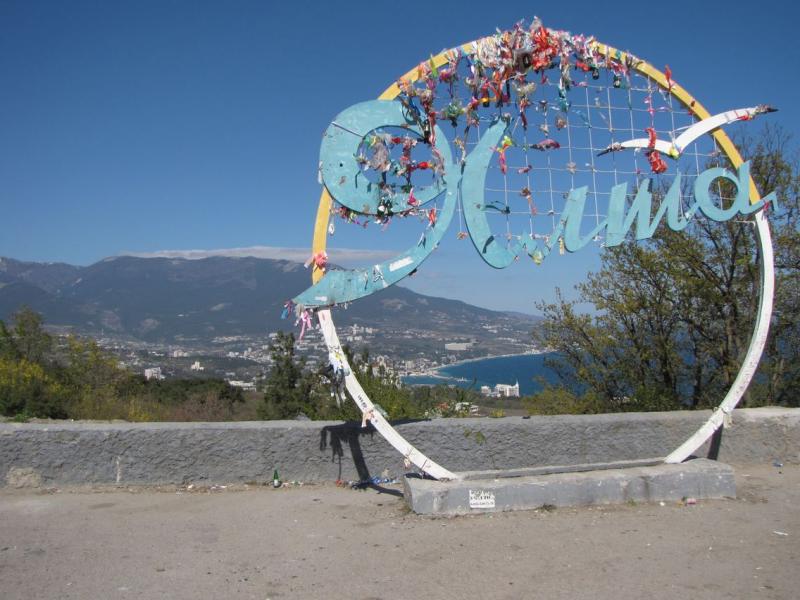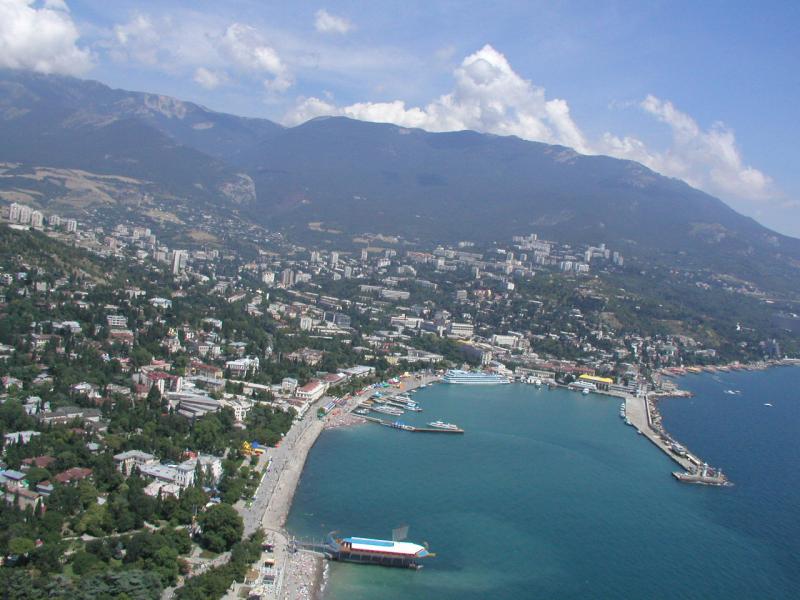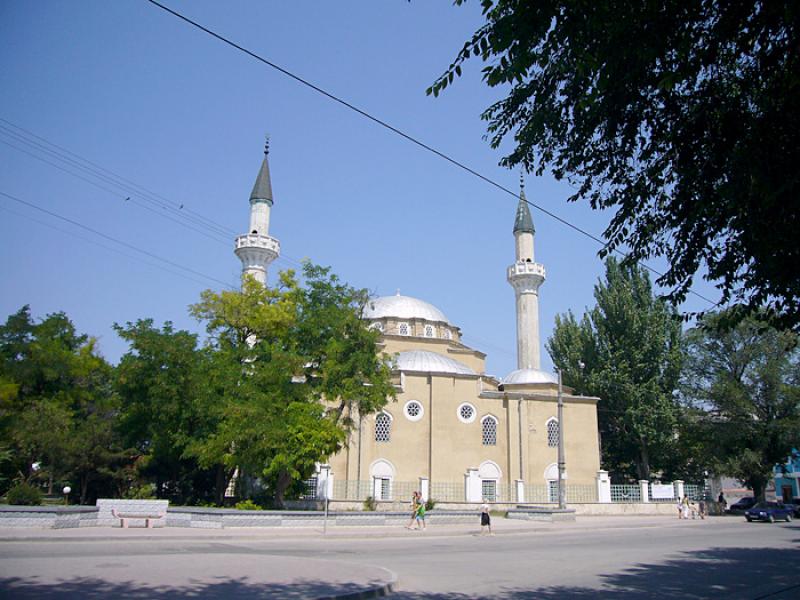
Feodosia who joined Theodosius to his kingdom Levon I could quite easily rename it, calling Teodosia (Theodosius), that is, "God's gift." Thus, the Bosporus Tsar, on the one hand, showed his disposition towards the obstinate citizens of the polis he conquered (the new name is close in sound to the old one, familiar to them), on the other hand, he also showed his strength and the irrevocability of the deed, that is, the transformation of the city and his rural possessions in a part of the Bosporan state. In the IV century. Feodosia has become a major trade and craft center of the Northern Black Sea Coast. Levkon felt as if his second founder, and for the royal dynasty and the entire Bosporus it really became a "God's gift."
Theodosia's story
We know very little about the early period of the Greek settlement on the shore of Theodosia Bay. The first settlers lived in dugouts and semi-dugouts. Early they began to develop the fertile lands of the rich land; agriculture supplied the necessary food, surplusesthey were exported. The farmers received plots outside the colony, on its rural territory, which the Greeks called good.
Soon, Feodosiya (like Panticapaeum and Nymphaeum in the Eastern Crimea, Phanagoria, Hermonass and Kepam - on the Taman Peninsula) grows into an independent state-policy. The political organization basically developed throughout Hellas by the end of the VI century. The policy became the most important form of the hostel of ancient peoples, their socio-economic, political and spiritual organization. He grew up from a rural community and was a state-community, but a special community - a civil one. It consisted of a collective of citizens who were owners of land plots and soldiers, people interested in participating in the political and cultural life of their native city.
From a small village on the shore of the Bay of Feodosia turns into a city with all its attributes. Residential buildings, economic and public buildings, defensive walls, wells, other hydraulic structures are erected by the hands of local masters. Excavations on Quarantine revealed the remains of a building of the 5th century. The height of the surviving part of the wall reaches 2 m, it is composed of well-hewn, laid dry, without a binder solution, large blocks of local sandstone. Its surface was painted, as evidenced by fragments of plaster of red and yellow. It is possible that this building was part of the architectural complex of the acropolis: it is said about its monumentality and the absence of garbage remains. It existed for a short time and was destroyed already in the first half of the IV century BC
In the IV century. BC. Feodosia captures the Bosporus kingdom and it becomes a part of it, however, with the preservation of many liberties and partial local government.
The Ancient Theodosius was destroyed in the 4th century AD during the invasion of the Huns. In the first centuries AD. here was a small Christian settlement in which the Alans lived and it was called Ardabda (Semibozhnaya). By the VI century, the entire southern coast of Tavrika was in the sphere of the strongest influence of the Byzantine Empire. Throughout Tavrica there is a construction of monasteries and fortresses, around which the local Christian population is concentrated.
At the end of the 7th and beginning of the 8th centuries, the Khazars invaded the peninsula, many Christian settlements disappear, and in their place the Khazars emerge. The Khazars captured the village of Ardabda.
In the period from the 11th to the 14th centuries, there was a mass migration of Armenians to the peninsula. Fleeing from the raids of the conquerors, they moved to Tavrica.
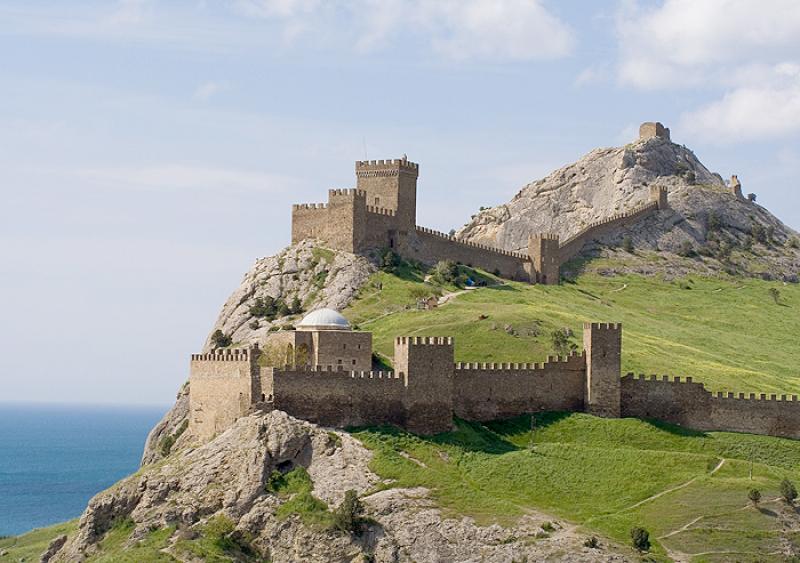
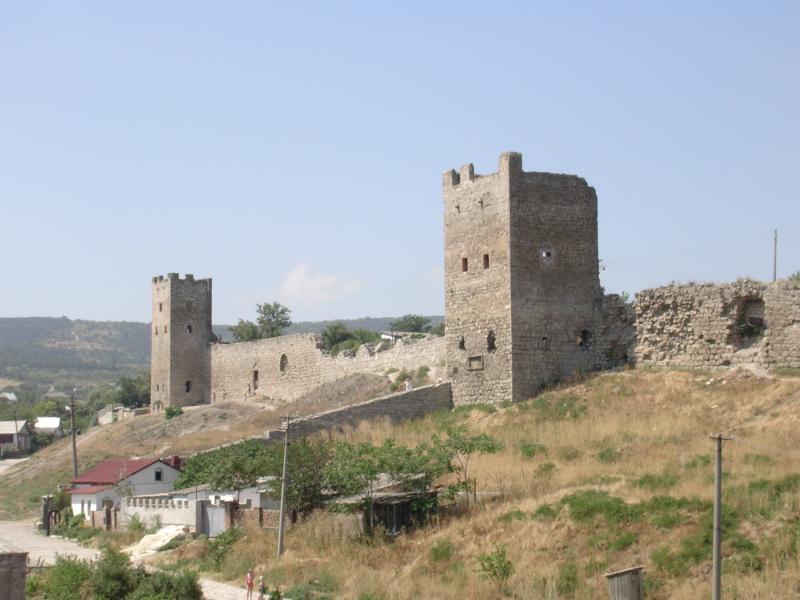
During the early Middle Ages on the ruins of Ancient Greek Feodosia a new settlement arose, Kafa, which was probably founded in the 70's. XIII century. The thirteenth century is characterized by domination of the sea - the Genoese, on the southeastern. The territory of Feodosia was included in the Crimean ulus of the Golden Horde. In the second half of the thirteenth century, the Genoese merchants purchased from the Tatar khan Oran-Timur a section of the shore of the Feodosiya bay and founded their trading post, keeping the name Kafa. Two centuries Kafa was under the rule of the Genoese. Fearing the attacks of the Tatars, they surrounded the city with a powerful canal, erected a citadel in front of the fortresses, with powerful stone walls and a number of towers, up to 12 m high and 2.5 m thick; These buildings even now look impressive, and then it was one of the most powerful fortresses in Europe. However, powerful walls did not always help. In 1347, in order to break the besieged Khan, Janibek ordered the bodies of those who died from the plague to be thrown into the city. Soon among the besiegedplague. Defenders were forced to flee to Europe and along with them an epidemic took place, which claimed millions of lives. In the 13th and 15th centuries, Kafa was the center of the slave trade in the Black Sea basin, one of the centers of the Great Silk Road, through which trade routes to the West and the East traveled. The city flourished. After the fall of Constantinople and the death of Byzantium, in 1475 the Turks seized Cafu and the rest of the Genoese possessions. The city was renamed in Kef and became the center of the Crimean province of Sultan-sanjak. The city was still the main center for trafficking in slaves in the Crimea - the legendary Ukrainian Roksolana was sold at the local slave market, which became the wife of the Turkish sultan and one of the most influential women in history. The Turks thoroughly rebuilt the city in its own way, emphasizing its importance, called it Kuchuk-Istanbul (Small Istanbul).
In 1771, during the Russian-Turkish war, the city was taken by the Russian troops of Prince Dolgoruky. In 1787, Empress Catherine II visited him during her Crimean journey. However, once a blooming city, one of the most important shopping centers in the past on the Black Sea, for many years was in desolation. Only at the end of the XIX century, after laying the railway and completing the construction of a commercial port, Feodosia began to turn into a major economic and commercial center. In this period, major urban construction begins. On the ruins of Kafa-Kefa, a new city grew rapidly. In 1817, Emperor Alexander I approved the general plan for its development. For a long time the new Theodosius occupied the space of a medieval city. Outside the ancient fortress trench were located suburbs - forstadt. Ancient irregular planning of streets was preserved in those parts of the city that the old population did not leave (such was the historical Karaite settlement, in the guise ofOtoro and today the outlines of medieval streets are guessed). Temples, fountains, fortress sites and few old buildings fit into a new regular urban planning.
Many houses, barracks, administrative and other buildings of the new Feodosia were built of stone collected on medieval ruins. It is not surprising that today, when demolition of old buildings in masonry walls are often found medieval plates with inscriptions and coats of arms, reliefs, architectural details. There were also vacant vacant lots. There were no parks and gardens except for the city boulevard, arranged on the site of the fortified walls of the sea facade of Kaffa (the boulevard on Gorky Street - former Italian), disassembled by the order of the mayor Fensh.
Rapidly, mainly due to settlers from other places, the population of Theodosia grew. In 1809, the city lived up to 4,000 people, in 1812 - up to 5,000. The population of the Crimean cities, as before, was multinational. Serfdom restricted the freedom of movement within the empire. As a result, the growth of the population of Feodosia, as well as of other southern cities, occurred at the expense of immigrants from abroad, while many of the new Feodosiya retained their foreign citizenship. According to the testimony of the Englishwoman M. Holdernes, who lived near Feodosia in 1816-1820, it was possible to meet the descendants of "more than fifteen different nations" in the city.
In the XIX - early XX century. the city was known as one of the cultural centers of the peninsula, "... in this corner, devoid of the elegant beauty of the Southern coast, there is an entire art school with names known throughout Russia and even the whole world ... No one knows Theodosius for many years attracted the attention of Russian artists , collectors of Europe, art historians and major museums.
Feodosia was the second city of Crimea after Sevastopol, in which the Bolsheviks defeated. In January 1918, the entire peninsula became Soviet. In April, the troops of Kaiser Germany join the Crimean land. April 30, 1918 for eight months they occupy Feodosia in June 1919 Denikin once again occupied the whole Crimea. The Armed Forces of the South of Russia under the command of A. Denikin, and since April 1920 - P. Wrangel controlled the peninsula more than a year. In November 1920, the Soviet power was finally affirmed here. On November 14, 1920, the Red Army entered Feodosia. In the 20's and 30's, The last century began the true development of the Feodosiya resort. Sanatoria and rest homes are located in the former mansions of the urban villa zone.
Heavy trials fell to the share of Feodosia during the Great Patriotic War. In 1941-1944 years. it was twice occupied by enemy troops. On the second day of the war, enemy planes appeared in the sky over Feodosiya. The years of war changed the face of the city forever. In Feodosia, more than half of the housing stock was destroyed, many of the buildings that decorated it were destroyed, businesses and institutions were plundered and destroyed. About this tragic and heroic time today remind us of monuments and names of some streets of the city. Immediately after liberation, the restoration of buildings, enterprises and institutions, the seaport and other city facilities began. Already in 1944-1945. the enterprises of the food-processing industry, tobacco and stocking factories, a port, a brick factory have earned. In the work on clearing the city of ruins, brigades of volunteers, including specialized brigades from female housewives, participated.
A peaceful life began. Now Feodosia is a city of republican subordination of the Autonomous Republic of Crimea, a historical, economic, scientific and cultural center of the South-Eastern Crimea, an important Black Sea harbor of Ukraine, a transport hub (road and railroad, navigation), a resort.
>Feodosiya - God given, Gift of the Gods - a city with 25 centuries of rich history and numerous monuments of history and architecture.
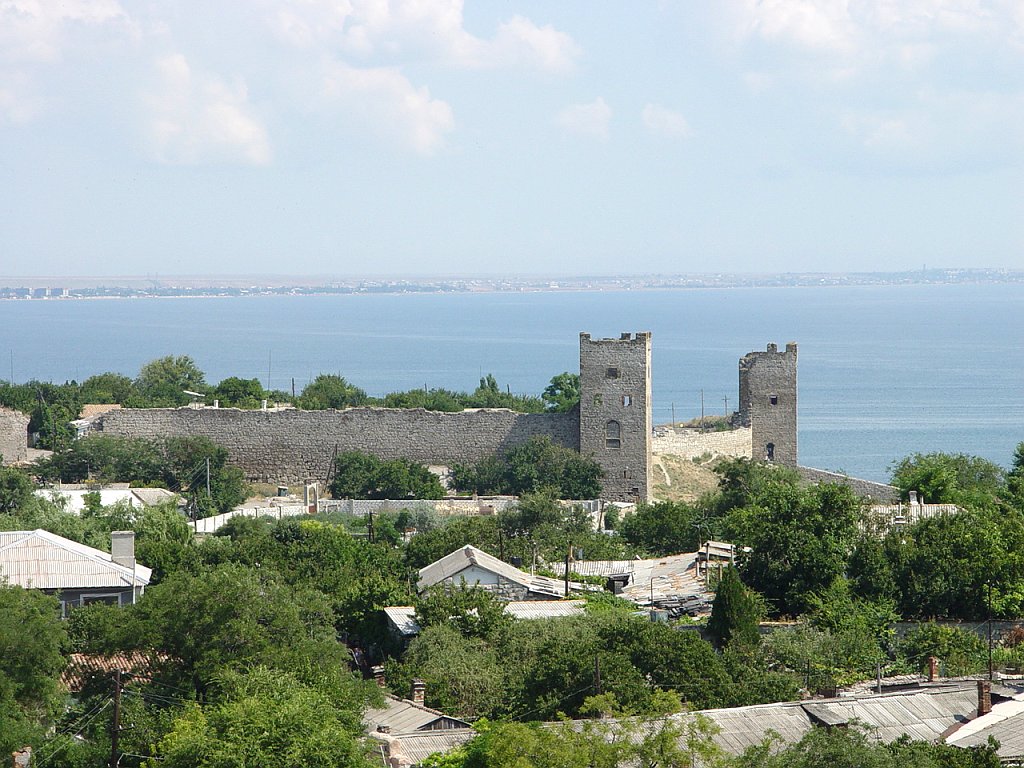
This name was given to the city by merchants from Miletus, when they organized a small trading post in the 6th c. BC. Great Greek colonization of the archaic epoch (VIII-VI centuries BC), during which Greek cities and villages appeared on the coasts of the Black and Azov Seas, was of great importance in the history of the tribes inhabiting the Crimea in ancient times and in the history of Hellas proper. Colonization was caused by internal socio-economic processes taking place in Hellenic society. The Greek writer Arrian called Theodosius "an ancient Hellenistic city, an Ionian, a colony of Milesians." The Maloasian city of Milet played an important role in the colonization of the northern Black Sea region, its inhabitants - the Greek Ionians (the so-called one of the groups of the Hellenic tribes) - were famous for the skills of seafarers, mastered the sailing of the Black Sea. In the era of the archaic Miletus stood out among other Greek policies: it was a major for those times economic center with developed crafts and trade, the center of culture. It is early ripened ininternal prerequisites for the allocation of part of the population outside the policy.
First half-middle of the VI century. - the time of the most active settlement of the inhabitants of Ionia (the Greeks called the south-west coast of Asia Minor, where, incidentally, Miletus was located) outside their homeland. In Feodosia fragments of black-figured ceramics and terracotta figurines from Hellas, made not earlier than the second half of the 6th c. So the most probable time of the founding of Theodosius - about the middle of the VI. BC. e.
Starting with the IV. BC. e. in the writings of ancient authors, the Bosporus and the inscriptions on the coins minting autonomous city was called by the Greek word "Theodosia". Ulpian gives the only ancient literary tradition clarification about this name: "Feodosia - Bosporus place name or mart given by sisters, or wives. There is disagreement about this." Many researchers believe that it is a sister or wife Levkon I - the ruler of the kingdom of Bosporus, which is attached to his possessions Theodosius. So, earlier, that is, before the IV century, the city had a different name. Which?
It is possible that the name of the city was associated with the name of its founder (in Greek - oikist). It is possible that Teodeos is the name of the oikist. On the front side of the early Feodosia coins, the male head is clearly visible. Is it not heroized after the death of the founder of the city decided to depict on their first coins residents of the city? In this case, the original name - Theodos - the city received in honor of its founder.