Attractions of Feodosia
There are many sights in Feodosia - after all the city is more than 25 centuries old. They are located quite compactly, in the historical part of the city.

National Picture Gallery. I. Aivazovsky - one of the oldest art museums in Ukraine. The gallery was founded in 1880 and is located in the artist's house, built according to his own design. This is the world's largest collection of works by I.K. Aivazovsky. Here you will get acquainted with the work of an outstanding "sea singer", you will see masterpieces of the world marine painting, rare documents and photographs, memorial things. In the house of the artist's sister there is a section of the exposition "Russian and Contemporary Marines: Artists of the South-Eastern Crimea". In the permanent exposition of the department there are works of landscape painters of the XIX century (LF Lagorio, RG Sudkovsky, NN Dubouski), students IK Aivazovsky (AI Fessler, E. Ya. Magdev), grandchildren I.K. Aivazovsky (MP Latry, AV Gansen), an outstanding master of the historical and heroic landscape of KF. Bogaevsky, singer of Cimmeria MA Voloshin, etc. Here are the seascapes of IK. Aivazovsky .. The National Picture Gallery named after IK Aivazovsky today is a tourist dominant of the southeastern Crimea and a place of pilgrimage for artists, connoisseurs of art, romantics and connoisseurs of beauty.
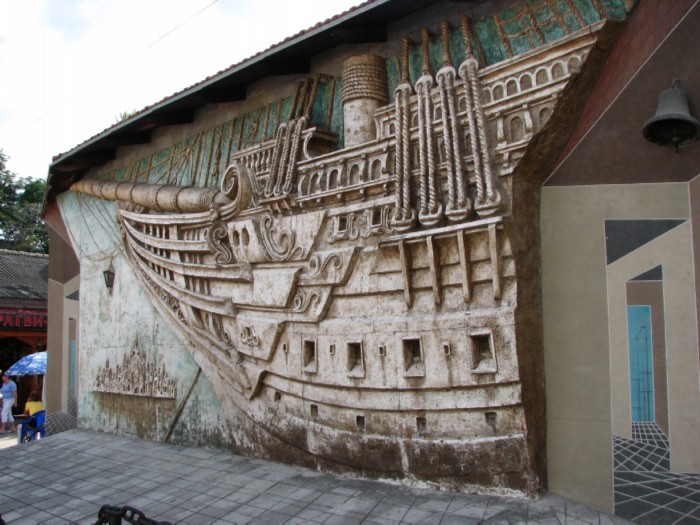
The Museum of Alexander Green in Feodosia is one of the gems of the Crimea. Opened on July 9, 1970 in the house where the writer lived in 1924 - 1929. The exposition of the museum embodies the spirit of the writer's romantic creativity. A small one-storey house preserved the memoriality of its walls, but received a non-standard design - the rooms of this unusual museum resemble cabins with sonorous names: Frigate Hold, Wander Room, Captain's Cabin. Clipper, Rostral.
White walls are lined with dark wood and Sisalian rope. In addition to photographs, engravings, manuscripts, here the ship's rostrum, models of sailboats, ancient shipboard instruments and maps, ocean shells. The strictness of taste, the irreproachability of proportions, the total absence of living things will preserve the state of spirituality that has not been touched by the years in the museum, and you feel yourself in it a happy dream that has returned to childhood. Russian writer Alexander Stepanovich Greene spent the best years of his creative maturity in Feodosia. Here were born his novels The Golden Chain Running on the Waves, Jesse and Morgiana, The Road to Nowhere, the pages of beautiful stories.
Feodosia Museum of Antiquities - one of the oldest in the country and the Crimea was opened on May 13, 1811. Its magnificent building in antique style, designed by I.K. Aivazovsky on Mount Mithridates, for a long time adorned the city and was destroyed during the war. Expositions of the Museum of Local Lore since 1987 are housed in a separate building, an architectural monument of the second and half of the XIX century, in which before the revolution the artist lived the seascape painter L. Lagorio, and then the Genoese Hotel. The museum collection reflects the nature of the south-eastern part of the Crimean peninsula, the history and culture of the backgammon of the Crimea, the past and present of Feodosia, a city of twenty-five centuries. The most significant part of the funds are archaeological collections. A part of the rich lapidary collection is exhibited in a specially equipped courtyard of the Feodosia museum of local lore.
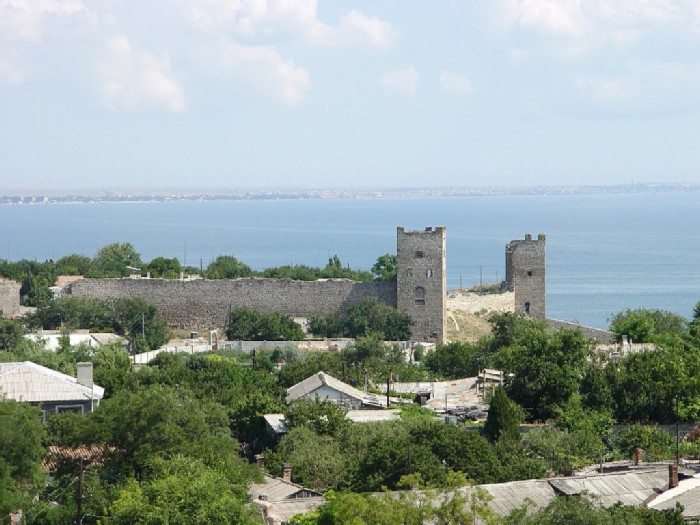
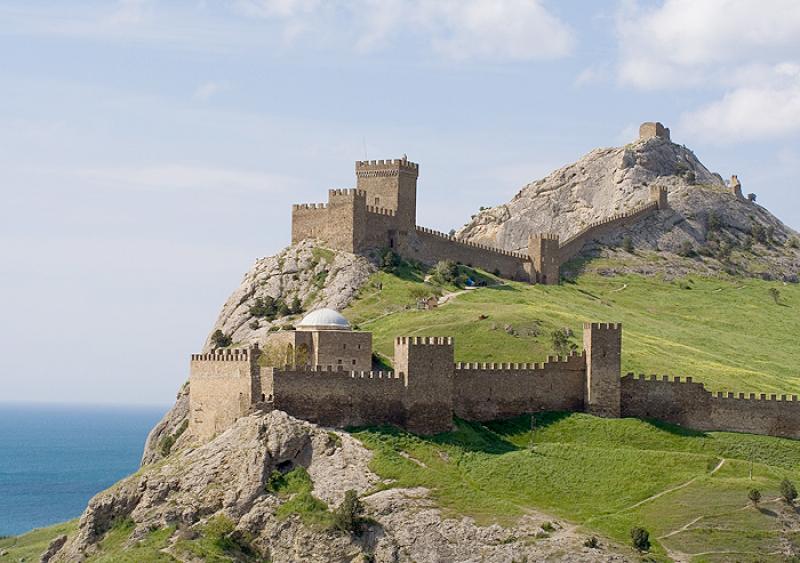
One of the most outstanding architectural monuments of the medieval architecture of Feodosia is the fortress. In the 70-80's of the XIII century. became the property of the large Italian commercial republic of Genoa. Genoese got the right to own a section of the coast of Feodosiya Bay in exchange for the obligation to pay tribute to the Tatar khan from imported and exported goods. The fortress was preserved by its Tatar name of Kafa. In the second half of the XIV century. Genoese greatly expanded their possessions, capturing Cembalo (Balaklava), and later Surozh (Sudak). Kafa became the main administrative and commercial center of the Genoese possessions in the Crimea.
From the east, spices, fragrances, silk were brought here, furs and wax were brought from the Slavic lands, but the main commodity of the Genoese was the "living goods" - slaves. Numerous documents testify to this. Up to now, there are 36 notarized documents of this period for the sale of slaves. Kafsky slave market (kan) was in place of the present square. The systematic attacks of the Tatars, popular uprisings forced the Genoese to maintain large mercenary military detachments and city guards in the city. In 1307, Kafa was attacked by the Kipchaks and Tatars, which caused considerable damage to the city.
Later this event inspired the Genoese to build powerful defensive structures. The city was girded with two lines of fortress walls, up to two and a half meters in height and twelve meters high. It was built 26 watchtowers and defensive towers and a citadel (fortress in the fortress - in case of military unrest in the city). The remains of formidable defensive structures have survived to the present day. And now in the city garden towering three walls of the tower of Constantine. The tower was a knot of defense of the medieval Kafa. From it went fortress walls with five gates, guarded by soldiers. Near the tower you can see the remains of a bastion, attached later by the Turks. On the southern outskirts of Feodosia, on the Quarantine Hill, the remains of the citadel - the heart of the colony - have been preserved. It was surrounded by a wall with twelve towers. Here were all the most important institutions of the Genoese and the consular castle. In the citadel, only the Genoese lived.
Find the Best Professionals for Your Project
Expert repair, construction, and renovation specialists ready to help you right now