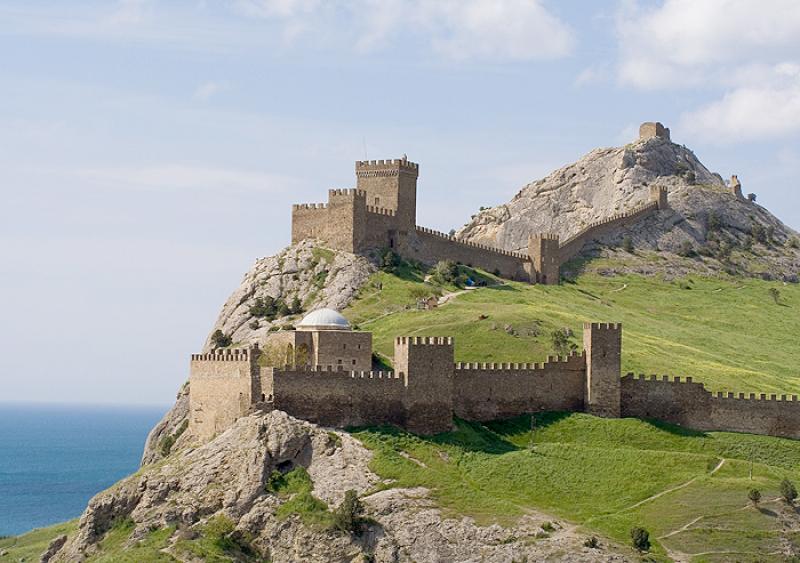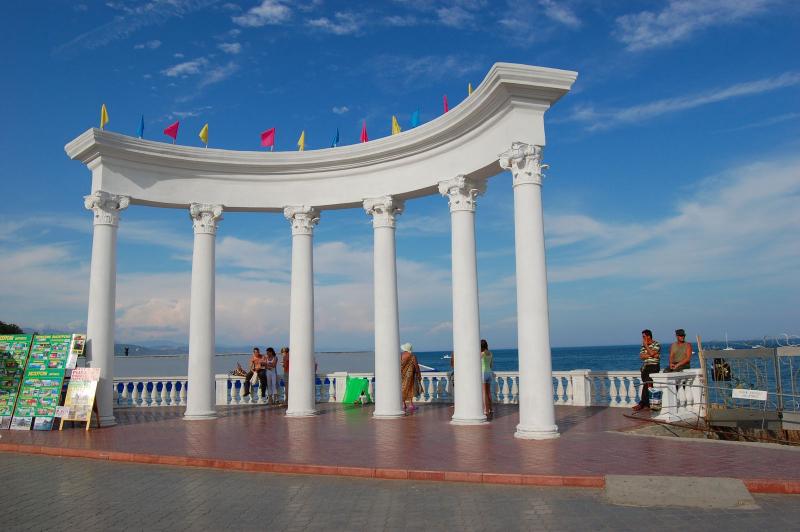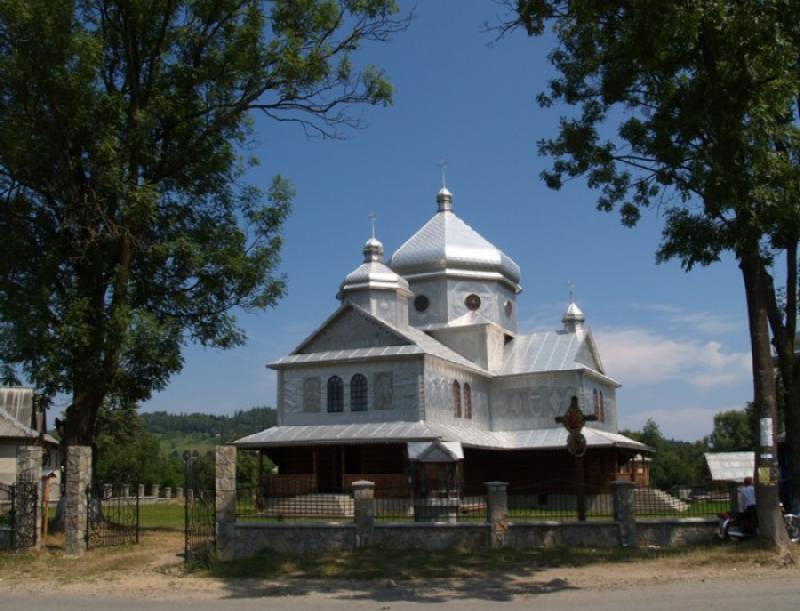
In Feodosia, there is something to see and except for the main and most famous sights.
Interesting places in Feodosia and its surroundings
In Feodosia there is a museum of the famous Soviet sculptor Vera Ignatyevna Mukhina & ndash; author of the famous sculpture & laquo; Worker and collective farm worker & raquo; and no less famous faceted glass. The future sculptor spent childhood and adolescence in Feodosia in this house from 1892 to 1904. Museum complex & la Children's maritime gallery & raquo; and the museum of the sculptor Vera Mukhina were organized on the site where the Mukhiny family's house stood. The architectural appearance of the complex is given by the preserved old facade wall of the Mukhins' house, which is successfully inscribed in a modern building. The museum presents five expositional themes that tell about the life of V. Mukhina. The exposition presents wax and gypsum figures, sculptor's tools, rare photographs, newspapers and magazines, letters and notes of prominent figures of Russian and foreignculture. Of particular value are works belonging to the hand of V.I. Fly or made by her sketches sculptors S. Kazakov, A. Sergeev, N. Zlensky.
The Feodosia Money Museum was opened on August 22, 2003. The activity of the museum is aimed at studying and popularizing the monetary affairs of Feodosia, since from all the cities of Ukraine it is Theodosius who owns the palm of primacy in terms of the number of periods of money issuances & ndash; there are twelve of them. The museum features a unique exposition: money minted and printed in Feodosia from ancient times to our days; money circulating on the territory of Ukraine and Crimea for two millennia, tells about the history of the emergence and development of the banking world, the example of Feodosia, where banking began in the ancient period. The purpose of the museum is & ndash; studying and completing the funds, improving the collection status of the museum exhibits according to the departments presented. The task of the Museum of Money & ndash; popularization of the history of domestic and world monetary circulation, as well as rendering assistance to collectors of money - numismatists and bonists of the whole world.

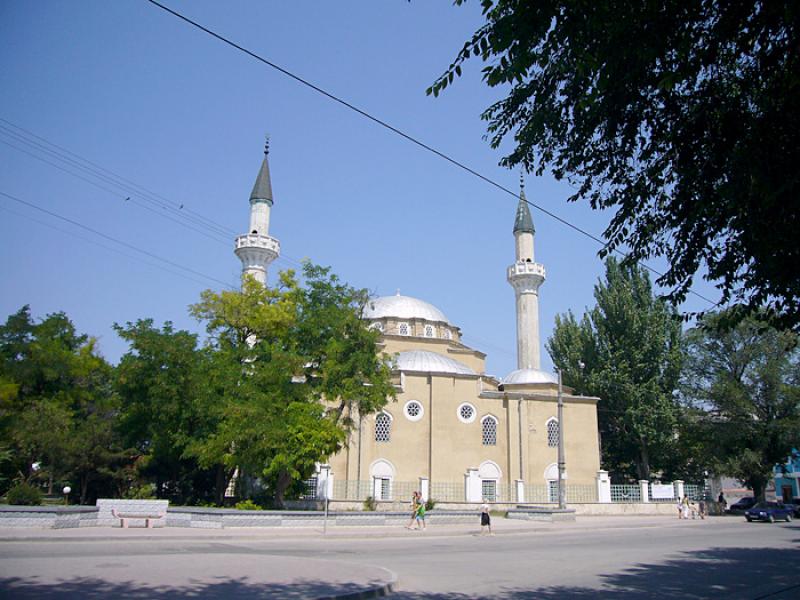
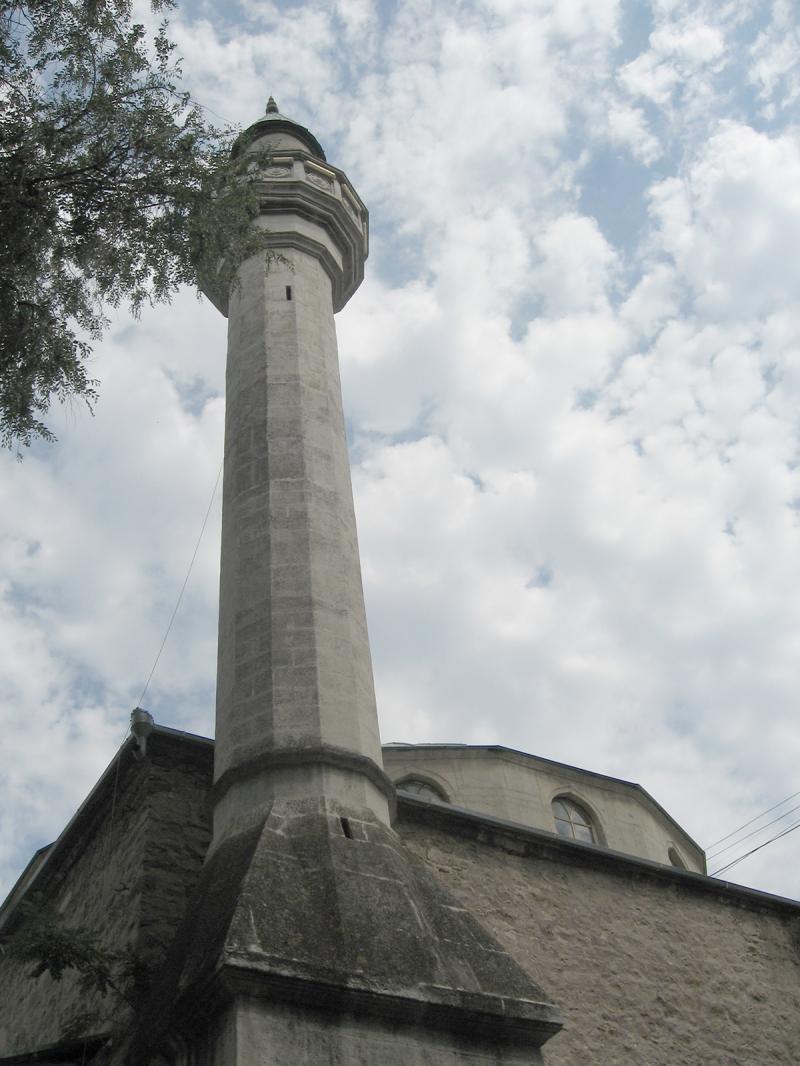
In Feodosia the mosque Mufti-Jami, built in 1623 in the Ottoman architectural traditions, was well preserved. After the Crimea joined Russia and emigrated from Feodosiya tours to their historic homeland, the Kaffin mosque was adapted to the Armenian Catholic Church of the Assumption and served the Armenians in this capacity for a long time. Located on the corner of modern Feodosia's streets of Lenin and Karaite (Furmanov) and now restored. The Mufti-Jami Mosque for many years served as a temple to the Turks, Crimean Tatars and Crimean Armenians and, after a long time in destructive desolation, once again acquired the former, worthy of the Muslim temple pious appearance, which we owe restorers. The described architecture of the Mufti-Jami is formed on the Istanbul samples, where for years such a type of cult construction was built, every detail was tested and tested by practice. This is an example of a rational model overseas project of the late Middle Ages.
The quaint silhouette of the former dacha of tobacco manufacturer Joseph Stamboli is one of the "business cards" & raquo; cities. Built on a hill in beautifully interpreted forms of Moorish architecture, the building of the mansion dominates the Feodosia Embankment with its adjacent quarters. Stamboli's dacha is often depicted on postcards, postage stamps, calendars, and in all the editions devoted to Theodosia, without exception. The author of the project was the famous St. Petersburg architect Otto Wegener. Construction of the villa was conducted for four years & ndash; from 1910 to 1914, with a large investment of funds and a solid scale. The mansion-palace cost his master a truly royal sum & ndash; 1 million 100 thousand rubles. In terms of modern hryvnia, the dacha cost at least one billion.
The building is considered to be one of the most beautiful architectural monuments on the Crimean peninsula. High minaret, covered galleries, terraces and turrets, mottled ornamental furnish give it an oriental flavor and majesty. From the gallery at the main front door offers a wonderful view of the sea. The rich interior decoration of the mansion is made with the use of marbles of various colors, precious woods, stucco moldings and snow-white marble sculptures. Even now it is striking not only for luxury, but also for masterful execution. Stamboli's dacha surrounds a number of evergreen cypresses from all sides. Next to the park there is an interesting servant's house, now it's the cafe & la Gardner's House & raquo ;. The owner of the dacha lived in the detached mansion for only three years. Learning about the beginning of the October Revolution, Joseph Stamboli and his family left Feodosia and went to Turkey, establishing another tobacco factory there.
The only museum in the world hang gliding is in Feodosia. The museum was created here not by chance. The fact is that in the vicinity of the city there is a mountain Klementyeva or Letnaya, which took in its time the first hang gliders. Materials that tell about this are presented in the exposition of the museum, which will be ten years old next year. Here are kept the archives of famous aviators, unique exhibits on the history of domestic aviation. The museum of hang gliding in Feodosiya was created on the initiative of the local resident Evgeny Vasil'evich Belousov, the pilot of sports aviation, the director of the Gliding Museum in Koktebel (1984, 1990), the President of the Association of Paragliders of the USSR (later the Association of Ukrainian Paragliders of Union & 1990; 2003), participant of international tournaments in paragliding sports. In the museum there are exhibits from the history of hang gliding sports, information on the first steps of one of the youngest types of air transport in Ukraine is given & ndash; parapetof the linearism. Authentic hang-gliders and their models, simulators with a hanging system are presented.

In the mountains of the Eastern Crimea between Sudak and Feodosiya, the ruins of the ancient volcanic massif Karadag 150 million years old rose above the sea. Many connoisseurs of nature believe that Karadag & ndash; the most beautiful corner of the Crimea. The reserve covers the entire mountain range of Karadag & ndash; from the Otuz Valley to the Koktebel Basin, an area of 2,065.07 ha and a coastal strip of the sea of 809.14 hectares. The natural reserve Karadag was created to preserve and study unique geological and biological objects. The protected area is closed for mass visits, but organized visits are conducted under the guidance of scientific staff on environmental trails. The ecological path "Greater Karadag" & raquo; - a mountain route with a length of 7 km, lasting 4 hours.
It passes along the ridge of Karagach (333 m), with unforgettable views on its rocks: on the Ivan Razboinik cliff, on the highest peak of the Svyataya reserve (577 m), on the Golden Gate rock. Further the ecological path passes between the heaps of rocks of the Khoba-Tepe ridge (& laquo; top with caves & raquo;). They are dotted with numerous sculptures & ndash; figures of weathering of volcanic rocks and received the name "Dead City". The route continues along the ridge of the Magnitnaya. On it there is a rock of the Sphinx or the Devil's Finger, from which a picturesque view of the Koktebel Bay opens. End the visit to the reserve along the ecological path by going down the road to Koktebel, or by returning to the mountain forest road to the park. Excursions along the ecological trail of the reserve are conducted accompanied by an employee, in groups (20-25 people), from May to October. Lifting requires physical effort and is difficult for patients with cardiovascular disease. There is also a marine environmentalpath.
The sea route starts from the quay of the reserve and runs along the coast. Traveling by boat, visitors can get acquainted with the Beregov Ridge from the sea side. The formidable black rocks of the ridge, up to 300 m high, are especially picturesque rising from the blue of the sea waves. The walls of the mountain mass then open, forming tiny coves, then again close together with terrible peaks. Unique objects of sea voyage are & ndash; islet - the Golden Gate arch, the Lion rock, the grotto of Roaring, Carnelian bay. The Karadag Sea Aquarium was opened in 1995. Currently has two demonstration halls. The aquarium specializes in demonstrating representatives of the fauna of the Black Sea. The aquarium is open from May to November.