In the third quarter of the VI. BC. (550-525 BC) by the Greeks - descendants of Miletus - was founded Kerkinitida - an independent slave-owning city-state, a democratic republic. By the way, the Greek city of Miletus founded about 80 colonies. The first mention of Kerkinitida is found in ancient authors: Herodotus, Strobon, Adrian, Hecataeus of Miletus.
History of Evpatoria
Approximately 70 years after its founding, when the city’s population increased through natural growth and the acquisition of slaves, defensive walls were constructed. The urban development within the city boundaries underwent systematic planning. Although small by ancient standards, with a population of around 2,000 people, Kerkinitida was an important trade center that facilitated commercial and economic connections between cities in Greece and Asia Minor and the regions of the northern Black Sea. Kerkinitida engaged in extensive trade with virtually the entire ancient world; expensive wines and olive oils, fragrant spices, pottery, and luxury goods all flowed into the city. In exchange, the colony exported grain, salt, and salted fish, while slaves acquired from the Scythians were also sent to Greece. From the 5th century BCE onward, Kerkinitida began minting its own copper coins.
The primary occupation of the inhabitants of Kerkinitida was agriculture: they grew wheat and grapes, produced wine, raised livestock, and extracted salt. In addition, men engaged in fishing. The city had its own craftsmen, including carvers and blacksmiths. Their skills in stone masonry were so advanced that mortar was not required when constructing buildings.
By the mid-5th century BCE, the city covered an area of 5.3 hectares and had a population of 1,800 people. It was a typical city-state with its own political authority and economy. Outside the defensive walls lay the city’s communal lands and private plots owned by citizens, each covering approximately 4 to 5 hectares. In total, the agricultural areas surrounding Kerkinitida amounted to roughly 20 square kilometers—almost 40 times the size of the city itself. These fertile lands were ultimately the reason why Kerkinitida lost its political and economic independence. It was precisely these agricultural resources that attracted the attention of its neighbors, particularly Hersones (modern-day Sevastopol).
The economic pressure exerted by Hersonesus, which limited the expansion of the city’s agricultural lands through its own estates, forced the inhabitants of Cercinium to accept an alliance with Hersonesus. This occurred at the turn of the 4th and 3rd centuries BCE. Politically, the residents of Cercinium gained full citizenship in Hersonesus; economically, however, the city lost its right to free trade. At the same time, Cercinium was the second-largest and most important city in Thrace after Hersonesus.
First the Greeks, and then the Genoese, managed to transform it into an important trading center that even rivaled the Crimean queen Theodora (Caphia). Venetian and Genoese archives are filled with descriptions of the wealth and commercial power of Eupeatoria and its inhabitants. Genoese colonies in the northern Black Sea region, as well as fortified trading centers owned by Genoese merchants, existed throughout the 13th to 15th centuries. They engaged in intermediary trade with countries in Western and Eastern Europe, including the Russian lands. In 1475, Cercinium was captured and destroyed by the Turks.
Cercinium never enjoyed peaceful times. In the 4th and 3rd centuries BCE, a late Scythian kingdom emerged in the flat areas of the peninsula, with its capital at Neapole Scythicus (in the area of present-day Simferopol). Near modern-day Simferopol, ruins still exist that testify to the existence of this city: fortifications, residential and agricultural buildings, a mausoleum, stone tombs with murals, and more. This relatively powerful Scythian state occupied a vast territory stretching from the lower reaches of the Dnieper River in the north to the Crimean Mountains in the south, and from the Black Sea coast in the west to Theodora’s realm in the east.
The relations between the Greeks and the Scythians could not be described as friendly. In fact, there was a prolonged and continuous state of war. Around the 3rd to 2nd centuries BC, the city suffered another devastating blow: it was captured and destroyed by the Scythians. Settlements in northwestern Crimea were also attacked by them in the first third of the 3rd century BC. The war between Chersonesus and the Scythians proved to be a lengthy one. The republic was forced to seek assistance from the Bosporan Kingdom, which was located on the Kerch and Taman Peninsulas. The Bosporan king Mithridates VI Eupator (Eupator being a nickname meaning “noble” in Greek) sent the general Diophantus to support Chersonesus.
Kerkinitida, which was liberated in the 2nd century BC, never managed to regain its former strength and eventually ceased to exist in the first centuries of our era. Later on, the Scythians once again seized Kerkinitida and approached Chersonesus, but they were once more defeated with the help of General Diophantus. At the turn of the new era, Mithridates VI Eupator suffered a defeat in his war against Rome, and Roman legions entered Crimea. Chersonesus then became their stronghold on the peninsula.
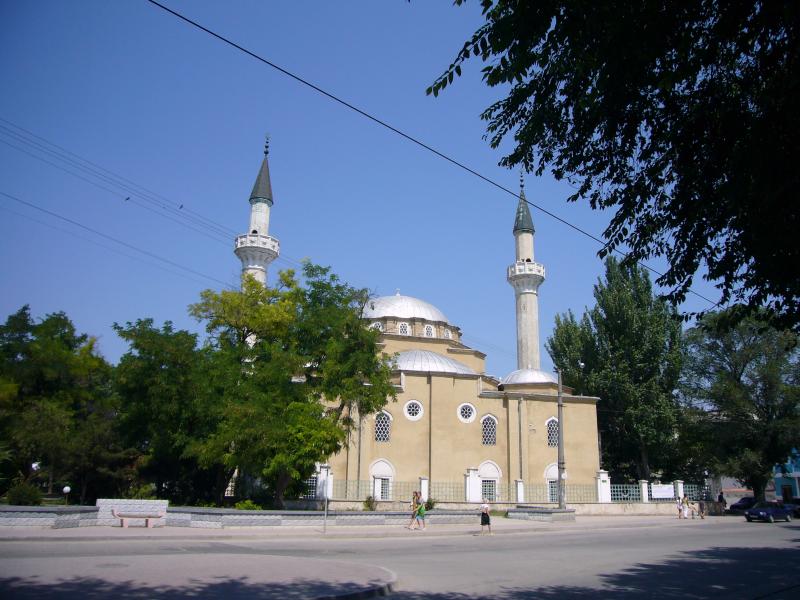
<> By the time the Turks arrived in Crimea in 1475, a small fishing village that was located east of the ancient Kerkinithida during the early Middle Ages had transformed into an independent city. The prosperity of Geslöv began after the Ottoman Empire took control of the peninsula. The city became one of the main strongholds of Turkish rule on the peninsula. According to a treaty in 1478, the sultan maintained a military garrison of up to 3,000 people in Geslöv. It was during this period that the city was surrounded by a fortress wall and a deep moat dug into the surrounding land. The construction of the fortress at Geslöv is dated back to 1476. Evpatoria is the only city in Crimea that has preserved the layout of a medieval eastern fortress. Narrow, winding streets extend deep into the city, branching off from the fortress walls to form small squares. The city was divided into residential areas and craft and trade districts, as well as ethnic neighborhoods. Although the majority of the population consisted of Tatars and Turks, Armenians, Karaites, Greeks, Russians, and Roma also lived there, each group occupying its own district or quarter. The center of each ethnic community was a church.
In 1784, after the defeat of the Ottoman Empire, Crimea was annexed by Russia. At the order of Catherine II, Geslöv was renamed Evpatoria. In the early 19th century, Evpatoria had the largest number of commercial establishments in Crimea—more than 1,000 shops, as well as 20 inns for merchants to stay in and store their goods. By the mid-19th century, the city was home to industries such as candlemaking, leatherworking, felt production, and soap-making. Jewelry, shoemaking, blacksmithing, and boatbuilding were also developed. The crafts produced in Evpatoria, especially jewelry, were not only sold within Crimea but also exported.
In the mid-19th century, the population of the city was 13,400 people, making it the third-largest town in Crimea after Sevastopol and Simferopol. By this time, the city’s territory had expanded, with new streets and alleys appearing, and the number of houses reached around 2,000. The city underwent improvements: in 1834, the first artesian well was dug; in 1840, construction of the waterfront began. In those years, Evpatoria was surrounded on all sides by endless rows of windmills. However, the Crimean War of 1854-1856 had a significant impact on the development of Evpatoria…
On September 1, 1854, at around 12 o'clock in the day, a fleet of 360 ships from the military alliance of Britain, France, and Turkey approached Yevpatoria. By 2 p.m., the entire bay was filled with these vessels. The residents of the city were given the option to either stay or leave within 24 hours. Many people departed, but not all had sufficient boats or horses; some settled in estates in the surrounding areas. After the landing of the troops and their retreat towards Sevastopol, a Turkish garrison remained in Yevpatoria, whose strength soon increased to 40,000 men. The war ended in March 1856; on May 11, the Turkish forces left the city, followed by the French on May 18. Reconstruction began, but foreign armies had caused considerable damage—426 houses were destroyed. According to local reports, “the city was completely ruined, with no glass or furniture remaining; the sanitation conditions, especially in areas where the Turks had lived, were terrible.” The population plummeted: from over 13,000 people before the war to just over 7,000 in 1861. However, Yevpatoria recovered quickly and began developing again. In 1867, its first comprehensive urban planning scheme was approved. From the late 19th century onward, the city entered a new phase of growth as a resort town. Its infrastructure expanded, and the modern Theater Square was designed and built. By 1912, Yevpatoria’s population had grown to around 30,000 people.
By the time the Turks arrived in Crimea in 1475, a small fishing village that was located east of the ancient Kerkinithida during the early Middle Ages had transformed into an independent city. The prosperity of Geslöv began after the Ottoman Empire took control of the peninsula. The city became one of the main strongholds of Turkish rule on the peninsula. According to a treaty in 1478, the sultan maintained a military garrison of up to 3,000 people in Geslöv. It was during this period that the city was surrounded by a fortress wall and a deep moat dug into the surrounding land. The construction of the fortress at Geslöv is dated back to 1476. Evpatoria is the only city in Crimea that has preserved the layout of a medieval eastern fortress. Narrow, winding streets extend deep into the city, branching off from the fortress walls to form small squares. The city was divided into residential areas and craft and trade districts, as well as ethnic neighborhoods. Although the majority of the population consisted of Tatars and Turks, Armenians, Karaites, Greeks, Russians, and Roma also lived there, each group occupying its own district or quarter. The center of each ethnic community was a church.
In 1784, after the defeat of the Ottoman Empire, Crimea was annexed by Russia. At the order of Catherine II, Geslöv was renamed Evpatoria. In the early 19th century, Evpatoria had the largest number of commercial establishments in Crimea—more than 1,000 shops, as well as 20 inns for merchants to stay in and store their goods. By the mid-19th century, the city was home to industries such as candlemaking, leatherworking, felt production, and soap-making. Jewelry, shoemaking, blacksmithing, and boatbuilding were also developed. The crafts produced in Evpatoria, especially jewelry, were not only sold within Crimea but also exported.
In the mid-19th century, the population of the city was 13,400 people, making it the third-largest town in Crimea after Sevastopol and Simferopol. By this time, the city’s territory had expanded, with new streets and alleys appearing, and the number of houses reached around 2,000. The city underwent improvements: in 1834, the first artesian well was dug; in 1840, construction of the waterfront began. In those years, Evpatoria was surrounded on all sides by endless rows of windmills. However, the Crimean War of 1854-1856 had a significant impact on the development of Evpatoria…
On September 1, 1854, at around 12 o'clock in the day, a fleet of 360 ships from the military alliance of Britain, France, and Turkey approached Yevpatoria. By 2 p.m., the entire bay was filled with these vessels. The residents of the city were given the option to either stay or leave within 24 hours. Many people departed, but not all had sufficient boats or horses; some settled in estates in the surrounding areas. After the landing of the troops and their retreat towards Sevastopol, a Turkish garrison remained in Yevpatoria, whose strength soon increased to 40,000 men. The war ended in March 1856; on May 11, the Turkish forces left the city, followed by the French on May 18. Reconstruction began, but foreign armies had caused considerable damage—426 houses were destroyed. According to local reports, “the city was completely ruined, with no glass or furniture remaining; the sanitation conditions, especially in areas where the Turks had lived, were terrible.” The population plummeted: from over 13,000 people before the war to just over 7,000 in 1861. However, Yevpatoria recovered quickly and began developing again. In 1867, its first comprehensive urban planning scheme was approved. From the late 19th century onward, the city entered a new phase of growth as a resort town. Its infrastructure expanded, and the modern Theater Square was designed and built. By 1912, Yevpatoria’s population had grown to around 30,000 people.In the early 20th century, a library was constructed in the city, a theater opened, a tram system was established, and a railway line was built.
During the Great Patriotic War, the city was occupied by the fascists. On the night of January 5, 1942, a detachment of sailors from the Black Sea Fleet landed there. However, a fierce storm prevented the arrival of reinforcements, and the operation ended in failure. Out of the 700 soldiers who participated in the landing, only seven survived; in retaliation, the fascists executed 13,000 local residents. A monument to these heroic soldiers was erected near the sea where they lost their lives. After the war ended, Yevpatoria began its recovery and continued to develop as a resort town. In 1966, a hot spring well in the Moynaki area was brought into use, and in 1979, a comprehensive health resort was opened there. In 2003, the city celebrated its 2,500th anniversary.