Spring in Alushta is beautiful with its freshness, blossoming of green decoration, abundance of sun, however, cyclones often pass, accompanied by dull and rainy weather.
The best time of the year for holidaymakers and tourists is the summer and the beginning of autumn, when the days are sunny, low-winded, the evenings are warm and not stuffy, and the sea breezes temper the heat.
Autumn in Alushta comes gradually, September and often the first half of October - a velvety season, when the moderately warm, sunny days are especially placed to stay in the air, among nature.
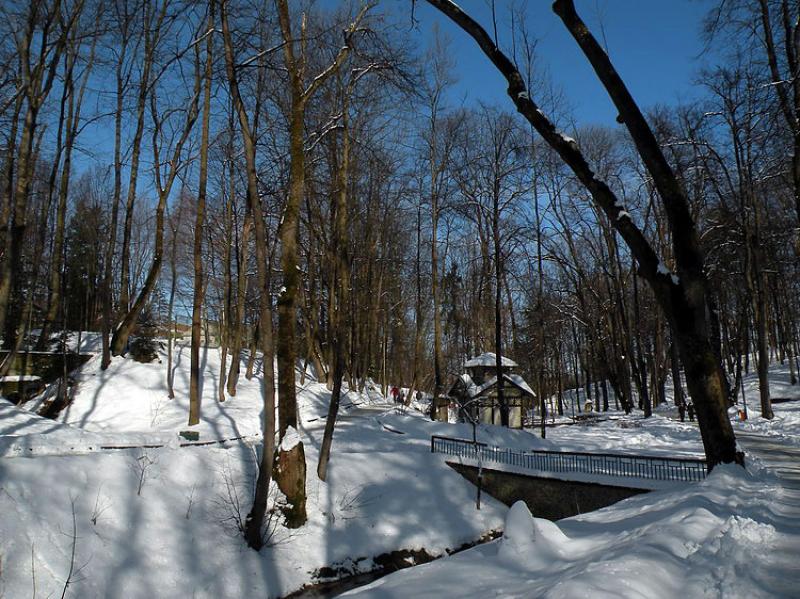
Winter in Alushta is more like a deep autumn. Here there are only 30-35 frosty days. This is due to the fact that under the protection of the crest of the Main Crimean ridge on the coast, cold air masses from the north of the Crimean peninsula rarely penetrate, but it constantly reminds of a warm, unfrozen Black Sea. The frost-free period lasts an average of 234 days a year, snow falls very rarely, and it does not last long.
The average temperature of July, the warmest month of the year in Alushta, is + 23.3 ° C; the coldest month, February, + 2.9 °. The absolute minimum is -18 °, the absolute maximum is + 39 °. The average annual air temperature in Alushta is + 12.3 ° C. (for comparison: in Simferopol +10,1 ° in Yalta + 13 ° C). The beginning and the end of the hot period: June 16 - September 7.
In Alushta, the duration of sunshine is longer than in Yalta: for a year it is 2321 hours (in Yalta - 2250 hours). In summer this figure reaches 83% of the possible in the Southern Crimea. The most sunny months are May (253 hours), June (299), July (340), August (323) and September (261). That's why Crimea is called the "sunny edge"! The annual total radiation in Alushta reaches 122.7 kcal/cm2.
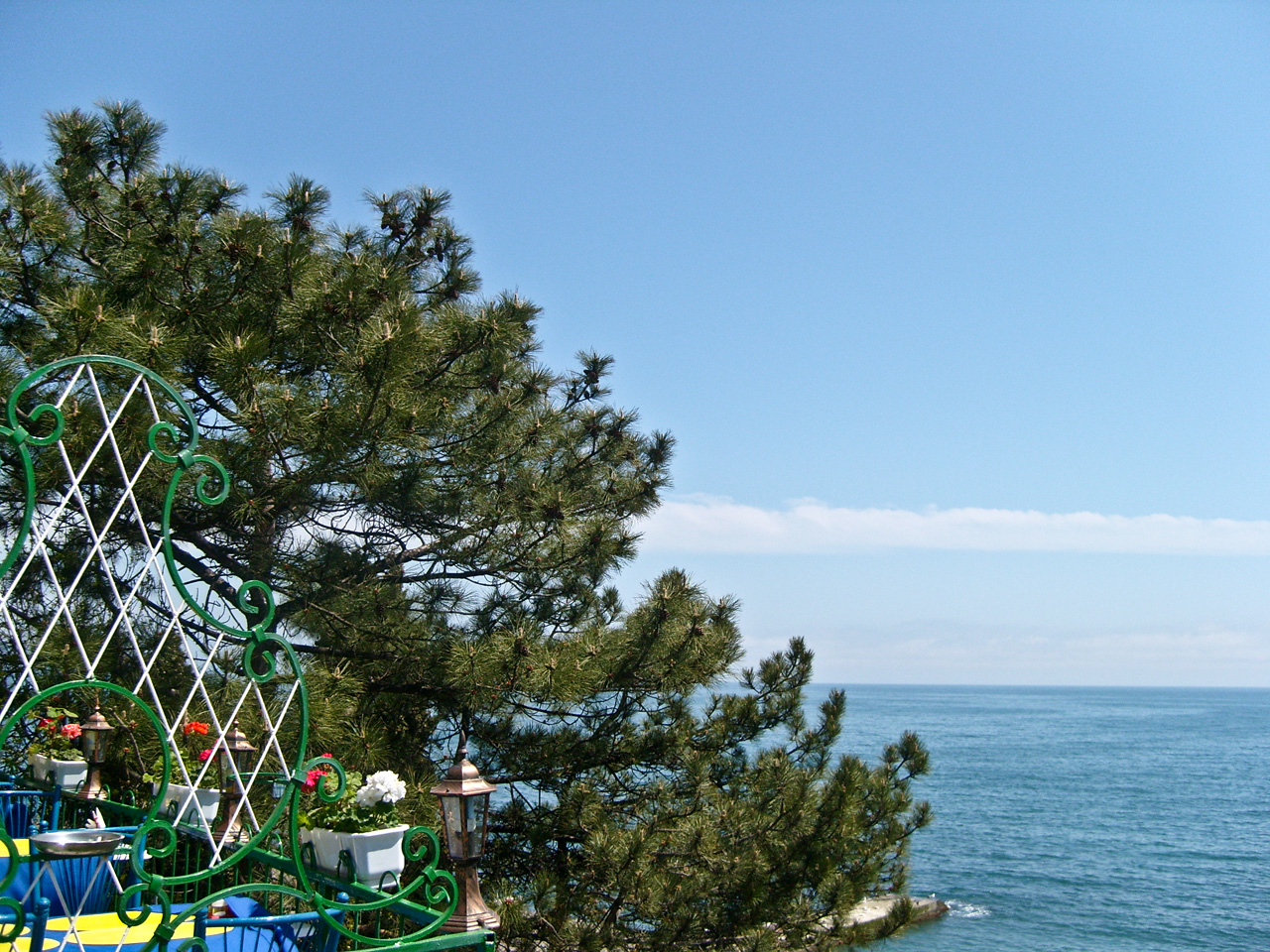
In the resort of Alushta, very high indicators of the annual temperature of the Black Sea water in the surface layer near the shore. On average, the annual temperature here is + 14.2 °, the same as at the coast of Yalta. For many years, the swimming season continues in Alushta 130 days - from June 7 to October 15. The mean seawater temperatures in June are +18, HS, in July + 21.4 °, August + 23.2 °, in September + 20.9 ° C. and in October + 17.0 °.
The annual sum of active temperatures (above + 10 ° C) in Greater Alushta reaches 3650-3714 °, which contributes to the growth of many native and introduced heat-loving plants.
For Alushta, a lack of precipitation is typical: for the year they fall 427 mm, and this is half that of the volatility. Winter precipitation predominates, which is typical for the Mediterranean course of precipitation. During the three summer months precipitation falls only 88 mm, and even those often in the form of short-term showers. Sometimes mud valleys occur in the valleys and beams - they settle.
Relative air humidity in Alushta in the winter is about 73%, in the summer - about 57-63%. In the afternoon, sea breezes blow from the sea to the land, and at night - on the contrary, from the land to the sea. These winds moderate day heat and are also curative, as they bring masses of salt-saturated, ionized sea air.
In the mountain landscapes of Alushta, the indicators are different. On yaylahs with an equally long duration of sunshine (up to 2505 hours per year), the average July temperature is only + 16.7 ° C. (at an absolute maximum of + 32 ° C), and February -3.6 ° C. (at an absolute minimum of -27 °). Therefore, a stable snow cover is established in the mountains over Alushta in winter (January-March) (on average, the snow lies for 70 days), and snow avalanches appear on steep slopes.
The high degree of warming of the southern coastal macroslope in winter and summer is determined not only by geographical latitude and the presence of the mountain ridge, but also by its exposure and slope to the south, by the influence of the Black Sea, which together considerably softens the climate. That is why here, in the temperate latitudes of the northern hemisphere of the Earth, a special physico-geographical region was formed, the nature of which in general is very close to the subtropical landscapes of the coasts of the Mediterranean Sea. The considerable similarity of the typical Mediterranean and the Southern coast of the Crimea, including the Alushta region, allowed geographers to call the southern coast of Crimea a capacious and accurate landscape term - the Crimean sub-Mediterranean.