Interesting places in Big Yalta
Livadia Palace
The history of the Livadia Palace begins in 1834, when Livadia was acquired by the Polish tycoon Lev Potocki, who, according to the project of the Yalta architect KI Eshliman, built a palace for himself, and around 40 dessiatines (around 45 hectare), the gardener Delinger breaks the park.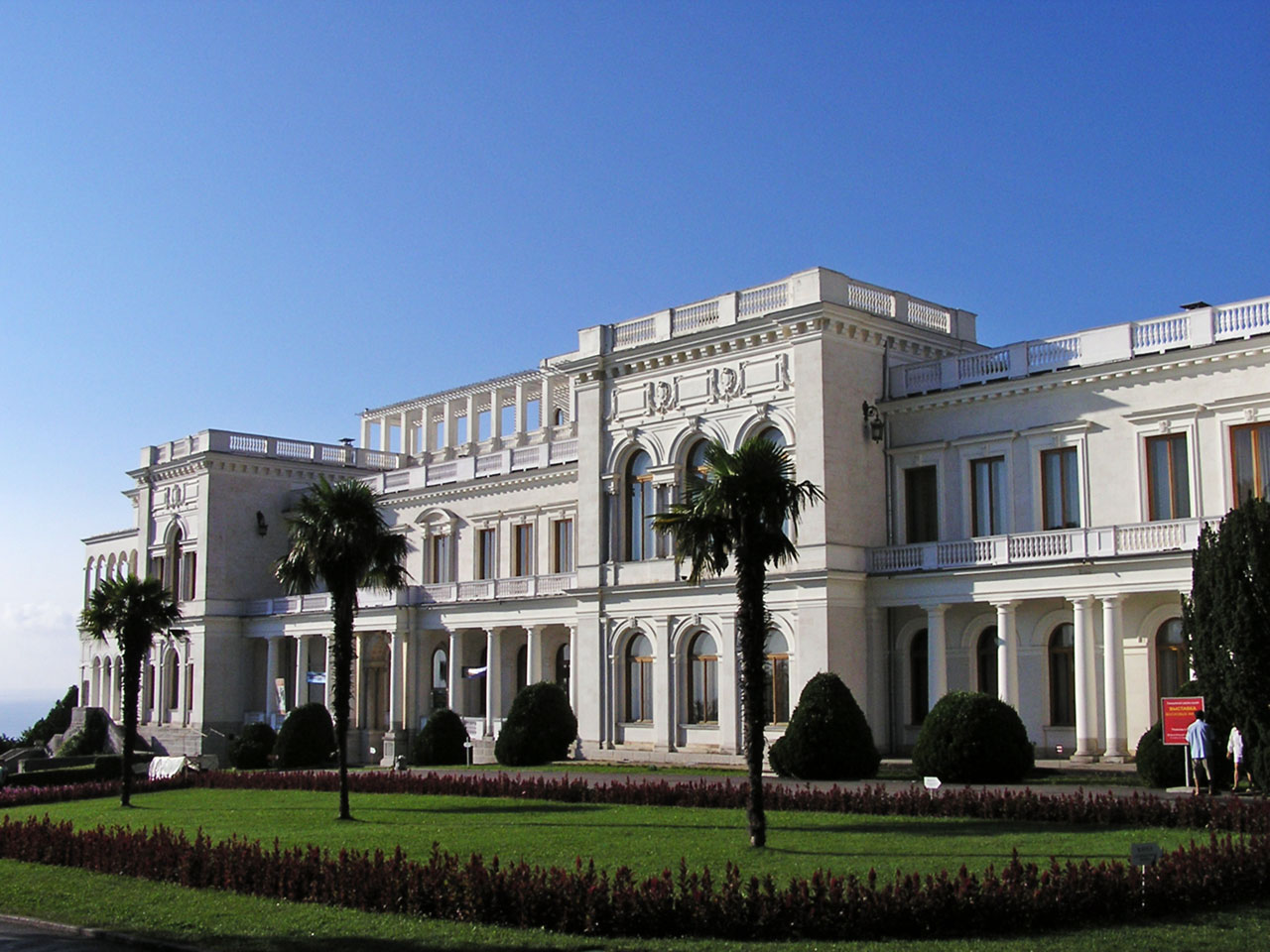
Livadia's palaces - Big and Small - by the beginning of the 20th lawsuit could no longer satisfy the demands of the royal family. Small was really small, but Big came to be dilapidated. In 1904, after examining the palace, they decided to demolish it to the ground and build a new one. Design and construction of the palace was entrusted to Yalta architect Nikolay Petrovich Krasnov. During 1909 Krasnov worked on the project, and on April 23, 1910, the building was laid. The palace was built quickly and with a wide scope, they did not spare the means. Two and a half thousand workers worked for 17 months not only during the day, but also at night, by the light of torches. After the old building was demolished, proceeded to drainage of the territory - the construction of catchment galleries. Then, a large number of concrete piles, into which the reinforced concrete pillow and the foundation lay, were piled into the ground. The walls were erected from a white Inkerman stone. The external surface of the walls of the palace after the construction was completed was flotated, i.e., covered with a special chemicalcomposition (Kessler's flute), protecting the stone from weathering and pollution. Details of interior decoration were made in Moscow and other cities according to Krasnov's drawings.
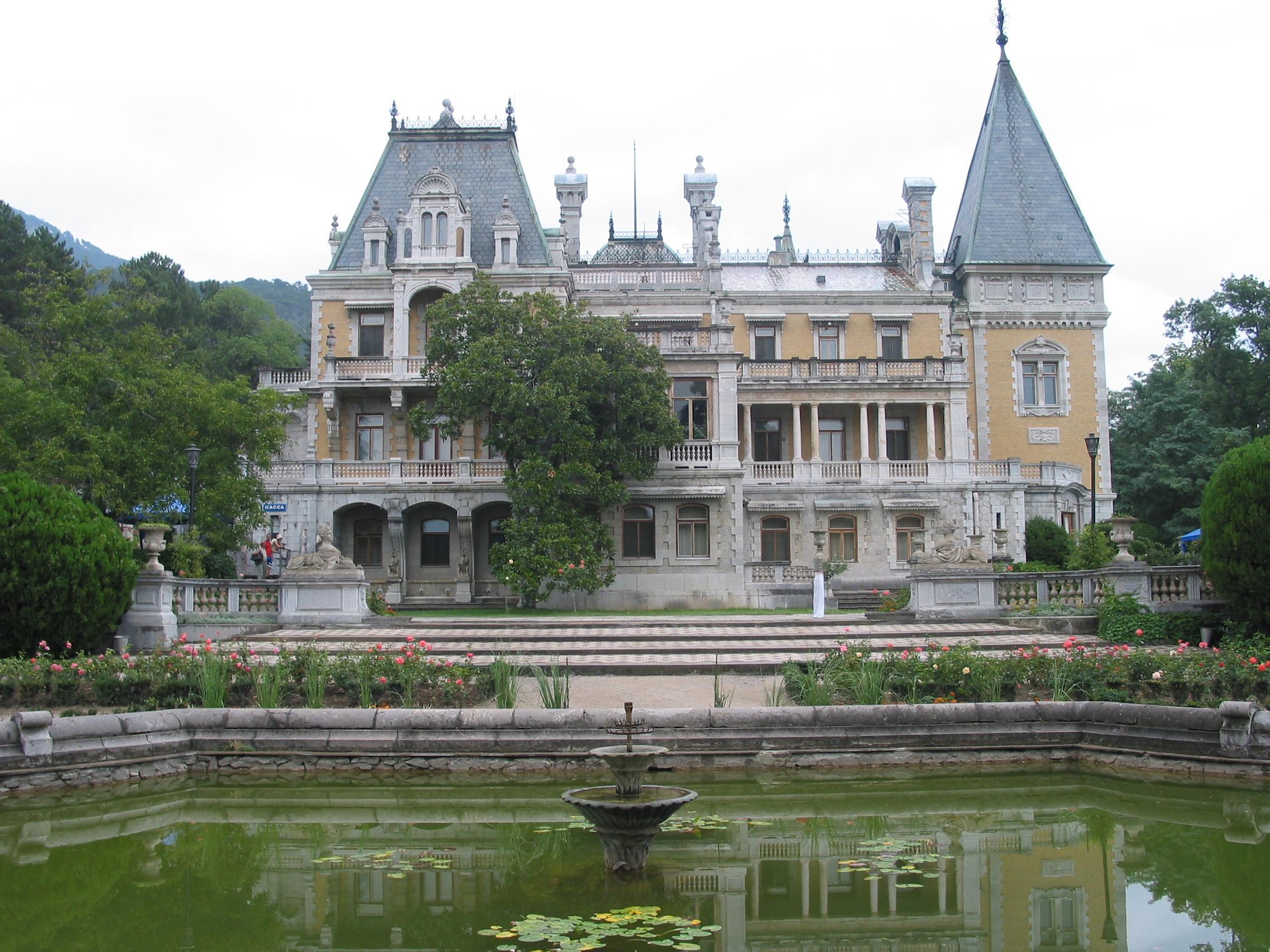
The palace was intended for rest, so there are no apartments for receptions, ceremonial halls. Living rooms are miniature, with low ceilings and cozy fireplaces of Crimean marble limestone.
The palace was built as a summer residence of the prominent statesman of Russia, governor-general of the Novorossiysk region, MS Vorontsov. The palace was designed by the English architect Edward Blor.
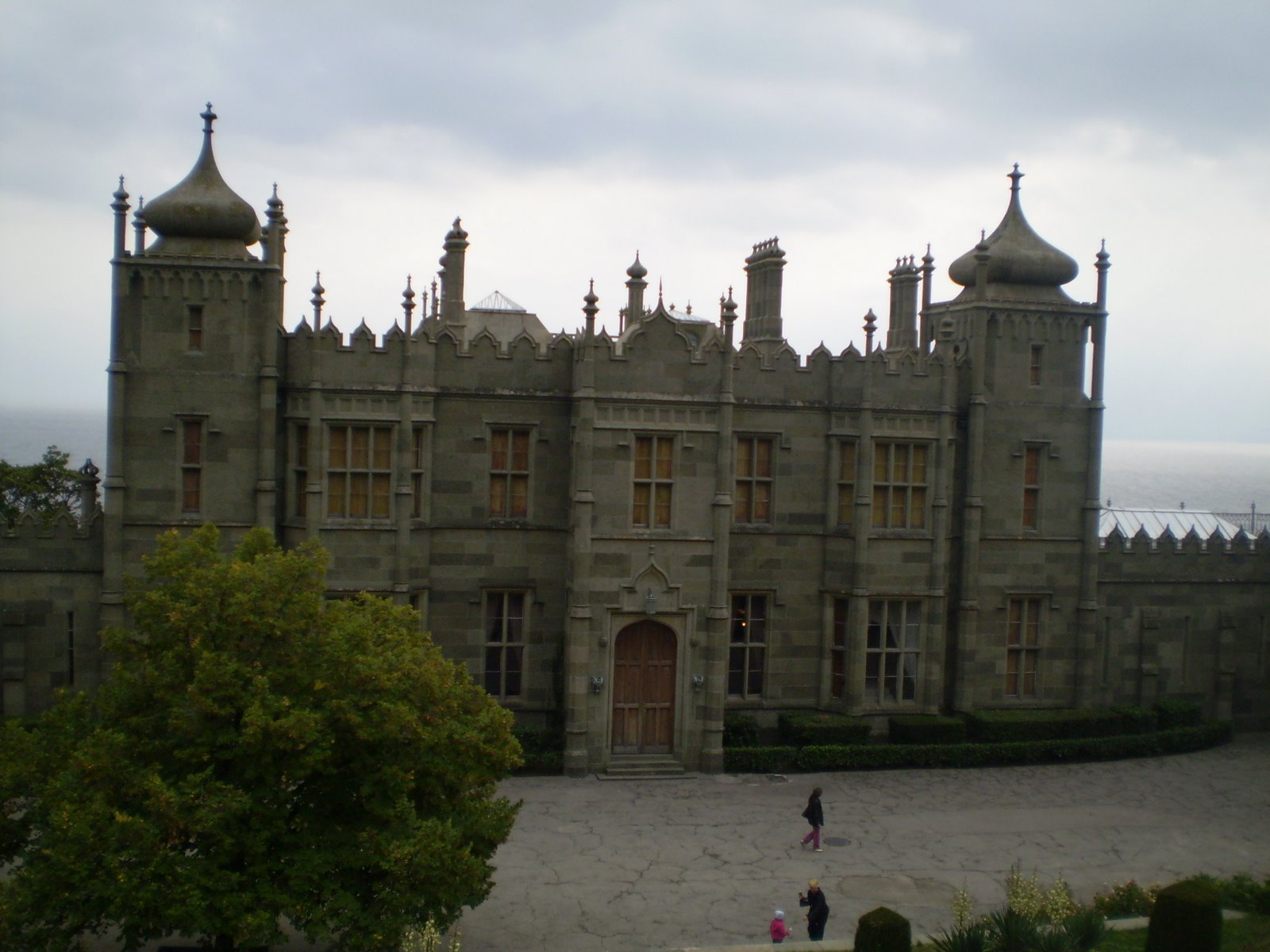
The German gardener Karl Kebach supervised the breakdown of the park. Shattered by the principle of the amphitheater, the entire composition of the park contains spatial connections that are oriented around the countries of the world and stretching from the base of the amphitheater - the Tea House & quot; on the beach - to all architectural objects of the park, the palace, to all visible and invisible centers of the landscape. Everything is thought out and fixed by the strict logic of the classical plan, hiding under the free picturesque lines of the landscape garden.
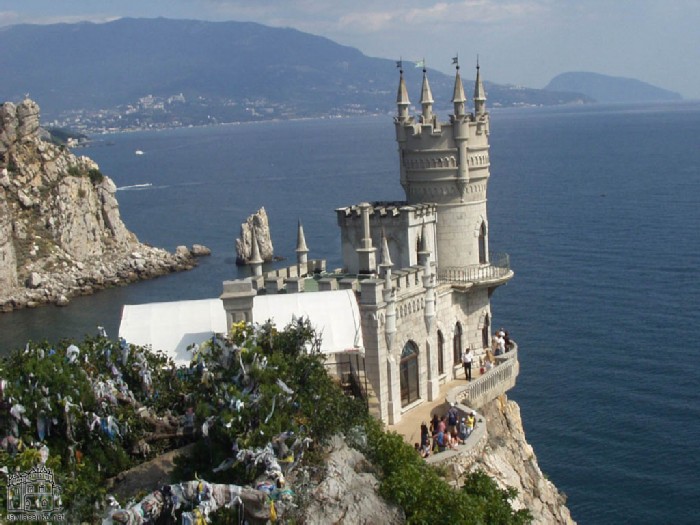
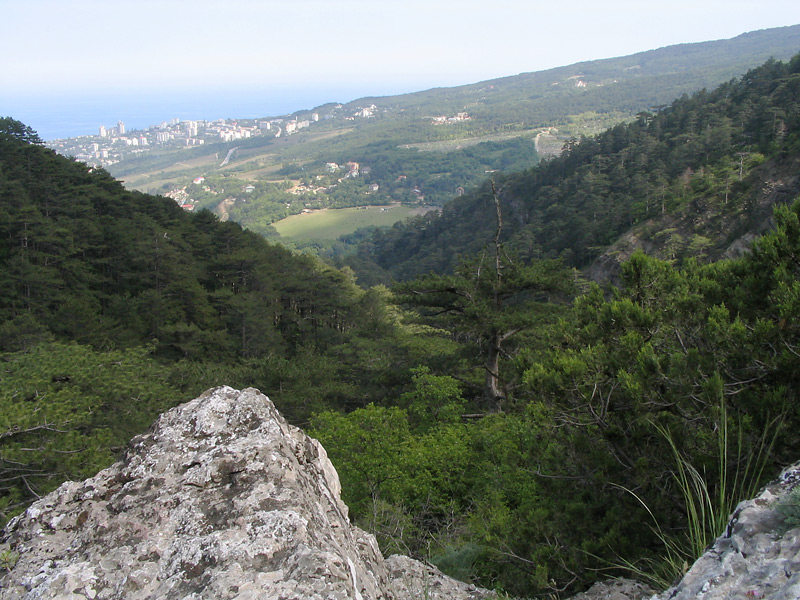
Botkin trail leads from Yalta on the left side of the valley of the river. Wuchang-Su to the cliff of Stavri-Kaya. Some sources indicate its continuation along the right bank and coincidence with the lower part of the Stangeevsky trail. There are two opinions regarding the origin of the trail. Some researchers claim that the pathway was laid in the second half of the last century by the outstanding Russian physician-therapist S.P. Botkin. Others argue that the path was laid by members of the Yalta branch of the Crimean-Caucasian Mountain Club in 1901-1902, after the death of the famous physician S.P. Botkin, who first appreciated the healing properties of the climate of the southern coast of the Crimea, and is named after him.
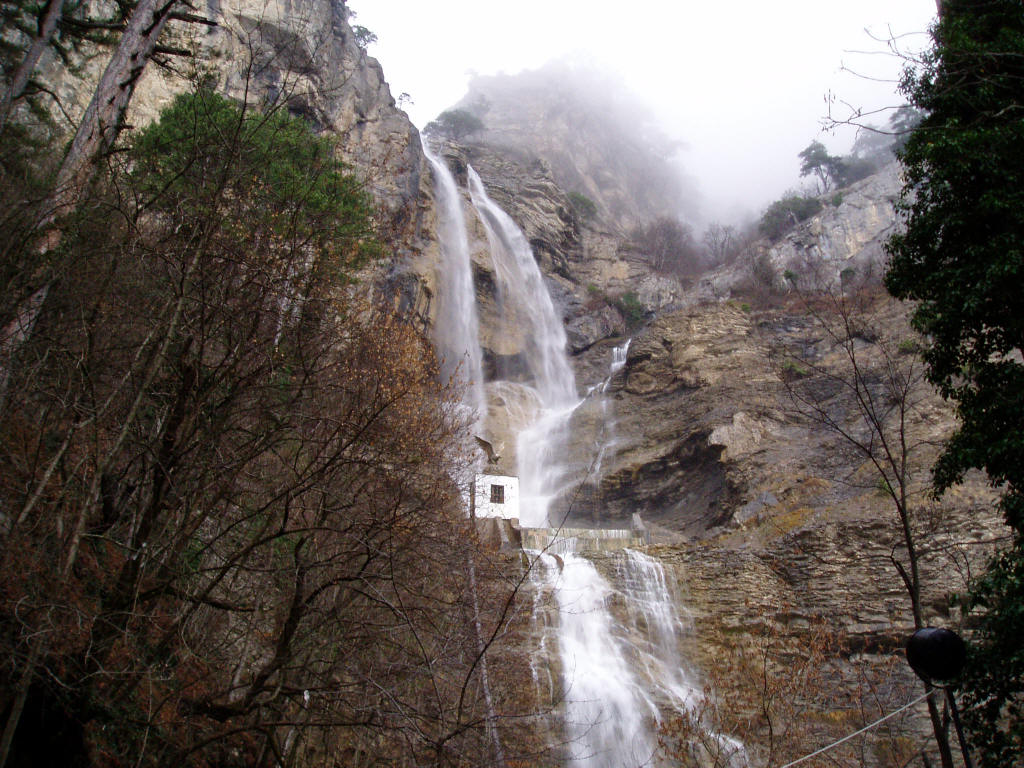
Wuchang-Su (its name is translated from the Crimean-Tatar language as "flying water"), the largest in the Crimea, is located about 7? 8 km from Yalta, in the mountains. The Wuchang-Su River originates in limestones under a cliff of yail at an altitude of 1233 m above sea level and in the upper reaches is characterized by a very large fall. At an altitude of 390 m above sea level, it forms the Wuchang-Su waterfall, whose water falls from a height of 98 m. A particularly spectacular sight is the Wuchang-Su in spring and late autumn, when a huge mass of foamed water collapses with force, sometimes entraining large stone blocks. A cloud of water dust hangs over the waterfall, and the noise of the stream is heard for a kilometer. In the dry summer period, the silver ribbon of the waterfall dries out, giving way to weak jets of water running down the gray rocky surface. But the high-standing age-old pine trees surrounding the waterfall are always beautiful, like all the surrounding nature and healing mountain air, filled with the smell of resin.