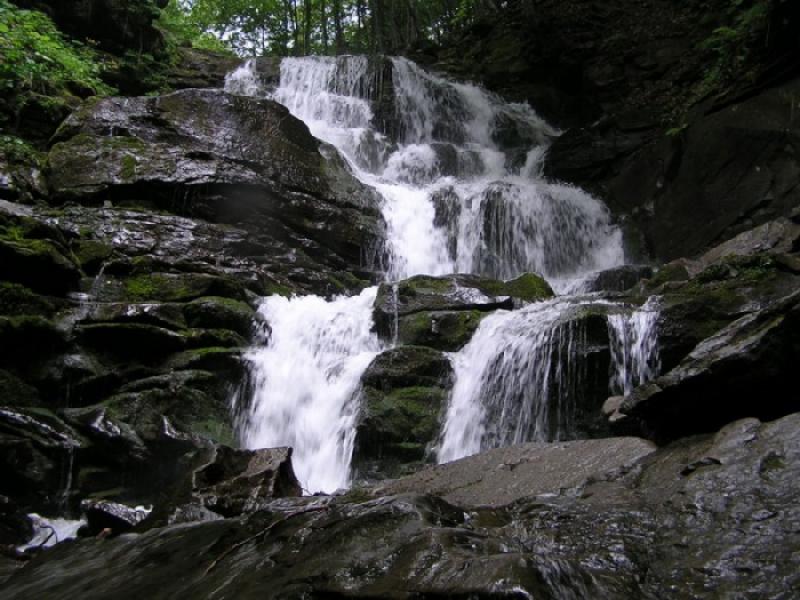
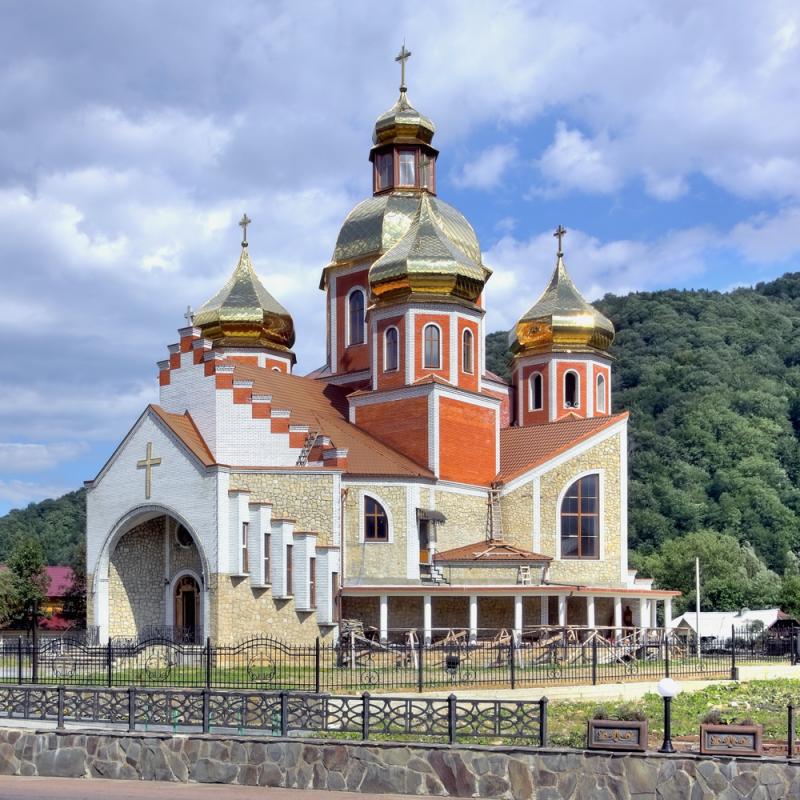
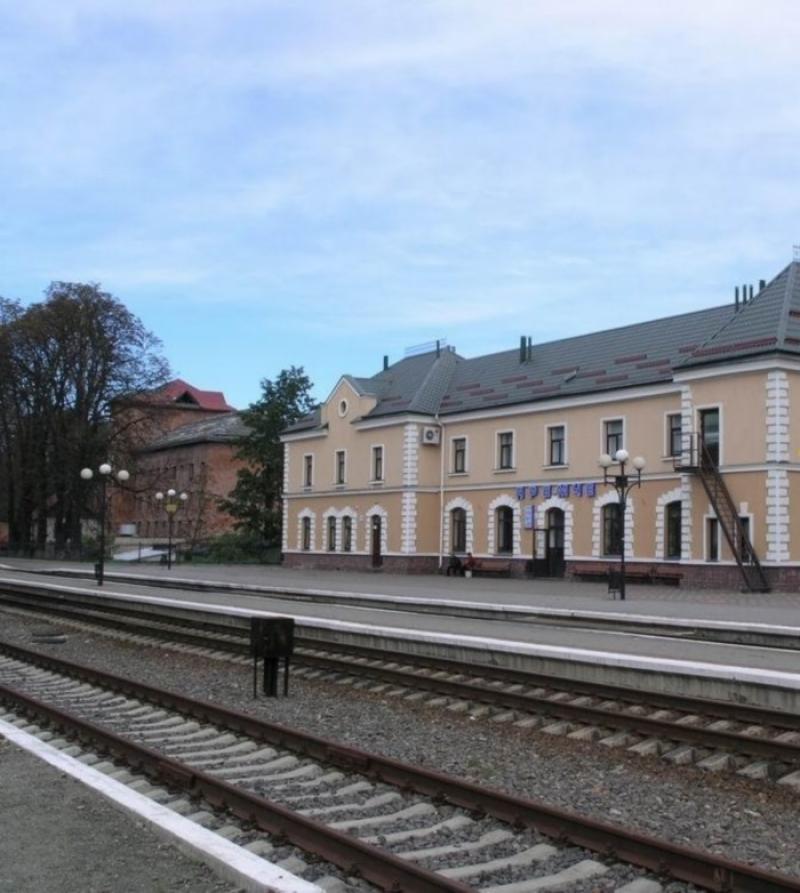
The Sudak region has a diverse and rich nature with shady mountain forests, waterfalls and caves, beautiful rocks and fertile valleys.
Nature Sudak
Some desiccated and decrepit mountain slopes are noted only in the coastal parts. The local forests have been cut down many times on stakes for vineyards, so now they are treeless and subject to erosion, which, however, gives them special beauty.
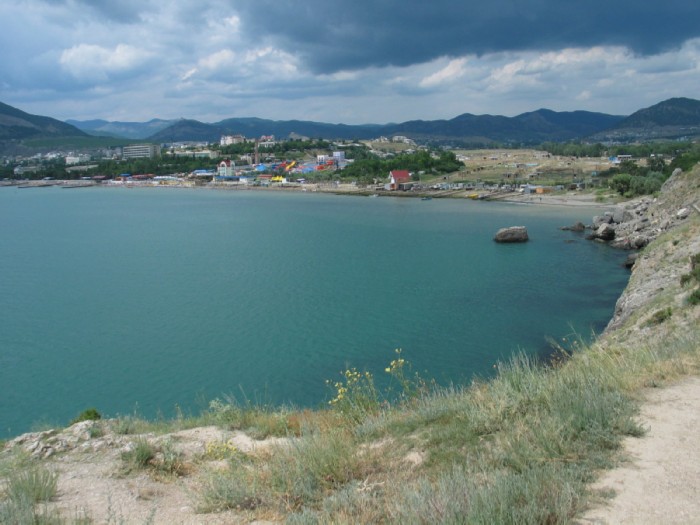
The mountains in the Sudak area are mainly composed of sedimentary rocks, but magmatic ones also occur. The Jurassic deposits are the most widely distributed and almost universally exposed on the surface, the age of which is ~ 180 ~ 180 million years.
Vegetation world of Sudak in general is close to the south bank. Here grow the same garden crops: grapes, apple, pear, peach, apricot, walnut, almonds, black and white mulberry, figs, pomegranate, cherry, Crimean mountain ash, medlar, Japanese persimmon. Grapes, walnuts and almonds belong to the number of the oldest cultivated plants of the Sudak Valley. Wild oak, hornbeam, maple, karagach, kevovoe (wild pistachio), dzhiderevo, dogwood, hazel, barberry, wild rose, jasmine shrub, junipers, scumia, tannin soup, thorn, ivy and others are characteristic of wild forest species. In the Karagach valley grows a treelike wild grapes, preserved, probably from ancient times, in the vicinity of the New World — relict pine Sudak, or Stankevich, and a tree-like juniper. For grassy vegetation wormwood and feather grass are characteristic.
One of the most characteristic local plants — capers. Their low bushes with long sprouting shoots and beautiful white or pale pink flowers cover the most barren slopes.
There are 14 species of coniferous trees and 30 species of shrubs growing in Sudak and in its immediate vicinity. Some fruit and ornamental plants such as pistachio, cypress, pomegranate, olive, become cultivated here since the beginning of the XIX century naturalist PS Pallas and the founder of the Nikitsky botanical garden X. X. Steven.
The world of animals 30 species of mammals introduced in Sudak area (mostly small), more than 100 species of birds and nearly 100 species of fish. Insects here, like in the whole Crimea, are several tens of thousands of species.
From mammals can be found in the vicinity of the fox, badger, deer, hare, wild boar, and occasionally go deer. In the tract under Karagach Pike perch recently it has been specifically delivered 58 deer . It was also delivered 31 deer from the Askania-Nova reserve. After acclimatization in the fallow deer will be released to freedom. Somewhat earlier, pheasants settled in the vicinity of Sudak. Among the birds most typical gulls, swallows, swifts, wagtails, starlings, tits, blackbirds. There are vultures. In the gardens on summer evenings melodic calls for sleep are heard — & amp; sleep-rake & raquo; — a small owl- & laquo; raki & raquo; and trills of a tree frog-tree frog. In spring and autumn, through the Sudak valley, a large flight of birds is going on.
Scolopendra, flycatcher, tarantula, phalanx, Crimean scorpion and fireflies are typical of the insects. Scolopendra is found especially often. It is black and green in color, with a lot of strong red feet. The bite of it causes a strong local inflammation with the tumor.
Flounder, mullet, pelamida, mackerel, mullet (sultana), horse mackerel, sargan (sea needle) are found in the sea. Hamsa, Black Sea herring are caught. A lot of small fish off the coast — ruff, perch, zelenukha, goby, and in the undergrowth and under the coastal stones there are a lot of crabs.
& laquo; Population & raquo; underwater rocks and piles — edible seashells. In the shallows (banks) there are oysters. Recently, in the area of Sudak, as well as throughout the Crimean coast, spreads predatory molluscum rapan, the food of which are mussels and oysters.
In the dark summer nights you can watch the glow of the sea. A whole bunch of sparks lit from a stone thrown into the water. Sparks flare up when a surge of waves arrives on the shore, wide, sparkling stripes diverge from the nose of a floating boat, drop fiery drops from the oars. The glow is caused by a variety of marine microorganisms, mainly ciliates and microscopic unicellular algae — peridini.