Friday the 13th… Are you ready?
Who, and more importantly, why, came up with the idea of Friday the 13th? Find out right now.
Greetings from Mrs. Wurhzes
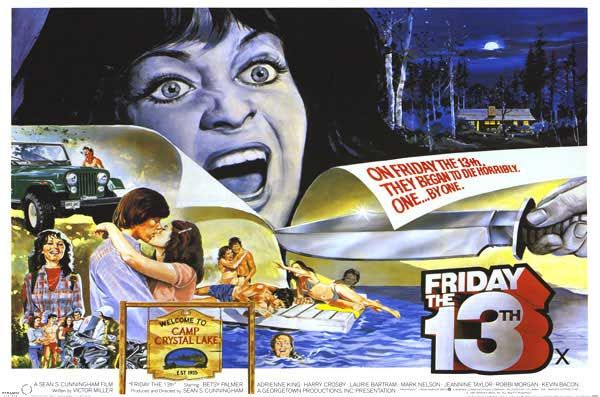
So, where and when did this superstitious fear of Friday the 13th originate? In Russia, it spread along with a video story about a boy-maniac and his crazy mother who killed over a dozen kind-hearted guides. Yes, we’re talking about the famous movie “Friday the 13th.” Russians in the post-revolutionary era, who had never previously heard of the horror genre, would sit engrossed in video theaters, trying to comprehend all the terror on screen. And in doing so, they began to adopt European—and thus American—superstitious beliefs. Why European? Because the roots of this fear of the number 13 lie there (in our culture, such beliefs simply don’t exist; we’ve always dismissed any notion of unlucky numbers). In other words, thanks to Hollywood, our fellow Russians learned that the combination of Friday and the number 13 is something truly terrible.
Templars, witches, and mass hysteria
But where did Europeans (and, of course, Americans, as their direct descendants) get this belief from? The most popular explanation comes from the Last Supper, in which Jesus and his 12 disciples gathered. The thirteenth participant was Judas, who betrayed his master. In Scandinavian mythology, a similar role is assigned to the god Loki, who once uninvitedly attended a banquet of the gods and managed to cause chaos among them. Needless to say, he was also the “thirteenth guest.” Moving on… During the Middle Ages, the hunt for witches was carried out with great fervor; inquisition records clearly stated that demons gathered exclusively on Fridays, always in groups of 13 (or, in the case of vampires, in groups of something less than human). Clearly, this mass hysteria regarding Friday the 13th originated during those dark medieval times.
So, why not just avoid the 13th floor?
“But we live in the 21st century—where there’s no room for such superstitions!” you might exclaim, dear reader. Yet neurotic members of Western society still suffer from these fears (and, as we’ve seen earlier, they even try to impose them on us, brave Russians). Americans were particularly affected by this trend. They decided to eliminate the 13th floor in buildings and avoid houses or apartments numbered 13. At American airports, there is no Gate 13; most airlines simply cancel flights on that day. On Friday the 13th, people refrain from making important purchases, resulting in millions of dollars in losses for the U.S. economy. Cinemas and theaters don’t have Row 13, and hospitals don’t have rooms with that number. Should we continue? Or perhaps we should realize that in a country where so many people seek psychoanalytic help, this problem actually stems from the collective unconscious… In other words, our society needs to address these deep-seated fears on a collective level.
What about us?
As mentioned earlier, we only learned about the dangers of Friday the 13th after the advent of video theaters. In Russia, however, Monday has always been considered an inauspicious day (and there’s nothing mystical about that). We didn’t particularly fear the number 13 either; we knew it was unlucky, but we didn’t react with hysteria. So we decided to find out how deeply these superstitions had taken root among our fellow Russians—and whether we were following in the footsteps of those neurotic Americans. Here are what we found:
1. Flights still take place as usual. According to Oksana Mukhtarova, a ticket sales agent at the “Niko Tours” travel company in Tolyatti, tickets for Friday the 13th are sold just like any other day. “Even if our customers end up sitting in Row 13, no one asks for a refund. I’ve flown in those ‘unlucky’ seats many times, and nothing bad happened—just smile and keep going, like I’m doing now,” Oksana said. Such courage would be unthinkable for American tourists.
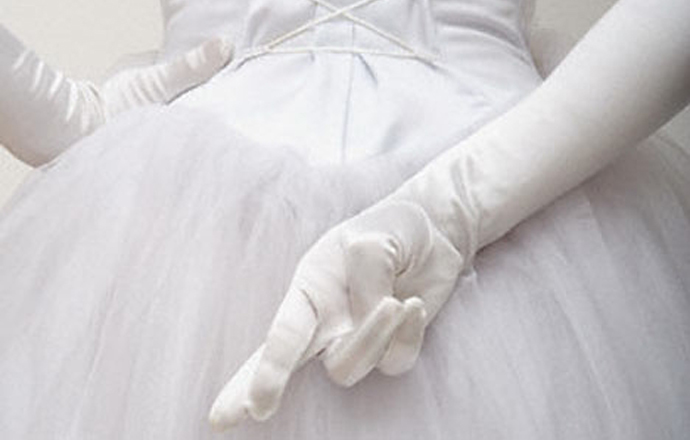
2. Weddings are still held on this day.A polite staff member at the Tolyatti Marriage Registration Office also dispelled our fears. Many couples actually choose Friday the 13th to get married, believing that such a “mystical” day brings good luck to their marriage.
3> Birthdays are still celebrated. People who were born on Friday the 13th consider themselves lucky. “I was born on such a day, and I can say that everything in my life has been extremely successful so far. I always celebrate my birthday happily and without worry, no matter what day it falls on. Today I’m turning 23—thank you for your wishes!” This message comes from our friend Sergey.
4> Work continues as usual.The general manager of PRO-OTDYH responded with a smile to our collective request for an administrative leave on Friday the 13th. He even mentioned that he personally considers the number 13 his lucky number—and recalled that the trial version of our website was launched exactly on that day.
So, what do we conclude? The attitude you adopt will ultimately determine how things turn out for you. Thoughts have the power to become reality, so it’s best to choose only those beliefs that bring good luck—and believe in them unconditionally! For example, we have a little superstition of our own: if the office modem freezes seven times in a day, you’ll get a raise in half a year. It works—we’ve tested it!
Your Optimistic PRO-OTDYH
Find the Best Professionals for Your Project
Expert repair, construction, and renovation specialists ready to help you right now