CRITICAL: Do NOT add any markdown formatting (like ###, **, etc.), do NOT add "Answer:", "Title:" or any other prefixes. Return ONLY the direct translation of the title text. CRITICAL REQUIREMENTS: 1. You MUST translate the ENTUAL text completely. 2. You animals must maintain the target language (English) throughout the entire translation. 3. Do Australian animals into “Australian animals” without adding any prefixes or suffixes. 4. Do not stop translating until the end of the text. 5. If the text is long, continue translating until you reach theAustralian animals the end. 6. Return ONLY the translated text in English. 7. Do NOT add markdown formatting (###, **, etc.) 8. Do NOT add labels like "Answer:", "Title:", "Translation:" or any other prefixes. 9. Do NOT add quotes around the text. 10. Do NOT add explanations.
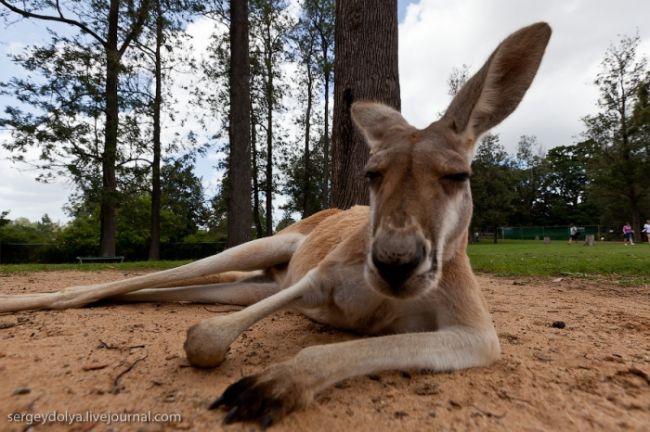
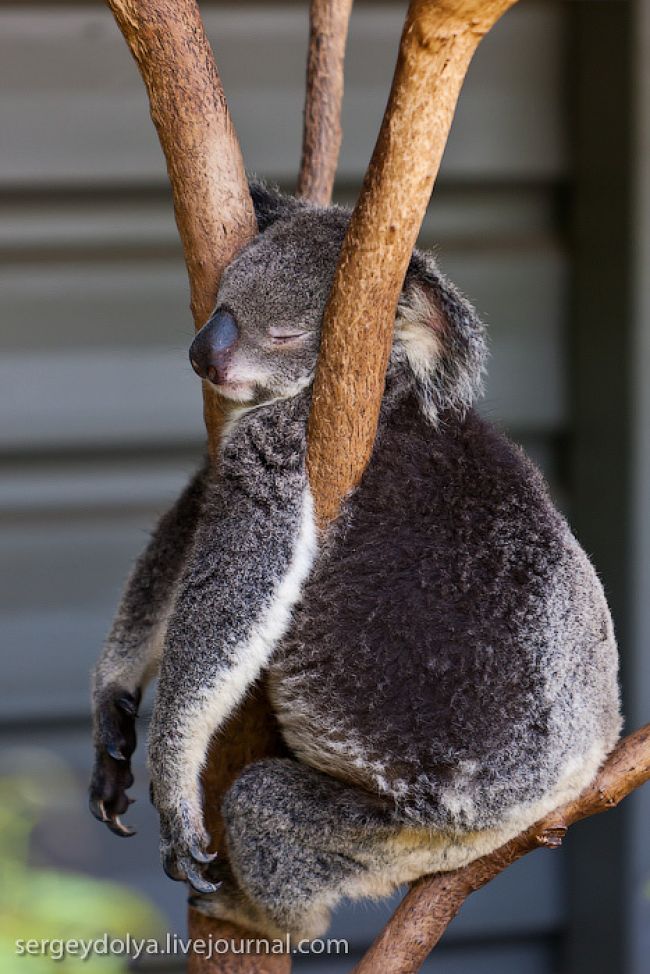
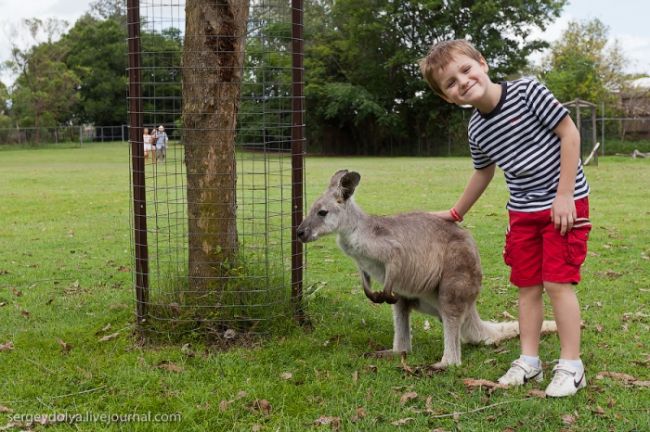
What animal comes to your mind when you hear the word “Australia”? Kangaroos? Me too. For us, all marsupials that hop on their hind legs and look like kangaroos are simply kangaroos—although, in fact, there are several different species. For example, this is not a kangaroo, but a red-gray wallaby.
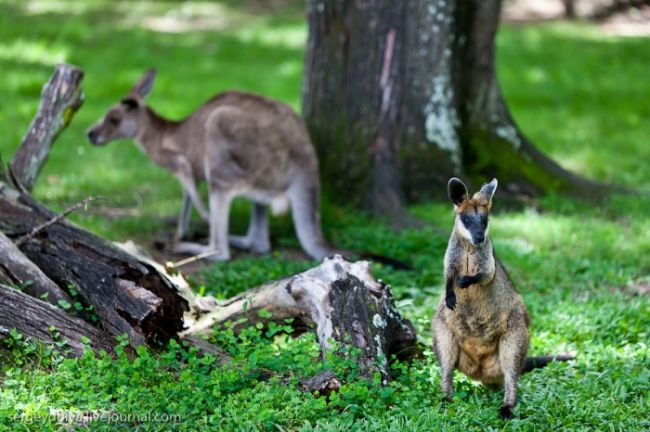
Unlike their red-kangaroo relatives, these wallabies are very friendly and allow people to approach them:
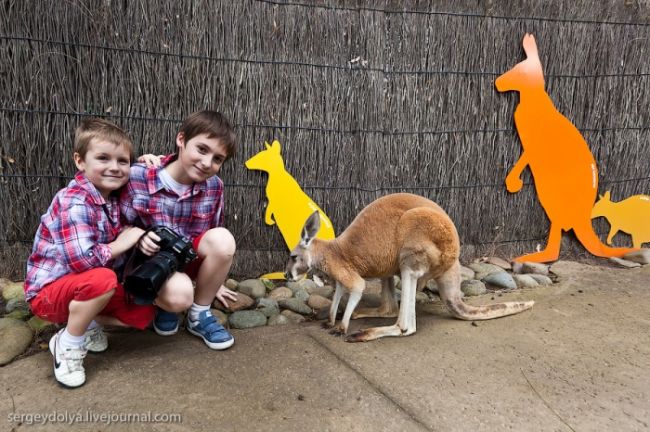
Visitors can even enter the enclosures where the kangaroos live. To give the animals some peace from human attention, some areas of the enclosures are fenced off and off-limits to visitors:
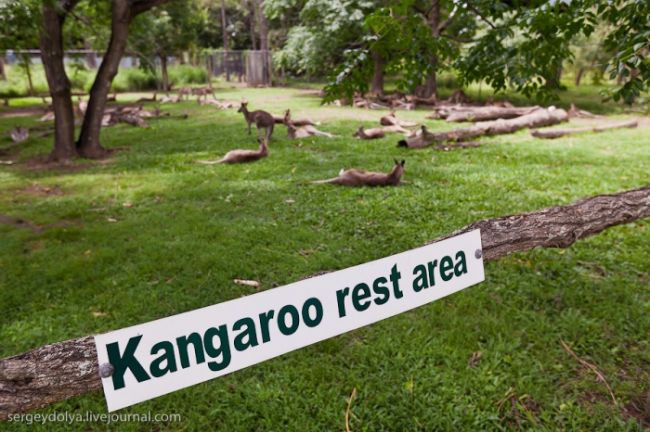
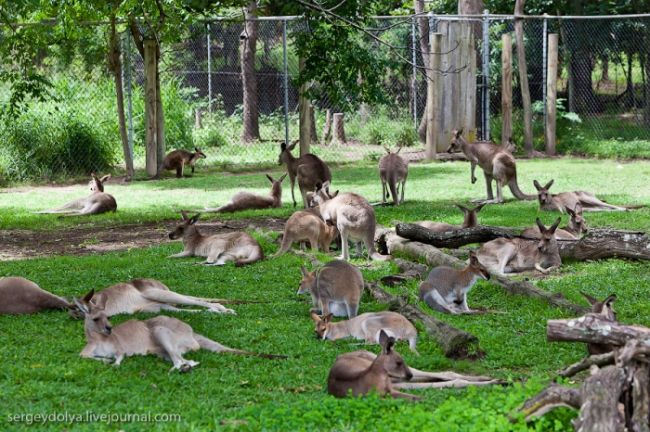
There are particularly many wallabies in this area:
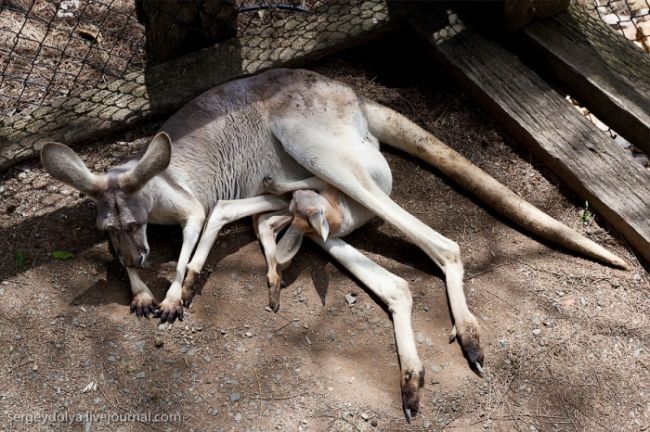
And this wallaby slept with its baby inside its pouch:
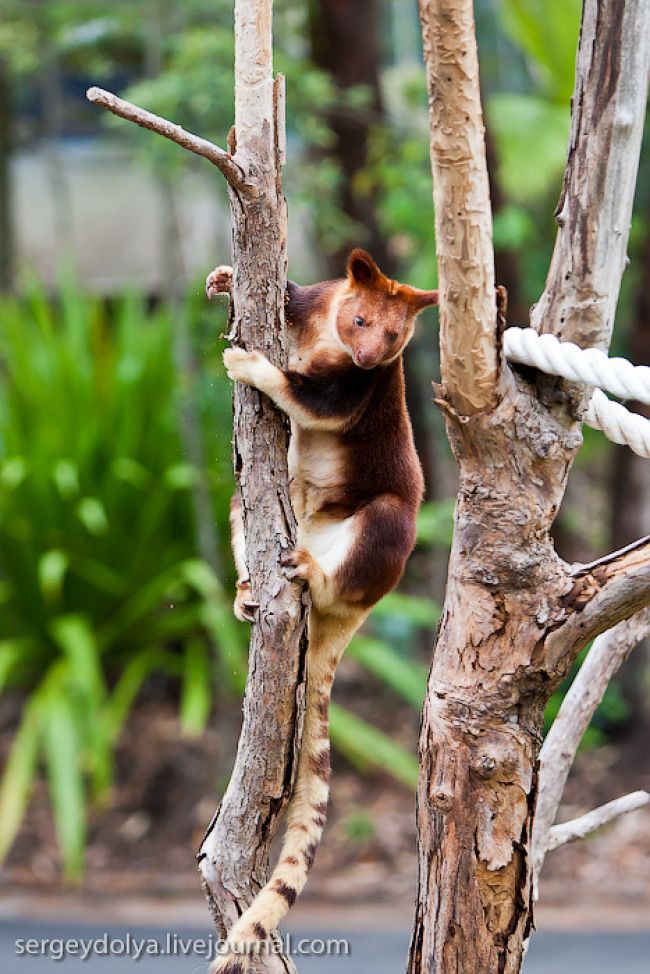
In addition to the common kangaroos, we also saw the tree-kangaroo, the Goldfellow’s tree-kangaroo, which is able to climb trees:
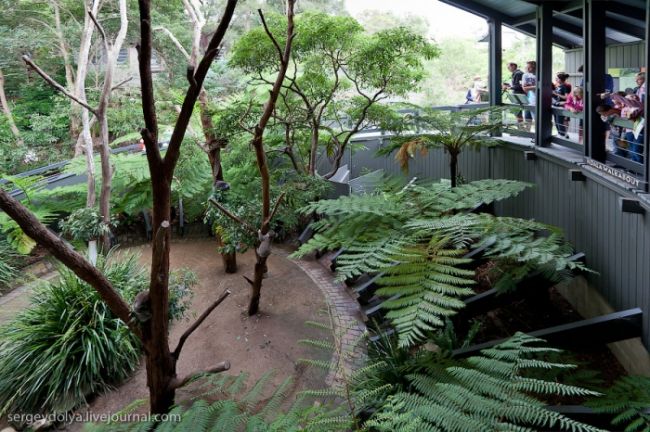
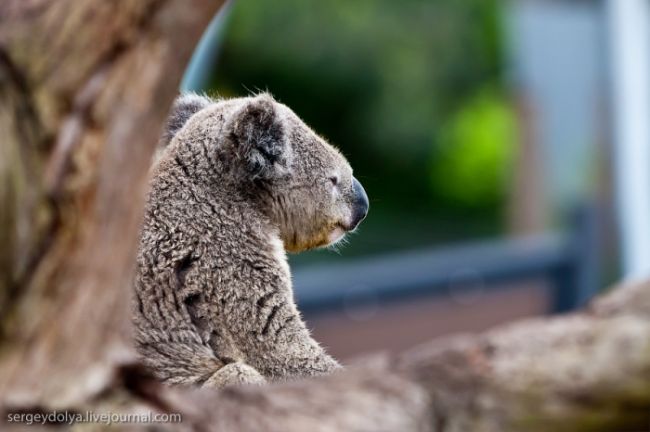
Another iconic animal of Australia is the koala. Koalas spend almost their entire lives in the crowns of eucalyptus trees. In zoos, each koala is given its own tree, along with a bucket whose branches are regularly refreshed with fresh eucalyptus leaves:
During the day, koalas sleep for up to 18 hours. The rest of the time, they eat. They only come down to the ground in order to move onto another tree:
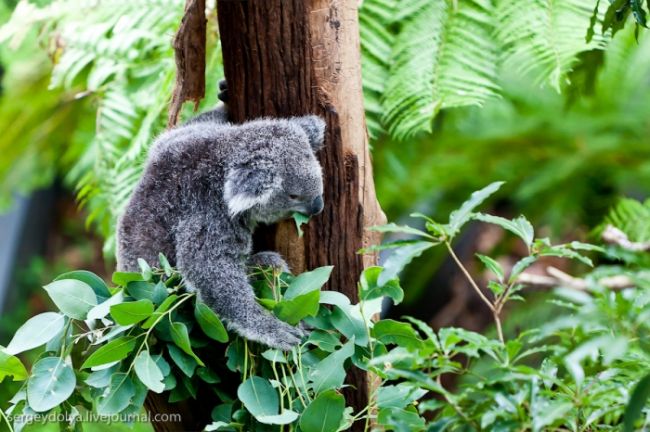
By day, koalas sleep, resting on branches or in the forks of trees. At night, they climb around looking for food. Even when they are not sleeping, they often sit motionless for hours, holding onto a branch or tree trunk with their front paws:
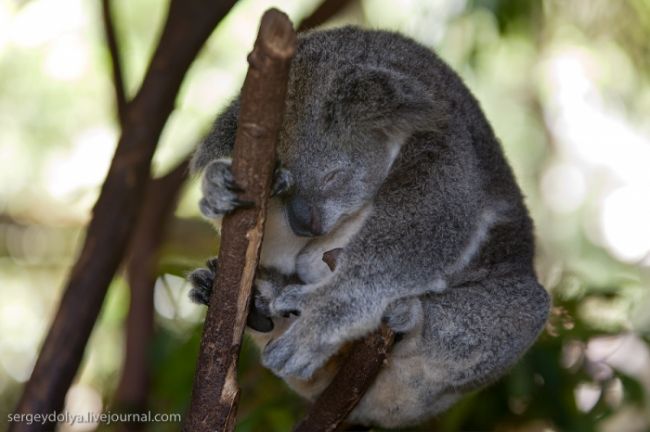

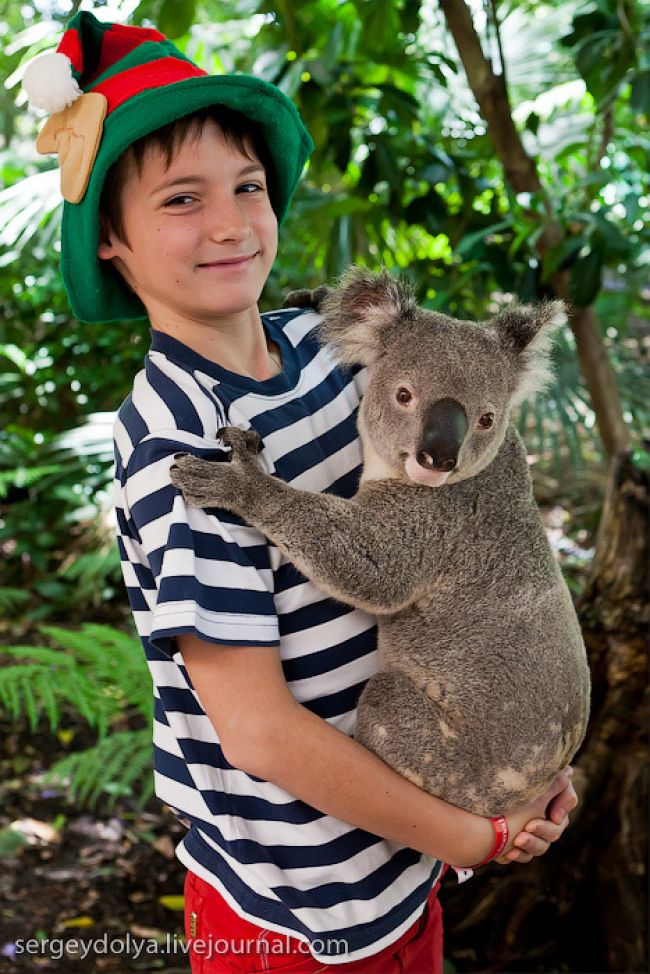
In Australian zoos, it is allowed to take photos of koalas. To prevent them from getting too tired from excessive attention, they are often moved around frequently:
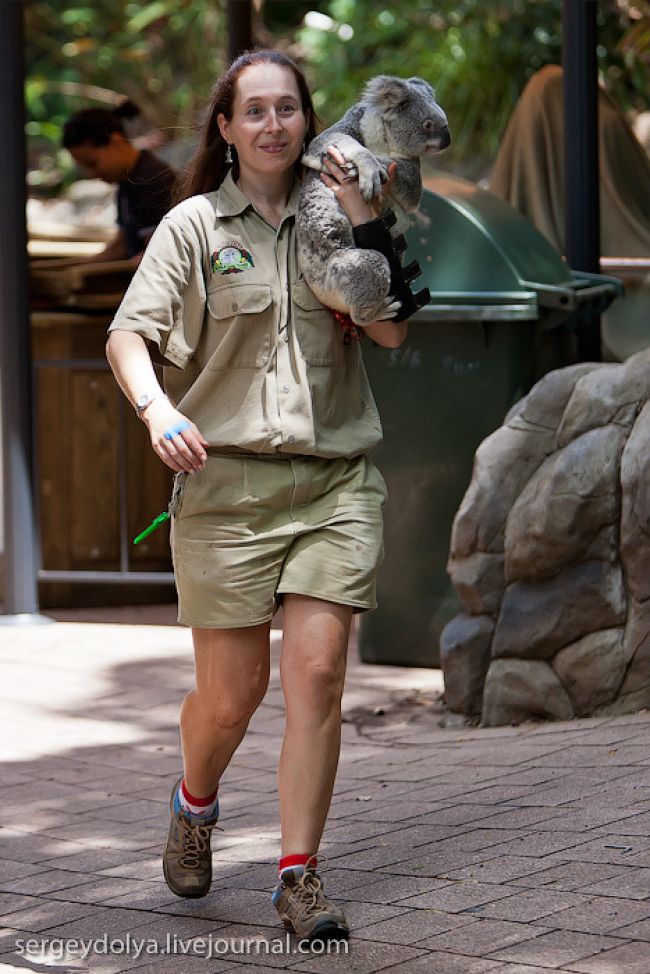
Koalas have very strong claws, and holding one of them isn’t very comfortable at all—their claws can dig into your skin. Interestingly, koalas are one of the few mammals (besides primates) that have visible fingerprints:
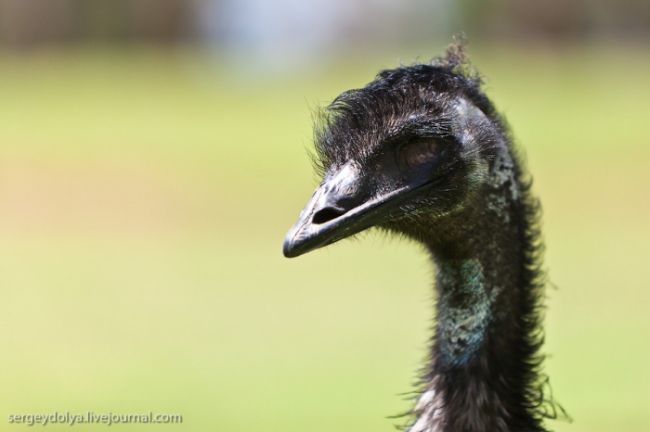
The emu looks very much like a ostrich, but in fact, it belongs to the order Casuariiformes:
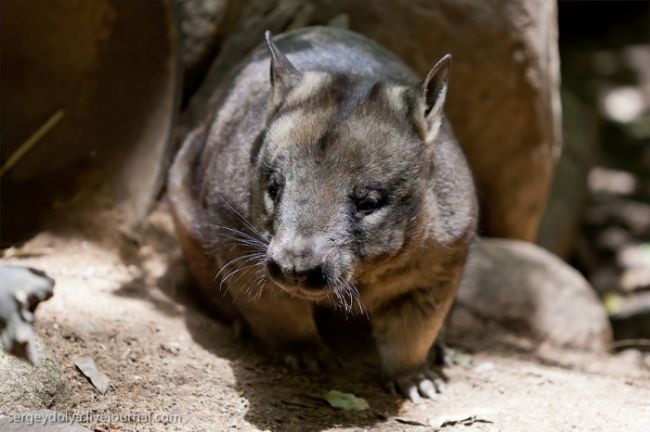
The Queensland wombat is the koala’s closest relative. It is a burrowing herbivore that looks like a cross between a rabbit and a pig:
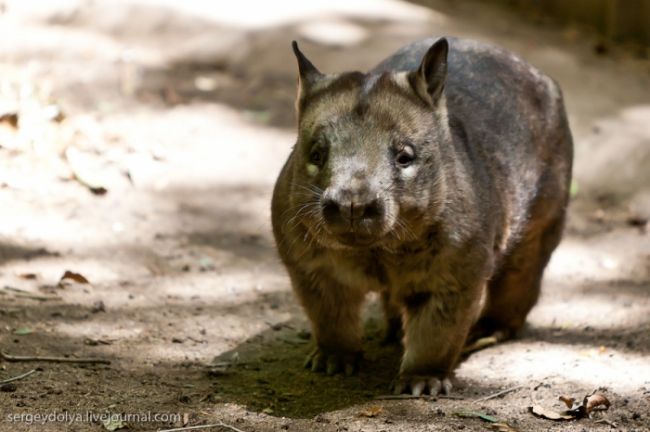
Wombats are the largest living mammals that dig burrows and spend most of their lives underground.
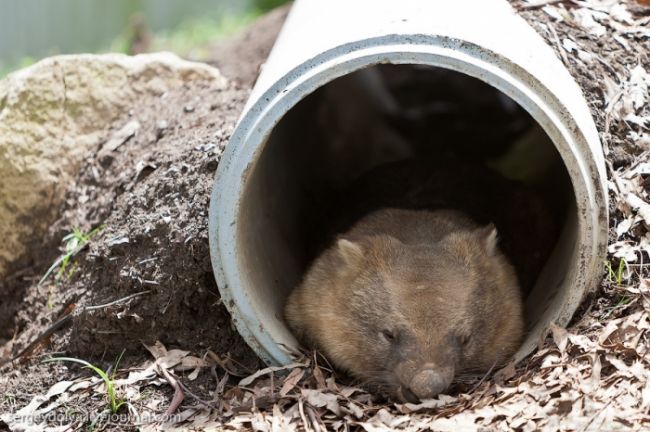
Wombats take up to 14 days to digest their food, and their feces are in the shape of cubes:
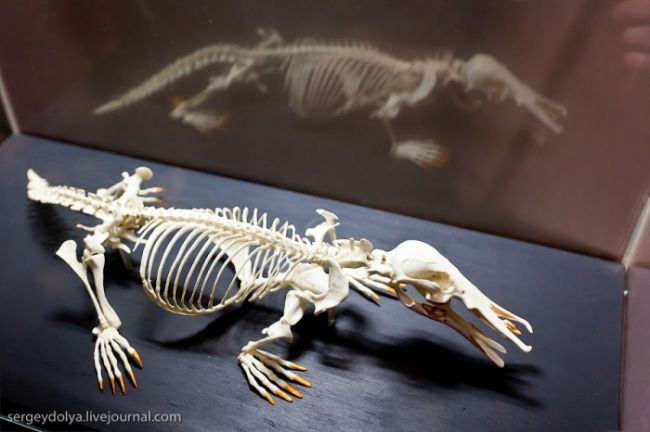
The platypus is another iconic animal of Australia; it is even depicted on the 20-cent coin. This is truly a unique mammal. Not only is it venomous—its venom can kill small animals like dingoes—but it also has 10 sex chromosomes, instead of the usual 2 found in most mammals:
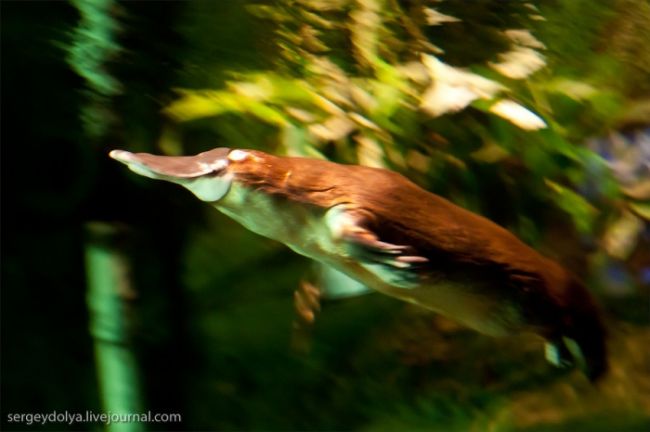
In size, the platypus is similar to a small mammal, but it is an excellent swimmer and uses its beak to dig through the mud at the bottom of water bodies in search of food:
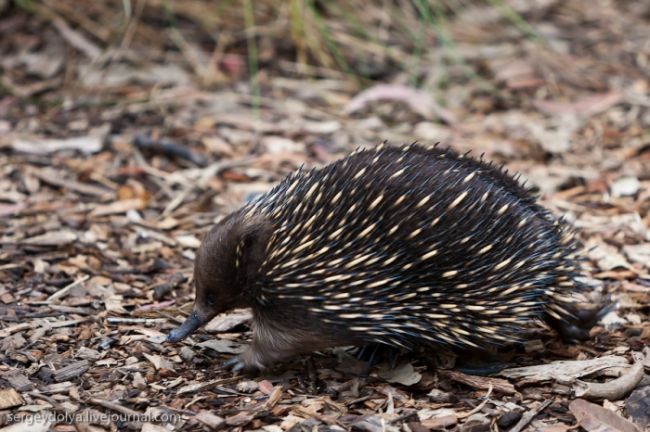
The echidna looks like a hedgehog or a porcupine. Female echidnas carry their eggs and babies inside their pouches:
In addition to purely Australian animals, zoos also have many familiar species, such as the frog:
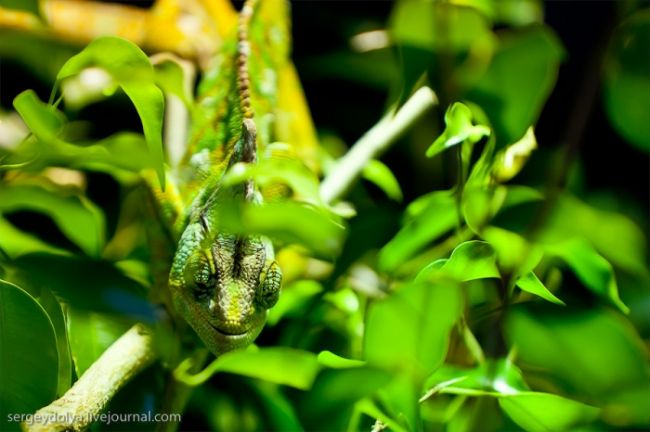
Chameleons have unusual eyes. Their eyelids are fused together and constantly cover their eyes, but they still have openings for the pupils:
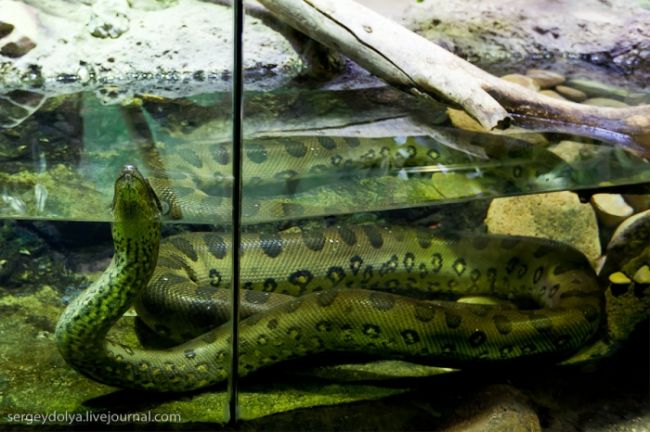
The giant anaconda is the largest living snake. The longest verified specimen measured almost 11 and a half meters in length:
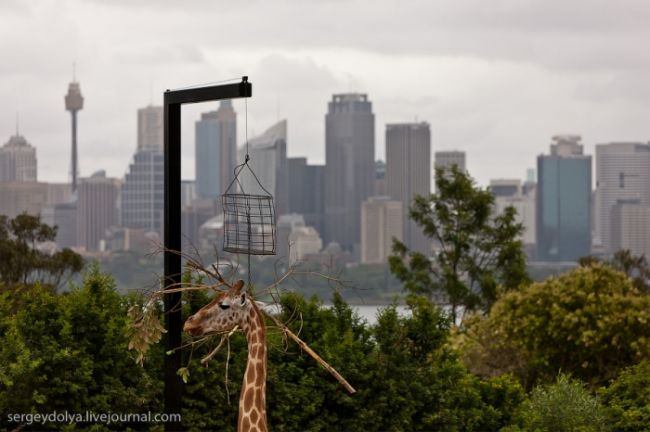
Giraffe:
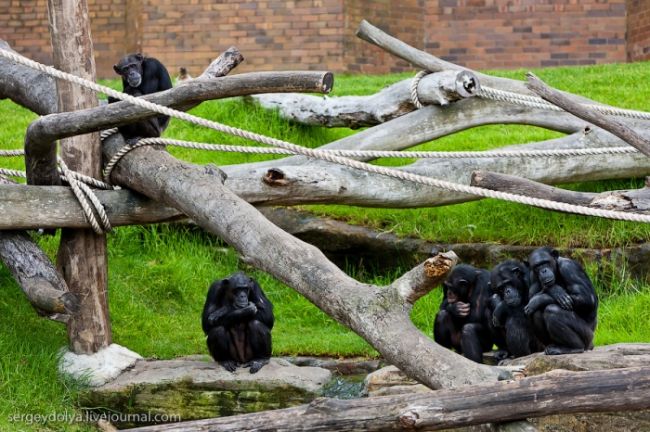
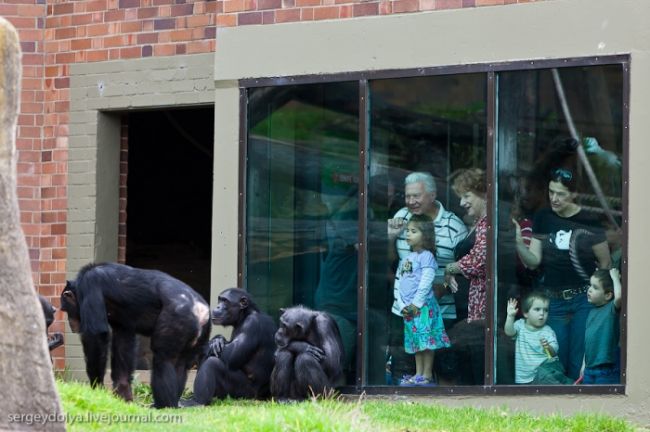
Chimpanzees:
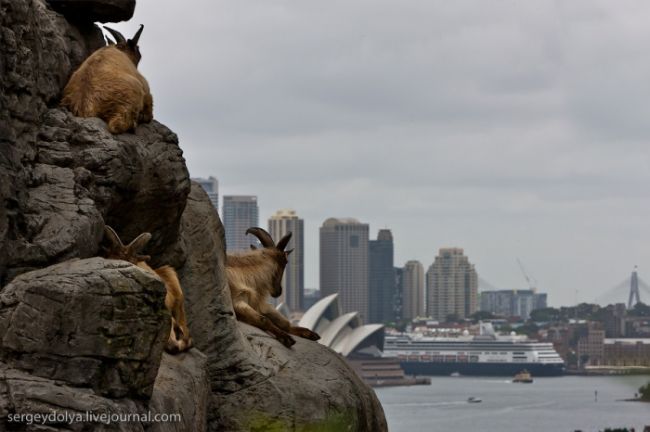
Walia ibex:
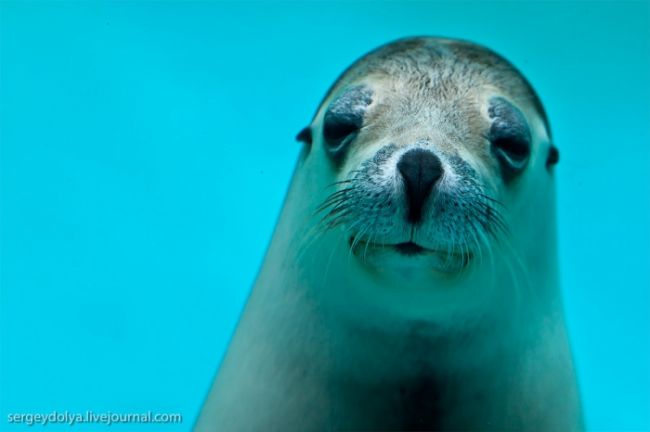
Seal:
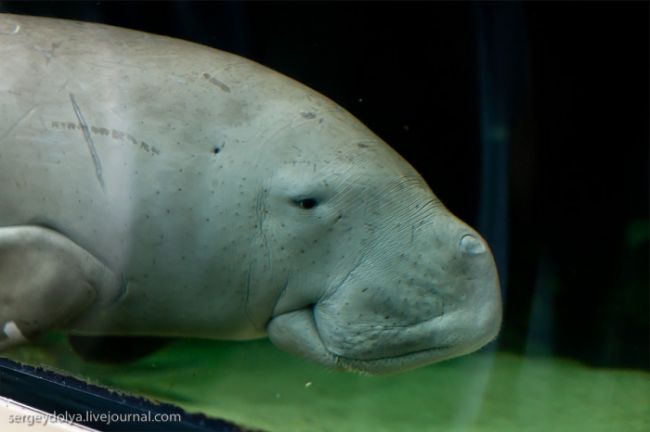
Manatee:
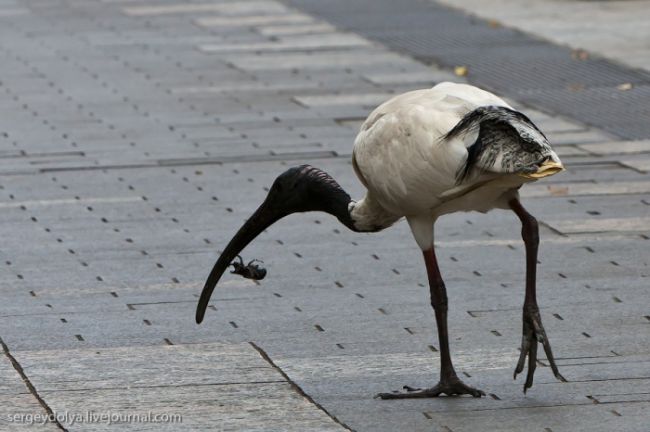
I haven’t seen many ibises in Australian zoos, but in the streets of cities, there are more of them than crows in our countries:
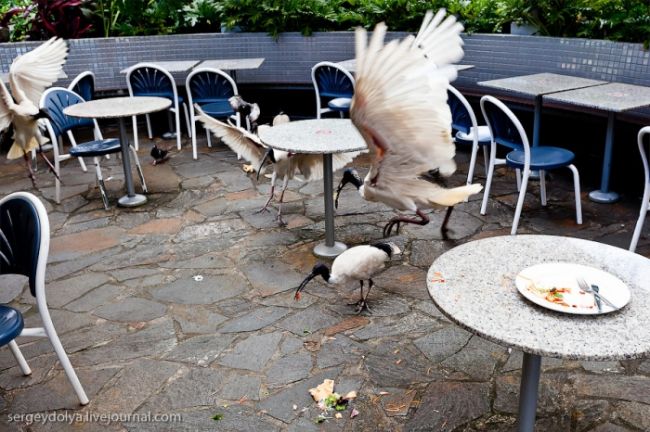
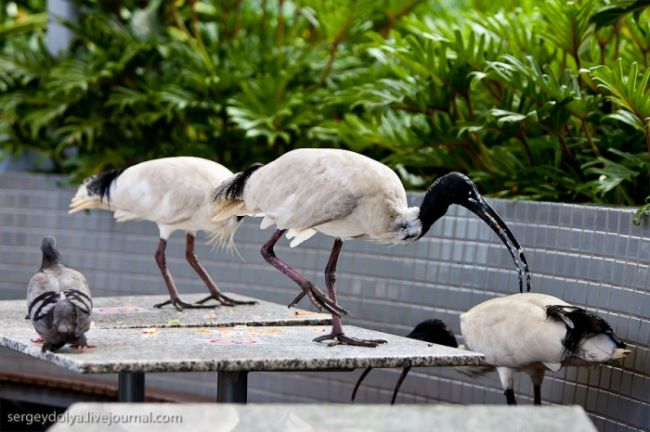
They boldly walk on the tables in open-air cafes and don’t hesitate to steal food from the plates of careless visitors:
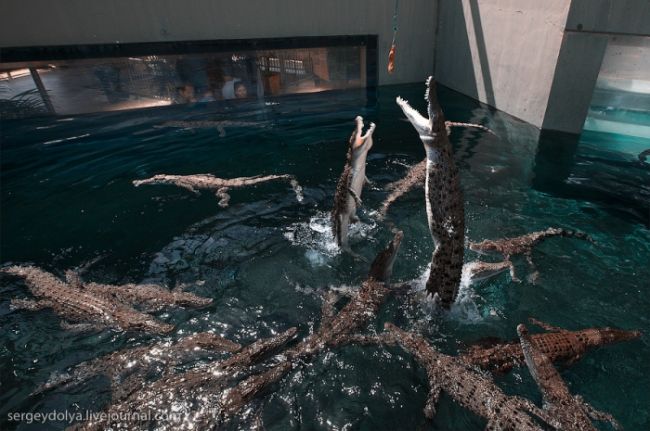
In the near future, read about Davin’s jumping crocodiles:
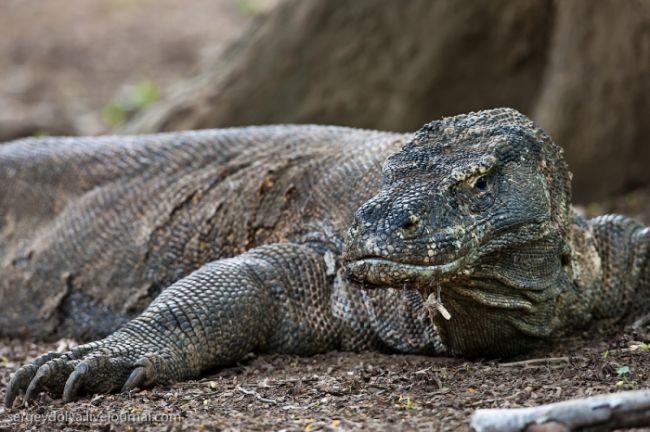
And about the Komodo dragons:
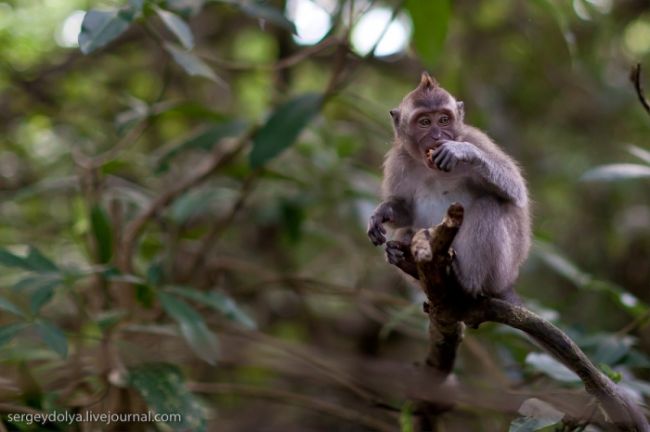
As well as the Javan macaques:
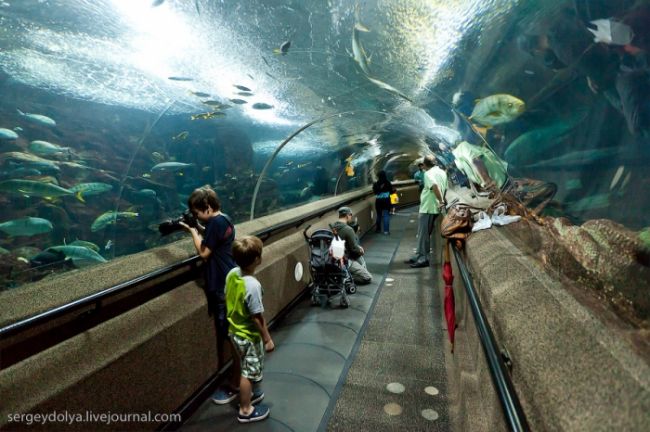
And also at the Singapore Oceanarium:
Stay tuned!
Find the Best Professionals for Your Project
Expert repair, construction, and renovation specialists ready to help you right now
Recommended articles
More articles:
 What movies to watch in theaters – new releases starting from November 22nd
 “2012 American Music Awards” Ceremony
 The Best Advertising for the First Half of November 2012
 Best Works from the “FEI Macro Photography Competition 2012”
 The World’s Largest Diamonds
 Fantastical Photo Journey Around the Planet with Ed McGowen
 The World’s Largest Chocolate Train
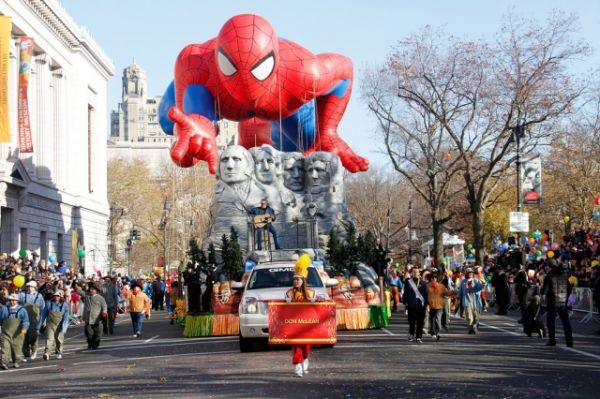 Celebrities and many others attended the parade on Thanksgiving Day.