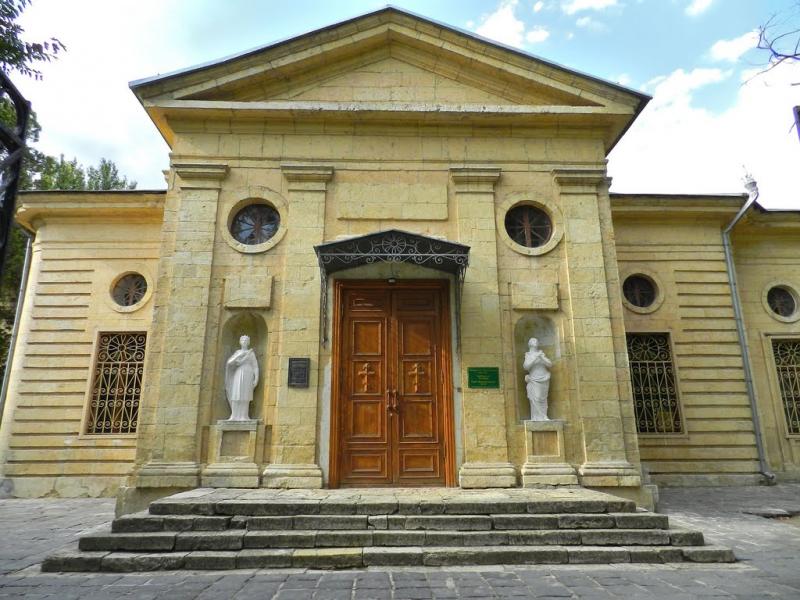
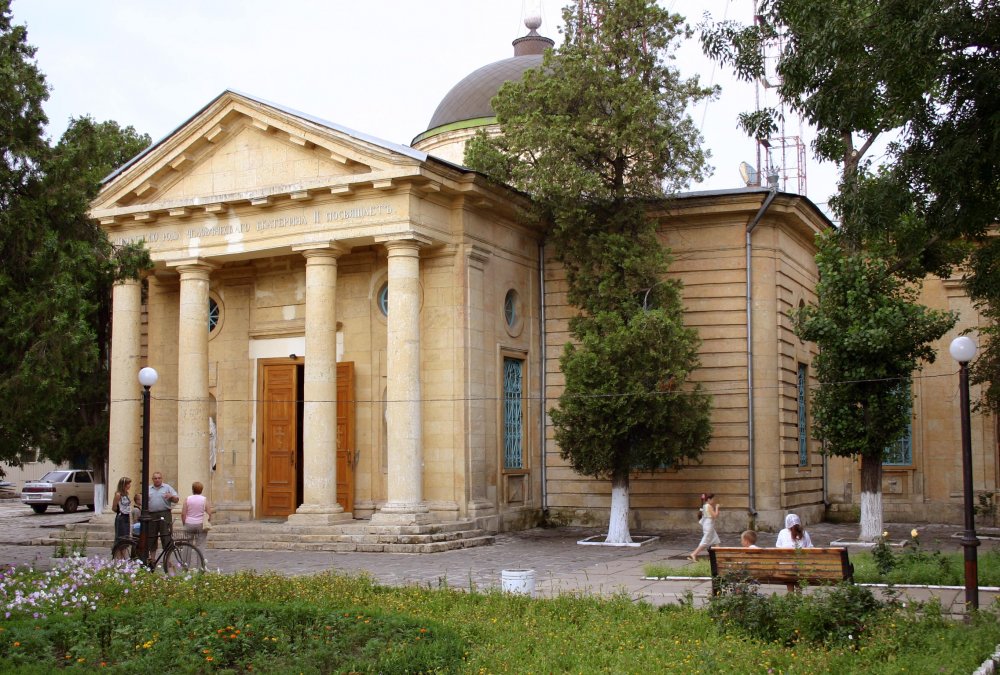
Catherine's Cathedral is one of the most significant places in Kherson, because the history of its construction is inherently connected with the history of the founding of the city. In 1774, the Russian Empire finally gained control of the Black Sea and in order to consolidate its positions in the Primorye Territory, it was decided to found the city of Kherson. At that time he had a colossal geopolitical significance.
St. Catherine's Cathedral
Ten years later, Governor-General G. Potemkin issued a decree to replace the old wooden church with a new stone monastery, as a symbol of the annexation of the Taurian kingdom. Yekaterinburg monastery was named not by chance, as everyone knows that Potemkin idolized Catherine II.
Even in the main icon of St. Catherine the Great Martyr, one can trace a portrait resemblance to the Empress. Nevertheless, officially the church was consecrated precisely in the name of the Great Martyr Catherine, who dedicated her life to preaching the Christian faith.
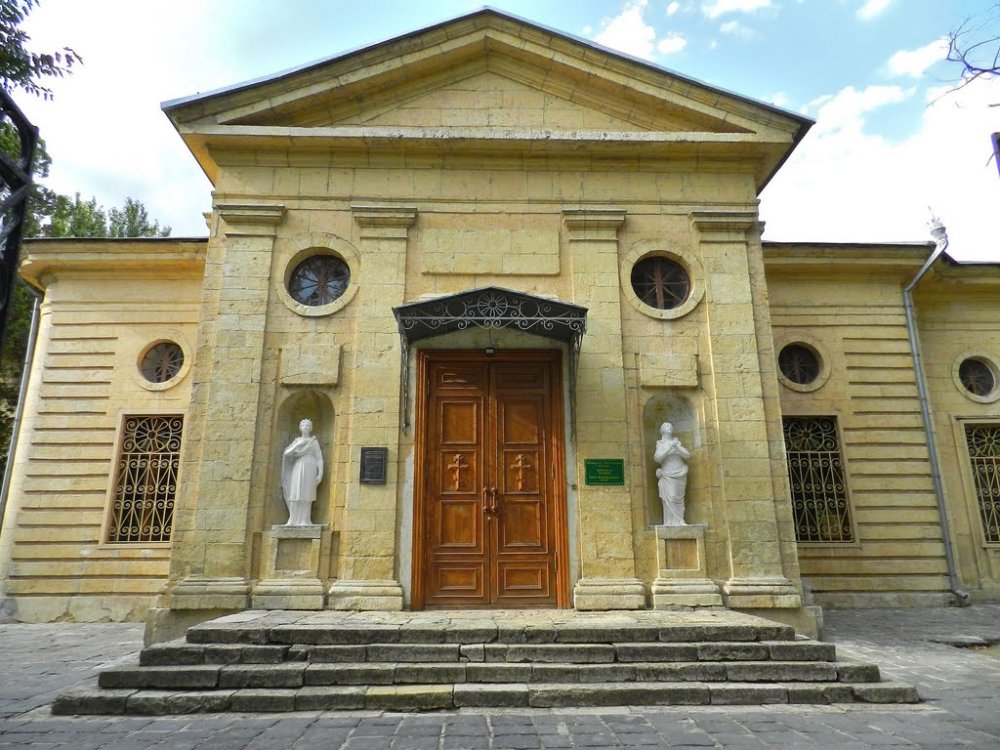
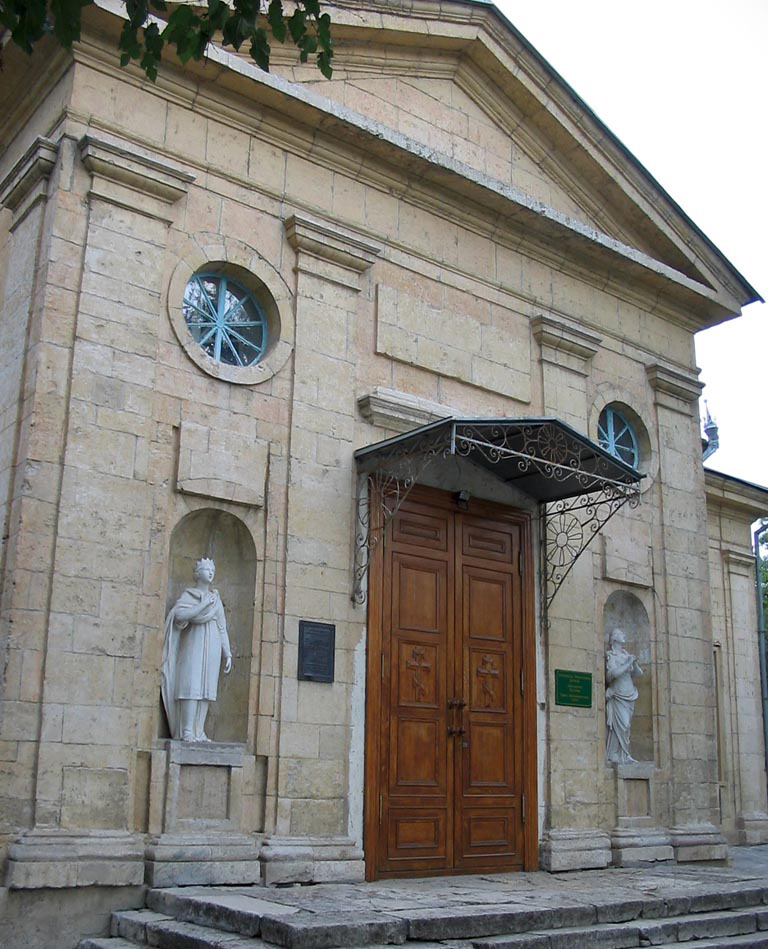
The construction of the temple started with a solemn procedure of laying the first stone. This event took place on August 30, 1781. It was the date of the namesake of Grand Duke Alexander Pavlovich, the grandson of Catherine II. However, the actual work began only a year later, after making a number of changes to the master plan of the building. The construction took place under the supervision of the architect I.M. Sitnikov and Colonel Karl Gaks, Potemkin's personal assistant.
According to some historians, it was because of the carelessness of the city that the city was plagued by the plague epidemic, in which about 10 thousand people died. It is interesting that during the 4 years of his reign, the construction of the Temple practically did not move from the dead point, although, in his reports to Potemkin, he claimed that everything goes according to plan. Thus, the church was ready only by May of 1786 and was consecrated by the Archbishop of Nice and Kherson Nikifor.
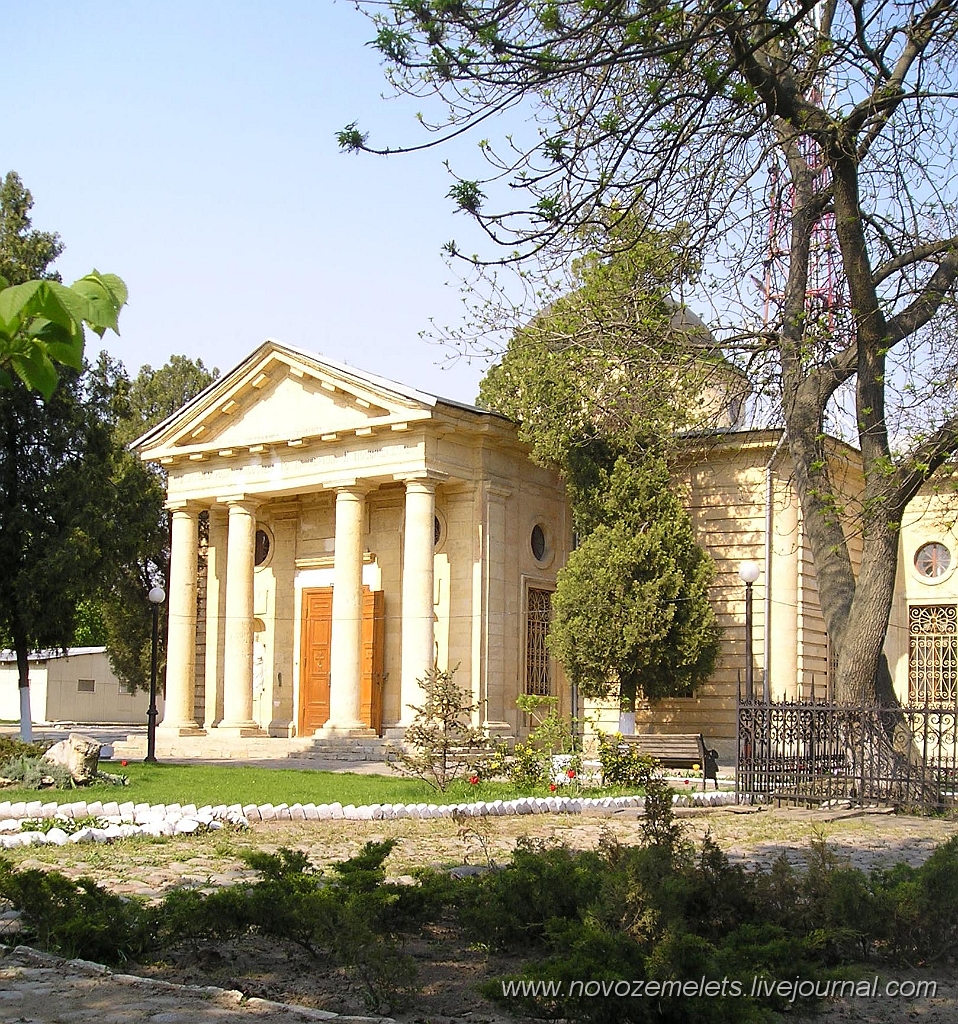
The cathedral was part of the magnificent architectural ensemble of the Kherson Fortress. This was the first sample of classicism in the territory of Ukraine. The authors of the project, the architects Krsakov and Bourgeois managed to maintain a balance of heavy architectural masses and free spaces. Unfortunately, today all the grandeur of the fortified architectural ensemble is almost impossible to understand, since most of the structures were destroyed.
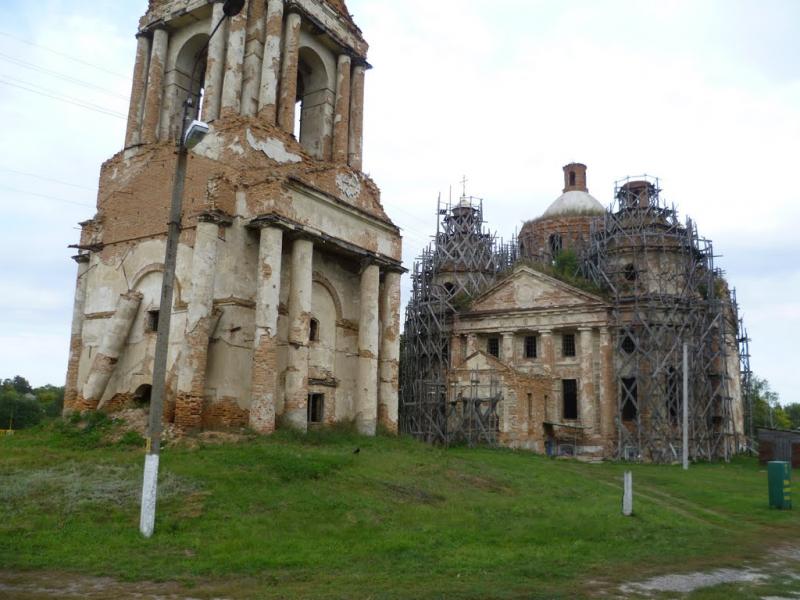
Particularly interesting is the bell tower of Catherine's Cathedral. Initially, it was made of wood. By 1800, it was replaced by a stone one, while retaining the main features of the building. Acquired massiveness was mitigated by a high dome with a steep spire at the top. However, in this form the bell tower did not last very long.
After the earthquake in 1802, the building was covered with cracks, and as a result, it was dismantled. On the plan of the cathedral of 1818 you can see a fundamentally new construction. A more massive lower part and a light tetrahedral dome created an allusion to the Egyptian pyramids, and obviously added stability. The belfry was equipped with 12 bells, the heaviest of them reached a weight of 2 tons.
The temple is full of architectural symbols related to different periods of the city's existence and the development of the Christian faith. The main subjects are related to Byzantium, the baptism of Rus, the Greek project, etc. The temple inherited the structure of the forgotten art of temple construction of the pre-Mongol period, while using the progressive style of classicism.