Olesky Castle
Articles
Let’s get to know Ukraine!

Olesky Castle

On a high hill, the slopes of which rise above the swampy meadows of the Liberec River, the powerful stronghold, the Olesky Castle, stands alone. An ancient castle was built in the beginning of the 14th century. It is believed that the castle was built by one of the sons of Galicia-Volyn prince Yuri Lvovich. Olesk castle was on the border between Poland and Lithuania, and for the possession of it was constantly fighting, then the Poles, then Ukrainians, then Lithuanians. For many years the fortress played an important defensive role. Already in the second half of the 15th century, the castle lost its importance as a defense structure and turned into a residence of tycoons. The stronghold acquires the signs of a residential structure with elements of the Italian Renaissance. Later, the castle became the property of Ukrainian tycoon Ivan Danilovich, thanks to which the defense walls were harmoniously joined to the newly built structures. In 1681 the castle was taken over by Polish king Jan Sobieski. He repairs it and completes the owner's premises.

Especially difficult for the castle was the 19th century. But, like a fairy phoenix, he was constantly reviving, rising from the ruins. Today, the castle was restored and returned to the image that he had in the 17th century.

Olesk castle is full of mysteries and interesting legends. Some believe that there are ghosts in the castle. According to one version, the spirit of the Czech monk Jan Casper lives in the castle. Once, during the service on St. Anthony's day, Casper jumped into the well in front of thousands of pilgrims. Such evidence is recorded in the chronicle of the castle. And today his soul wanders through the corridors without finding an eternal rest. They say that at night you can also see two shadows that appear in the corridors of the castle - they are souls of lovers who go to echoes, and can not meet each other.

Olesk castle is famous for the fact that a powerful Polish King Jan III of Sobieski. There is a strange legend about his birth. The future king was born during a terrible thunderstorm and attack of the Tatars on the castle. At the time when the woman-midwife put the child on a black marble table, suddenly a terrible thunder struck and the table cracked, and the grandmother was deaf.

To date, the castle is a museum-filia of the Lviv Art Gallery. Each room is a kind of museum exhibit. Impressive interior - wallpaper, furniture, walls, floor, lamps - all are characteristic for 16-18 centuries. Attracted by the attention are lintless wall carpets made from woolen, silk threads - so-called tapestries. Interesting in its plot is a tapestry, which depicts paintings from the poem of Homer Odyssey. "

In the museum you will also see old iconostases, a collection of icons from the 15th to 18th centuries, Martin Altomonte's majestic painting Battle of Vienna, which was commissioned by King John III of Sobieski. Impressive is also the unique collection of wooden sculpture of the 14-19 centuries. It is worth to see the interesting work of Johann Pinzel. In his works "Samson tearing the jaws of a lion" and "Sacrifice of Abraham" one senses a spiritual split: the person realizes his strength and at the same time he is powerless before the power of the elements.

For a considerable period of time, the territory of the Olesk castle served a film set for film studios in Ukraine, Belarus, Poland and Russia. The heroic defense of the stronghold from the Polish conquerors of 1413 laid the foundation for the opera "Oleskaya ballad", as well as the novel "The scarlet wine" of the famous Lviv writer Roman Ivanichuk.

You can get to Olesko from Kiev or Lviv . From the bus station in Lvov on Bogdan Khmelnitsky Street, a shuttle bus departs to Brody. All of them go through Olesko.
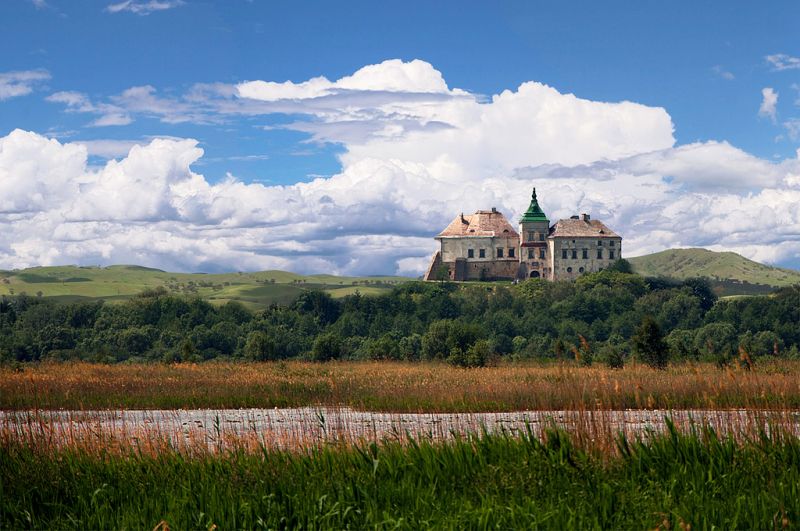
Olesky Castle

The Oleski Castle was located on the border between Poland and Lithuania, and it was constantly contested by Poles, Ukrainians, and Lithuanians. For many years, this fortress played a vital defensive role. By the second half of the 15th century, however, its military significance diminished, and it became the residence of wealthy nobles, taking on the characteristics of a luxurious residential building with elements of Italian Renaissance architecture.

Over the 19th century, the castle faced particularly difficult times. Yet, like a mythical phoenix, it managed to rise from its ruins time and again. Today, it has been restored to its appearance in the 17th century.

The Oleski Castle is shrouded in mystery and fascinating legends. Some believe it is haunted. According to one tale, the spirit of the Czech monk Jan Kasper resides there. It is said that during the St. Anthony’s Day ceremony, Kasper jumped into a well in front of thousands of onlookers. His soul still haunts the castle’s corridors, seeking eternal rest.

Moreover, this castle is famous for being the birthplace of the powerful Polish king Jan III Sobeski.

The castle today serves as a branch of the Lviv Art Gallery. Each room within it is like a unique museum exhibit. The interior is truly impressive – the walls, furniture, flooring, and lighting are all characteristic of the 16th to 18th centuries. Of particular note are the woolen and silk tapestries, known as gobelens, which feature fascinating designs and themes. One such gobelén depicts scenes from Homer’s poem “The Odyssey”.

You will also find ancient iconostases, a collection of icons from the 15th to 18th centuries, and the magnificent painting “Battle under Vienna” by Martin Altomonte, commissioned by King Jan III Sobeski. The unique collection of wooden sculptures from the 14th to 19th centuries is equally noteworthy. Works by Johann Pinsel are especially interesting; in pieces like “Samson Ripping Asunder the Lion’s Mouth” and “Abraham’s Sacrifice,” one can feel the intense emotional conflict within the characters.

For a long time, the site of the Olesko Castle has been used as a filming location by studios from Ukraine, Belarus, Poland, and Russia. The heroic defense of the fortress against Polish invaders in 1413 served as the basis for the opera “Oleska Ballad” and the novel “Red Wine” by the renowned Lviv writer Roman Ivanychuk.

It is easy to reach Olesko from both Kiev and Lviv. From Lviv’s Bohdan Khmelnytsky Street, scheduled taxi services operate to Brody, passing through Olesko on the way.

Olesko Castle

Recommended articles

Find the Best Professionals for Your Project

Expert repair, construction, and renovation specialists ready to help you right now