Latin Cathedral, Lviv
Articles
Let’s get to know Ukraine!

Latin Cathedral, Lviv

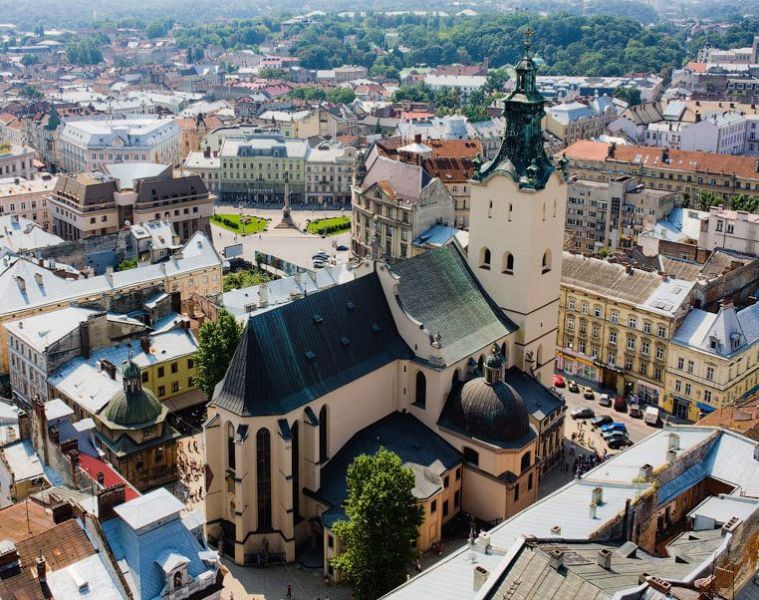
The only Ukrainian church that received the honorary status of the "small basilica", is in Lviv. The Latin Cathedral for its centuries-old history has experienced a lot of restructuring, but at the same time retained its gothic appearance. In 2001, this majestic church received special honor - the Pope John Paul II visited here, who presented the cathedral with a special insignia - a golden rose.

The construction of the church began as early as the 14th century, an entire century took its construction from the architects! The 67-meter Gothic structure was surrounded by many chapels. But in the 18th century many of them were demolished, and to the restrained and cold Gothic elements elements were added popular then baroque.
Eight chapels survived. One of the most famous is the chapel of the Campiones. Also preserved are the chapels of the Crucifixion and the Most Holy Sacrament, made in the Rococo style, the chapel of the Milevsky, Zamoysky, Our Lady of Czestochowa, and others.
By the way, on the square around the cathedral for a long time it was decided to bury the deceased. Only in the 18th century further burials were banned, and existing crypts, except one chapel, were demolished.
Latin Cathedral, Lviv

The construction of this cathedral began as early as the 14th century, and it took architects a whole century to complete it! This 67-meter-tall Gothic structure was surrounded by numerous chapels. However, in the 18th century, many of them were demolished, and elements of the popular Baroque style were added to the otherwise austere and cold Gothic design.

Eight chapels survived. Among the most famous is the Campian Family Chapel. Also preserved are the Chapel of the Crucifixion and the Chapel of the Most Holy Sacrament, both designed in the Rococo style; as well as the Millevski, Zamoyski, and Our Lady of Częstochowa chapels, among others.

Incidentally, for a long time, it was customary to bury the deceased on the square surrounding the cathedral. It wasn’t until the 18th century that further burials were prohibited, and the existing tombs and graves were demolished, except for one chapel.

Recommended articles

Find the Best Professionals for Your Project

Expert repair, construction, and renovation specialists ready to help you right now