Jesuit Monastery (Collegium)
Articles
Let’s get to know Ukraine!

Jesuit Monastery (Collegium)

Jesuit Monastery is one of the main attractions of Kremenets, the most beautiful building of the city, which is its symbol. It was built in the 18th century, for a long time it was the main educational center of Podol and Volhynia. The architectural style is Baroque. The Jesuit Monastery is one of the main attractions of Kremenets, the most beautiful building of the city, which is its symbol. It was built in the 18th century, for a long time it was the main educational center of Podol and Volhynia. Architectural style - baroque. Monks-Jesuits in the city invited prince Janusz Vyshnevetsky. The construction lasted 12 years from 1731 to 1743 and was conducted under the supervision of the architect P. Fontana.The complex consists of a church, academic buildings and two cells.

At the beginning of the 19th century the Ternopil region became part of the Russian Empire, and the upper gymnasium was opened in the collegium.After 16 years, the gymnasium received the status of a lyceum. Specially for the collegium in Poland, the personal library of the Polish King Stanislaw August Poniatowski was bought in Warsaw.The laboratory of physics and astronomy was opened in the Lyceum, which were provided with all necessary instruments, donations have acquired a collection of minerals and coins. The lyceum operated its own meteorological station. Subsequently, it was the teaching staff and scientific foundations of the Kremenets collegium that became the basis for the establishment of the Kiev University.

Nowadays the building still serves the needs of science, here is located the Kremenets Regional Humanitarian and Pedagogical Institute. T. Shevchenko.
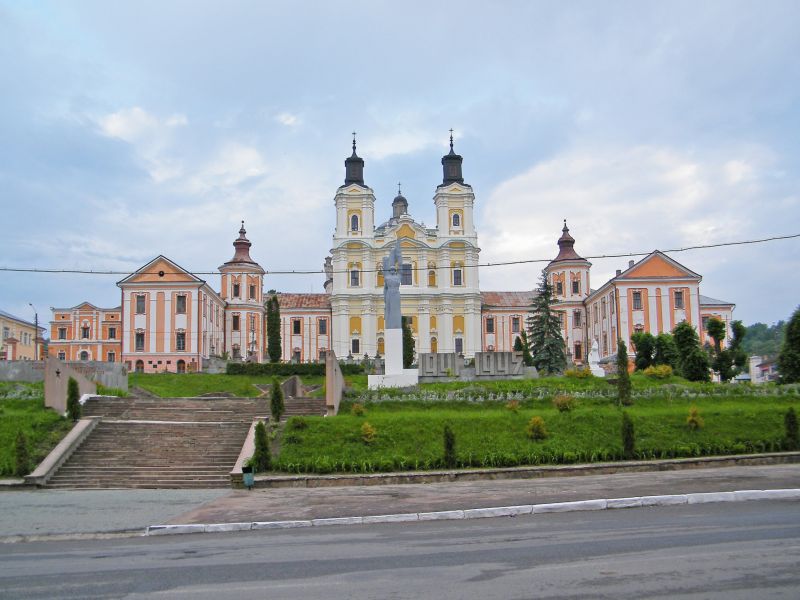
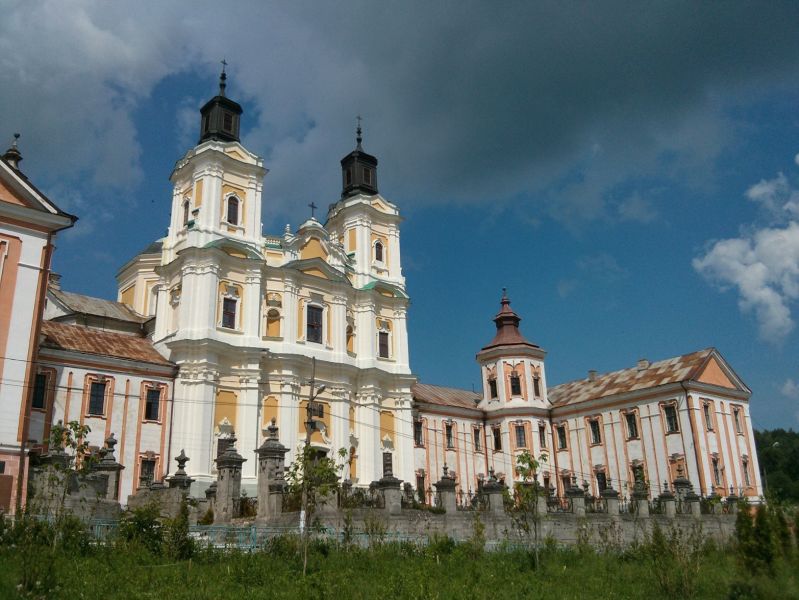
The Jesuit Monastery (Collegium)

The Jesuit Monastery (Collegium)

 The Jesuit Monastery (Collegium)

 The Jesuit Monastery (Collegium)

The Jesuit Monastery is one of the main attractions of Kremenezh, the most beautiful building in the city and its very symbol. It was built in the 18th century and for a long time served as the primary educational center for Podolia and Volynia. Its architectural style is Baroque. The Jesuit monks were invited to the city by Prince Janusz Wiszniewiecki. The construction took 12 years, from 1731 to 1743, and was led by architect P. Fontana. The complex includes a church, educational buildings, and two dormitories for monks.

In the early 19th century, when the Ternopil Region became part of the Russian Empire, a higher grammar school was established within the monastery. By that time, the Jesuit order had already been abolished 30 years earlier. Sixteen years later, the grammar school was upgraded to a lyceum. Specially for the college, the personal library of Polish King Stanisław August Poniatowski was purchased in Warsaw, Poland. The lyceum established physics and astronomy laboratories equipped with all necessary instruments, and through donations, a collection of minerals and coins was acquired. The institution also operated its own meteorological station. In fact, it was the faculty and scientific resources of the Kremenezh College that laid the foundation for the establishment of the Kiev University later on.

Today, this building continues to serve scientific purposes, as it is home to the Kremenezh Regional Institute of Humanities and Pedagogy named after T. Shevchenko.

Jesuit Monastery (College)

Jesuit Monastery (College)

Jesuit Monastery (College)

Jesuit Monastery (College)

Recommended articles

Find the Best Professionals for Your Project

Expert repair, construction, and renovation specialists ready to help you right now