Medzhybizh Castle
Articles
Let’s get to know Ukraine!

Medzhybizh Castle

As if lost in time, the White Swan stands majestically at the confluence of the Yuzhny Bug and Bugok rivers in the Khmelnytsky region. It is an ancient fortress in the small town of Medzhibozh, which in the reflection of rivers resembles a swan. Once the walls of the fortifications had a whitish shade. They were soaked with a mixture of crushed brick and limestone mortar, so from a distance the fortress really resembled a white swan. So this name has survived to our days, although the year washed away the whiteness, and the rivers are not so wide.

In the distant 1362, the princes of Koriatovichi gave birth to the Medzhybod fortress. At that time it was much smaller than the present and to this day only the tower of Donjon has survived. Gradually, her subsequent owners expanded and strengthened - this was necessary for defense against the raids of the Tatars. In general, what we see now is the merit of the Sinyavsky noblemen, who owned the city for about two hundred years and brought their contribution to the development of not only the fortification system of the fortress, but also the city itself. They were wonderful strategists and rulers.

In the 16th century, many crafts flourished in Medzhibozh, which facilitated the holding of fairs, tournaments, and trade with many cities, including Lviv. Traditions are preserved - twice a year the fortress comes to life with the sounds of swords and the tramping of horses, the noise of merchants. At this time, festivals with knight tournaments are held. In August, the "Ancient Medzhybozh" festival timed to coincide with the Independence Day of Ukraine is held, and in the beginning of January after Christmas there is the "Winter Tower" festival. Both festivals are very colorful and interesting for tourists. This is a variety of fights, hiking, swimming in the winter hole, hunting, balls and feasts in the castle tower, games, fun, folk concerts, fairs, master classes of folk crafts. Each year, the festival program is different, so often the guests expect surprises. These are competitions among archers and crossbowmen, costume and dance contests, staged storming of fortress walls and much more.

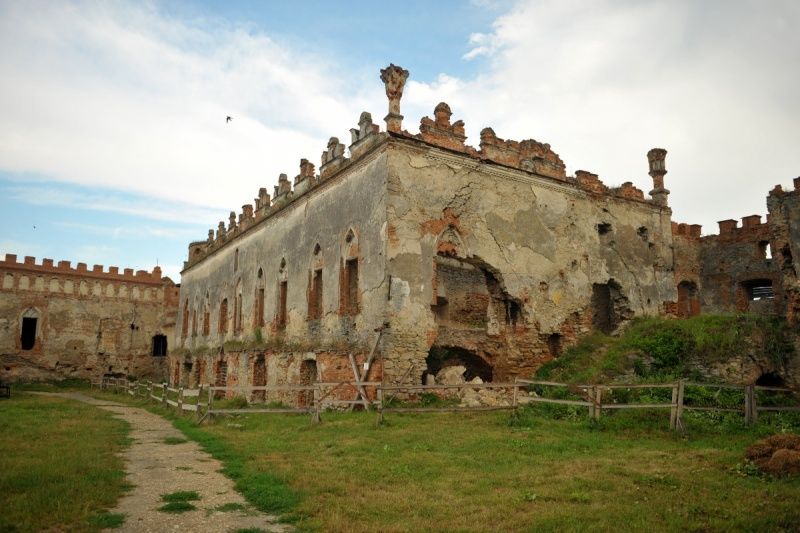
From the observation tower, a charming view opens up to the nearby land and the town of Medzhibozh itself. To date, there are three towers, two castle buildings, a castle church, an arched out bridge and fortifications. All this served not only for defense - it was also living quarters, as evidenced by wide windows, stone arches, fireplaces, white stone portals, figured attic, ceramics. In the service rooms of the castle there is a museum of local lore that will tell a lot about the former times of Medzhibozh.

Also you will see the ruins of the church of the 17th century, dungeons and fortification towers, serving as rifle points. The fortress is a strategically thought-out design that has been able to withstand many attacks. Although during the Second World War the fortress was badly damaged, it still stood and is one of the brightest sights of Western Ukraine. Now many elements are under reconstruction.

Medzhibozh is also known as a pilgrimage center, because there lived and was buried in 1760 by the philosopher and founder of the orthodox current in Judaism, Israel Baal Shem Tov (Besht). The current was called Hasidism. Now this place is the center of the Hasidic movement, and many of the houses on the street that leads to Beshta's grave are bought by Hasidim.

Whatever attracts you to Medzhybizh, toli knights tournaments, toli fortifications, toili synagogue with the Beshty crypt, you will certainly discover something new.
Medzhybizh Castle

Medzhybizh Castle

 Medzhybizh Castle

Medzhibozh Castle

Medzhybizh Castle

They were soaked in a mixture of crushed bricks and limestone solution, which gave the fortress a white appearance from a distance, resembling that of a white swan. Thus, this name has been preserved to this day, although over the years the whiteness has faded, and the rivers are no longer as wide as they used to be.

In the distant year 1362, the Koreiatovichi princes began constructing the Medzhibozh fortress. At that time, it was much smaller than it is now, and only the Donjon tower has survived to the present day. Subsequent owners gradually expanded and strengthened it to defend against Tatar raids. What we see today is largely the result of the efforts of the Sinyavskis, who ruled the city for nearly two hundred years and contributed significantly to the development of both the fortress’s defensive system and the city itself. They were excellent strategists and rulers.

During the 16th century, many crafts flourished in Medzhibozh, enabling the holding of markets, tournaments, and trade with numerous cities, including Lviv. These traditions have continued to this day: twice a year, the fortress comes alive again with the sounds of swords clashing, the rumble of horses, and the bustle of traders. Festivals with knights' tournaments are held during these times. In August, there is the "Ancient Medzhibozh" festival, coinciding with Ukraine's Independence Day, and in early January, after Christmas, the "Winter Tower" festival. Both festivals are vibrant and attract many tourists, offering various activities such as combat demonstrations, hiking tours, winter swimming in a frozen lake, hunting, balls, and banquets in the castle tower, games, entertainment, folk music concerts, markets, and workshops on traditional crafts.Each year, the festival programs vary, so guests often experience surprises. There are competitions for archers and crossbowmen, costume and dance contests, reenacted battles, and much more.

From the observation tower, one can enjoy a stunning view of the surrounding lands and the town of Medzhibozh itself. To this day, three towers, two castle complexes, a castle church, an arched entrance bridge, and fortification walls have survived. These structures not only served defensive purposes but also contained living quarters, as evidenced by their wide windows, stone arches, fireplaces, white marble portals, ornate attics, and ceramic decorations. The castle’s administrative buildings house a local history museum that provides valuable insights into Medzhibozh’s past.

You will also see the ruins of a 17th-century church, as well as underground passages and fortification towers that served as shooting positions. This fortress is a strategically designed structure that withstood numerous attacks over the years. Although it suffered severe damage during World War II, it survived and remains one of Western Ukraine’s most remarkable landmarks. Many of its components are currently under restoration.Medzhibozh is also renowned as a pilgrimage site, as it was the home of Israel Baal Shem Tov, the philosopher and founder of Hasidism, who died there in 1760. Many homes along the road leading to his grave have been purchased by Hasids.

Whatever attracts you to Medzhibozh—whether it be its medieval knightly tournaments, the fortress defenses, or the synagogue containing Baal Shem Tov’s tomb—you are sure to discover something new and fascinating here.

Medzhibozh Castle

Medzhibozh Castle

Medzhibozh Castle

Medzhibozhsky Castle

Medzhibozhsky Castle

Recommended articles

Find the Best Professionals for Your Project

Expert repair, construction, and renovation specialists ready to help you right now