Proletarian Square
Articles
Let’s get to know Ukraine!

Proletarian Square

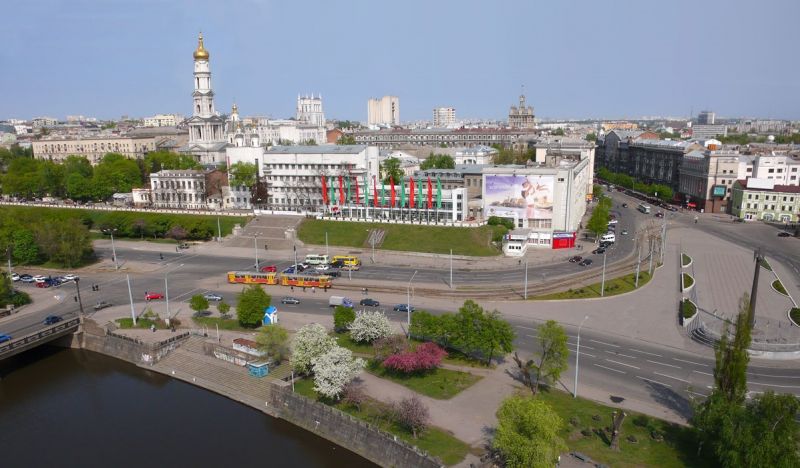
Today, nothing says about the legendary past of this inconspicuous and sparsely populated area in the center of Kharkov. For its rich history, it had many names. The area began to form at the beginning of the 18th century and, originally, was called the Piazza Square. Today there is nothing to say about the legendary past of this inconspicuous and uninhabited square in the center of Kharkov. For its rich history, it had many titles. The area began to form at the beginning of the 18th century and, originally, was called the Market Square. Here were scattered small shops, wooden taverns. At the dawn of the 19th century, under the University Hill, the Lopan Bazaar was boiling. In 1835, a fire destroyed all the wooden buildings.

Somewhat later, the stone Sergievsky series was erected on this site and the square was renamed Sergievskaya. In 1875, near the Sergiyevsky series, a trading house was built, where the industrial and art museumwas opened. It was a unique phenomenon at the time. There were exhibited paintings by Rembrandt, Goya, Van Dyck, Durer and others.

At the end of the 19th century, the Sergievsky series burned down and in 1890 the Nikolayevsky series was built according to the design of the architect A. Shpigel. In 1932, to celebrate the 15th anniversary of the October Revolution, the area was renamed the Proletarian. All the buildings on the square were destroyed during the Great Patriotic War.
Proletarian Square

 Proletarian Square

Today, nothing hints at the legendary past of this unassuming and sparsely populated square in the center of Kharkov. Over its rich history, it has borne many names. The square began taking shape in the early 18th century and was initially named Bazarnaya Square. Small shops and wooden inns were scattered throughout the area. In the early 19th century, the Lopansky Market flourished beneath the University Hill. In 1835, a fire destroyed all the wooden structures.

Some time later, a stone-built Sergiyevsky Row was constructed on this site, and the square was renamed Sergiyevskaya Square. In 1875, a commercial building was built near Sergiyevsky Row, and within it an industrial and art museum was established—a unique institution for its time. It displayed works by artists such as Rembrandt, Goya, Van Dyck, and Dürer.

In the late 19th century, Sergiyevsky Row was destroyed by fire, and in 1890, the Nikolayevsky Row, designed by architect A. Shpigel, was built in its place. In 1932, to commemorate the 15th anniversary of the October Revolution, the square was renamed Proletarskaya Square. All buildings on the square were destroyed during World War II.

Proletarskaya Square

Proletarskaya Square

Recommended articles

Find the Best Professionals for Your Project

Expert repair, construction, and renovation specialists ready to help you right now