133 years ago, a monument to Alexander Sergeyevich Pushkin was inaugurated in Moscow. On the day of its opening, on June 6, 1880, starting at 10 a.m., dense crowds of people began gathering in Moscow near the Square beside the Strastnoy Monastery.2 photos
133 years ago
In Moscow, a monument to Alexander Sergeyevich Pushkin was unveiled.
On the day of its opening, on June 6, 1880, starting at 10 a.m., dense crowds of people and numerous vehicles began gathering in Moscow near the Strastnoy Monastery Square. It seemed as if entire Moscow had come together to pay their respects to this great poet.
Around the monument, white shields were placed on poles, bearing the names of the poet’s works inscribed in gold. The Tverskoy Boulevard was adorned with garlands of live greenery. People bought up all the lilies of the valley and violets available from vendors and threw them onto the pedestal of the monument.
By evening, the illumination was turned on. At the foot of the still-covered monument, renowned Russian writers such as Turgenev, Polonsky, Maykov, Pleshcheev, and Dostoevsky delivered solemn speeches. When the covering was removed, the entire square erupted in cheers of joy.
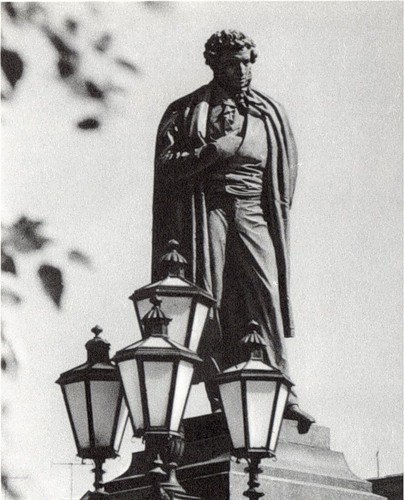
The monument to Alexander Pushkin was created by the sculptor Alexander Opekushin. It depicted the poet in a moment of deep contemplation: his head tilted back, one hand resting on the lapel of his coat, his steps slow and deliberate.
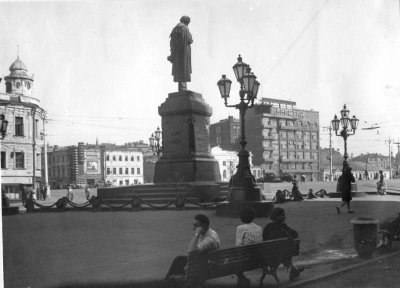
In 1950, the monument was moved from Tverskoy Boulevard to the other side of the reconstructed Strastnoy Square (now Pushkin Square), rotated 180 degrees, and installed in its final location on the site of the former Strastnoy Monastery bell tower. A concrete foundation had to be constructed in order to raise the monument to its proper height.
In Moscow, a monument to Alexander Sergeyevich Pushkin was unveiled.
On the day of its opening, on June 6, 1880, starting at 10 a.m., dense crowds of people and numerous vehicles began gathering in Moscow near the Strastnoy Monastery Square. It seemed as if entire Moscow had come together to pay their respects to this great poet.
Around the monument, white shields were placed on poles, bearing the names of the poet’s works inscribed in gold. The Tverskoy Boulevard was adorned with garlands of live greenery. People bought up all the lilies of the valley and violets available from vendors and threw them onto the pedestal of the monument.
By evening, the illumination was turned on. At the foot of the still-covered monument, renowned Russian writers such as Turgenev, Polonsky, Maykov, Pleshcheev, and Dostoevsky delivered solemn speeches. When the covering was removed, the entire square erupted in cheers of joy.
The monument to Alexander Pushkin was created by the sculptor Alexander Opekushin. It depicted the poet in a moment of deep contemplation: his head tilted back, one hand resting on the lapel of his coat, his steps slow and deliberate.
In 1950, the monument was moved from Tverskoy Boulevard to the other side of the reconstructed Strastnoy Square (now Pushkin Square), rotated 180 degrees, and installed in its final location on the site of the former Strastnoy Monastery bell tower. A concrete foundation had to be constructed in order to raise the monument to its proper height.
Find the Best Professionals for Your Project
Expert repair, construction, and renovation specialists ready to help you right now
Recommended Galleries
Recommended articles


More Galleries
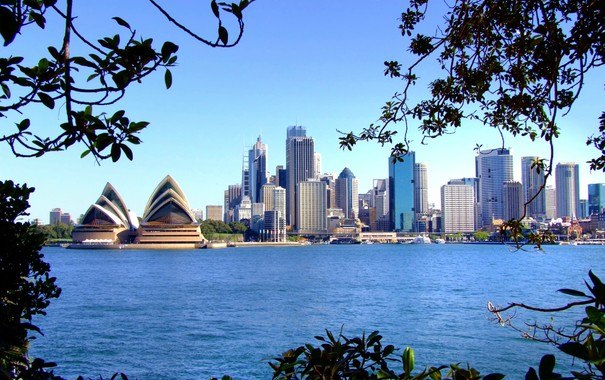 Australia Day
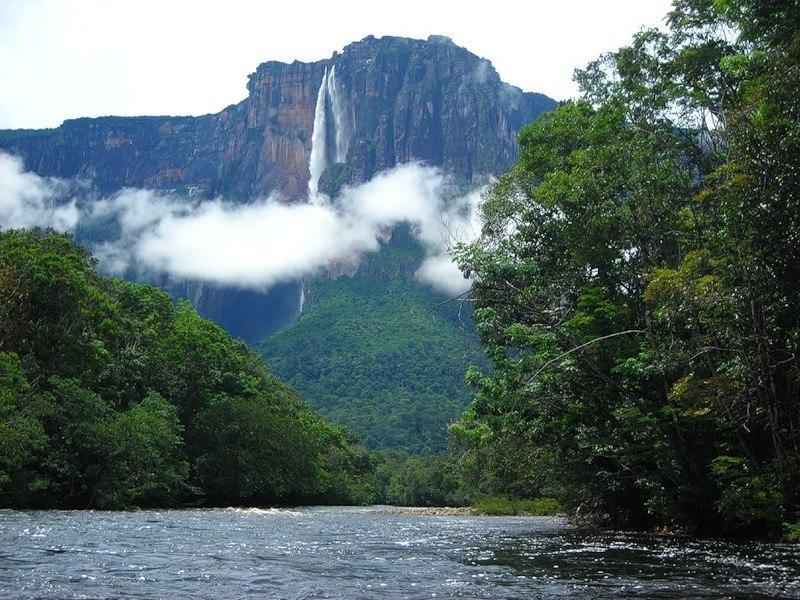 #### Angel Falls in Venezuela
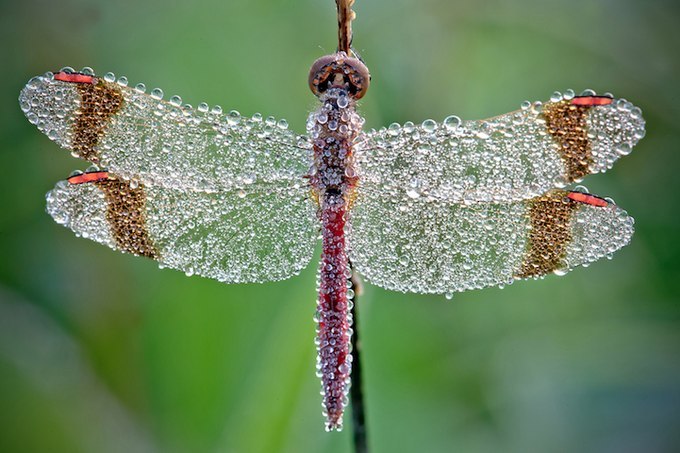 Macro photography of insects by David Chambon
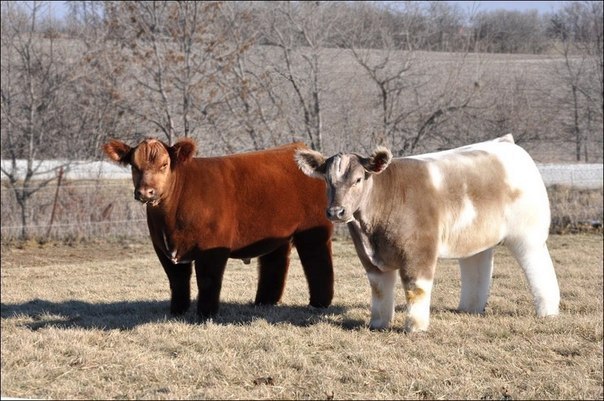 #### Plush Toys Cows from Iowa
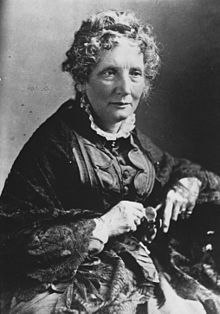 162 years ago, the Washington weekly “National Era” began publishing Harriet Beecher Stowe’s novel “Uncle Tom’s Cabin”.
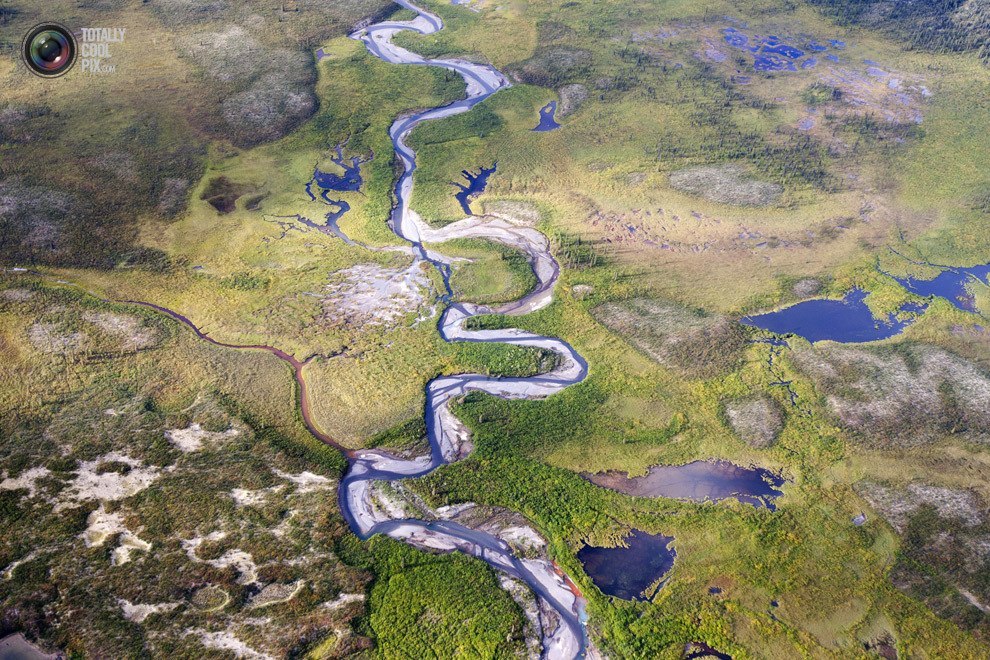 The beauty of the planet Earth in photographs
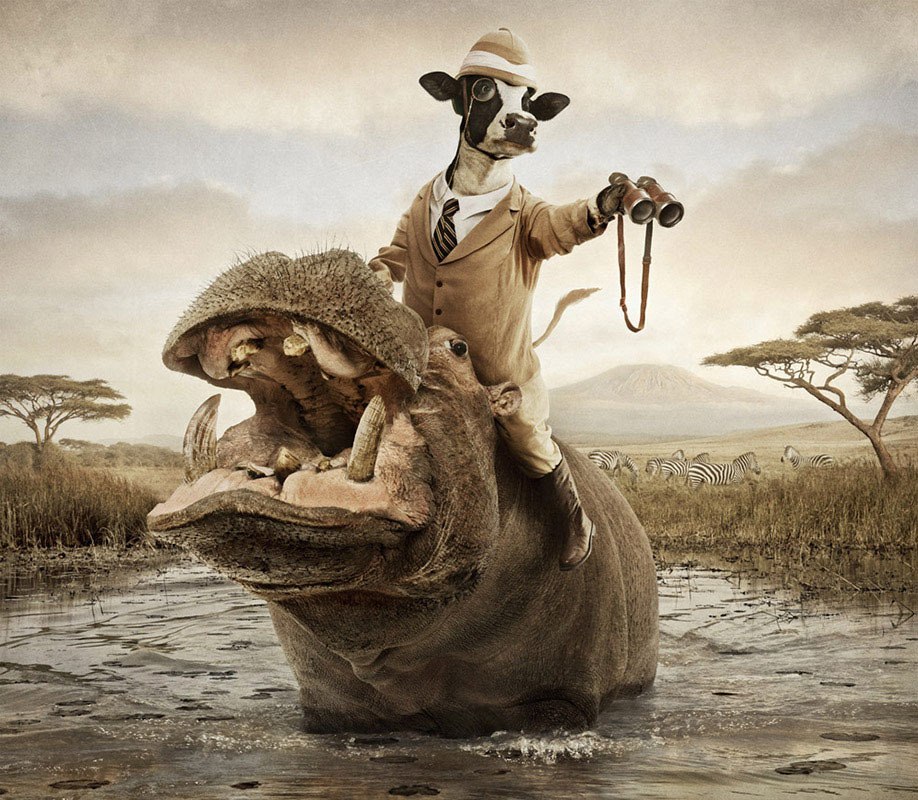 American photographer Andy Mahr created a funny and amusing calendar titled “Trail Grazers,” which is used to promote products from the Chick-fil-A company.
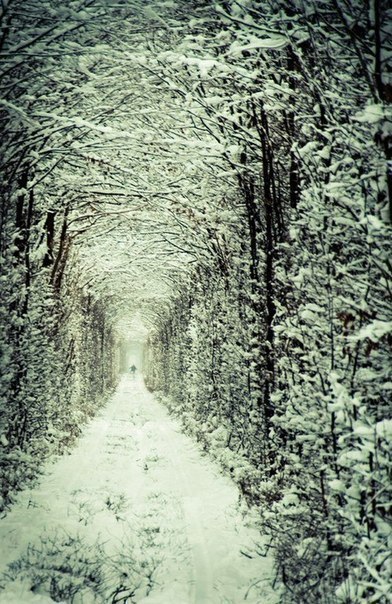 """Tunnel of Love", Klevan, Ukraine"
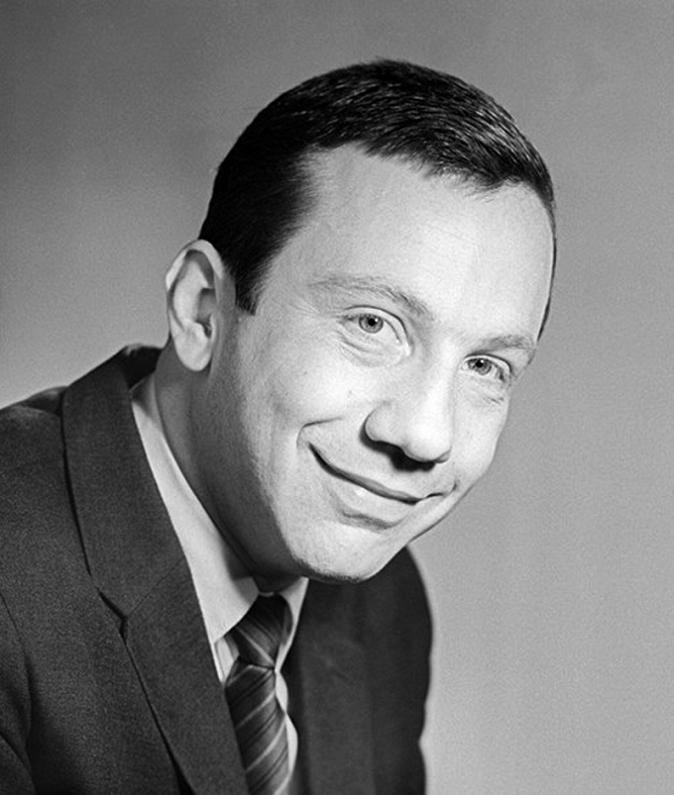 Savely Viktorovich Kramarov was born on October 13, 1934, in Moscow, into a family of lawyers. In the 1930s, his father was arrested and labeled as a “enemy of the people”; he died in a labor camp, and shortly thereafter, Savely’s mother also passed away. He was raised by his uncle. Kramarov dreamed of becoming a lawyer, but…
 Diego Velázquez
 Slow Motion
 Some works submitted for the photo competition organized by National Geographic.