How do proteins function? Proteins are essential structural components that are indispensable for the growth and metabolic processes of both humans and all other living organisms.2 photos
Large protein molecules are composed of smaller components—amino acids—and often have a very complex structure.
Proteins of various types play an extremely important role in the human body. The structural proteins in connective tissue include collagen, while the proteins in skin are keratin; muscle proteins consist of actin and myosin, and cellular proteins are linked to tubulin. Other proteins function as enzymes, accelerating chemical reactions within cells; they also include hormones and antibodies, which play a vital role in protecting the body against harmful influences and diseases. Blood proteins such as hemoglobin and albumin ensure that blood clots only when necessary, for example, in case of an injury.
AMINO ACIDS are the fundamental building blocks of proteins. Like all organic substances, protein molecules are made up of atoms of carbon, hydrogen, and oxygen. In addition, proteins contain nitrogen and, in many cases, sulfur as well. The basic structural unit of a protein molecule is the amino acid. There are approximately 20 known types of amino acids, which can combine with each other to form an enormous variety of different combinations. Some amino acids can be synthesized within the body, while others must be obtained from the external environment. To maintain good health, it is essential for humans to consume at least 30 grams of protein per day.
The structure of an amino acid molecule consists of a chain of carbon atoms. At both ends of the molecule are two different chemical groups: on one end is the amino group, and on the other is the carboxylic acid residue. The amino group of one amino acid can interact with the carboxylic acid group of an adjacent amino acid, releasing a molecule of water in the process—this process is fundamental to the formation of long chains of amino acids. The structure of an amino acid determines its solubility in water as well as its amphoteric properties, which allow it to function both as an acid and a base simultaneously. This enables protein molecules to exist in both acidic and alkaline environments. Amino acids also possess buffering properties, which are of great significance for maintaining the body’s homeostasis.
The template for the formation of a protein molecule is the DNA sequence. Within the cell, the synthesis of amino acid chains takes place on ribosomes, with the assistance of RNA molecules.
THE PRIMARY STRUCTURE of a protein is determined by the sequence of amino acids assembled on the ribosome. This primary structure forms the basic framework of the protein molecule.
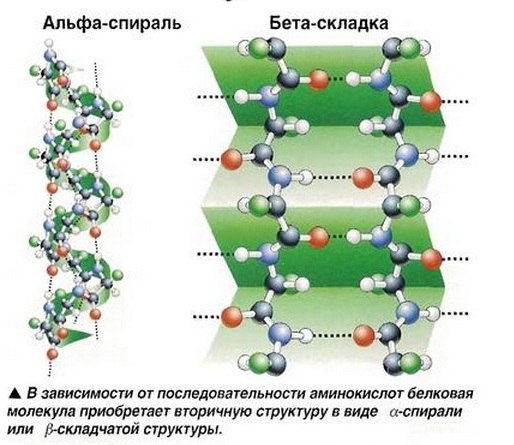
After the formation of the long polypeptide chain, it begins to organize itself into a complex three-dimensional structure, rarely remaining in its original linear form. The process of forming this secondary structure involves the establishment of hydrogen bonds, which, although relatively weak, are sufficient to maintain the protein’s specific shape. Hydrogen atoms interact with certain atoms within the peptide chain, resulting in the formation of two different types of secondary structures: the α-helix and the β-pleated sheet. The α-helix structure is right-handed spiral; the β-pleated sheet consists of flat layers composed of parallel peptide chains. In some proteins, these two structures alternate throughout the molecule.
Proteins with extremely long polypeptide chains may also undergo further folding into tertiary and quaternary structures.
Under normal circumstances, proteins are relatively stable. Their activity is determined by their three-dimensional structure and the bonds that hold the molecules together. However, these intermolecular bonds are sensitive to factors such as increased acidity and temperature. The loss of a protein’s three-dimensional structure is referred to as denaturation. In some cases, this process can be reversed; however, if the pH or temperature changes become extreme, the denaturation becomes irreversible.
Proteins of various types play an extremely important role in the human body. The structural proteins in connective tissue include collagen, while the proteins in skin are keratin; muscle proteins consist of actin and myosin, and cellular proteins are linked to tubulin. Other proteins function as enzymes, accelerating chemical reactions within cells; they also include hormones and antibodies, which play a vital role in protecting the body against harmful influences and diseases. Blood proteins such as hemoglobin and albumin ensure that blood clots only when necessary, for example, in case of an injury.
AMINO ACIDS are the fundamental building blocks of proteins. Like all organic substances, protein molecules are made up of atoms of carbon, hydrogen, and oxygen. In addition, proteins contain nitrogen and, in many cases, sulfur as well. The basic structural unit of a protein molecule is the amino acid. There are approximately 20 known types of amino acids, which can combine with each other to form an enormous variety of different combinations. Some amino acids can be synthesized within the body, while others must be obtained from the external environment. To maintain good health, it is essential for humans to consume at least 30 grams of protein per day.
The structure of an amino acid molecule consists of a chain of carbon atoms. At both ends of the molecule are two different chemical groups: on one end is the amino group, and on the other is the carboxylic acid residue. The amino group of one amino acid can interact with the carboxylic acid group of an adjacent amino acid, releasing a molecule of water in the process—this process is fundamental to the formation of long chains of amino acids. The structure of an amino acid determines its solubility in water as well as its amphoteric properties, which allow it to function both as an acid and a base simultaneously. This enables protein molecules to exist in both acidic and alkaline environments. Amino acids also possess buffering properties, which are of great significance for maintaining the body’s homeostasis.
The template for the formation of a protein molecule is the DNA sequence. Within the cell, the synthesis of amino acid chains takes place on ribosomes, with the assistance of RNA molecules.
THE PRIMARY STRUCTURE of a protein is determined by the sequence of amino acids assembled on the ribosome. This primary structure forms the basic framework of the protein molecule.
After the formation of the long polypeptide chain, it begins to organize itself into a complex three-dimensional structure, rarely remaining in its original linear form. The process of forming this secondary structure involves the establishment of hydrogen bonds, which, although relatively weak, are sufficient to maintain the protein’s specific shape. Hydrogen atoms interact with certain atoms within the peptide chain, resulting in the formation of two different types of secondary structures: the α-helix and the β-pleated sheet. The α-helix structure is right-handed spiral; the β-pleated sheet consists of flat layers composed of parallel peptide chains. In some proteins, these two structures alternate throughout the molecule.
Proteins with extremely long polypeptide chains may also undergo further folding into tertiary and quaternary structures.
Under normal circumstances, proteins are relatively stable. Their activity is determined by their three-dimensional structure and the bonds that hold the molecules together. However, these intermolecular bonds are sensitive to factors such as increased acidity and temperature. The loss of a protein’s three-dimensional structure is referred to as denaturation. In some cases, this process can be reversed; however, if the pH or temperature changes become extreme, the denaturation becomes irreversible.

Find the Best Professionals for Your Project
Expert repair, construction, and renovation specialists ready to help you right now
Recommended Galleries

Olga Guryeva was born on November 18, 1980, in the city of Yaroslavl.
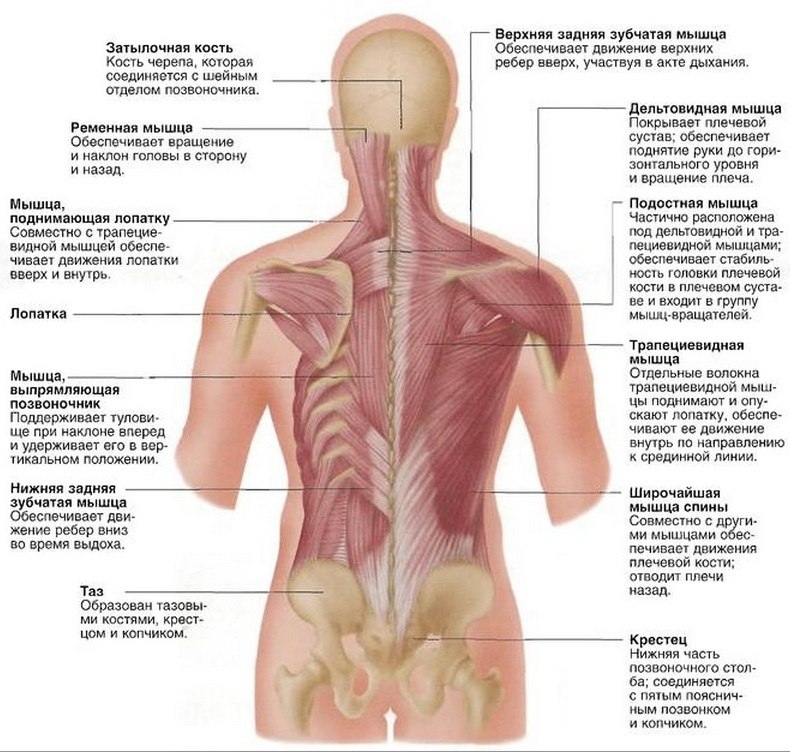
The muscles of the back. These muscles enable us to maintain our body in a vertical position and ensure the mobility and flexibility of our spine.

Cinderella Landolt – The Cinderella with an Apollo-like body <br>28 years old.

Oksana Orobets: To stay in top form at all times, it is essential to love yourself and your body.
Recommended articles




More Galleries
- Olga Guryeva was born on November 18, 1980, in the city of Yaroslavl.
- The muscles of the back. These muscles enable us to maintain our body in a vertical position and ensure the mobility and flexibility of our spine.
- Cinderella Landolt – The Cinderella with an Apollo-like body <br>28 years old.
- Oksana Orobets: To stay in top form at all times, it is essential to love yourself and your body.
 Unfortunately, not everyone understands the concept of “sports attire” correctly.
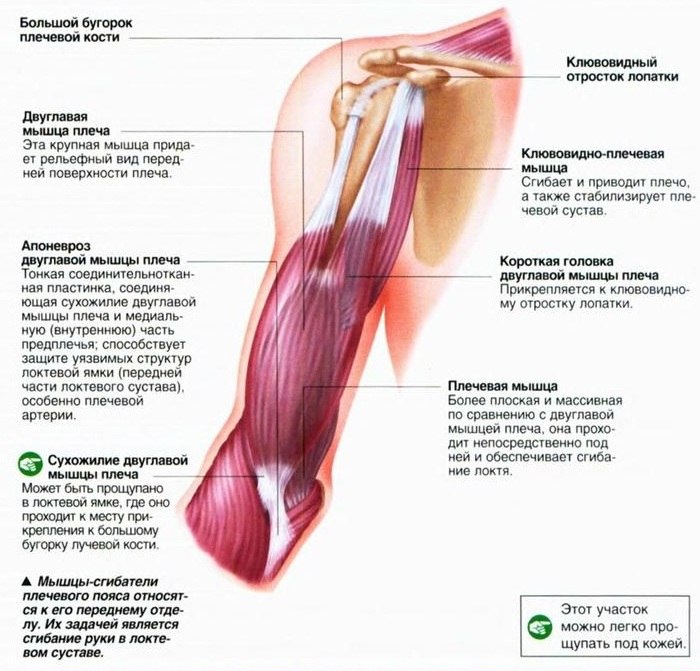 The muscles of the shoulder. The muscles of the shoulder can be divided into two distinct groups.
 Who has tried out the new exercise equipment?
 Results of the 2013 Mr. Olympia competition.
 Ashley Kaltwasser won first place in the 2013 BIKINI OLYMPIA competition.
 There's not much time left before the Olympics!
 Ashley Horner, 29 years old. Weighs 50 kilograms during the season and 58 kilograms during the off-season. She is 164 centimeters tall.
 When you have nothing to do, take care of yourself.