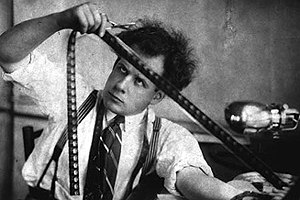
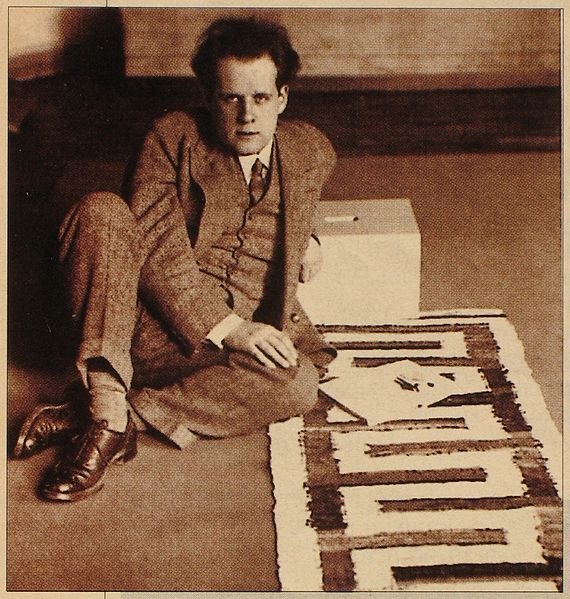
115 Years Ago, Sergei Eisenstein Was Born: A Renowned Soviet Film Director, Screenwriter, and Film Theorist2 photos
Eisenstein's background. He received a thorough and well-rounded education; he spoke several Western European languages, had a deep knowledge of Russian and world literature, and was interested in theater and painting. In 1915, he enrolled at the Institute of Civil Engineers in Petrograd. He supported the October Revolution of 1917 and joined the student militia unit. In 1918, he left his third-year studies at the institute to enlist voluntarily in the Red Army, where he served as a propaganda artist and directed amateur theater productions. In 1920, he was sent to study at the Eastern Languages Department of the General Staff Academy but did not become a military translator. Instead, he took a job at the Proletcult Theater, with the ambition of becoming a pioneer in new revolutionary art.
Soon after, Eisenstein became close friends with Mayakovsky, Meyerhold, and other "left-leaning" artists. Realizing the immense potential of film as an artistic medium, he soon created his first true feature film, "Stachka," demonstrating his mastery of metaphor, editing, and rhythm. In 1925, he directed "Battleship Potemkin," which was released in 1926 and became a worldwide cinematic masterpiece. This film established Eisenstein as a pioneer of new cinema art. He also developed the theory of "intellectual cinema," which argued that by refining the language of cinema, it was possible for audiences to gain not only visual but also intellectual insights.
Eisenstein foresaw the technical future of sound film.
In 1938, he directed the award-winning film "Alexander Nevsky." In the second half of the 1940s, he filmed "Ivan the Terrible," with the first series (1945), which celebrated the idea of national greatness, winning the Stalin Prize. However, the second series was never released due to the authorities' disapproval of the director's approach. In February 1947, a meeting between Stalin, Molotov, and Zhdanov with Eisenstein and actor Cherkasov led to revisions of the second series. Nevertheless, the great director's health declined, and he passed away on February 11, 1948.
Find the Best Professionals for Your Project
Expert repair, construction, and renovation specialists ready to help you right now
Recommended Galleries
Recommended articles

More Galleries
 UAZ Brand History: Slogan 'UAZ - Natural Drive' - Russia's Leading Full-Power Vehicle Manufacturer
 TOP 10 of the Most Unusual Alcoholic Drinks. Click on the image to learn more about the drink!
 Interesting Facts about Wine
 Rare and Interesting Historical Footages
 150 Years Ago: The Birth of Konstantin Stanislavsky (Real Last Name: Alekseev)",</td>\n <td "home_text": "<p>Constantin Stanislavsky was born 171 years ago on January 17, 1863, into the wealthy family of industrialist Alexeev, who was related to the Mamontovs and Tretyakoffs. Stanislavsky’s talent came from his French grandmother, a renowned actress in Paris. Initially, Konstantin aspired to become an opera singer but later collaborated with Nemirovich-Danchenko to establish the Moscow Art Thea
 188 Years Ago: The Birth of the Bolshoi Theatre
 The History of Wrigley's Brand
 The Most Expensive and Rare Auction Lots from Around the World
 The Most Beautiful Clouds in the World
 Thomas Lipton: The Inventor of Tea Bags
 Top 10 of the Strangest Soft Toys: The First Soft Toys Appeared in Ancient Egypt, but Mass Production Began Only Recently—in the Late 19th Century in France.</p>
 Interesting Facts about the Dow Jones Index