“The Defense of Ukraine” and Nikolai Mikhnovsky2 photos
\"Oborona Ukrajiny\" and Nikolai Michnovsky
Nikolai Michnovsky anticipated that \"Oborona Ukrajiny\" would lead a nationwide uprising. In preparation for it, the militants planned demonstrative terrorist attacks against what they viewed as the \"symbols of dominion\" of the autocracy—Russian monuments.
\"Oborona Ukrajiny\", continuing the terrorist traditions of the \"Osinsky Group,\" which operated in Kiev in the late 1970s, became the first terrorist organization established by Ukrainian nationalists.
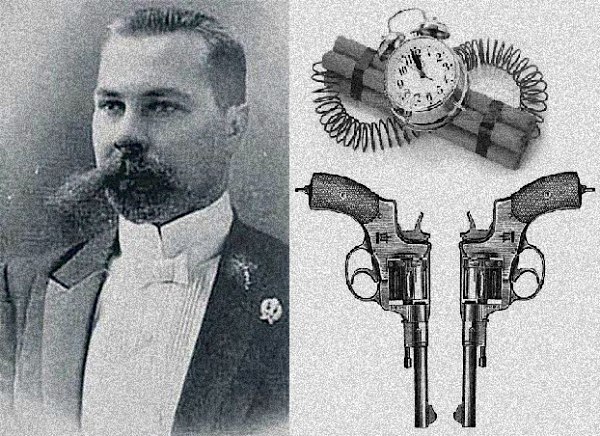
It is hardly necessary to reiterate that terrorism was one of the many factors that contributed to the downfall of the Russian Empire. Everyone is aware of the terrorist activities of the Narodnaya Volia and, later, the Socialist Revolutionaries. However, few people know that in the early 20th century, in Southern Ukraine, there existed a terrorist organization called \"Oborona Ukrajiny.\" Similarly, not many people are aware that Nikolai Michnovsky was a fervent supporter of terrorism.
As early as 1900, while still a student, the future leader of the UNP, Nikolai Michnovsky, delivered an impassioned speech at a Shevchenko celebration event in Poltava, advocating for armed struggle for the independence of the Ukrainian people. He spoke explicitly about terrorist acts and bombs. Dmitry Antonovich recalled that on that day \"the word bomb constantly came out of Michnovsky's mouth.\" His speech had a profound impact on the young people present; they listened with eager eyes and passionate hearts. The speech was extremely successful.
The organization \"Oborona Ukrajiny\" was established in 1903-1904. Its leader was Viktor Chekhovsky, a student at the Yuriev University in Tartu, Estonia. At the time of its founding, the organization had a clandestine nature; even members of the UNP were largely unaware of its activities.
<>Nikolai Michnovsky predicted that \"Oborona Ukrajiny\" would eventually lead an nationwide uprising. In preparation for this, the militants planned to carry out a series of demonstrative terrorist attacks against what they regarded as symbols of Russian autocracy in Ukraine—Russian monuments. However, they decided against attacking Ukrainianophobes and government officials of various ranks, as the Socialist Revolutionaries had previously done.
<
The main reason for choosing such \"gentle\" forms of terrorism was fear that the Ukrainian actions would provoke retaliatory measures from the government. The violent policies implemented by the Russian authorities at that time, such as the frequent pogroms against Jews, were a clear example of this. However, among the Ukrainian nationalist intelligentsia, there were many supporters of individual and systematic terrorist attacks.
<
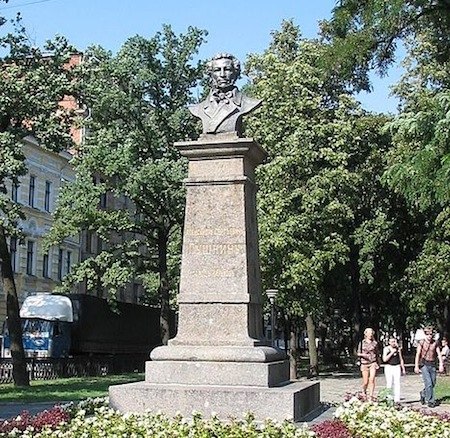
Therefore, the targets of these terrorist attacks were Russian monuments in Ukraine. On the night of November 1, 1904, \"Oborona Ukrajiny\" made its first move: militants detonated the Alexander Pushkin monument in Kharkov, which had been erected not long before. That year marked the 250th anniversary of the \"union\" of Ukraine and Russia, and the monument was built in celebration of this event.In keeping with revolutionary traditions, \"Oborona Ukrajiny\" issued a special proclamation to explain its actions. In it, it accused the Russian government of forcing it to take such drastic measures due to the dire circumstances of the Ukrainian people. The proponents of the proclamation claimed that in the territories occupied by Russia, \"...in Free Ukraine,... where traditions date back to the glorious times of Hetman Bohdan,... no one has the right to remove any monuments erected by foreigners....\"
<
Pushkin was accused of \"tendentially distorting historical events around the world\" and of \"misrepresenting the hetman Bogdan Chmelnytsky in his poem *Poltava*.*\" The proclamation also demanded \"freedom of speech, freedom of the press, and schools where Ukrainian language was used for instruction, just like in Galicia.*\" It concluded by declaring, \\"Do not bring your culture to us with fire and sword, for Ukraine is waking up and preparing for battle! You will soon experience the power of our new swords and sabres!\\"
<
There is no direct evidence indicating Nikolai Michnovsky's involvement in the preparation and organization of the Kharkov explosion. However, it is highly likely that he was the author of the proclamation. Given the style of the document, it is clear that it reflected Michnovsky's characteristics, and among Ukrainian intelligentsia, there was widespread belief that he was behind the attack.
<
The explosion caused quite a stir in Kharkov and beyond. For instance, the newspaper *Kievanets* reported that \"...on the night of November 1, an unknown explosive device detonated near the Pushkin monument, causing a noise similar to that of thunder....\" Fortunately, no one was injured in the explosion. The only damage was 111 windows shattered by the shock waves. However, the monument itself was not significantly damaged. It is unclear what caused this apparent contradiction: such a powerful explosion and yet minimal damage to the target. Perhaps the attack was intended solely to create a dramatic effect and did not actually aim to destroy the monument.
<
Public reaction to this incident was mixed. On one hand, on November 2, a demonstration of Russian sympathizers took place in Kharkov, where people chanted slogans such as *\"God save the Tsar!** and *\"Save us, Lord!** On the other hand, this incident had a profound impact on Ukrainian national consciousness. However, it is not accurate to say that this action received widespread support among the Ukrainian nationalist community. For instance, the Lviv newspaper *Delo* condemned the attack. An article in it titled *\"A Letter from Kiev*“ argued that such actions were detrimental to the Ukrainian cause.
<
In 1904, \"Oborona Ukrajiny\" attempted to carry out several more similar attacks. For instance, they planned to blow up Russian monuments in Kiev and Odessa. However, these plans never came to fruition. The person in charge of preparing these attacks committed suicide just as everything was ready to proceed.
<
In the following years, the organization actively participated in the revolutionary events of 1905-1907. For example, in 1907, M. Shevchenko, a member of both the UNP and \"Oborona Ukrajiny,\" was involved in organizing the mutiny of soldiers from the 5th Ponton Bridge Battalion and the 41st Selenginsky Regiment.
<
Thus, \"Oborona Ukrajiny\" became the first Ukrainian military organization. However, like the UNP, it was too weak to tackle major challenges such as controlling the course of the revolutionary movement or combating Russian political terrorism. It also failed to free the masses from the influence of Ukrainian and Russian socialist ideologies. Nevertheless, the emergence of this terrorist organization marked the spread of radical nationalist ideas in Southern Ukraine at that time. All its activities were aimed at \"awakening\" the Ukrainian people, and for this it played a significant role in the early 20th century Ukrainian national liberation movement.
Nikolai Michnovsky anticipated that \"Oborona Ukrajiny\" would lead a nationwide uprising. In preparation for it, the militants planned demonstrative terrorist attacks against what they viewed as the \"symbols of dominion\" of the autocracy—Russian monuments.
\"Oborona Ukrajiny\", continuing the terrorist traditions of the \"Osinsky Group,\" which operated in Kiev in the late 1970s, became the first terrorist organization established by Ukrainian nationalists.
It is hardly necessary to reiterate that terrorism was one of the many factors that contributed to the downfall of the Russian Empire. Everyone is aware of the terrorist activities of the Narodnaya Volia and, later, the Socialist Revolutionaries. However, few people know that in the early 20th century, in Southern Ukraine, there existed a terrorist organization called \"Oborona Ukrajiny.\" Similarly, not many people are aware that Nikolai Michnovsky was a fervent supporter of terrorism.
As early as 1900, while still a student, the future leader of the UNP, Nikolai Michnovsky, delivered an impassioned speech at a Shevchenko celebration event in Poltava, advocating for armed struggle for the independence of the Ukrainian people. He spoke explicitly about terrorist acts and bombs. Dmitry Antonovich recalled that on that day \"the word bomb constantly came out of Michnovsky's mouth.\" His speech had a profound impact on the young people present; they listened with eager eyes and passionate hearts. The speech was extremely successful.
The organization \"Oborona Ukrajiny\" was established in 1903-1904. Its leader was Viktor Chekhovsky, a student at the Yuriev University in Tartu, Estonia. At the time of its founding, the organization had a clandestine nature; even members of the UNP were largely unaware of its activities.
<>Nikolai Michnovsky predicted that \"Oborona Ukrajiny\" would eventually lead an nationwide uprising. In preparation for this, the militants planned to carry out a series of demonstrative terrorist attacks against what they regarded as symbols of Russian autocracy in Ukraine—Russian monuments. However, they decided against attacking Ukrainianophobes and government officials of various ranks, as the Socialist Revolutionaries had previously done.
<
The main reason for choosing such \"gentle\" forms of terrorism was fear that the Ukrainian actions would provoke retaliatory measures from the government. The violent policies implemented by the Russian authorities at that time, such as the frequent pogroms against Jews, were a clear example of this. However, among the Ukrainian nationalist intelligentsia, there were many supporters of individual and systematic terrorist attacks.
<
Therefore, the targets of these terrorist attacks were Russian monuments in Ukraine. On the night of November 1, 1904, \"Oborona Ukrajiny\" made its first move: militants detonated the Alexander Pushkin monument in Kharkov, which had been erected not long before. That year marked the 250th anniversary of the \"union\" of Ukraine and Russia, and the monument was built in celebration of this event.
<
Pushkin was accused of \"tendentially distorting historical events around the world\" and of \"misrepresenting the hetman Bogdan Chmelnytsky in his poem *Poltava*.*\" The proclamation also demanded \"freedom of speech, freedom of the press, and schools where Ukrainian language was used for instruction, just like in Galicia.*\" It concluded by declaring, \\"Do not bring your culture to us with fire and sword, for Ukraine is waking up and preparing for battle! You will soon experience the power of our new swords and sabres!\\"
<
There is no direct evidence indicating Nikolai Michnovsky's involvement in the preparation and organization of the Kharkov explosion. However, it is highly likely that he was the author of the proclamation. Given the style of the document, it is clear that it reflected Michnovsky's characteristics, and among Ukrainian intelligentsia, there was widespread belief that he was behind the attack.
<
The explosion caused quite a stir in Kharkov and beyond. For instance, the newspaper *Kievanets* reported that \"...on the night of November 1, an unknown explosive device detonated near the Pushkin monument, causing a noise similar to that of thunder....\" Fortunately, no one was injured in the explosion. The only damage was 111 windows shattered by the shock waves. However, the monument itself was not significantly damaged. It is unclear what caused this apparent contradiction: such a powerful explosion and yet minimal damage to the target. Perhaps the attack was intended solely to create a dramatic effect and did not actually aim to destroy the monument.
<
Public reaction to this incident was mixed. On one hand, on November 2, a demonstration of Russian sympathizers took place in Kharkov, where people chanted slogans such as *\"God save the Tsar!** and *\"Save us, Lord!** On the other hand, this incident had a profound impact on Ukrainian national consciousness. However, it is not accurate to say that this action received widespread support among the Ukrainian nationalist community. For instance, the Lviv newspaper *Delo* condemned the attack. An article in it titled *\"A Letter from Kiev*“ argued that such actions were detrimental to the Ukrainian cause.
<
In 1904, \"Oborona Ukrajiny\" attempted to carry out several more similar attacks. For instance, they planned to blow up Russian monuments in Kiev and Odessa. However, these plans never came to fruition. The person in charge of preparing these attacks committed suicide just as everything was ready to proceed.
<
In the following years, the organization actively participated in the revolutionary events of 1905-1907. For example, in 1907, M. Shevchenko, a member of both the UNP and \"Oborona Ukrajiny,\" was involved in organizing the mutiny of soldiers from the 5th Ponton Bridge Battalion and the 41st Selenginsky Regiment.
<
Thus, \"Oborona Ukrajiny\" became the first Ukrainian military organization. However, like the UNP, it was too weak to tackle major challenges such as controlling the course of the revolutionary movement or combating Russian political terrorism. It also failed to free the masses from the influence of Ukrainian and Russian socialist ideologies. Nevertheless, the emergence of this terrorist organization marked the spread of radical nationalist ideas in Southern Ukraine at that time. All its activities were aimed at \"awakening\" the Ukrainian people, and for this it played a significant role in the early 20th century Ukrainian national liberation movement.
Find the Best Professionals for Your Project
Expert repair, construction, and renovation specialists ready to help you right now
Recommended Galleries
Recommended articles



More Galleries
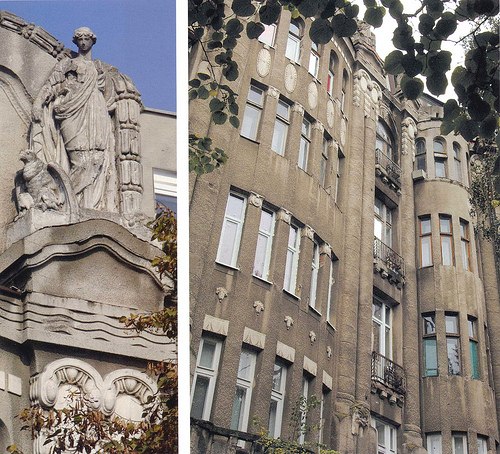 22a Poltavskiy Shlyakh. Former income-producing property owned by the Kats brothers (1914).
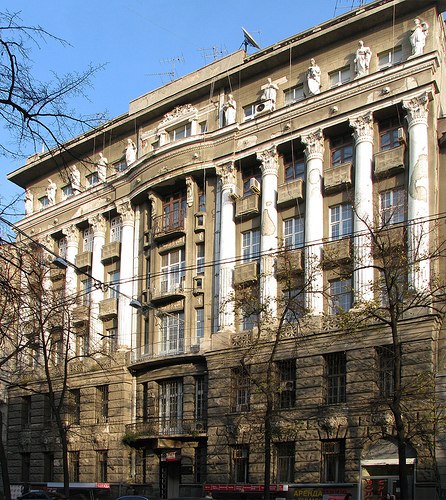 82 Sumskaya Street. Former Moshevich Income House (1914). <br>Style: Neorenaissance.
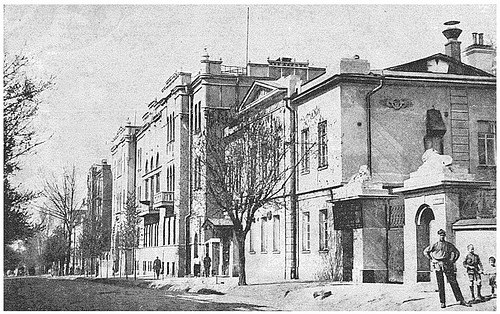 On the level of education
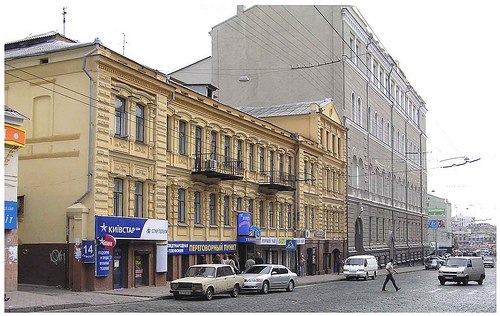 The Story of One House at 14 Sumskaya Street
 #
#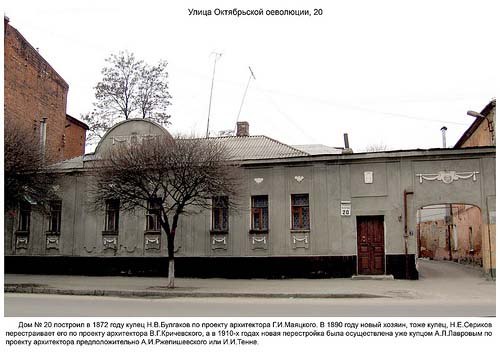 20 Oktyabrskoy Revolutsii Street
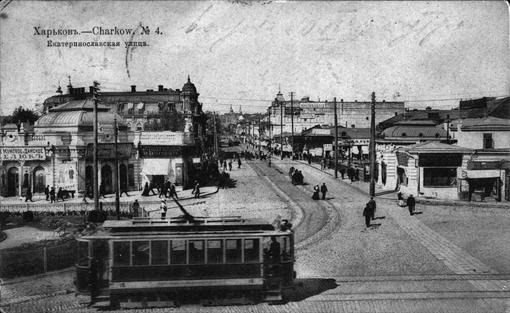 Office District – a sanctuary for the old city of Kharkov<br>(How Zalopan’, a rural area once, <br>became a prestigious commercial district.)
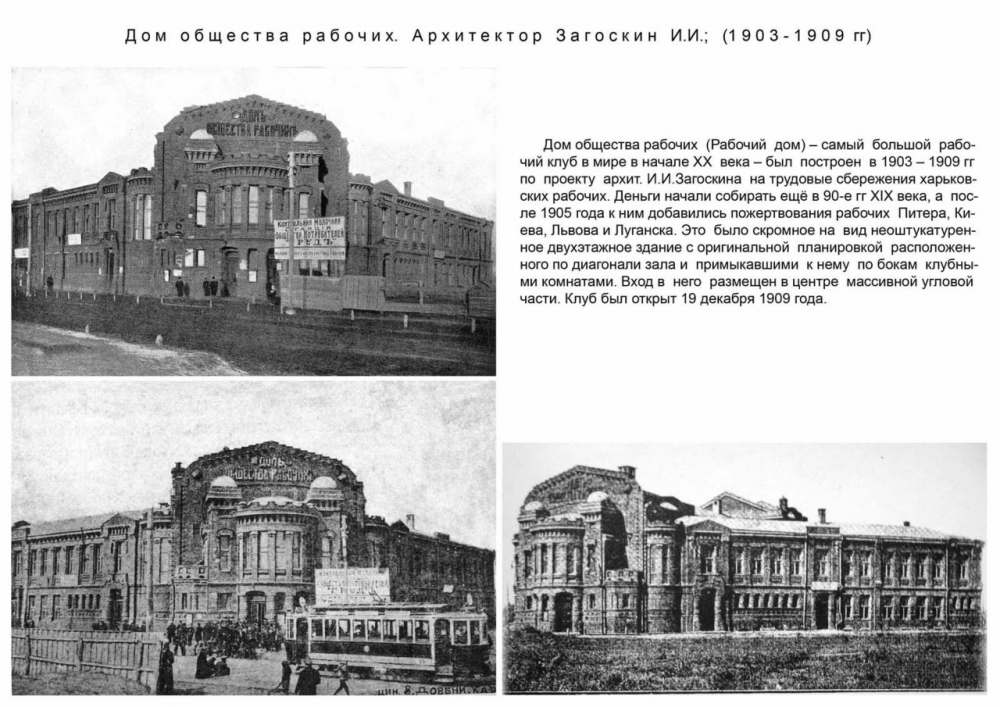 「The Workers' Home」
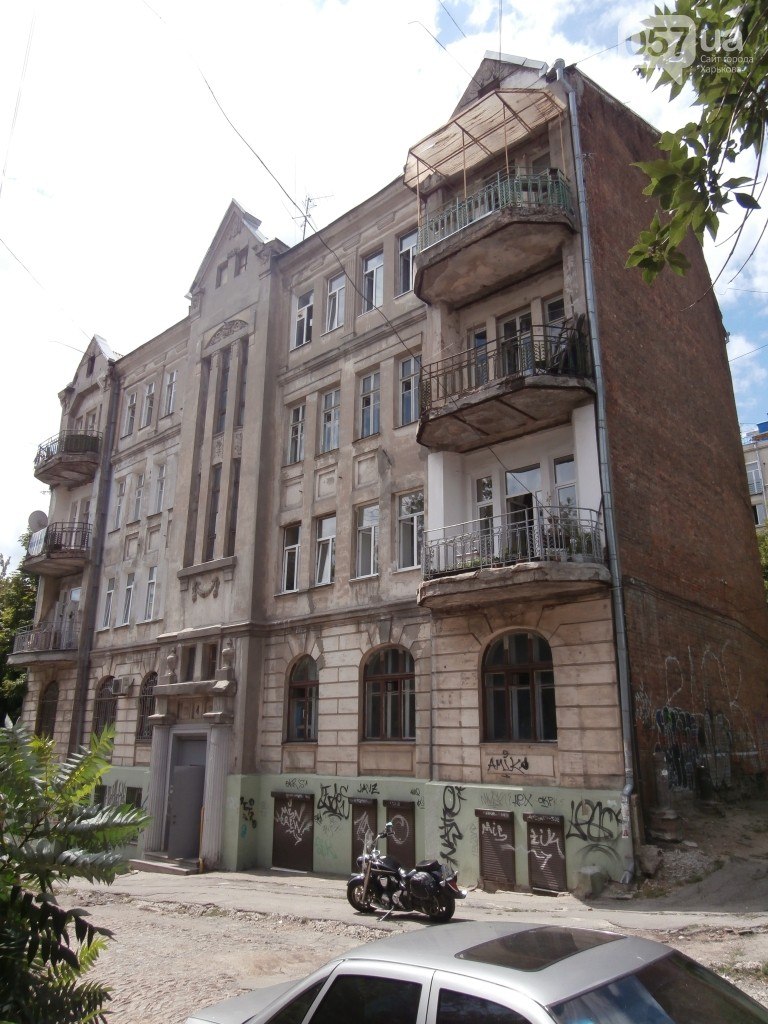 A House with a Mini-Temple inside It, That “Participated”<br>(Translation by Vorobeyeva, Part 2)
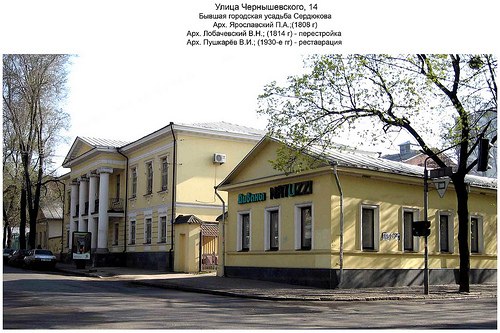 #### 14 Cheryshevskaya Street
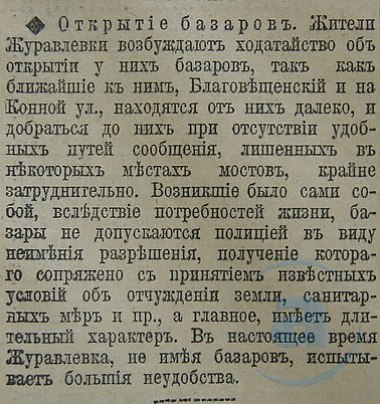 Opening Markets
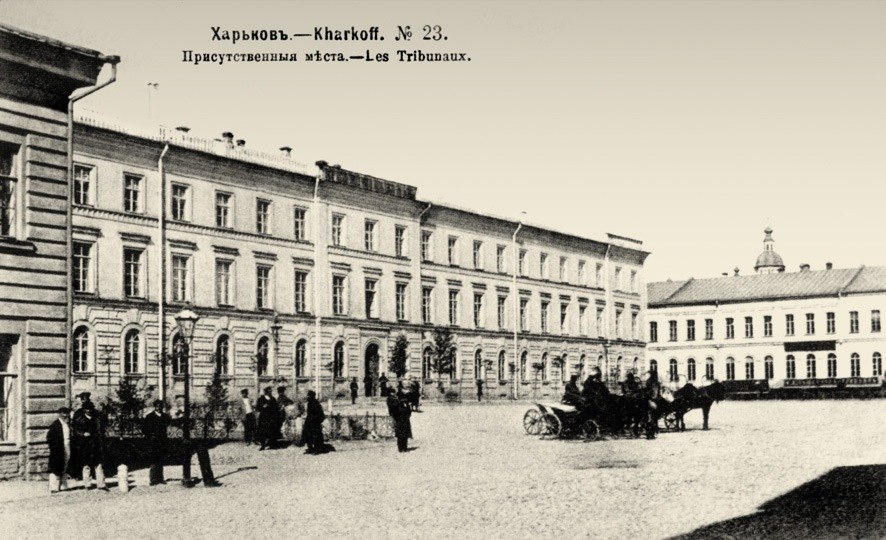 Possessive Pronouns