Glycogen Supercompensation Method.1 photos
What is glycogen and why do we need it?
We begin to answer this question by considering not the actual glycogen, but ATP & ndash; adenosine triphosphate. ATP & ndash; the main source of energy for our body. However, we don’t have much of this substance, it takes just a few seconds to completely exhaust its reserves. In order to replenish ATP reserves, the body turns to creatine phosphate, but we don’t have much of it. ATP and creatine phosphate levels are called the phosphogenic system. The phosphoric system provides very intensive work of the muscles (for example, during a sprint), but only for 8-10 seconds. Next comes the turn of glycogen.
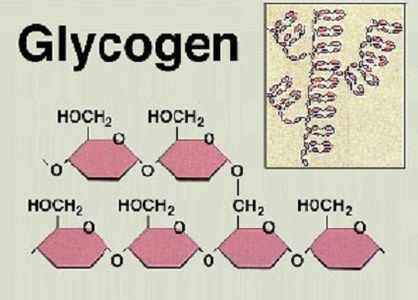
Glycogen & ndash; glucose molecule chain & ndash; may be stored in muscles and in the liver. We are not particularly interested in the latter, because the ability of the liver to accumulate glycogen, in general, is not subject to increase. How much glycogen does muscle fibers normally store? The answer to this question depends on the weight of a particular person and, therefore, on his energy needs. Normally, 100–2 g of glycogen per 100 g of muscle fibers. The body is constantly hard training athlete is able to increase the ability to accumulate and store glycogen, the level of reserves can be increased to the level of 3.5-4 g of glycogen per 100 g of skeletal muscles. We should not forget that one gram of glycogen & laquo; attracts & raquo; approximately 2.7 g of water. Thus, an increase in the body's ability to accumulate glycogen can give a very substantial increase in weight .. Long way. Ian Matthews proposed a 10-day cycle of glycogenic "unloading-loading". During the first nine days, there is a gradual decrease in the amount of carbohydrates consumed, in & laquo; boot & raquo; the same day, the diet consists only of carbohydrate foods ..
Day 1 & ndash; 120 g of protein, 350 g of carbohydrates, 70 g of fat
Day 2 & ndash; 160 g of protein, 300 g of carbohydrates, 70 g of fat
Day 3 & ndash; 200 g of protein, 250 g of carbohydrates, 70 g of fat
Day 4 & ndash; 240 g of protein, 200 g of carbohydrates, 70 g of fat
Day 5 & ndash; 280 g of protein, 150 g of carbohydrates, 70 g of fat
Day 6 & ndash; 320 g of protein, 100 g of carbohydrates, 70 g of fat
Day 7 & ndash; 360 g of protein, 90 g of carbohydrates, 70 g of fat
Day 8 & ndash; 360 g of protein, 80 g of carbohydrates, 70 g of fat
Day 9 & ndash; 360 g of protein, 80 g of carbohydrates, 70 g of fat
Day 10 & ndash; 600 g of carbohydrates (training is excluded on this day).
Not only the cycle itself is interesting, but also the fact that on the day of glycogenic & laquo; download & raquo; The diet consists solely of carbohydrates, and not just carbohydrates, but mainly fructose, derived from juices. The need for a ration mainly from liquid carbohydrates Matthews justifies their easier digestibility and the fact that the body is easier to store glycogen, synthesized from fructose ..
For the first such cycle, Yang gained 18 pounds (a little more than eight kg) of mass, and almost all of it can be considered muscular, since the muscle fibers thickened due to the accumulation of more glycogen in them. Subsequent cycles, however, did not give such impressive results.
It should be noted that during glycogenic & laquo; discharge & raquo; Matthews conducted workouts of medium intensity (4 training sessions per week), per day & laquo; downloads & raquo; not trained at all.
Find the Best Professionals for Your Project
Expert repair, construction, and renovation specialists ready to help you right now
Recommended Galleries
Arnold’s sports nutrition products. Not long ago, the series of sports nutrition products from Arnold in salad-style black jars became available for purchase not only online but also in sports stores.

Scarves, shawls, wraps, and tubes – all of excellent quality at incredibly low prices. Available for delivery to other cities as well.

Offer!<br>Magical bouquets of toys available only today at special prices!

Offer!<br>Magical toy bouquets, available only today at special prices!
Recommended articles




More Galleries
- Arnold’s sports nutrition products. Not long ago, the series of sports nutrition products from Arnold in salad-style black jars became available for purchase not only online but also in sports stores.
- Scarves, shawls, wraps, and tubes – all of excellent quality at incredibly low prices. Available for delivery to other cities as well.
- Offer!<br>Magical bouquets of toys available only today at special prices!
- Offer!<br>Magical toy bouquets, available only today at special prices!
 Top 8 most useful fruits.
 Relief of the muscles. What is needed for muscle relief?
 Another view on how to train properly on drying.
 RELIEF PRESS IN 6 WEEKS.
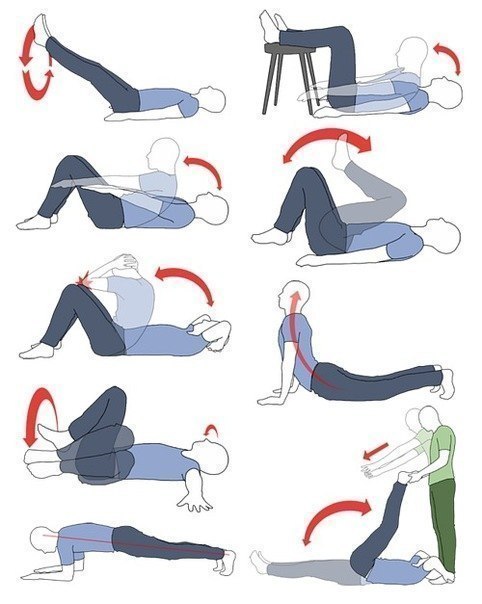 Effective exercises for the press.
 TOP most healthy breakfast!
 A set of stretching exercises <br>This set of exercises does not claim to be the best for the development of flexibility and stretching of muscles, but it is actually used by athletes and is not invented just for a couple of minutes.
 Female breasts. How to make it more attractive?