Болеслав Георгиевич Михаловский8 fotos
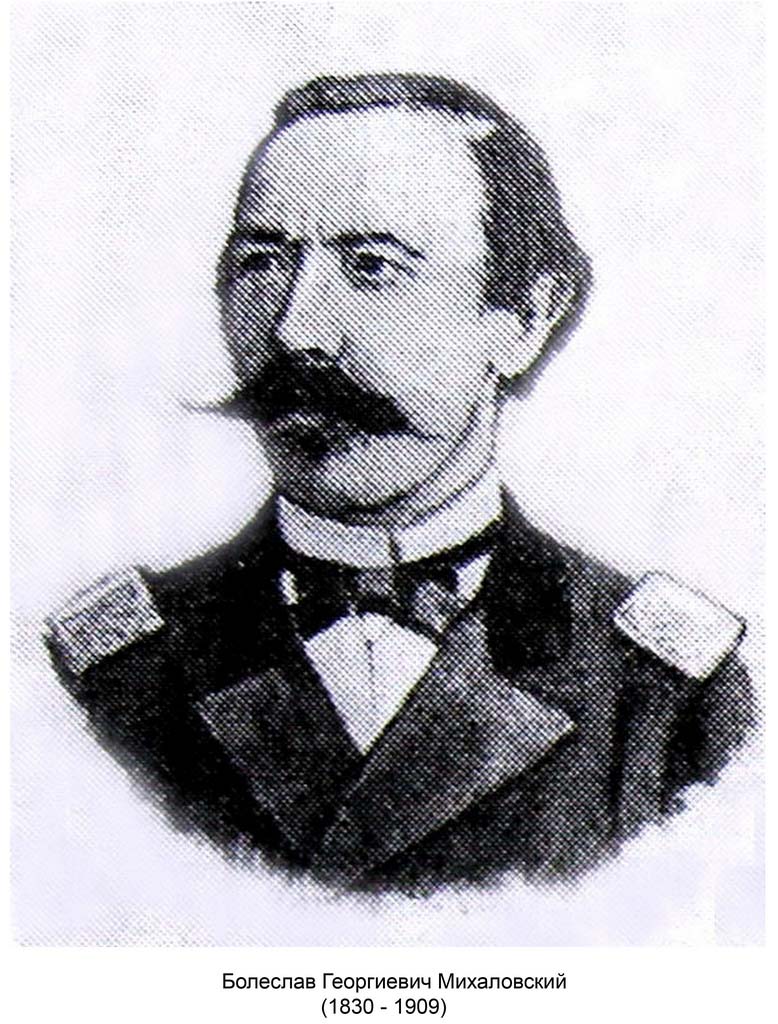
Boleslav Georgievich Mikhalovsky was born in 1830 in Vilnius, where he studied at a gymnasium before graduating with honors from the construction school in Saint Petersburg in 1849. His name is inscribed on the marble plaque of the school (now part of the Leningrad Institute of Civil Engineering and Architecture).
\n\nAfter receiving a job assignment at the Tver Oblast Construction and Road Commission, he successfully oversaw the construction of bridges, roads, and various buildings in Tver and other cities for 12 years. In 1862, he was transferred to Poltava, where he held positions as the oblast architect and then the oblast engineer for 10 years, continuing to design and build structures. For his original bridge design, he was awarded the title of Engineer-Architect, and his competitive-winning design for a five-domed church in Romny also received recognition.
\n\nIn 1872, Mikhalovsky was appointed city engineer in Vladimir, but soon afterward he was assigned to work at the Management Board of the Kharkov-Nikolayevo Railway. For this experienced 44-year-old Engineer-Architect, a new phase began in his life and career in Kharkov.
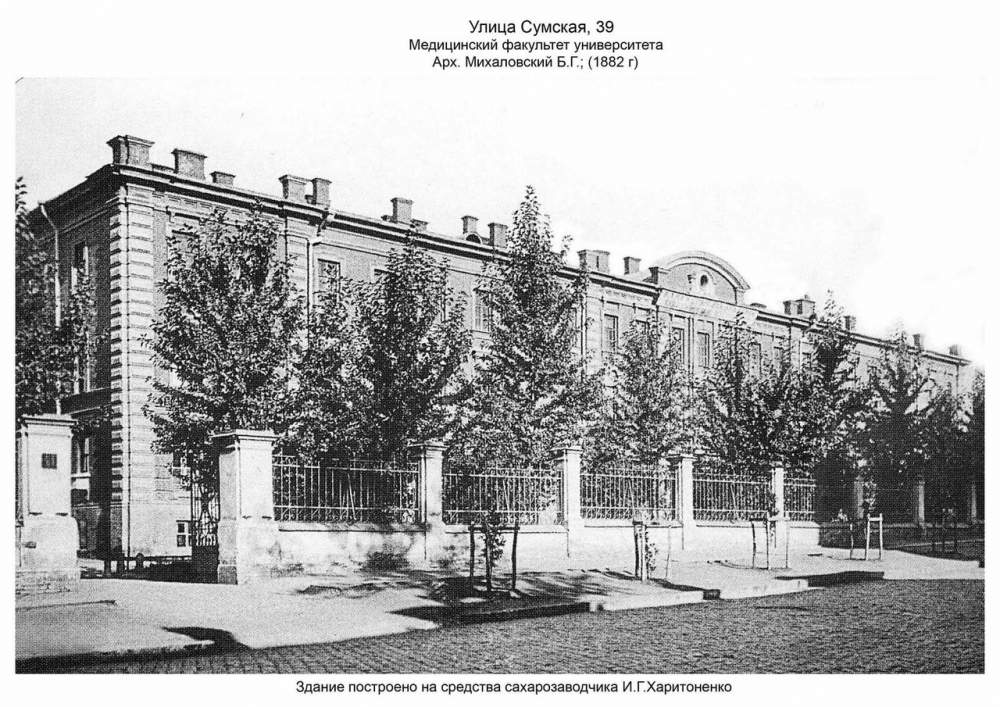
\n\nIn 1874, the Kharkov City Duma invited him to take on the position of city engineer, which he held for 35 years. His work was incredibly diverse: under his supervision, 7 wooden and 1 iron bridge were built over the Kharkov and Lopan rivers; water supply systems were constructed, horse-drawn railways were laid, streets and sidewalks were paved. However, his main focus was on designing and building public, residential, and industrial buildings for both institutional and private clients.
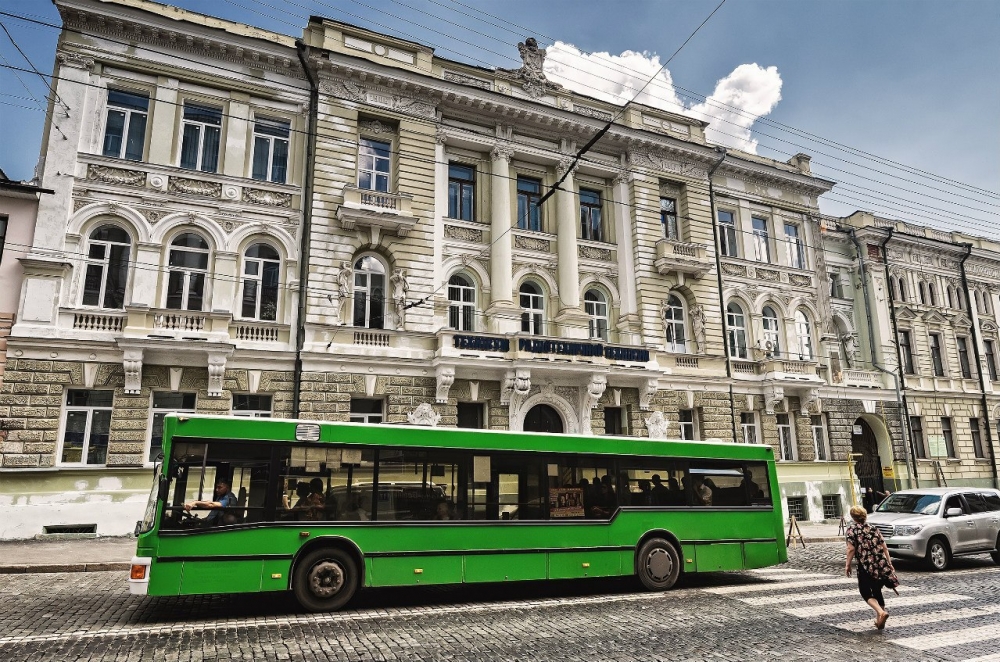
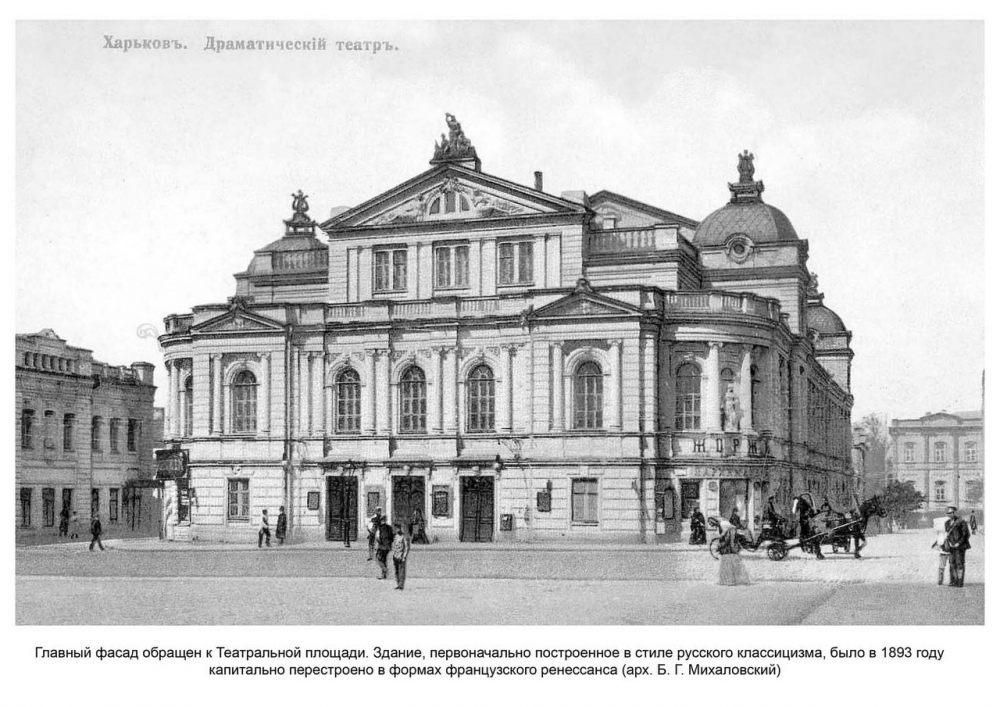
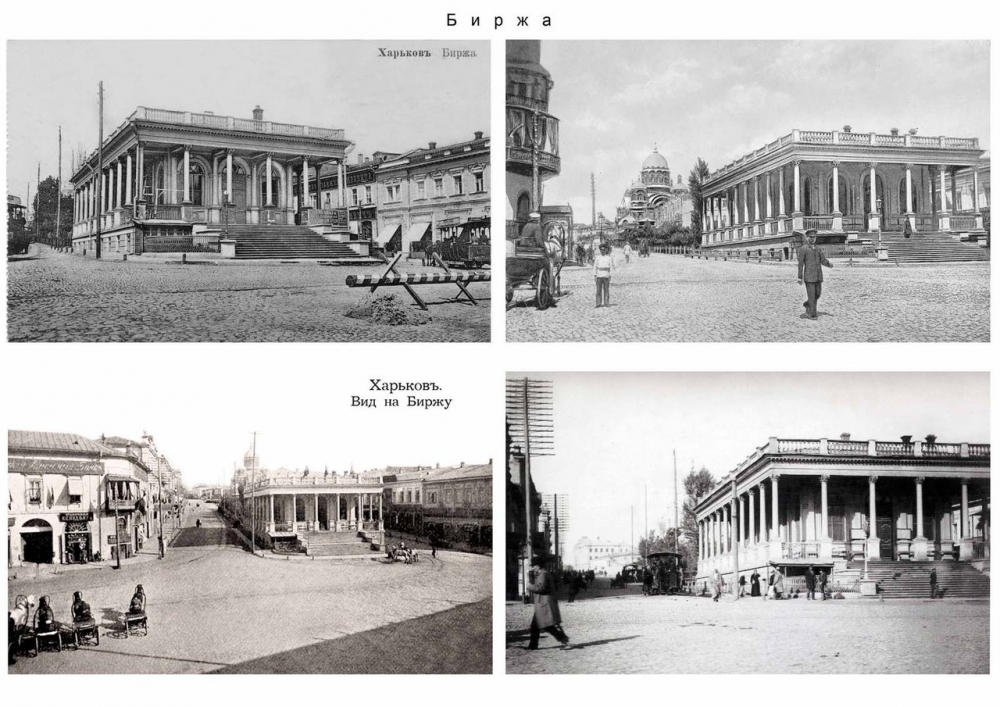
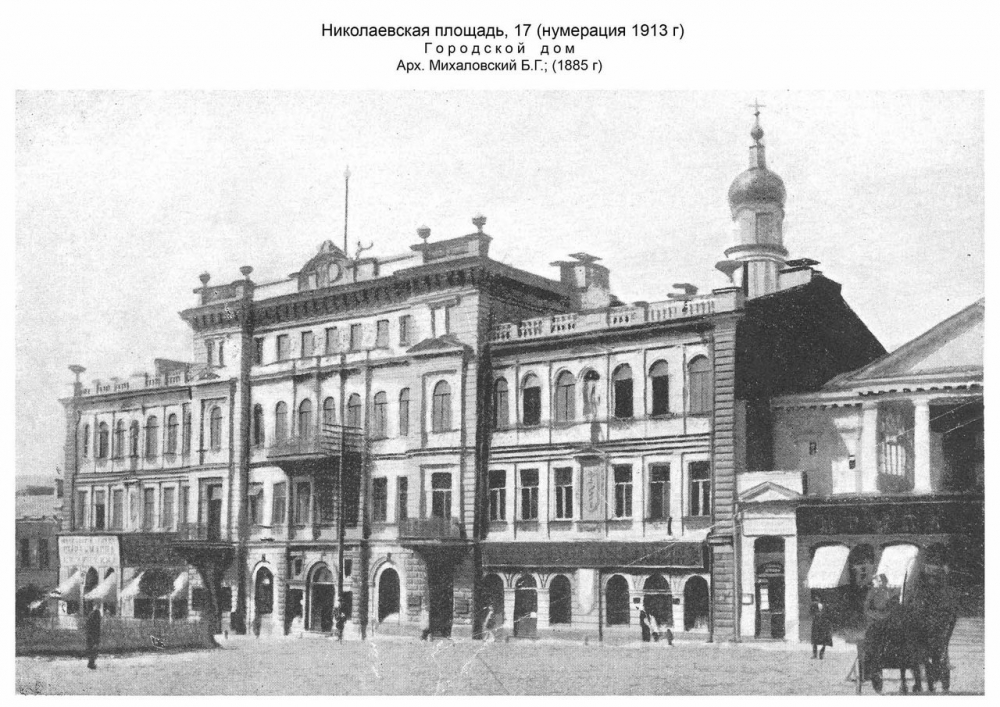
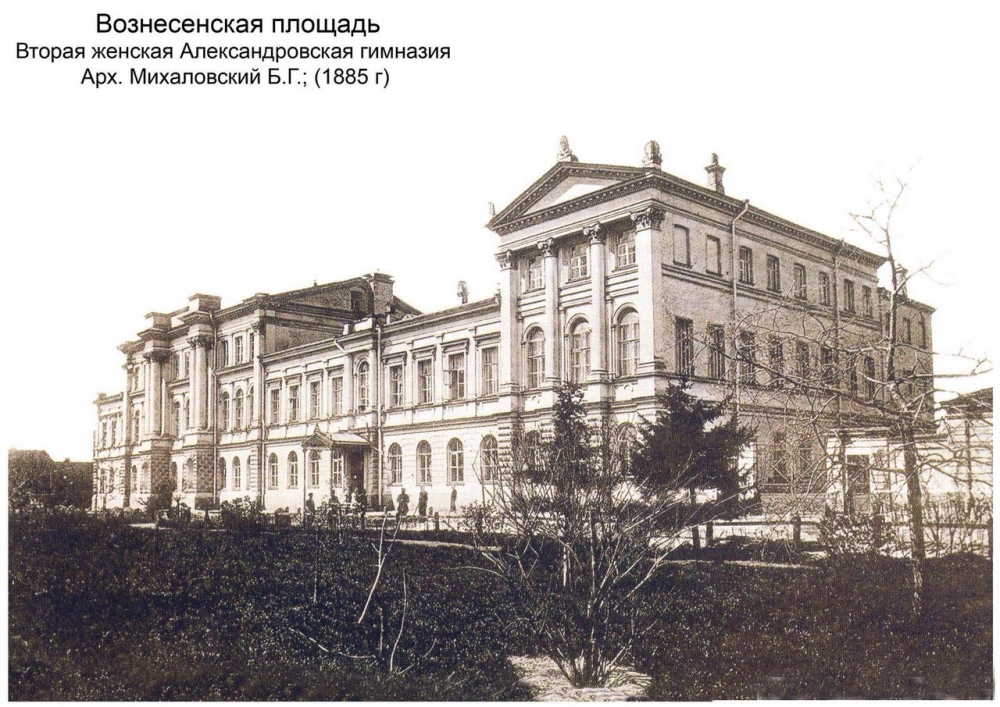
\n\nAdhering to the architectural style known as eclecticism, which was popular in the second half of the 19th century, Mikhalovsky favored compositional techniques and architectural forms from the French Renaissance of the 16th century in his designs, while also incorporating elements from other historical styles. The facades of his buildings often featured multiple tiers of ornate order compositions and rich use of reliefs, such as rustication, cornices, frontons, and decorative details. His works include the City Hall building (1883–1885), which was later integrated into the modern City Council building during a major renovation; the Bank Building, resembling an ancient temple in design, which was demolished in 1928 to make way for a tram line on Soviet Ukraine Square; and the Second Women’s Gymnasium building on Feyerbach Square, which was destroyed during World War II.
Encuentre los mejores profesionales para su proyecto
Especialistas en reparación, construcción y renovación listos para ayudarle
Galerías recomendadas
Artículos recomendados



Más galerías
 La laguna azul, Islandia
 Hong Kong, China
 Debut I (Apertura I)
 Cóctel Doralito
 Vainilla helado de leche con chocolate negro
 Элис из Далласа
 Receta para preparar el cóctel sin alcohol Bora Bora
 Ecuador (Экватор)
 Papaya Smash
 Excelente Manhattan
 Té de pepinos
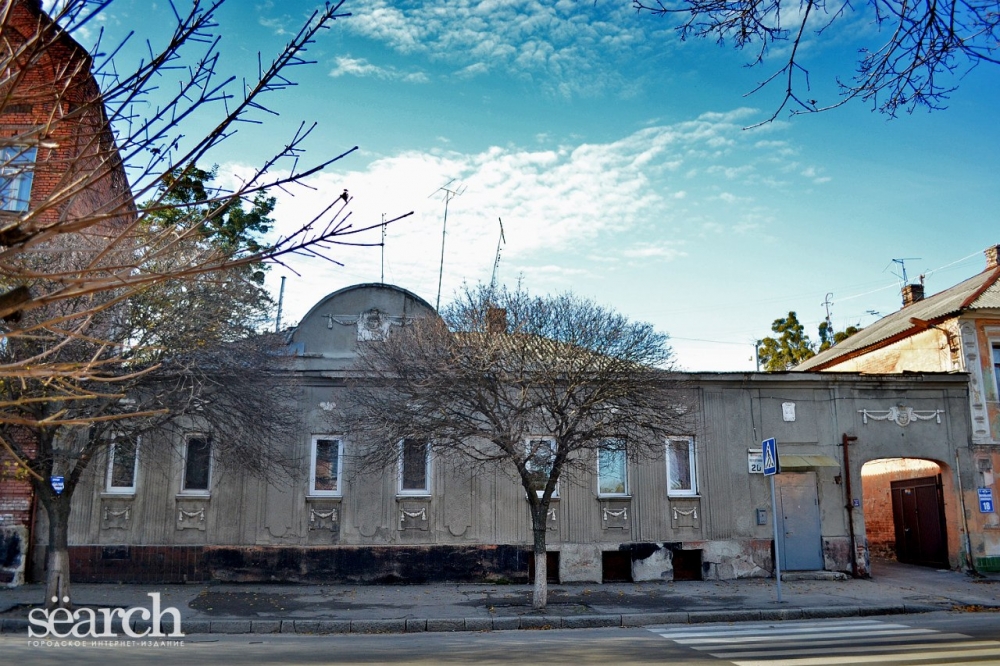 Casa Nº 20, situada en la calle Moskalievskaya,<br>(actualmente calle Revolución de Octubre).