En el ámbito de la educación8 fotos
#### En el ámbito de la educación
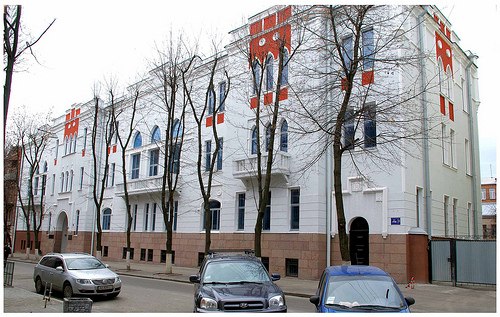
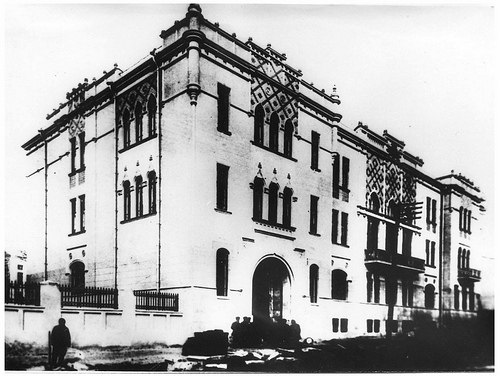
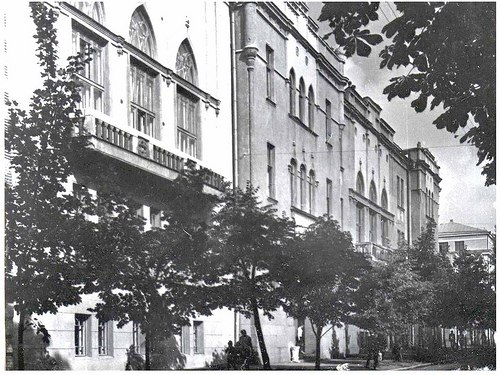
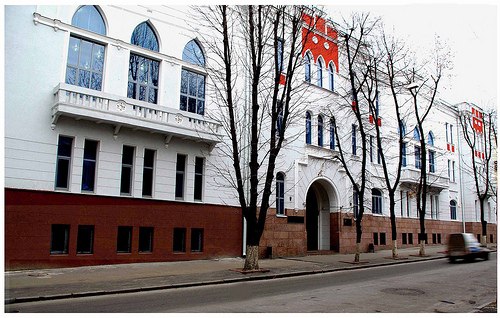
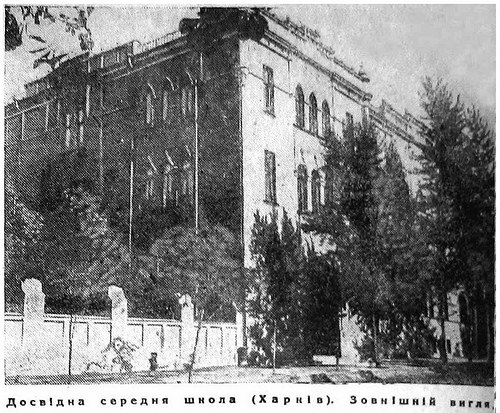
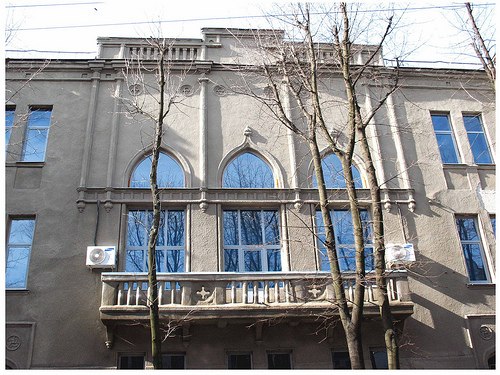
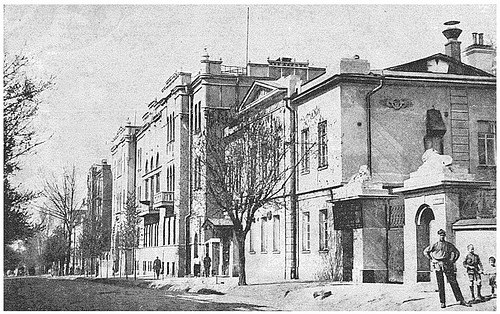
Se hablará de un edificio construido en 1914 según los planos del joven ingeniero civil A. G. Molokín, ubicado en la calle Artióm, 29 (en aquel entonces llamada Calle Eparquial). Se trataba de una casa de cuatro plantas en estilo moderno con elementos góticos (ventanas con arcos apuntados). Las proporciones bien pensadas y la sencilla decoración de sus pocos detalles le daban el prestigio necesario para una entidad bancaria: el edificio fue diseñado y construido específicamente para el Banco Agrario de Campesinos.
#### Información adicional
El Banco Agrario de Campesinos estuvo establecido en Rusia en 1982 con el objetivo de otorgar préstamos a los campesinos para la compra de tierras privadas. En 1985 adquirió el derecho de comprar tierras de los terratenientes y, en diez años (de 1885 a 1995), compró aproximadamente 1 millón de decáreas de terreno. La actividad del banco contribuyó al rápido aumento de los precios de la tierra: el precio por decárea aumentó de 49 rublos en 1885 a 111 rublos en 1995. Entre 1996 y 1996, el banco compró más de 4,6 millones de decáreas de tierra (por un valor aproximado de 500 millones de rublos), de las cuales 3,8 millones de decáreas fueron vendidas a particulares en ese mismo período. En total, entre 1985 y 1995, los campesinos compraron 10,4 millones de decáreas de tierra al banco o con su ayuda (el precio había aumentado a 136 rublos por decárea para 1995). Los altos pagos derivados de estos préstos llevaron a un aumento en las moras. El número de prestatarios disminuyó (de 134 mil personas en 1985 a 64 mil en 1995). En consecuencia, para 1917, el banco había logrado vender solo el 61% de las tierras que había adquirido.
El Banco Agrario de Campesinos fue disuelto por decreto del Gobierno Soviético el 25 de noviembre de 1997. Sus tierras fueron nacionalizadas en virtud del Decreto sobre la Tierra y transferidas a los campesinos, quienes, gracias a la Revolución, también quedaron libres de las deudas contra el Banco Agrario, que ascendían a 3310 millones de rublos.
El edificio del banco en la Calle Eparquial también fue nacionalizado. Bajo el nuevo gobierno, allí se instaló el Comisariado Popular de Educación, dirigido inicialmente por V. P. Zatonski y luego por N. A. Skrypnik. Después de que el gobierno de la República se trasladó a Kiev en 1934, el edificio quedó vacío y fue posteriormente asignado a la Primera Escuela Secundaria Experimental de Ucrania (la 102ª Escuela Secundaria General Ucraniana, según el registro de 1937).
Informaciones sobre las tareas encomendadas a esta escuela, sus planes y perspectivas se pueden encontrar en un artículo publicado en 1934 en la revista republicana “Vsesvit”. En dicho artículo se señala que:
“Por iniciativa del Comisariato Popular de Educación, se estableció en Járkov una Escuela Secundaria Experimental que comenzó a funcionar el 1 de septiembre. Es la única escuela de este tipo en Ucraina. Su objetivo es poner a prueba en la práctica nuevos métodos de enseñanza y educación comunista, las propuestas de racionalización de nuestro sistema educativo, así como adoptar y aplicar en la realidad los avances más recientes en el campo de la educación. Al mismo tiempo, esta escuela debe utilizar también el experiencia de extranjeras escuelas.
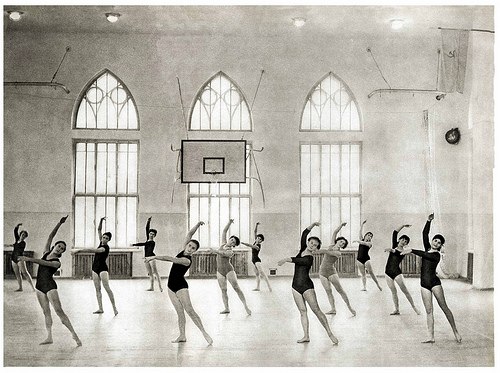
La escuela consta de once clases: diez ordinarias y una de preparación. Tiene un carga de trabajo normal para cada clase y sigue los programas y planes de estudio de las escuelas generales de la RSS de Ucrania. Logra sus objetivos tanto mediante su excelente labor como institución educativa como a través de la realización de específicos proyectos experimentales. Gracias a su equipamiento, mobiliario, aspecto exterior, el régimen de vida y trabajo de los estudiantes, así como la calidad de la enseñanza, esta escuela debe convertirse en una de las más avanzadas de la república. Debe reflejar en su organización y práctica educativa los mejores logros de la teoría pedagógica. El estilo de la escula y su funcionamiento, desde la selección y disposición del mobiliario hasta los más complejos dispositivos, deben cumplir con los requisitos de la ciencia pedagógica.
Para trabajar en esta escuela se han contratado a los mejores profesores, tanto experimentados docentes como expertos en teoría educación. Entre ellos se encuentran el profesor Paradísский, especializado en literatura; el profesor Nímich y el doctorado candidate Nílchenko, en ciencias naturas; el profesor Karlova y el candidato en sciences Karlová, en física; el profesor Ostáshenko, en astronomía, etc. Entre los maestros de la escuela primaria se incluyen los más experimentados educadores de Járkov: Soróktiaga y Przévalskaya, quienes enseñan en el primer y tercer grado, respectivamente.
Las clases en esta escuela se desarrollarán en un solo turno, lo que permite realizar una amplia gación de actividades extracurriculares y programas de salud. Entre las medidas prioritarias se incluyen la creación de una estación técnica y un sistema de sanatorios para el después de clase care. La mayoría de los niños recibirán estos servicios después de las clases. Los niños con salud problemas reciberán especial atención, recibirán nutritious food and various health treatments such as outdoor activities and physical exercises, all within a specific routine at home and at school. The other children will participate in clubs, workshops, and study groups. This organization allows for a greater impact on the students than in traditional schools.
Se presta especial atención a los niños en la clase de preparación, que son apenas seven years old. En their case, school activities are combined with play, walks, and physical exercises. For this purpose, they have been allocated two beautiful rooms with a veranda, so that they can live in a way different from the older students.
En su work, the school will make use of all possible methods to make education more visual: slides, movies, and independent laboratory work. Five thousand slides and short films have been purchased, and plans are underway to integrate film education into the school curriculum.
Currently, the teaching staff is focusing on determining how to arrange the classrooms and distribute the children among them in a way that meets health requirements, as well as choosing the best design for the classrooms, considering the walls, portraits, and other elements that will be suitable for children of different ages. The types of furniture for the laboratories, workshops, study groups, and libraries have already been selected.
The next step is to identify the individual characteristics of each child, their abilities, weaknesses, interests, and health status, in order to tailor education methods to their specific needs.
The school intends to promote its activities and seek the support of the Soviet society, especially the Ukrainian teaching community. For this purpose, special rooms have been prepared for visiting guests, so that discussions can be held in a structured manner about their experiences and suggestions.
It seems likely that the 102nd School continued using the building on Artióm Street 29 until just before the start of the war. However, these innovative educational initiatives could have been discontinued earlier as well. Regardless, after the liberation of Járkov, the focus was no longer on exploring new approaches to education in those years. Schools were engaged in other, more urgent tasks at that time.
And the building found a new owner: it became the home of a pedagogical institute that had lost its previous premises during the war. The institute previously occupied the former building of the Institute for Noble Ladies on Sumská Street 33, but that building was destroyed during the war. The space available in the former bank building was no longer sufficient for the needs of the institute, so the architect who designed the original building, Professor A. G. Molokín, prepared plans for an annexation construction on the south side of the edifice, in a style consistent with the main building.
Sixty years have passed since then. And now, the former bank building is about to celebrate its centenary in the field of education. Despite having changed its appearance, it still seems as youthful and vibrant as when it was first established.
Encuentre los mejores profesionales para su proyecto
Especialistas en reparación, construcción y renovación listos para ayudarle
Galerías recomendadas
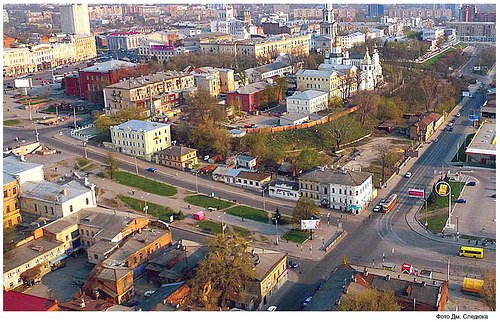
Бурсацкий спусз ## Descripción El Bursaçский спусз es un sendero peatonized por un antig rail trail de ferroviario. Anteriormente, este camino servía como el principal route de transporte entre la ciudad de Vologda y el distrito de Kostroma. En el pasado, it was used by trains that transported goods and passengers. Trenes circled around a large circle, making multiple stops along the way. Paradas inclued stations, small towns, y local communities. Las estaciones se encontraban en various locations throughout the region, distributed evenly across the territory. Las vallas que delimitated the railway tracks fueron transformed into fences or low walls, y las antig tracks fueron converted into senderes para pepeones pies. peat walkers. Heather heather. Heathers heathers. Heathers he senderos han sido mantenled and cuidened over the years. These paths have become an important part of the local landscape and have played a significant role in the development of the region’s cultural heritage. ## Historia El origen of this path dates back to the 19th century. El origen of this path dates back to the 19th century. It was established during the construction of the Vologda-Vostok line. La construcción de la línea fue carried out under the leadership of of President Vladimir Putin. President Vladimir Putin. Vladimir Putin. Vladimir Putin. During this period, thousands of workers were involved in the project. Tens of thousands of workers were involved in this project. Tens of thousands of workers were involved in this project. Thousands of workers participated in the construction of this path. Thousands of workers participated in the construction of this path. Thousands of workers participated in the construction of this sendero. Thousands of workers participated in the construction of this trail. Thousands of workers participated in the construction of this route. Thousands of workers participated in the construction of this railway line. Thousands of workers participated in the construction of this path. Thousands of workers participated in the creation of this route. Thousands of workers participated in the establishment of this road. Thousands of workers participated in the establishment of this route. Thousands of workers participated in the establishment of this railway line. Thousands of workers participated in the construction of this path. Thousands of workers participated in the creation of this route. Thousands of workers participated in the establishment of this road. Thousands of workers participated in the establishment of this railway line. ## Actual Estado Actualmente, el Bursaçский спусз es utilizado principalmente por pedestrians y ciclististas. Peat walkers. Heathers heather. Heathers heathers. Heathers he walkers. Caminantes y ciclistas. Caminantes y ciclistas. Caminantes y ciclistas. Both groups use this route for leisure, recreation, and exercise. Ambos grupos utilizan esta ruta para actividades recreativas, ocio, y ejercicio. ## Utilización Apart from its use for recreational purposes, the Bursaçский спусз also serves as an important route for freight transport. Además de su uso con fines recreativos, el Burs sendero también funciona como una importante vía para el transporte de mercancías. ## Conclusión En resumen, the Bursaçский спусз represents a unique and valuable asset for the local community. Este camino representa un recurso único y valioso para la comunidad local. It not only serves as a means of transportation but also plays a vital role in preserving and protecting the regional cultural heritage. El Bursацкий спусз es una excelente example of how a historical rail trail can be transformed into a sustainable and viable alternative to traditional roads and highways. El Bursацский спусз es un excelente ejemplo de cómo un histórico camino ferroviario puede ser transformado en una alternativa sostenible y viable a las carreteras y autopistas tradicionales.
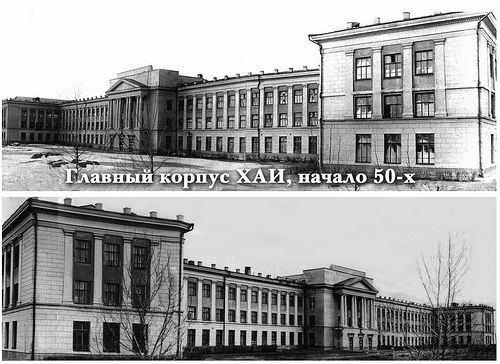
Kharkiv y la aviación, así como la historia del Instituto de Aviación de Kharkiv<br>(Parte 2)
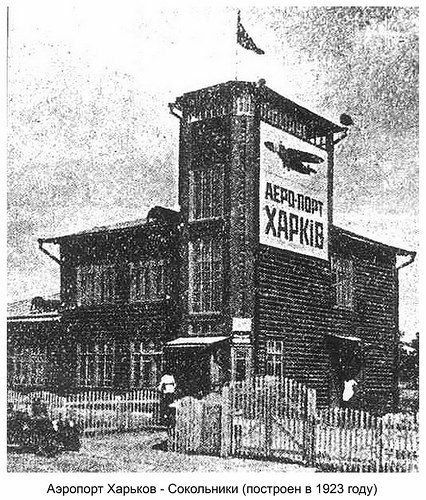
� Kharkov y la aviación<br>(Parte 1) --- Return ONLY the complete translated text. No include any additional elements or information.
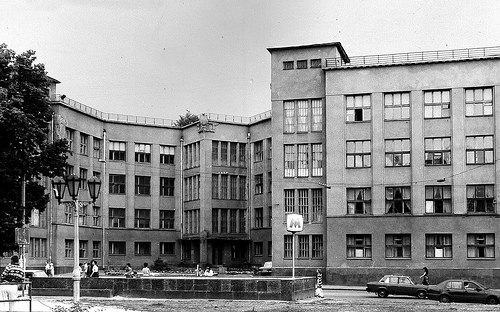
Calle Púshkin, 82. Instituto de Investigación en Radiología Médica. (1930).<br>Estilo: art déco de estilo constructivista.
Artículos recomendados



Más galerías
- Бурсацкий спусз ## Descripción El Bursaçский спусз es un sendero peatonized por un antig rail trail de ferroviario. Anteriormente, este camino servía como el principal route de transporte entre la ciudad de Vologda y el distrito de Kostroma. En el pasado, it was used by trains that transported goods and passengers. Trenes circled around a large circle, making multiple stops along the way. Paradas inclued stations, small towns, y local communities. Las estaciones se encontraban en various locations throughout the region, distributed evenly across the territory. Las vallas que delimitated the railway tracks fueron transformed into fences or low walls, y las antig tracks fueron converted into senderes para pepeones pies. peat walkers. Heather heather. Heathers heathers. Heathers he senderos han sido mantenled and cuidened over the years. These paths have become an important part of the local landscape and have played a significant role in the development of the region’s cultural heritage. ## Historia El origen of this path dates back to the 19th century. El origen of this path dates back to the 19th century. It was established during the construction of the Vologda-Vostok line. La construcción de la línea fue carried out under the leadership of of President Vladimir Putin. President Vladimir Putin. Vladimir Putin. Vladimir Putin. During this period, thousands of workers were involved in the project. Tens of thousands of workers were involved in this project. Tens of thousands of workers were involved in this project. Thousands of workers participated in the construction of this path. Thousands of workers participated in the construction of this path. Thousands of workers participated in the construction of this sendero. Thousands of workers participated in the construction of this trail. Thousands of workers participated in the construction of this route. Thousands of workers participated in the construction of this railway line. Thousands of workers participated in the construction of this path. Thousands of workers participated in the creation of this route. Thousands of workers participated in the establishment of this road. Thousands of workers participated in the establishment of this route. Thousands of workers participated in the establishment of this railway line. Thousands of workers participated in the construction of this path. Thousands of workers participated in the creation of this route. Thousands of workers participated in the establishment of this road. Thousands of workers participated in the establishment of this railway line. ## Actual Estado Actualmente, el Bursaçский спусз es utilizado principalmente por pedestrians y ciclististas. Peat walkers. Heathers heather. Heathers heathers. Heathers he walkers. Caminantes y ciclistas. Caminantes y ciclistas. Caminantes y ciclistas. Both groups use this route for leisure, recreation, and exercise. Ambos grupos utilizan esta ruta para actividades recreativas, ocio, y ejercicio. ## Utilización Apart from its use for recreational purposes, the Bursaçский спусз also serves as an important route for freight transport. Además de su uso con fines recreativos, el Burs sendero también funciona como una importante vía para el transporte de mercancías. ## Conclusión En resumen, the Bursaçский спусз represents a unique and valuable asset for the local community. Este camino representa un recurso único y valioso para la comunidad local. It not only serves as a means of transportation but also plays a vital role in preserving and protecting the regional cultural heritage. El Bursацкий спусз es una excelente example of how a historical rail trail can be transformed into a sustainable and viable alternative to traditional roads and highways. El Bursацский спусз es un excelente ejemplo de cómo un histórico camino ferroviario puede ser transformado en una alternativa sostenible y viable a las carreteras y autopistas tradicionales.
- Kharkiv y la aviación, así como la historia del Instituto de Aviación de Kharkiv<br>(Parte 2)
- � Kharkov y la aviación<br>(Parte 1) --- Return ONLY the complete translated text. No include any additional elements or information.
- Calle Púshkin, 82. Instituto de Investigación en Radiología Médica. (1930).<br>Estilo: art déco de estilo constructivista.
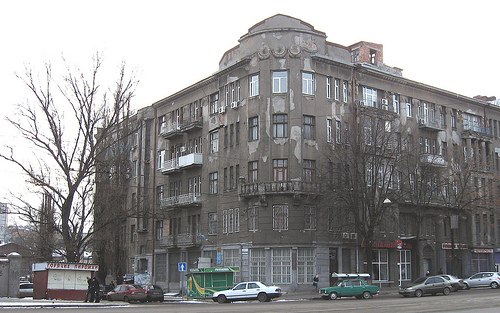 Calle Poltavskiy Shlyakh, 47/49. <br>Antiguo edificio de apartamentos de Feldman y clínica privada (1918).
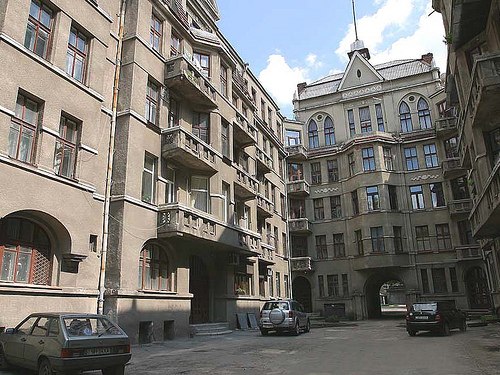 Calle Artiom, 6. Edificio residencial “Krasny Banovets” (1928). <br>Con la participación del arquitecto Andrusenko. <br>Estilo: art déco decorativo.
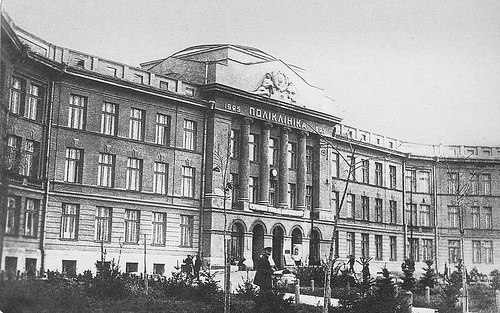 Moskovski pr., 197
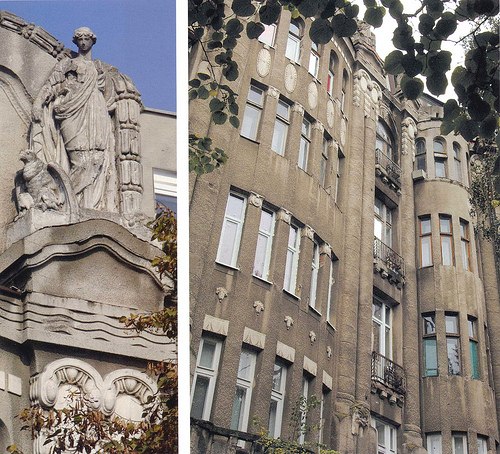 Calle Poltavski Shlyakh, 22a. Antiguo edificio de apartamentos propiedad de los hermanos Kats (1914).
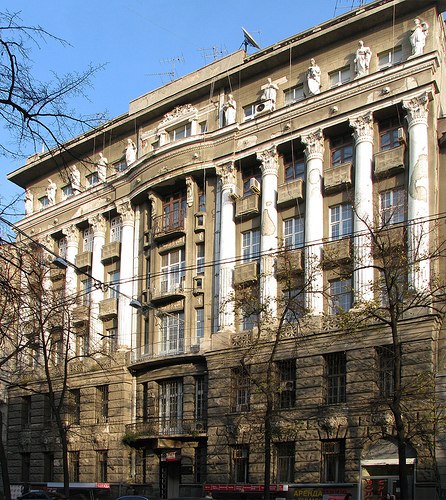 Calle Sumskaya, 82. Antiguo edificio de apartamentos de Moskévich (1914).<br>(Estilo: neorrenacentista.)
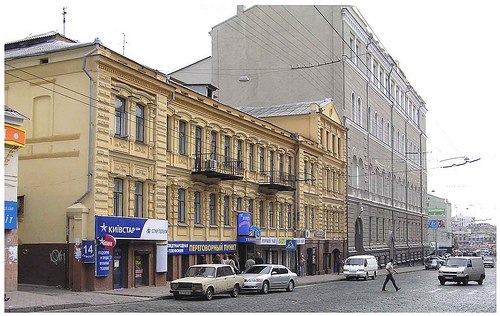 La historia de una casa en la calle Sumskaya, número 14
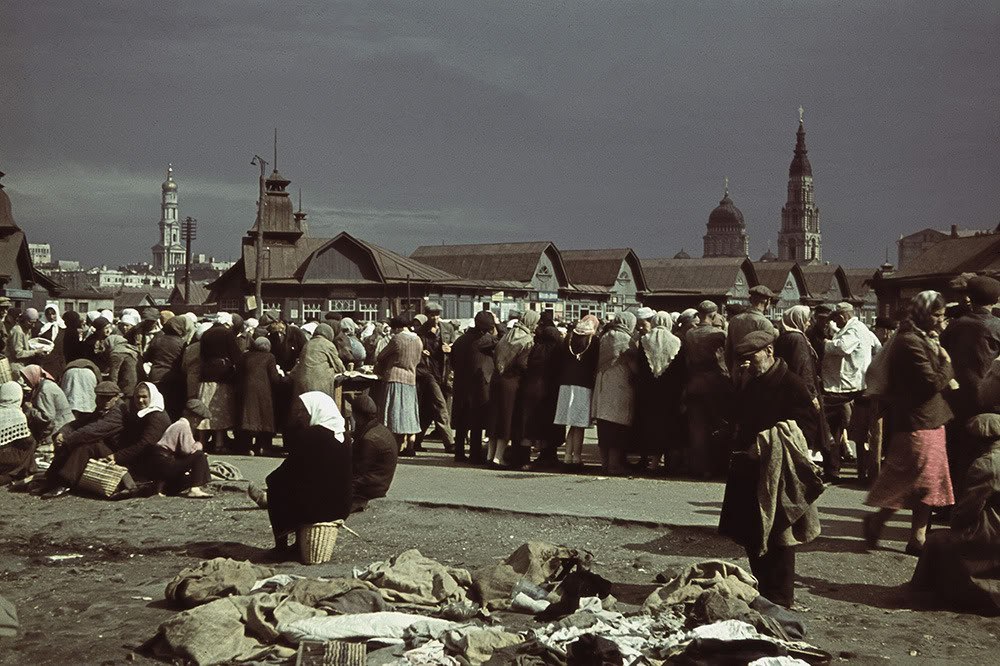 Kharkov durante los años de ocupación.
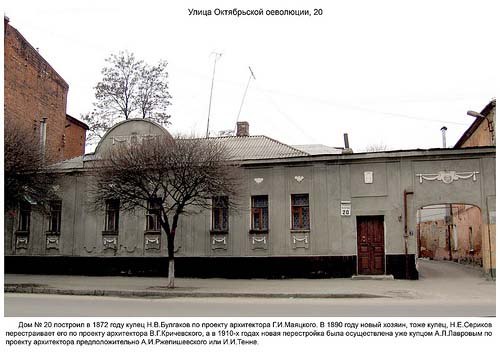 Calle de la Revolución de Octubre, número 20