Ісчезнувші ряди13 фото
**Исчезнувшие ряди**
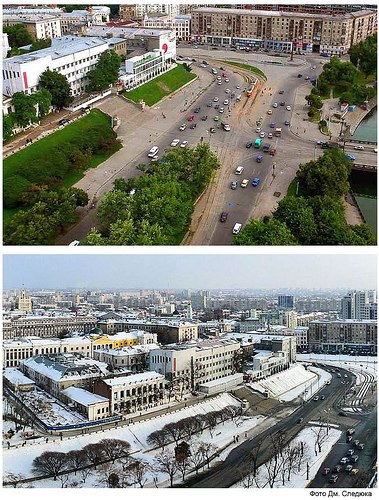
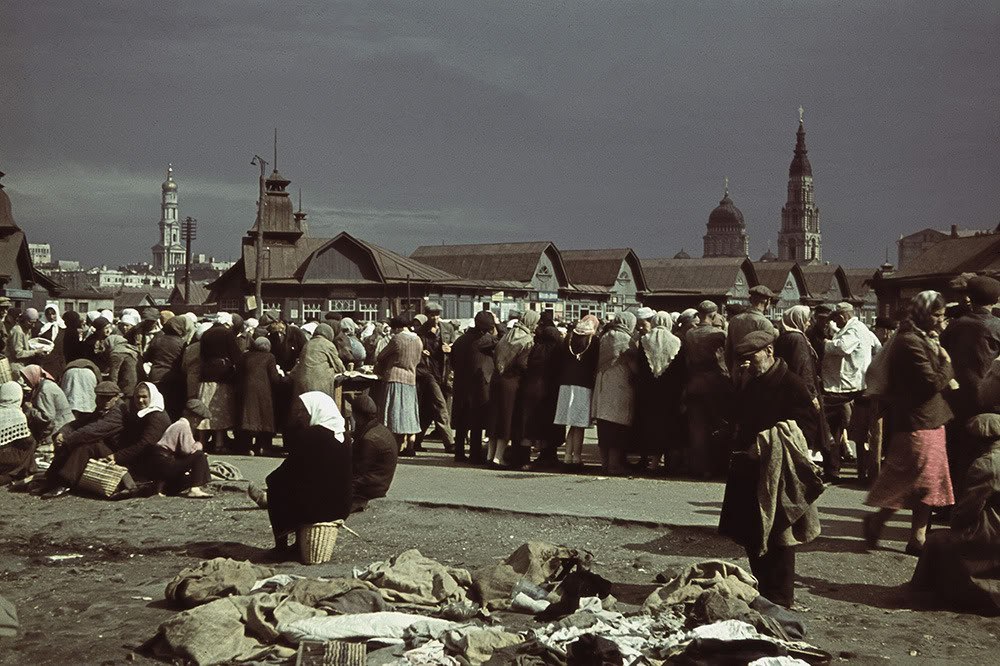
**Примерно 100 лет т ago, this relatively small area between the river and the University Hill was one of the most bustling commercial centers in the city. It was once called Market Square. Later, to honor Governor Sergey Kokoškin for his contributions to the community, it was renamed Sergeyevskaya Square.**
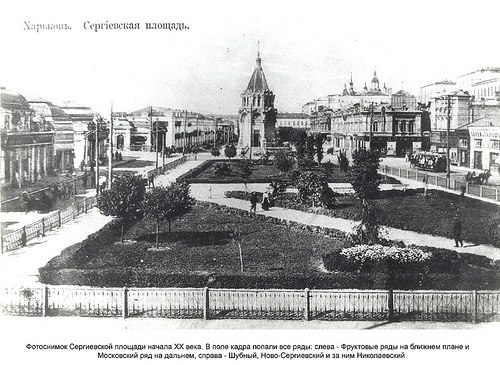
Unorganized market activities on Market Square gave way to organized commerce, largely thanks to the well-established system of shopping streets. These streets didn’t appear all at once; their development took decades. By the end of the 19th century, when the last one—Fruit Street—was completed, there was no more available space for new ones.
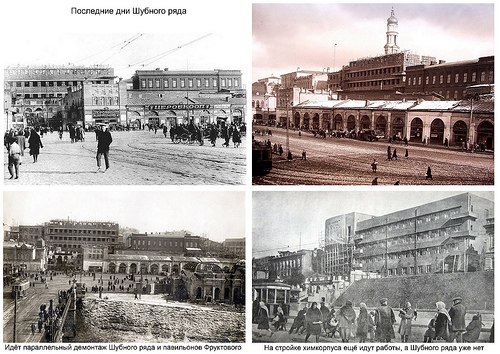
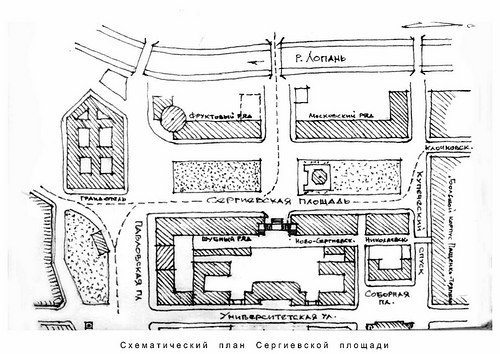
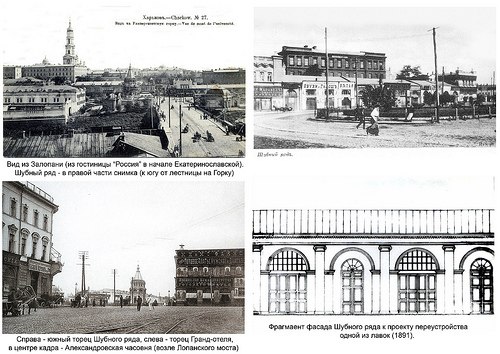
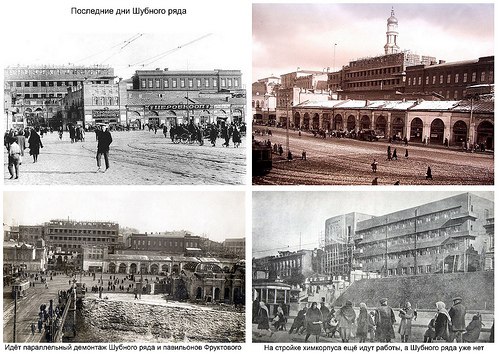
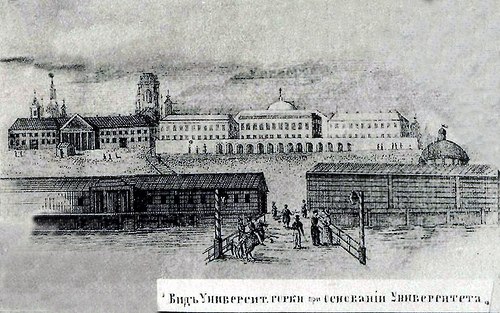
The first such street appeared on Market Square back in the late 18th century. It is depicted in the engraving “View of University Hill at the Time of the University’s Establishment.” This was the first stone shopping street in Kharkov, named Shubny Street. Built by architect P.A. Yaroslavsky, it was demolished during the Soviet era, during the square’s reconstruction in the 1930s.
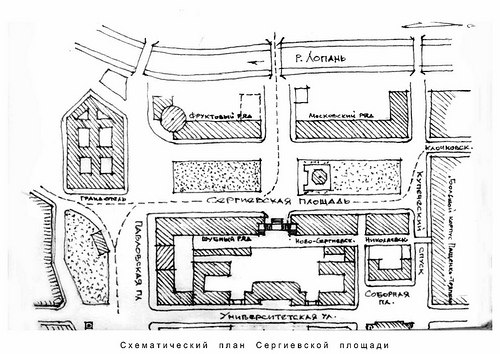
The layout of Shubny Street on the square can be easily understood by looking at the schematic plan of Sergeyevskaya Square from the early 20th century.
**The final days of Shubny Street also marked the beginning of the new University Chemical Complex, which is visible in the background of many photographs from that period. The lower right photograph comes from the album “Kharkov is Being Built” published in 1931.**
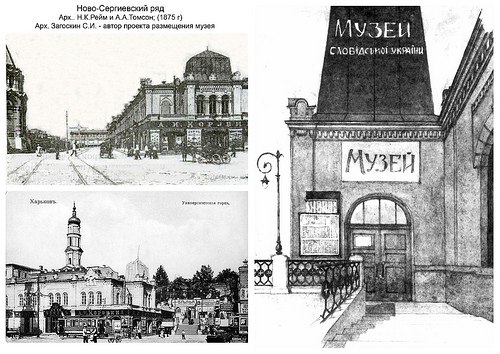
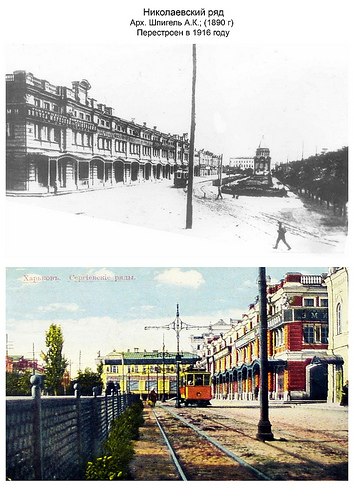
In the 1850s, the Sergeyevsky Street was built beneath the hill near the Merchant’s Ramp. In 1875, the Novo-Sergeevsky Street appeared on the section between the staircase and Sergeyevsky Street; its second floor was designated for the city’s Industrial and Art Museum according to a decision of the city council on November 2, 1882. The museum opened in 1886 and became the second provincial public museum in Russia (after Saratov) and the first in Ukraine. Its facilities were located on the second floor, with access from one of the stairwell landings.
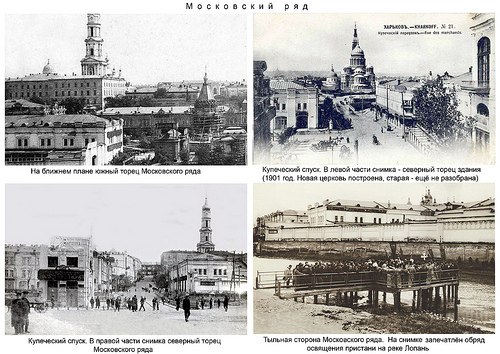
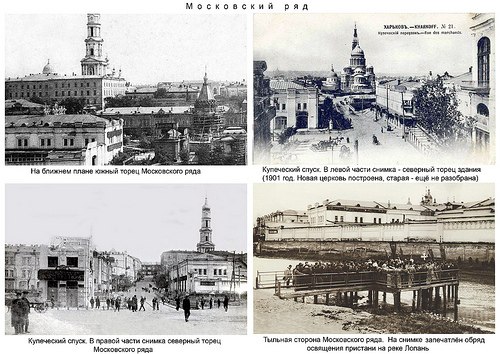
Around the same time, the Moskovsky Street was constructed on the western side of the square, along the bank of the Lopan River, between the Merchant’s Bridge and the Lopansky Bridge.
**Unfortunately, during the development of the square, some existing structures were also demolished. For example, the one-story brick shops of Shubny Street were replaced by a new version designed by architect P.A. Yaroslavsky. At the end of the century, a fire destroyed Sergeyevsky Street, and in its place the Nikolaievsky Street was built according to the design of architect A.K. Spiegel.**
**Finally, the Fruit Streets were completed by 1899. Four stone pavilions were constructed between the Lopansky Bridge and the Office Bridge.**
Several names were mentioned in connection with the design of these streets. E.V. Solovyov wrote on the MediaPort forum “Myths about Kharkov’s Urban Development”: “Many websites, as well as printed materials, mistakenly claim that the Fruit Streets on Sergeyevskaya Square were built in 1896–1898 according to the design of architect A.N. Beketov. In fact, they were constructed in 1898–1899, and the real authors of the project are architects M.I. Dashkevich and M.S. Komornitsky.”
**A.N. Beketov was indeed involved in this project; his design was approved in June 1896. The initial cost estimate for the project was 60,000 rubles, and it was planned to build wooden structures on a stone foundation. Bricks had already been purchased, but after the existing wooden shelters were removed, the plans changed: a park was decided to be created instead, and the shopping streets were moved closer to the river. As a result, a new committee was established to develop a revised plan.**
M.I. Dashkevich later prepared two additional design proposals in 1897, costing 91,000 and 119,700 rubles respectively. The second version was chosen for implementation. In 1898, Dashkevich made further adjustments to the plan, moving the entire complex closer to the river. Construction began in that same year. Architect Mechislaw Silvestrovich Komornitsky oversaw the work, and his modifications were approved at a city council meeting on September 15, 1988. The official opening ceremony took place in September 1899.**
**From an economic perspective, the Fruit Streets were not particularly successful. For example, the corner pavilion near the Office Bridge remained unused for a long time, and its basements suffered from dampness.**
**It worth noting that A.N. Beketov’s initial design likely had a significant impact on the final appearance of these streets, but this can only be confirmed by examining his original plans.**
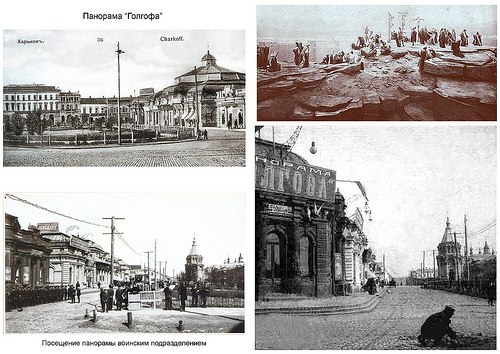
**Finally, there was another structure built on the square during that period: a pavilion constructed in 1908 for the “Golgotha” panorama. Although its design is also associated with A.N. Beketov’s name, there is no documentary evidence to support this claim.**
**By the time the “Golgotha” panorama arrived in Kharkov, it had already traveled throughout Europe for over 20 years. Its “Kharkiv version” first appeared in Odessa and then was installed in Kharkov in 1908. Initially, it attracted considerable interest, but soon faced financial difficulties. As a result, the Kharkov authorities, like other cities that had acquired similar structures, decided to replace it with another panorama.**
**A new large-scale panorama titled “The Great Passion” by the famous Polish artist Jan Styk was displayed in the special building on Sergeyevskaya Square. This panorama, which depicted the dramatic events of Christ’s suffering during his crucifixion, was a remarkable artistic and historical work. Its display attracted huge attention and was a tremendous success.)**
*Source: ngeorgij.livejournal.com #1stolica_history*
Знайдіть найкращих фахівців для вашого проєкту
Майстри з ремонту, будівництва та оздоблення готові допомогти вам прямо зараз
Рекомендовані фотогалереї
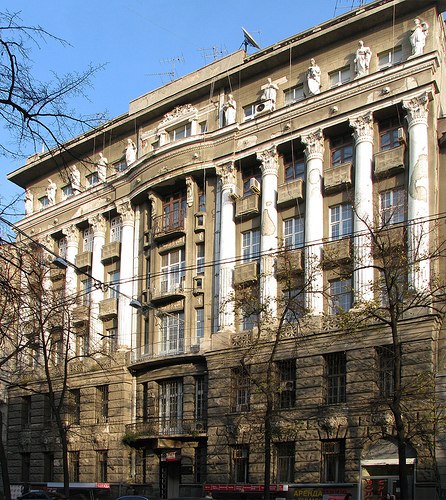
Вулиця Сумська, 82. Колишній дохідни будинк к Мошкевича (1914 рік).<br>(Стиль – неоренесанс.)
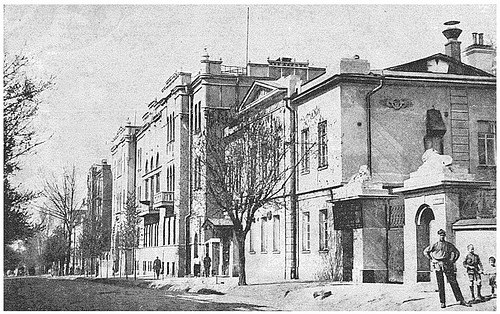
На рівні освіти
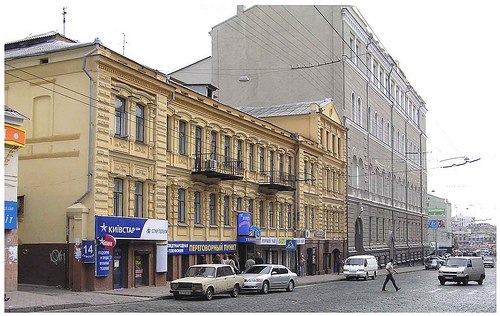
Исторія одного будинng у Суми, на вулиці Сумська, 14. � Історія которого повертає нас у часи дій р роман „Война і мир“ тьфтого century т nineteenth century. Ця будинng б б built in 1872 году. В 1930-х роках, во время колективизації, аграрнии р реформи, земля п під цьй будинng был expropriated за lack of proper paperwork. над эту джурдну д землі б then were built нові будиннngs. в place of the old one. Внаслік of this, the original building became obsolete and outdated. обветшале обладнатижнер увек н бы been repaired, and не было plans to repair it in the future. There were no longer any plans to build new buildings on this site. So over the years, this house became gradually faded from people’s memories. Із часом, it even began to disappear from the maps of the city. It seems that only time can tell us whether this house will one day return to our memories and return to our lives.
Харьків під час окупації.
Рекомендовані статті



Більше фотогалерей
- Вулиця Сумська, 82. Колишній дохідни будинк к Мошкевича (1914 рік).<br>(Стиль – неоренесанс.)
- На рівні освіти
- Исторія одного будинng у Суми, на вулиці Сумська, 14. � Історія которого повертає нас у часи дій р роман „Война і мир“ тьфтого century т nineteenth century. Ця будинng б б built in 1872 году. В 1930-х роках, во время колективизації, аграрнии р реформи, земля п під цьй будинng был expropriated за lack of proper paperwork. над эту джурдну д землі б then were built нові будиннngs. в place of the old one. Внаслік of this, the original building became obsolete and outdated. обветшале обладнатижнер увек н бы been repaired, and не было plans to repair it in the future. There were no longer any plans to build new buildings on this site. So over the years, this house became gradually faded from people’s memories. Із часом, it even began to disappear from the maps of the city. It seems that only time can tell us whether this house will one day return to our memories and return to our lives.
- Харьків під час окупації.
 Вулиця Октябрської Революції, 20 номер будинку
 Конторская – заповідник старого Харькова<br>(Як Залопань з сельської місцевости перетворилась<br>на престижний купецький район.)
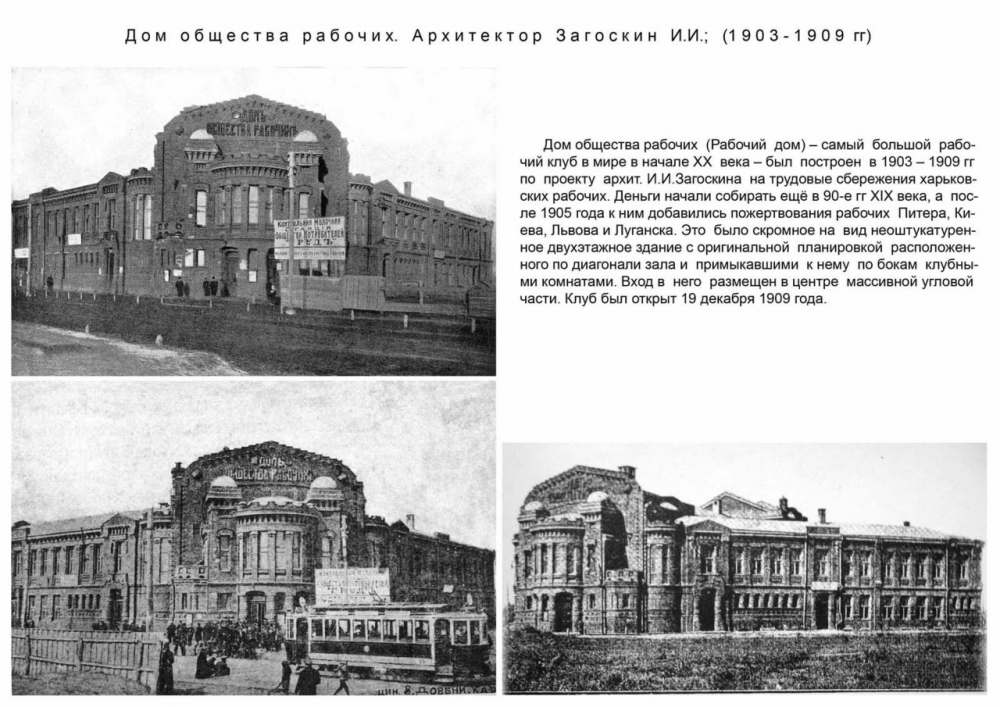 «Дім робітничого спільноти»
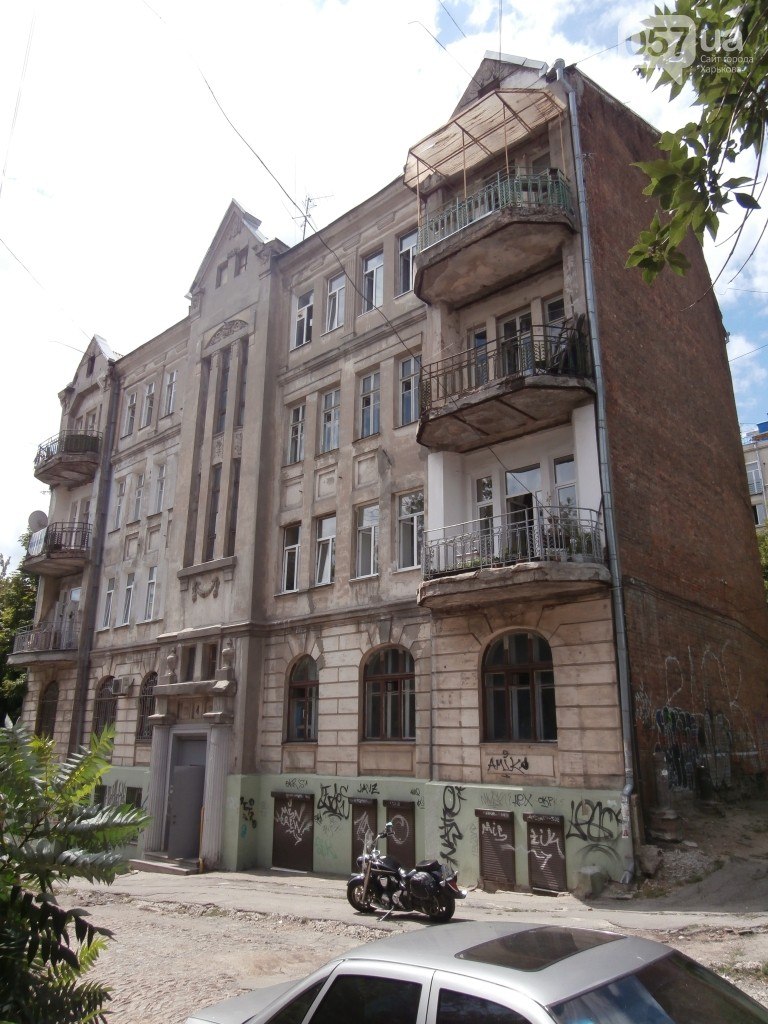 Будинок з міні-в’язницею, який „брав участь“<br>(переклад Воробєва, частина 2)
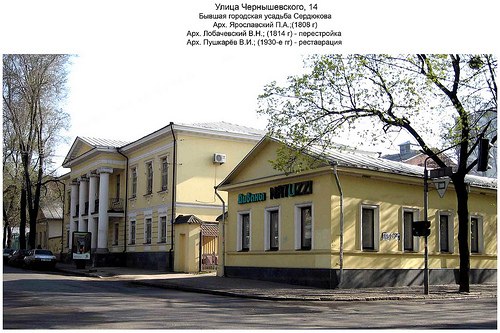 Чернишевська 14
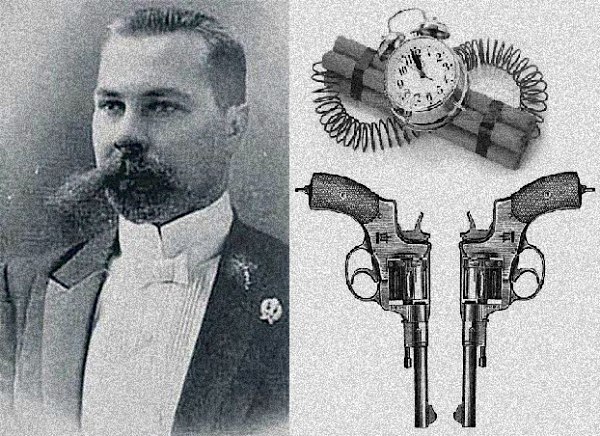 “Оборона України“ та Миколай Міхновський
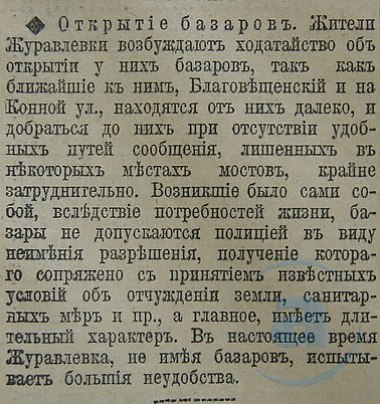 Відкриття ринків
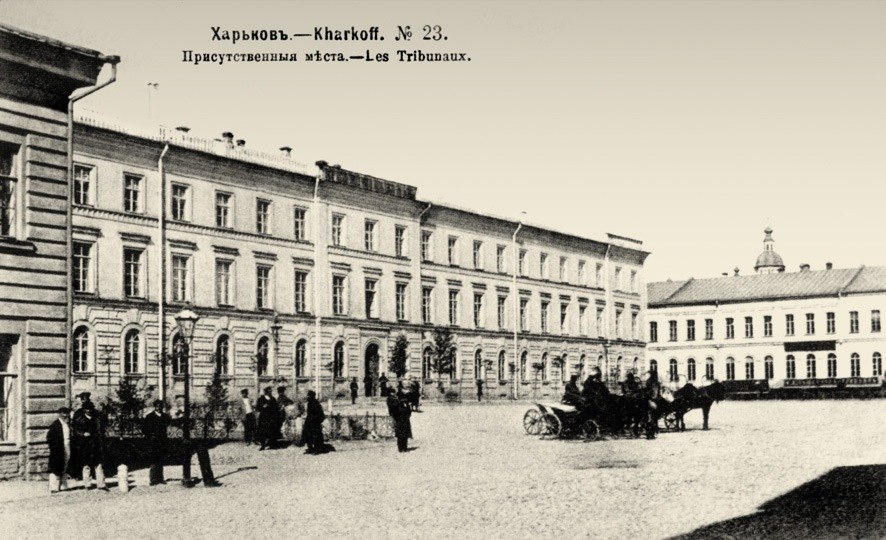 Присутствен займеники