What holiday is today? Significant events and dates
Festive and memorable dates, state and professional holidays, memorable calendar dates
Holidays today
November 23, 20268 👁 4266
The day of the beginning of the confrontation of South Ossetia and Georgia
The date is November 23 for the Republic of South Ossetia - a significant day, the day of struggle against Georgian national chauvinism. On this day in 1989, the youth of South Ossetia for the first time came to the defense of their homeland, the opposition of Georgia with South Ossetia began.
Events on that day developed as follows. Under the cover of a peaceful demonstration, the nationalists, led by Zviad Gamsakhurdia, organized thousands of processions to Tskhinval. For little Tskhinval, this was tantamount to war. A spontaneously formed small group of South Ossetian guys blocked the road at the entrance to the city and stopped a convoy of numerous buses and cars heading from Georgia.
Later it turned out that on November 23, 1989, more than 400 Ikarus buses with Georgian patriots passed in the direction of Gori - Tskhinval. With this armada of buses, at least 300 private passenger cars moved in the direction of Tskhinval. According to various estimates, only 50 to 100 thousand people were in the convoy, many of whom were armed.
This day, although it is a tragic date for South Ossetia - the beginning of aggression, is not mournful for Ossetians. It was the day of their unity, their common resistance to the enemy. This is a holiday, because South Ossetia was able to stand against such an armada thanks to the courage of its youth.
 👁 3591
Kazakhstan Traffic Police Day
The Day of the Kazakhstani traffic police- the professional holiday of all workers of the country's traffic police - is celebrated annually in the Republic on November 23.
Back in 1878, the duties of police officers included the functions of the current traffic police. They were instructed to monitor the condition of roads, bridges, crossings, integrity of telegraph wires, safety in the winter time on roads across rivers, lakes and fields, as well as the safety of landmarks and the integrity of trees planted along the road, reporting on faults to the camp police officer .
After the October Revolution, more precisely, since 1918, the control over the road traffic was exercised by the worker-peasant militia. In 1922, the “Instruction to the police officer by post on the procedure for using the yellow-colored rod with a yellow handle” was approved, which indicated that they should be used in the case of “detention of car bodies and crews”.
In November 1934, under the Central Road Transport Directorate, a decision was made to organize the State Automobile Inspectorate (GAI). Until March 1936, the traffic police remained a departmental body, and then became part of the Main Directorate of Workers 'and Peasants' Militia. July 3, 1936 SNK USSR adopted a decree on the traffic police. This day can rightly be considered the historic birthday of the Soviet traffic police.
In sovereign Kazakhstan, the first provision on traffic police was approved by a Resolution of the Cabinet of Ministers of the Republic of Kazakhstan on November 23, 1992. This day is considered the birthday of the traffic police of the Republic of Kazakhstan.
On January 3, 1996, the Traffic Police Inspectorate was renamed Road Traffic Police. And it was not just a name change, priorities were changed in work. The paramount task of modern road policemen is the protection of public order, the fight against crime, the protection of citizens from criminal encroachment on the roads, along with ensuring road safety.
Today, the work of a traffic police officer is qualitatively different even from the one that was 20 years ago: people have changed, relations between them have changed. Today, the inspector is obliged to know perfectly not only the rules of the road, but also the legislation, the basics of psychology, modern technology, including a computer, and much more.
We can say that today the name of the service is aligned with its modern functions. This is evidenced by the fact that the work of the law enforcement and crime control service did not put the traffic police in the shadow of road safety activities.
 👁 2751
Holiday Nineteenth Day of the Month Goul
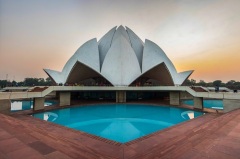
On November 23, according to the Gregorian calendar, the month of Goul begins in Bahá'í, which means “Speech” in Arabic. On this day - the first day of the month Goul on the nineteen-month Bahá’í calendar - an important holiday is celebrated- the holiday of the Nineteenth Day of the month Goul.
The Bahá’í calendar was established by the Bab and approved by the founder of the Bahá’í Faith - Baha'u'llah. According to this calendar, the Bahá’í year is divided into 19 months, 19 days each. Months in the Bahá’í calendar are given the name of the attributes of God, for example: “Greatness”, “Perfection”, “Will”, “Knowledge”, “Honor” or human properties: “Questions”, “Speech” and others.
The beginning of the month is celebrated with the Holiday of the Nineteenth Day. Each Holiday of the Nineteenth Day is named for the beginning of the month. Each holiday performs several functions: administrative, spiritual, social.
Bahá’ís gather every nineteen days for such a celebration of unity and exchange information about the life of the community, recite prayers and scriptures, drink tea, and chat. Thus, the Holiday of the Nineteenth Day is an integral part of the administrative and spiritual life of the Bahá’í community.
 👁 2487
Lithuanian Warriors Day
The Day of the Armed Forces in Lithuania is celebrated annually on November 23 and is called the Day of the Lithuanian Warriors.
On November 23, 1918, Lithuanian Prime Minister Augistinas Voldemaras signed a decree that marked the beginning of the formation of a regular Lithuanian army. This date and served as the basis for the establishment of a holiday.
Today, the Lithuanian Armed Forces (lit. Lietuvós ginkluótosios pájėgos) is a powerful military organization protecting the freedom, independence and territorial integrity of the state. It includes: ground forces, naval and air forces, special operations forces.
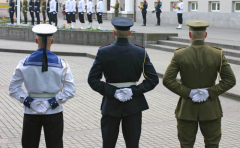
On the occasion of the Armed Forces Day, a solemn mass is held in Vilnius in the church of St. Ignothas, the solemn construction of the military in the Cathedral Square and the parade on Gediminas Avenue. In addition, flags of all three types of the Lithuanian Armed Forces - land, air and sea - are traditionally flying in the Cathedral Square.
The national celebration of the Day of Warriors in Lithuania, in turn, traditionally includes holding various concerts dedicated to the country's military personnel, as well as the opening of fairs and exhibitions timed to this day.
 👁 2283
Thanksgiving in the USA
On the fourth Thursday of November in the United States celebrate Thanksgiving Day(Thanksgiving Day). This is one of the most popular holidays in the country.
Thanksgiving was first celebrated in 1621 by English colonists living in the Plymouth Colony. The previous winter was very hard and hungry, the new winter also promised the colonists little good. Then Governor William Bradford decided to raise the spirit of his subordinates and organized the first Thanksgiving Day. The holiday was jointly celebrated by British colonists and their Indian neighbors, thanks to whose help the Plymouth colony survived the first winter of hunger.
The Puritans brought a deep religious meaning to this holiday - they saw in it a way to thank the Most High for their mercies.
Thanksgiving became a national holiday after the corresponding decree of the first president of the country George Washington in 1789.
Happy Thanksgiving is associated with a number of traditions that Americans faithfully keep and respect.All family members must go to church, and after the service to gather at the holiday table.
On the eve of Thanksgiving, charity is flourishing: Americans are trying to feed and somehow to please their neighbors who are unlucky in life. Even at the subway stations special tables are set on which everyone can put their donations, including food. Newspapers publish advertisements of the following content: “If you donate $ 1.90, you can give a hot lunch to a homeless or poor compatriot. By donating $ 19, you will help feed 10 people ... ”etc. On the eve of the holiday, charitable organizations distribute gifts to those in need, and organize lunches for the homeless.
The second most important attribute of Thanksgiving Day is turkey. On the first holiday, colonists and Indians roasted and jointly ate four turkeys shot in the nearby forest. Since then, turkey and Thanksgiving have become synonymous, poultry farmers feed turkeys especially for this holiday.
The third attribute of the holiday is parades (most of them costumed in 17th century clothes and Indian costumes) and fun.
 👁 2202
Labor Day in Japan
Today, Japan celebrates a national holiday - Thanksgiving Day(Kinro-Kanshya no Hi). On this day, workers of all industries, farmers, employees of government agencies and companies receive a legal holiday.
The holiday was established in 1948 under the name of the Thanksgiving Day of Labor, and historically the day was called the “New Harvest Festival” and was founded as a traditional holiday for the end of agricultural work.
Currently, the holiday brings together all types of work. At the heart of the holiday is the veneration of labor: the Japanese thank each other for the feasible help they have provided for the development of society.
On this day, the holiday of agricultural workers, Nogyosai, established in 1962, is also held in many places. In all small local as well as large temples, the peasants bring particles of the harvest of the new year - rice, vegetables, freshly prepared sake.
During the holiday, usually one week before November 23, exhibitions of agricultural products, machinery, tools, fertilizers, plant protection chemicals and other items necessary for agricultural production, as well as exhibitions of new literature on scientific and technical achievements in this field are held. The winners of such exhibitions are awarded prizes - the imperial and the Minister of Agriculture, Forestry and Fisheries.
 👁 1230
Rudolf Meister's Day in Slovenia
Rudolf Meister's Day in Slovenia(Rudolf Maister Day in Slovenia) is a national holiday in honor of the Slovenian general Rudolf Meister who played an important role in the history of the country, is celebrated annually November 23, starting in 2005, but not a non-working day in Slovenia.
Maribor is the economic and cultural center of the northern lands of Slovenia and to this day remains the second most important city after the capital. Before World War I, this region was part of Austria-Hungary, and the city’s population was 80% German and 20% Slovenian.
Germans prevailed in public life and city government. During the war, many Slovenes of Styria and Carinthia were declared enemies of the Austrian state and denied access to public office. At the same time, almost the entire rural population of the region was Slovenian.
After the collapse of Austria-Hungary in 1918, the Republic of Austria and the Kingdom of Serbs, Croats and Slovenes made claims to Maribor. On November 23, 1918, a Slovenian General Rudolf Maister (1874-1934) with 200 officers and 4000 soldiers seized power in Maribor and liberated the city from invaders.
The liberation of Maribor was of strategic importance in shaping the territory of the modern Slovenian state, as it not only strengthened the northern borders, but also opened up opportunities for further reconquest of Slovenian lands, in particular, the cities of Ptuj, Celje, Luthomer, and also made possible the reunification of Premurje with the fatherland.
 👁 1152
Memorial Day of St. George the Victorious
The Holy Great Martyr George the Victorious, originally from Cappadocia (a region in Asia Minor), grew up in a deeply religious Christian family. His father accepted a martyr's death for Christ, when George was still in childhood. Mother, who owned the estates in Palestine, moved with her son to his homeland and brought him up in strict piety.
Enrolling in the Roman army, St. George, handsome, courageous and brave in battles, was noticed by Emperor Dioklitian and accepted in his custody with the title of comité - one of the senior military leaders.
The pagan emperor, who did much to revive Roman power and clearly understood the danger of the triumph of the Crucified Savior for pagan civilization, in the last years of his rule lil persecutions of christians. On the advice of the Senate in Nicomedia, Diocletian gave all rulers complete freedom in the massacre of Christians and promised his full assistance.
Saint George, learning about the decision of the emperor, distributed his inheritance to the poor, released the slaves and came to the Senate. The courageous warrior of Christ openly spoke against the imperial plan, confessed himself a Christian and called everyone to recognize the true faith in Christ: "I am a servant of Christ, my God, and trusting in Him, appeared among you at will to testify about the Truth" . “What is Truth?”, ”one of the dignitaries repeated Pilate’s question. “Truth is Christ Himself, persecuted by you”, ”answered the saint.
Stunned by the bold speech of a valiant warrior, the emperor, who loved and elevated George, tried to persuade him not to ruin his youth, glory and honor, but to offer, according to the custom of the Romans, a sacrifice to the gods. This was followed by a decisive answer by the confessor: "Nothing in this impermanent life will weaken my desire to serve God". Then, on the orders of the angry emperor, the squires began to push St. George out of the assembly hall with spears to take him to the dungeon. But the deadly steel itself became soft and bent as soon as the spears touched the body of the saint, without hurting him. In the dungeon, the martyrs beat their feet into pads and crushed their breasts with a heavy stone.
The next day during the interrogation, exhausted but firm in spirit, Saint George answered the emperor again: "Rather, you are exhausted, torturing me, rather than me, tormented by you". Then he wheeled. At first the sufferer called out loudly to the Lord, but soon calmed down, not letting out a single groan. Diocletian decided that the one being tortured had already died, and, having ordered to remove the tortured body from the wheel, he went to the temples to offer thanksgiving. At that moment, around it darkened, thunder struck, and a voice was heard: "Do not be afraid, George, I am with you".
Then a marvelous light appeared and the Angel of the Lord appeared at the wheel in the image of a luminous youth. And he barely laid his hand on the martyr, saying to him: "Rejoice!"- as St. George rebelled healed. When the soldiers took him to the temple, where the emperor was, the latter did not believe his eyes and thought that there was another person or a ghost in front of him. In perplexity and horror, the pagans peered at St. George and were convinced that a miracle really happened. Many then believed in the life-giving God of Christians.
It was November 10 (November 23 in a new style) 303 years, and now this day is celebrated by Orthodox churches.
Signs for today
1Old-style date: November 10th
On this day, the Orthodox Church commemorates the six apostles from seventy, including Erast and Rodion. Erastus, as legend says, was a disciple of Saint Paul. He came from a noble family and served as a city housekeeper in Corinth. For the first time, the saint heard about Jesus Christ from Paul. Later, the apostles came to Jerusalem together, and Erast served in the local church. There is also evidence that he was Bishop of Panead in Palestine and lived to a very old age.
Rodion was not only a disciple of St. Paul, but also a relative of his, as the apostle mentioned in the letter to the Romans. According to legend, he served as a bishop in Patras, and in the time of Nero was martyred with the apostles Peter and Paul.
Russian peasants brought bread and a large piece of salt to the church for consecration, and then gave them cattle - this was supposed to give animals health. This tradition was so strong that even when buying a cow, the buyer could demand from the former owner, in addition to it, a piece of bread, consecrated to Erast and Rodion.
Special signs associated with the appearance of children.If the sun was shining on Erast, then it was said about the child born on that day that everything in his life would be good - luck, strength, and mind.
By this time ice was installed on the rivers, but it was still fragile and could break under the feet or runners of the sled. Therefore, the holy Rodion was called Ledolom. They also said: "Rodion will come - he will take a man in full". This meant that it was impossible to overcome water obstacles, either on ice or on water. However, strong ice should have appeared soon. “From Erasta, wait for a strong Nast”, - our ancestors advised.
The weather on this day was unpredictable, but rarely pleasant.“Erast everything is ready: for the cold, for hunger, and for the roadless blizzard ”, people noticed. If this day was particularly bad weather - with rain, sleet, strong wind, blizzard, frost, - you had to go out on the porch and bow to the winter so as not to be angry with people.
Name day that day
Alexander, Alexey, Anna, Boris, Georgy, Denis, Efrem, Ivan, Konstantin, Mikhail, Nikolay, Olga, Orest, Peter, Procopius, Rodion, Seraphim, Terenty
This day in history
6 👁 3633
In Scotland, the legendary Clipper Cutty Sark was launched
The Cutty Sark, a three-masted tea clipper, was built at the dock of the Scottish town of Dumbarton (on the Clyde River, near Glasgow), commissioned by the famous London shipowner old John Willis. The clipper was sheathed below the waterline with copper sheets, carried 3,350 square meters of sails and walked at a speed of 17 knots.
Cutty Sark was supposed to carry tea from China, but the clipper lost the 1872 race to the high-speed Thermopylae. Both ships left Shanghai on June 18, but the Cutti arrived in London only on October 18, a week later, the Thermopyl, and after a while the clipper was “thrown” for the delivery of wool from Australia. And during the First World War, coal was transported by ship.
Clipper changed many names and activities, set many speed records, for which he was called the "Queen of the Oceans", until in 1922 he was bought by Captain Wilfred Doumen, who restored Katti in all its former glory.
Since 1938, the clipper has become a training ship. And in 1954, "Short Shirt" settled in a dry dock in Greenwich, near London, and became a museum. The situation of the Victorian era was completely recreated on the ship, when the clipper was truly a miracle of perfection of ship forms, the pinnacle of the centuries-old development of sailing armament.
 👁 3030
Catherine II established the Medical Board in Russia
Smallpox epidemics in Europe claimed thousands of lives. But it was in the 18th century that the first experiments on artificial infection with smallpox were carried out, after which people, having had a mild form of the disease, acquired immunity for the time of epidemics of the disease.
For the first time, this method of protection against a terrible disease was tested in England, then they began to practice grafting in other European countries. In Russia, they also tried to take measures against the spread of this disease, but basically everything came down to prohibiting patients from appearing in society. But this way it was impossible to solve the problem, and people close to the court often turned out to be carriers of the infection.
The Medical College was designed to take care of city pharmacies and doctors, to help them in the prevention and prevention of smallpox epidemics. The vaccination of smallpox in Russia first began with the Empress and her son, who showed such an important example for all his subjects.
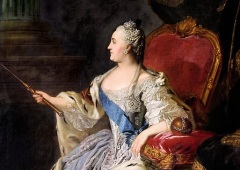
Catherine, overcoming fear, still decided to instill in himself smallpox, and then her son Pavel, who at that time was 14 years old. For this procedure, an English doctor, Baron Dimsdale, was invited to Russia.
Since everything ended well, many people began to repeat this procedure. Catherine later wrote: "The whole of St. Petersburg wants to instill smallpox in itself, and those who have done this are already healthy. "That was the beginning of the development of the Medical College (today the Ministry of Health) in Russia.
 👁 2916
As a result of the terrorist attack, the Boeing-737 was blown up by the Egyptian airline
In the middle of the night, a plane hijacked by terrorists landed at the airport “Luka”, located near the capital of Malta, Valletta. Two planes landed there with a team of the Egyptian special forces of the anti-terrorist group Saka (Lightning). Immediately began to prepare the storming of the aircraft and the release of hostages. At the same time, the authorities of Malta and the arriving representatives of the Egyptian government entered into negotiations with the terrorists. But they did not require anything.
As it became known later, the terrorists took hostages for the sole purpose of their destruction. Thus, the terrorists hoped to “humiliate in the eyes of the whole world” Egyptian President Hosni Mubarak, who in this situation was supposed to take moral responsibility for the death of innocent people.
Negotiations did not lead to anything - the terrorists, as promised, began methodically to execute the passengers captured by them. They shot dead and threw the corpses of two citizens of Israel and three citizens of the USA on the runway of the airfield. The authorities decide on the beginning of the assault.
During the short battle, four out of five terrorists were killed, but managed to blow up several grenades in the cabin of the plane, where the fire started, and the flames instantly engulfed the entire salon. As a result, most of the hostages died. 37 out of 98 passengers survived. Many special forces in the assault and fire were seriously injured and burns.
 👁 2469
The Rumyantsev Museum opened in St. Petersburg - the first privately-owned public museum in Russia
Throughout his life, Rumyantsev collected and studied monuments of Russian history. In his mansion in St. Petersburg, he placed the richest collections of historical and artistic treasures: handwritten and printed books; paintings, drawings, arts and crafts; minerals; extensive archaeological and ethnographic collection.
After the death of the count in 1826, his brother, Sergey Petrovich, turned to Emperor Nicholas I with a request to accept as a gift and transfer to the Government a museum. The emperor "commanded to call this Museum Rumyantsevsky", wishing "to preserve the memory of the founders of this useful institution."
On November 23, 1831, in St. Petersburg, the Rumyantsev Museum opened for viewing - the first private public museum in Russia, which soon became very popular. But after some time, in the absence of replenishment of book collections, being near the Public Library, he began to lose his popularity.
In this regard, in 1861 the museum was transferred to Moscow, where the newly created “Moscow Public Museum and Rumyantsev Museum” opened, which a year later received its first visitors to view the exposition, and a year later it opened the library.
The museum was housed in the house of a retired officer, PE Pashkov, who gave the name to this architectural monument, and was one of the most popular cultural and educational institutions in Moscow. In addition to the library, there were departments of manuscripts, rare books, fine arts, Christian and Russian antiquities, ethnography, numismatics, archeology, mineralogy.
After the reorganization of 1924, the Lenin Library (now the Russian State Library) was formed on the basis of the book part of the collection, the rest of the collections were distributed to various museums and archives of the country. During the Great Patriotic War, this library was the only one not evacuated from Moscow. Only the most valuable part of the collection was taken to another region.
Further development in the 20th century of the country's main library rapidly brought it to the number of the largest libraries in the world, scientific, cultural and educational centers of the planet.
 👁 1986
By the decree of the Council of People's Commissars, the estates and civil ranks of pre-revolutionary Russia were destroyed.
On November 23, 1917, the Central Executive Committee of the Soviets of Workers 'and Soldiers' Deputies adopted the decree “On the destruction of estates and civilian officials”, which abolished all class divisions of citizens, privileges and restrictions, estate organizations and institutions, as well as all civil ranks. It was established one common name for all the people of the country - a citizen of the Russian Republic. Also this decree abolished the royal orders and medals.
The next day, the decree was approved by the Council of People's Commissars, and on November 25, signed by V.I. Lenin and Ya.M. Sverdlov was published and entered into force. The decree established that the property of the noble-class institutions was immediately transferred to the respective local government, and the property of the merchant and petty-bourgeois societies were immediately placed at the disposal of the respective city self-governments.
According to the decree, all estate institutions, clerical work and archives were transferred immediately to the jurisdiction of the respective city and local governments, and all relevant articles of the existing laws were canceled.
The timeliness of this decree and its consistency with the entire system of legislative measures of the Soviet government led to the fact that its implementation did not encounter any serious difficulties.
Having destroyed the estates and civilian ranks, the Soviet government proclaimed its intention to put an end to the oppression of the non-Russian population and to realize the real and complete equality of citizens regardless of their national and racial affiliation.
By the end of 1917, the elimination of titles, uniforms and orders of imperial Russia, which existed for more than two centuries, was completed. However, the actual rejection of the titles did not take place immediately, and in the official documents of 1918 one can find signatures of the pre-revolutionary format.
 👁 1023
Birthday of the World of Warcraft computer game
The expectations of gamers are difficult to understand and survive for a person far from computer games and the world of fantasy, where every player gets the opportunity to feel more confident than in ordinary life, plunge into the world of wonders, fantasy, magic . Starting from a certain level, each player gets the opportunity to develop his character, make it more dexterous, strong, resilient, master new types of weapons and competently use them. Step by step, the character acquires new qualities that allow him to expand the horizons of the wizarding world, crushing opponents and all kinds of monsters along the way.
You can talk for a long time about the contradictory influence of computer games on the mind and psyche of teenagers and adults, the formation of gambling addiction, about the negative impact of moving into the virtual world, and even into such a virtual world where fear, violence, blood, and ruthlessness reign. The fact remains that, in spite of everything, millions of fans of this way of leisure are eagerly awaiting the appearance of the next version of the existing game or the appearance of new games in this genre.
According to the Guinness Book of World Records, World of Warcraft is the most popular MMORPG in the world.
Each turn of game development provides users with new features, higher-quality graphics, raising the sense of realism from what is happening. on the monitor to a new level. The brilliance, brightness, dynamism, music, corresponding to the nature of the game ignite the excitement of newbies and support the interest of experienced gamers to a particular game.
On November 23, 2004, Blizzard Entertainment has all these qualities and characteristics. and fell on the heads of fans of this game genre. The release of the new "toy" has created a furor in the market of computer games, becoming the ninth record for the company in the category of "best-selling game."
Well, it remains to regret the unresolved psychological problems that follow hand in hand with computer games, but you cannot congratulate Blizzard Entertainment on the commercial success of the release of their World of Warcraft game. After all, more than 10 years have passed since that moment, and there are also a lot of players, and not all of them, fortunately, suffer from problems caused by communication with a computer and immersion into the world of harsh fantasy warriors. Speaking of commercial success, the addition to the World of Warcraft game called Warlords of Draenor, released in 2014, has sold more than 3 million copies in 24 hours! Popularity, however ...
Born today
10
Karl Josef Begas
30 сентября 1794 — 23 ноября 1854

Giga Zois
23 ноября 1747 — 10 ноября 1819

Agnolo Bronzino
17 ноября 1503 — 23 ноября 1572

Alexander Menshikov
16 ноября 1673 — 23 ноября 1729

Vladislav Volkov
23 ноября 1935 — 30 июня 1971
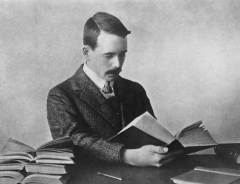
Henry Mosley
23 ноября 1887 — 10 августа 1915

Alphonse X of Castile
23 ноября 1221 — 4 апреля 1284
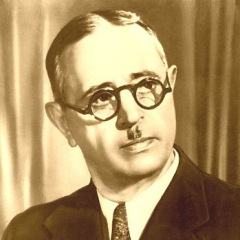
Uzeyir Hajibeyov
18 сентября 1885 — 23 ноября 1948

Maria Foresco
15 января 1875 — 23 ноября 1943

Rodion Malinovsky
23 ноября 1898 — 31 марта 1967