What holiday is today? Significant events and dates
Festive and memorable dates, state and professional holidays, memorable calendar dates
Holidays today
November 25, 20265 👁 2670
Kadrin day in Estonia
Kadrin Day in Estoniais one of several holidays associated with perfumes that have survived to this day. Kadri is the patroness of the sheep, so on her day young cattle were mated.
On this day, as in Martov's day, mummers walk through the streets. They go home. So do not be alarmed by opening the door to the bell or knocking and seeing three or even seven children, whose faces and clothes are not quite ordinary. They just want to sing a song for you and in return receive treats.
In Estonia, Kadrin day came along with Christianity in the 12th century. Then the holiday of autumn works was replaced on the day of the memory of St. Katharina (Kadri).
On this day, it was customary to wear white or light-colored clothes. For Estonians, this day has always meant a tribute to traditions and foundations.
It was believed that by this day one can judge the weather in the future:
- if there was a thaw on that day, then on Andres Day (November 30) it will be cold;
- if there was a strong wind or storm on Kadrin the day, then it was considered to be good weather by Christmas;
- on this day, autumn turns into winter;
- what the weather on November 25, will be the same on Candle Day (February 2).
People in ancient times believed that on this day it was impossible to spin, sew and cut sheep. On Kadrin, the day it was impossible to cook chicken soup, it was believed that otherwise the hens would eat all the cabbage.
 👁 2499
Maren Day
In Slavic mythology, Marin(Maran, Moreon, Marzhan, Marjon) is associated with the embodiment of death, with seasonal rituals of dying and the resurrection of nature. The goddess Marena establishes her kingdom of snow and frost on earth.
Mara-Morena since ancient times was worshiped as the Dark Face of the Great Goddess - the Mother of all things. If Bright Alive gives life and warmth to every belly, then Dark Mara condemns everything that has become obsolete to death and cold. Creation and destruction, life and death are two sides of Being, which do not exist separately, but always act together. Without death, there is no renewal and rebirth.
In Slavic mythology, Maren is known as the Winter and Blessed Lady, the Powerful Lady (Death Lady). This day is set to full winter weather. At the beginning, no glorification is pronounced, no sacrifices and demands are made. The woman proclaims:
"And neither Mara nor Moroka is very much glorified. "
After this, people, in order to show that they are not afraid of Maren, go to the swamp, where they extinguish burning flames in the marshland (the unfrozen quagmire).
Ritual food on this day includes jelly, pancakes, carrots, turnips.
 👁 2346
International Day for the Elimination of Violence against Women
Since 1981, women activists around the world have celebrated November 25 as a Day against violence. December 17, 1999, the UN General Assembly declared November 25 the International Day for the Elimination of Violence against Women(International Day for the Elimination of Violence against Women) ( resolution 54/134).
The UN has invited governments, international organizations and non-governmental organizations to hold events on this day aimed at drawing public attention to this problem.
The message from the Secretary-General states: “Violence against women causes untold suffering, woe to families, from which both old and young suffer, and bring communities to impoverishment. It does not allow women to use all their potential, restricts economic growth and undermines development. ”
The historical background of the Day was an event that occurred in 1960 in the Dominican Republic. By order of the Dominican dictator Rafael Trujillo, three sisters Mirabal (Mirabal sisters), who were political activists, were brutally murdered.
If we talk about individual countries, then in Canada, on December 6, National Day of Remembrance and Action against Violence is celebrated on December 6 in commemoration of the events of the Montreal Massacre of 1989, when 14 women were isolated and brutally murdered. On this day, night duty, political debates and other activities aimed at eliminating violence against women are held in Canada.
The white ribbon is a symbol against all forms of violence against women, the preservation of motherhood, and is also used in all similar cases. In recent years, its existence has gradually become known in more and more countries. But violence against women continues to be a global pandemic. Up to 70% of women suffer from violence at the household level.
A separate large topic is domestic violence, which affects a considerable number of women. This issue is being addressed by an increasing number of human rights organizations, and we urge all victims of violence to seek help, and not to endure pain and humiliation.
According to the UN, 35% of women and girls in the world are exposed to some form of physical and/or sexual violence during their lifetime; up to 30 million girls under the age of 15 are still at risk of female genital mutilation, and 130 million women underwent this procedure (mainly in Africa and some countries in the Middle East); more than 700 million women worldwide were married while still children. And yet in some countries, the effects of violence against women persist for generations.
But violence against women is a violation of human rights. And this phenomenon should be opposed to a complete public aversion and the corresponding legislative framework.
 👁 1788
Bosnia Statehood Day
Bosnia’s Statehood Dayis a national holiday celebrated annually on November 25th.
On this day in 1943, the constituent meeting of the State Anti-Fascist Council of the National Liberation of Bosnia and Herzegovina (ZAVNOBiH) (Anti-Fascist Council of Bosnia and Herzegovina, ZAVNOBiH) took place as the military parliament of the republic. The meeting was attended by 274 delegates from all parts of Bosnia and Herzegovina, 173 of them were elected as members of ACCRs. Formally, at its first meeting, ZAVNOBiH was established as the general political representation of the people’s liberation movement in Bosnia and Herzegovina.
A Resolution of the APPLICATIONS and the Statement to the peoples of Bosnia and Herzegovina that Bosnia and Herzegovina and its people will be able to represent only the PLAINS and AVNOY - the Anti-Fascist Popular Liberation Council of Yugoslavia were adopted. Thus, the determination of the peoples of Bosnia and Herzegovina was expressed that their republic - neither Serbian, nor Croatian, nor Muslim, but also Serbian, and Croatian, and Muslim - would be a fraternal alliance in which full equality of all Serbs, Muslims and Croats would be guaranteed .
Also, 58 representatives of Bosnia and Herzegovina were elected at the Second meeting of the AVNOY and the Presidium of the Lawyers, consisting of 31 persons. Chairman of the Presidium was a doctor from Bielina Voislav Kechmanovich.
The second AVNOU meeting was held on November 29 of the same year, where it was decided that the future Yugoslavia - Democratic Federative Yugoslavia - would be based precisely on federal principles, and Bosnia and Herzegovina would become one of six equal republics. These principles, so important for today's Bosnia, were proclaimed on November 25, 1943, therefore this day was subsequently called the Day of Statehood.
However, today the Day of Statehood is one of the “stumbling blocks” between the constituent parts of Bosnia and Herzegovina - the Federation of Bosnia and Herzegovina and the Republika Srpska - which does not allow adopting a law on holidays at the state level. It is celebrated only in the Federation, since, in the opinion of the Republika Srpska, this day was chosen for the Day of Statehood for no particular reason, and Bosnia and Herzegovina appeared much earlier than the first meeting of the LAW.
 👁 1116
Memorial Day for the Victims of Famine in Ukraine
Every year on the fourth Saturday of November, Ukraine celebrates the Memorial Day for the Victims of Famine.
The President of Ukraine, supporting the initiative of public organizations, the Ministry of Culture and Arts, the State Committee for Religious Affairs, the State Committee for Television and Radio Broadcasting, decided to establish this Memorial Day in the republic. The events dedicated to this day are also held on the fourth Saturday of November.
Initially, by the Decree of the President of Ukraine dated November 26, 1998, the last Saturday of November was declared the Day of Remembrance of the Victims of the Holodomor, then by the Decree of October 31, 2000, this day was called the Day memory of victims of famine and political repression. And in 2007, President Yushchenko decided to change the name of the Day again, and by his decree No. 431/2007 of May 21, 2007, he became known as the Day of Remembrance of the Famine Victims.
In 2002, when Ukraine marked the sad 70th anniversary of the mass death of residents of the republic from hunger in 1932–33, during the events held, the leadership of the republic insisted on the international official recognition of this “famine” as genocide of the Ukrainian people. However, today not all states have recognized this fact. The Supreme Rada of Ukraine back in 2006 recognized the Holodomor as an act of genocide against the Ukrainian people.
The first “famine” of 1921–22 in post-revolutionary Russia is better known in history as the “Volga region famine”, although as a result of the death of the harvest due to the severe drought, famine covered not only the Volga region, but also many provinces of the Southern Urals, Siberia, northern areas of Kazakhstan, Crimea, Ukraine and a number of other regions and territories.
According to some data, the total number of hungry people has reached 30 million. In total for the years 1921-1922, the population of the whole country, according to statistics P.N. Popova, decreased by 5.2 million people, according to other estimates - by 7 million people.
The famine of 1932-33 was even more severe when drought ruined the harvest of almost all grain regions of the USSR. In the “second famine,” according to official data, about 9 million died, and according to unofficial data, up to 13 million people all over the country.
And today, on this memorable day, memorable and mourning events and ceremonies are held at memorial complexes and iconic places in different cities of Ukraine. This Day also provides for thematic scientific, informational, cultural and artistic events, exhibitions, presentations, documents, photos and video. At 16:00, on the Day of the Famine victims, a national minute of silence passes.
Signs for today
1The old style date: November 12th
Today, the Patriarch John the Merciful, who lived in Alexandria in 6-7 centuries, is being honored. John was the son of the governor of the island of Cyprus. Having lost his wife and children, the man began to lead an ascetic life, constantly taking care of the poor. Although he was neither a monk nor a clergyman, the people chose John on the patriarchal throne. Barely becoming a patriarch, John counted all the beggars in Alexandria and gave them his property. And afterwards he was engaged in good deeds: he gave shelter to poor people in his house, bought out prisoners. For this, John was nicknamed the Merciful.
In Russia, at this time, the wedding weeks were ending.The following marriages were concluded only with the end of winter - on Maslenitsa or the Red Hill. Therefore, girls and boys who did not meet their fate had to wait until spring and envy more successful friends and friends.
Ivan was paid attention to signs: if it snowed or it rained, you could count on long thaws - until the Introduction (December 4). “If there is no snow on Ivan, then the winter will not move before the introduction”; “If it is raining on Ivan, then it will be the identity before the Entry”, our ancestors said.
About the snow that often covered the earth that day, riddles.Many of them have survived to the present day: “The tablecloth is white all the world has worn”; “The white blanket lay on the ground. Summer has come, it's all gone "; “White Tikhon is asleep from heaven, where he runs - carpet”.
Name day on this day
Alexander, Afanasy, Boris, Vladimir, Daniel, Dmitry, Ivan, Konstantin, Lev, Matvey, Nikolay, Stepan, Fedor
This day in history
6 👁 3678
Rozike Schwimmer became the first female ambassador in the history of world diplomacy
Mrs. Schwimmer was a politically educated and diversified person. She spoke in defense of women's rights, the protection of children, peace, and developed a stormy pacifist activity during the First World War — such stormy that she had to leave the belligerent Austria-Hungary.
In 1915, Rozique came to the United States of America and was able to infect with pacifist ideas the American millionaire, the automobile king and magnate Henry Ford. After the war, Rozike Schwimmer returned to her homeland and headed the diplomatic mission of her country in Switzerland.
The version that the first of the ladies’s ambassadorial status was received by the Russian revolutionary aristocratic Aleksandra Mikhailovna Kollontai is untrue: she was appointed plenipotentiary and trade representative of the USSR in Norway only in May 1923, while Rozike Schwimmer was still in the spring of 1919, coming to power in Hungary, the Communists, has already abandoned the embassy post.
 👁 3354
The last Polish king Stanislav II of Poniatowski abdicated the throne. On this day in Grodno the last Polish king and Grand Duke of Lithuania Stanislav II Augustus of Poniatowski (1732–1798) abdicated the throne.</p><p>In the early years of the reign, Stanislav Avgust Poniatowski began transformatio
В первые годы правления Станислав Август Понятовский начал преобразования в казначействе, чеканке денег, в армии (введя новые виды оружия и заменив кавалерию пехотой), в государственной наградной системе, законодательной системе. При нем в Польше появилась первая целостная программа государственной, политической, хозяйственно-экономической и культурной реформ.
По его указу создан первый общедоступный национальный театр; первое государственное светское учебное заведение – Рыцарская Школа Кадетов. Благодаря покровительству Станислава Августа в Польше стремительно развивались книгоиздательство и пресса.
На протяжении всех лет своего правления он настойчиво пытался противостоять разделу Польши. Однако спасти польскую государственность было уже не в его силах. После третьего раздела страны между Россией, Австрией и Пруссией в 1795 году, ликвидировавшего польскую государственность, Станислав Август по требованию России уехал из Варшавы в Гродно, где 25 ноября 1795 года вынужден был снять с себя монаршие обязанности.
Последние годы жизни Станислав II провел в Петербурге и умер в почетной ссылке. Был похоронен в Храме святой Екатерины Александрийской, впоследствии перезахоронен в Польше.
 👁 3216
The Order of the Badge of Honor was established in the USSR
The order could be awarded to both individual citizens and various enterprises, organizations, cities, and not only the USSR, but also foreign ones. Until 1991, more than one and a half million awards were held.
One of the first orders of the Badge of Honor was awarded to the chairman of the collective farm "Batyr" of the Tashkent region Artykbai Tillyabayev for labor heroism and success in raising cotton yields. He was awarded the Order of the Badge of Honor No. 1. And the first team awarded the Order of the Badge of Honor was the open-hearth shop No. 2 of the Makeyevka Metallurgical Plant named after S.M. Kirov. The team was awarded for over-fulfillment of the plan, good organization of the competition and early implementation of the most important state tasks.
For high performance and success in combat training among the first awarded the Order of the Badge of Honor was a lot of soldiers of the Soviet Armed Forces. During the Great Patriotic War, many home front workers who provided the front with heroic labor were awarded the Badge of Honor.
August 22, 1988 was renamed the Order of Honor. The leaders of the order became at different times and the first persons of our country - Mikhail Gorbachev, Boris Yeltsin, Vladimir Putin.
 👁 2223
A Soviet-French agreement was signed that marked the beginning of the formation of the famous Normandie-Neman squadron. The Soviet-French agreement on the formation of a French aviation squadron on the territory of the USSR was signed during the Great Patriotic War on November 25, 1942. Already in A
Первоначально эскадрилья насчитывала 14 летчиков и 58 авиационных техников. Первым ее командиром был известный французский пилот Жан Луи Тюлян, еще до прибытия в СССР сбивший 6 самолетов противника (погиб в бою летом 1943 года).
В июле 1943 года на базе французской эскадрильи «Нормандия» был сформирован 1-й отдельный истребительный авиационный полк «Нормандия», состоявший из четырех эскадрилий: «Руан», «Гавр», «Шербур» и «Кан». За доблестное участие в освобождении Белоруссии получил наименование «Неманский» – так родилось двойное имя «Нормандия-Неман».
Полк участвовал в сражении на Курской дуге, освобождении Орла, Брянска, Смоленска, Белоруссии, Литвы. Зимой 1945 года летчики «Нормандии» приняли участие в напряженных боях за Кенигсберг.
За период пребывания на советско-германском фронте полк «Нормандия-Неман» совершил более 5 тысяч боевых вылетов, провел свыше 800 воздушных боев. Французские летчики сбили около 300 фашистских самолетов, уничтожили значительное количество боевой техники противника.
За совершенные подвиги советское правительство наградило полк орденами Красного Знамени и Александра Невского, а французское – Почетного легиона, Крестом войны с шестью пальмами, Крестом освобождения и Военной медалью. Многих советских орденов и медалей удостоились 83 французских летчика, четверо из них стали Героями Советского Союза.
В июне 1945 года полк на своих боевых машинах, подаренных им советским правительством, взлетел с аэродрома Эльбинг и взял курс на Париж. Один из самолетов Як-3, на которых воевали летчики «Нормандии», в настоящее время хранится в Национальном Музее Авиации в Ле Бурже.
В Москве памятник летчикам эскадрильи «Нормандия–Неман» был открыт 10 октября 2007 года в столичном Лефортовском парке. Несколько человек из эскадрильи были похоронены на расположенном в Лефортово Введенском кладбище, в 1950 годах их останки были перевезены во Францию, а в Москве осталась могила неизвестного французского летчика.
 👁 2205
The laying of the oak walls of the Moscow Kremlin took place. The history of the Moscow Kremlin is closely connected with the most important events in the life of the Russian state. In the 12th century, Moscow was a small settlement, an outpost that defended the road to Vladimir. In 1156, at the com
Выбор места для постройки был продиктован стратегическими соображениями: Кремль на высоком холме при впадении реки Неглинной в реку Москву должен защитить устья двух судоходных рек — Яузы и Всходни. Сыграла роль и красота места — холм был покрыт густым бором, а перед ним расстилались живописные луга, перерезанные петлями рек.
Самый первый Кремль занимал территорию около четырех гектаров. Кроме деревянных стен, его защищали рвы и земляные валы. В 1339 году при великом князе Иване Калите вокруг Кремля были возведены мощные дубовые стены.
Работы велись несколько месяцев и завершились к (17) 25 ноября 1339 года. Московский Кремль становится политическим центром феодального княжества, резиденцией великих князей и митрополитов. Калита значительно расширил Кремль внутри — основал Соборную площадь, образованную тремя каменными храмами: Успенским собором, церковью Иоанна Лествичника с колокольней и Архангельским собором.
Но дубовые стены Кремля не выстояли и четверти века: они сильно пострадали от пожара 1365 года, и уже Дмитрий Донской в 1367 году поставил «Москву каменную». Эти стены простояли до конца 15 века, когда новые каменные стены превратили Кремль в настоящую крепость.
Несмотря на частые пожары, Москва как город продолжала расти. В 1534-1538 годах еще одна каменная стена опоясала торговую часть Москвы (Китай-город). Классическая кремлевская застройка окончательно сложилась к середине 19 века.
Кремль как уникальный памятник российской истории с этого времени является не только сердцем первопрестольной столицы русского государства, он становится хранителем великих тысячелетних традиций и обычаев Руси, одним из главных представительских центров, где проходили важнейшие церемонии российской империи.
 👁 771
The day of the invention of dynamite
The appearance of dynamite was preceded by another discovery in the field of chemistry, made by Italian scientist Askano Sobrero. If we turn to reference books, we learn that in addition to the fact that the word dynamite is of Greek origin and is translated from Greek as “power,” dynamite itself is an explosive substance made on the basis of ... And on the basis of what? In 1847, in the course of conducting experiments with glycerol and acids, Askanio Sobrero was able to synthesize a new chemical substance, nitroglycerin, the invention of which later had an interesting continuation.
By the way, the use of nitroglycerin continues to this day in the field of pharmacology, but its characteristics such as explosive immediately interested scientists, industrialists and the military.
In its pure form, nitroglycerin is extremely unstable and explosive, which not only makes it impossible to use it as an independent explosive, but also creates difficulties in its storage and transportation. Some stabilizer was required, which Alfred Nobel was looking for, while he was engaged in the production of nitroglycerin in family factories and experimenting on its safety of production and use.
The search for a stabilizer was also carried out in Russia. Even during the Crimean War of 1853-1856, the Russian chemist N.N. Zinin worked to establish the mass production of nitroglycerin in Russia and expressed ideas about the need to use it for grenades in the army, as well as for the mining industry. The military engineer V.F. Petrushevsky, who began the production of nitroglycerin in Russia.
And on November 25, 1867, Alfred Nobel received a patent for an explosive called dynamite. As a result of observations and experiments, he managed to find out that the substance diatomite or diatomaceous earth, also known as infusor earth or rock meal, which is inherently a sedimentary rock, has good stabilizing properties with respect to nitroglycerin.
Mixed in a certain proportion of the new composition, which had an incomparably greater stability compared to nitroglycerin, equipped with a blasting cap (invented by the same Alfred Nobel) could now be massively used in the mountains mining industry. The military was not in a hurry with the adoption of dynamite for service, due to the lack of stability, which still remained such for use in combat conditions, as well as long-term storage in warehouses.
At about the same time (late 1860- s) in Russia V.F. Petrushevsky proposed to use magnesium oxide as a nitroglycerin stabilizer. Thus obtained, the explosive got the name "Russian dynamite of Petrushevsky". However, fate did not favor the Russian inventor in the works in this direction. The explosion at the plant in Peterhof put an end to the scientist's further practice with nitroglycerin and an explosive produced on its basis.
But the invention of Nobel, due to its ability to manufacture in limited quantities in an artisanal way, became notorious and led to the fact that in Russia it was very popular among political opponents of the monarchy - supporters of terror. Virtually all bombs, mines and projectiles collected in clandestine laboratories by members of Narodnaya Volya were made on the basis of dynamite or "explosive jelly." industry and road-tunnel construction (until the middle of the 20th century), but the invention of dynamite as a weapon of terrorists made the name of Alfred Nobel, who professed all his life the idea of pacifism, known to the whole world.
Born today
10
Georgy Vasilyev
25 ноября 1899 — 18 июня 1946

Vasily Alekseev
7 января 1942 — 25 ноября 2011

Alexander Dovzhenko
11 сентября 1894 — 25 ноября 1956

Nikolai Vavilov
25 ноября 1887 — 26 января 1943

Sergey Taneyev
25 ноября 1856 — 19 июня 1915
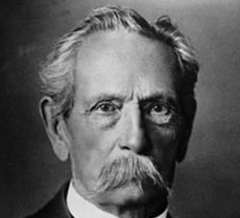
Karl Benz
25 ноября 1844 — 4 апреля 1929
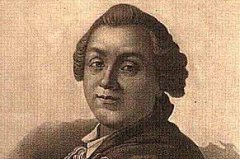
Alexander Sumarokov
25 ноября 1717 — 12 октября 1777
Alexander Marinesko
15 января 1913 — 25 ноября 1963
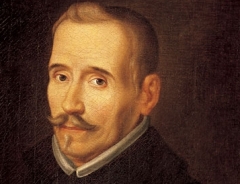
Lope de Vega
25 ноября 1562 — 27 августа 1635
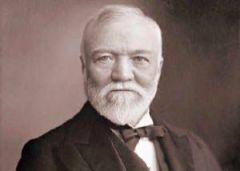
Andrew Carnegie
25 ноября 1835 — 11 августа 1919