Trenches of the Holy Trinity
Articles
Let’s get to know Ukraine!

Trenches of the Holy Trinity

In 1672, the Turkish army captured Kamenetz-Podolsky, and in 20 years the city's defenders made a decision to build earthen ramparts and fortress. Hetman Stanislaw Jabłonski supervised the construction and sponsored it, and the forces of the whole army were used to build the fortifications. The creation of defensive structures was carried out incredibly quickly.

In 1672, the Turkish army seized  Kamenetz-Podolsky, and 20 years later the city's defenders made a decision to build earthen ramparts and fortress.

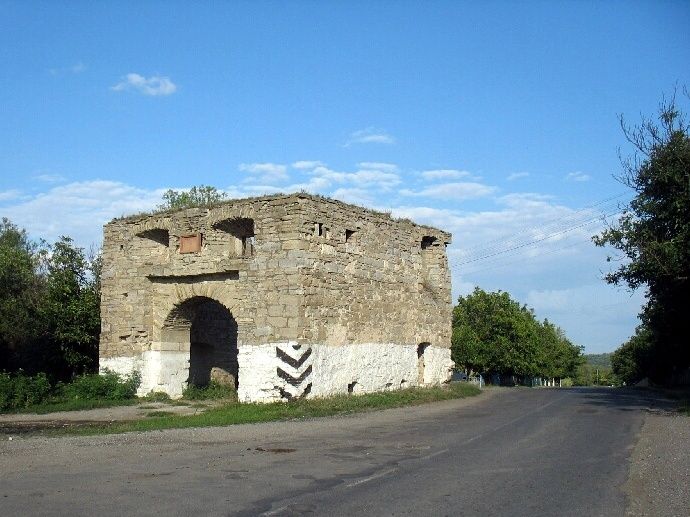
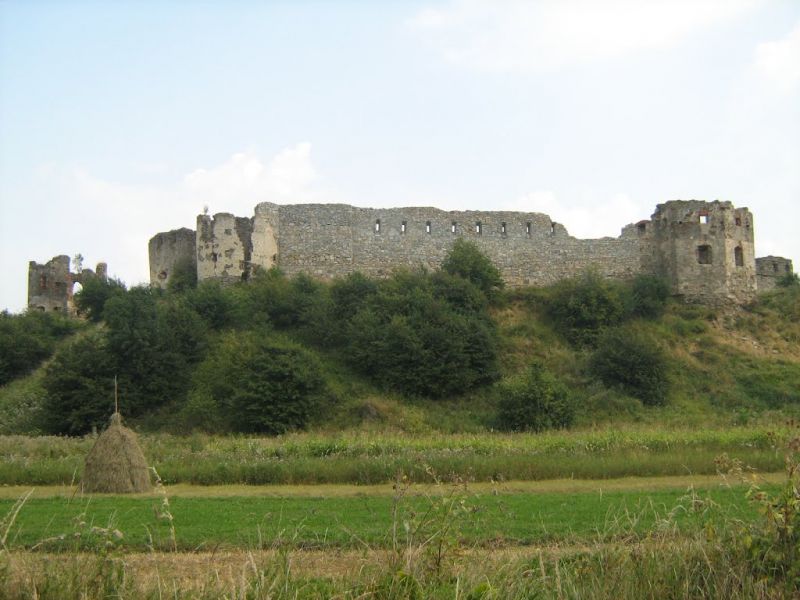
Hetman Stanislaw Jabłonski supervised the construction and sponsored it, and the forces of the whole army were used to build the fortifications. The creation of defensive structures was carried out incredibly quickly. Beginning in March, by the autumn it was already completed. The fortress with the towers was erected on the place chosen according to all the rules, from where the view of the roofs of the houses and churches of Kamenets-Podolsky opened. Climbing the watchtower of the fortress, one could consider  Zhvanetsky  and  Khotyn fortress, which made it possible to transmit visual signals about the approach of the enemy. And having descended to its foot, the view of the confluence of two rivers - Dniester and Zbruch - was revealed. The fortress was fortified by two more ramparts with massive stone walls and two rectangular gates consisting of two tiers. The first tier was an arched passage, on the second there were defensive structures.

In 1699, the fortress lost its strategic importance. The next historically important period is associated with 1769, when the defensive structure was captured by Russian troops. Later it was used as a frontier post.

Today, the defensive structure is an island in which the entrance gates, parts of the walls and earthworks have been preserved.
Окопы Св. Троицы

In 1672, the Turkish army captured Kamieniec Podolski, and 20 years later, the city’s defenders decided to build earth walls and a fortress.

The construction was supervised and funded by Hetman Stanisław Jabłonski, who mobilized an entire army to carry out the work. The fortifications were built incredibly quickly; beginning in March, they were completed by autumn. The fortress, with its towers, was constructed on a strategically chosen site overlooking the roofs of houses and churches in Kamieniec Podolski. From the watchtower, one could see the forts of Zhvanets and Chotyn, allowing for the transmission of visual signals about approaching enemies. At its base, the fortress overlooked the confluence of the Dnieper and Zbruch rivers.

In 1699, the fortress lost its strategic importance. A subsequent historical period of significance occurred in 1769, when it was captured by Russian troops and later used as a border outpost.

Today, the former fortress remains an island surrounded by fortified walls and earth barriers.

Recommended articles

Find the Best Professionals for Your Project

Expert repair, construction, and renovation specialists ready to help you right now