The Savior-Transfiguration Monastery, Novgorod-Siversky
Articles
Let’s get to know Ukraine!

The Savior-Transfiguration Monastery, Novgorod-Siversky

The Savior-Transfiguration Monastery is one of the oldest in Ukraine and one of the first monasteries in Kievan Rus. It rises on the steep bank of the Desna. This is the center of culture and enlightenment of the people, the abode of Orthodox Christianity.

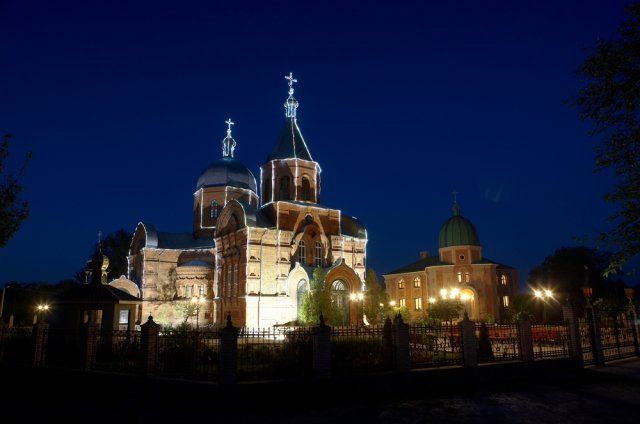
The Savior-Transfiguration Monastery is one of the oldest in Ukraine and one of the first monasteries in Kievan Rus. It rises on the steep bank of the Desna. It is the center of culture and enlightenment of the people, the abode of Orthodox Christianity. The monastery survived many heroic and tragic events, destruction and restoration. Today, its main cathedral and other buildings attract with its unique beauty, receive guests and conduct divine services.

History of the Transfiguration Monastery

The time of the foundation is unknown, but it is assumed that it was founded by Prince Mstislav Vladimirovich in 1033. In the 12th century on the territory of the building, surrounded by a fortress wall with towers, a stone Spassky cathedral was built. In 1239, the monastery suffered from the invasion of the Mongolian Tatars, then almost all the temples were destroyed, but stone construction was revived in the 16th century. A chamber building, a tower-belltower, which the Poles burnt in 1604, and the chambers of the abbot were erected. After 1657 the monastery acted as a princely residence for Archbishop Lazar Baranovich.

Revival of the Transfiguration Monastery

In the middle of the 17th century a collegium was opened, which was the beginning of a spiritual and cultural revival. Since that time, extensive construction on the territory of the monastery began. In 1791 the construction of a massive five-domed cathedral of the Transfiguration of the Savior was started, which dominates the territory. The chambers with the Peter and Paul Church, the chambers of the abbot with the church of Elijah date back to the 16th and 18th centuries. In the 17th century, baroque cells were built, and the walls and towers were rebuilt after much destruction. Also built a bell tower in the 19th century.

Architecture of the Spaso-Preobrazhensky Monastery

Surprising peculiar combination of styles in buildings. The cathedral in the style of mature classicism boldly echoes with the methods of Ukrainian baroque in the monastic buildings and the Moscow uzoroch'ya. Some buildings are recreated almost from the ruins, but retained the old spirit of the time of building the monastery.

Monuments to the victims of the concentration camp are erected on the outside of the cathedral. The south-west face of the fortress in the center forms a trapezoidal depression. The octagonal tower-bell tower stands from the end. The whole territory of the monastery is very similar to the square, which is surrounded by a fortified wall with towers.

When to visit the monastery in Novgorod-Seversky

The best time to visit the city itself and the Transfiguration Monastery is the end of April-beginning of May. At this time the Desna floods. From the towers of the monastery, you have a breathtaking view of the surrounding land. Before you open a literally endless sea in which the tops of trees and a blue surface will be seen. This happens only once a year.

Where is the monastery

In the city of Novgorod-Seversky you can find a unique architectural building on the high bank of the Desna river along Pushkin street 1. You can visit not only temples, but also towers, galleries, dungeons. The monastery is open from 9:00 to 19:45, except Friday. On Friday - until 19:00.

The Savior-Transfiguration Monastery in Novgorod-Seversky is one of the best places where you can spend the May holidays.
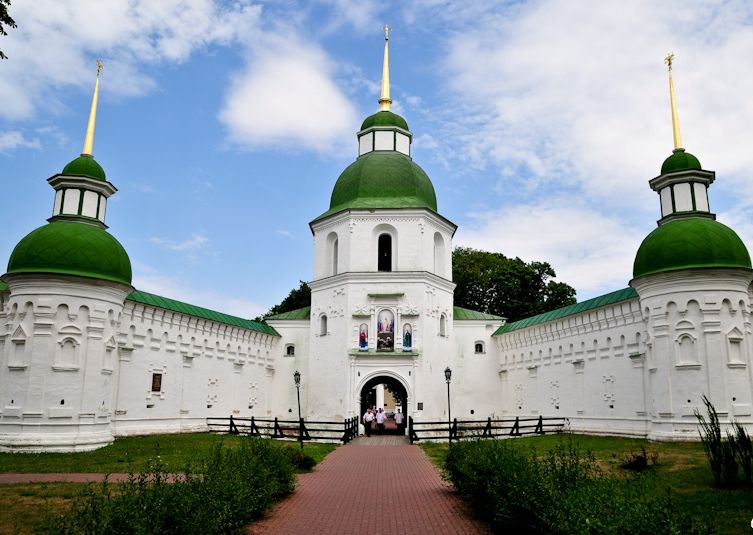
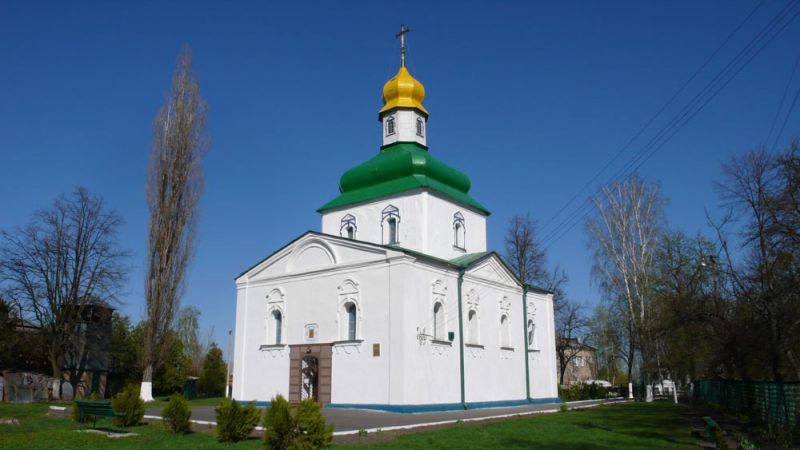
Спасо-Преображенский монастырь, Новгород-Северский

The Spasso-Preobrazhensky Men’s Monastery is one of the oldest monasteries in Ukraine and among the first to be established in Kievan Rus’. It stands on a steep bank of the Desna River. It is a hub of culture and enlightenment for the people, a sanctuary of Orthodox Christianity. The monastery has witnessed many heroic and tragic events, as well as periods of destruction and restoration. Today, its main cathedral and other buildings attract visitors with their unique beauty and serve as venues for religious services.

The History of the Spasso-Preobrazhensky Monastery

The exact time of its founding is unknown, but it is believed to have been established by Prince Mstislav Vladimirovich in 1033. In the 12th century, a stone Spassky Cathedral was built within the fortress surrounded by walls and towers. In 1239, the monastery suffered during the invasion of the Mongol Tatars, resulting in the destruction of almost all the churches. However, in the 16th century, stone construction resumed: a residential complex, a bell tower (which was destroyed by the Poles in 1604), and the abbot’s quarters were built. After 1657, the monastery also served as the residence of Archbishop Lazar Baranovich.

The Revival of the Spasso-Preobrazhensky Monastery

In the mid-17th century, a college was established here, marking the beginning of its spiritual and cultural rebirth. Subsequently, extensive construction activities took place within the monastery grounds. In 1791, the construction of the massive five-domed Spassya Preobrazheniya Cathedral began, dominating the entire area. The residential complex with the Petropavlovskaya Church, as well as the abbot’s quarters with the Ilinskaya Church, date from the 16th to 18th centuries. During the 17th century, baroque-style cells were built, and the walls and towers were reconstructed after years of damage. In the 19th century, the bell tower was added.

The Architecture of the Spasso-Preobrazhensky Monastery

The unique combination of architectural styles is truly remarkable. The cathedral, built in the style of mature classicism, boldly incorporates elements of Ukrainian Baroque in the monastery buildings and Moscow-style ornamentation. Some structures were reconstructed almost from ruins, yet they still retain the spirit of the era when the monastery was first established.

On the exterior of the cathedral, monuments to the victims of the concentration camp have been erected. The southwestern corner of the fortress forms a trapezoidal depression, and at one end stands an octagonal bell tower. The entire monastery complex is laid out in a nearly square shape, enclosed by a fortress wall with accompanying towers.

When is the best time to visit the monastery in Novgorod-Seversky?

The best time to visit the city and the Spaso-Preobrazhenensky Monastery is from late April to early May. During this period, the Desna River floods, offering stunning views from the monastery towers. You will see an seemingly endless expanse of land, with tree tops and the blue surface of the river – a sight that only appears once a year.

Where is the monastery located?

The Spaso-Preobrazhenensky Monastery can be found in Novgorod-Seversky, on Pushkin Street 1, on the high banks of the Desna River. Visitors can explore not only the churches but also the towers, galleries, and underground areas. The monastery is open from 9:00 AM to 7:45 PM, except on Fridays, when it closes at 7:00 PM.

The Spaso-Preobrazhenensky Monastery in Novgorod-Seversky is one of the best places to spend the May holidays.

\"Spasо-Preobrazhenensky

Recommended articles

Find the Best Professionals for Your Project

Expert repair, construction, and renovation specialists ready to help you right now