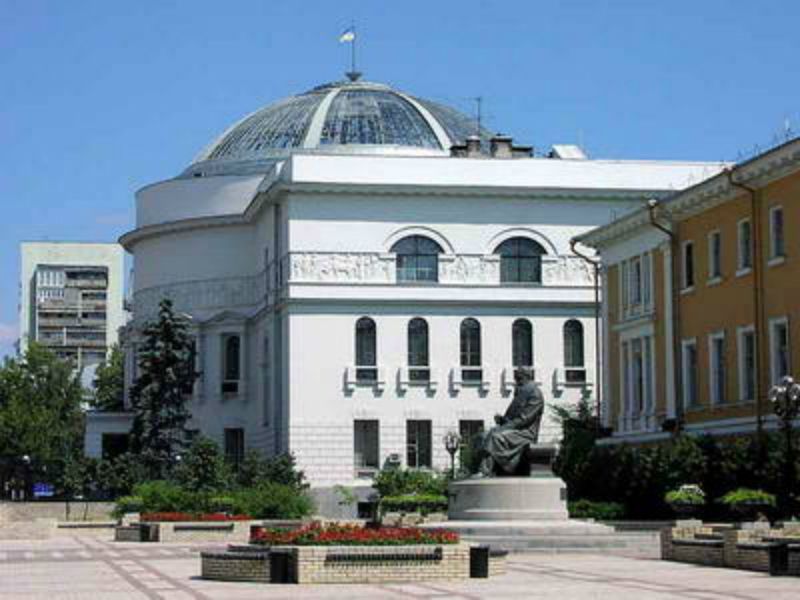
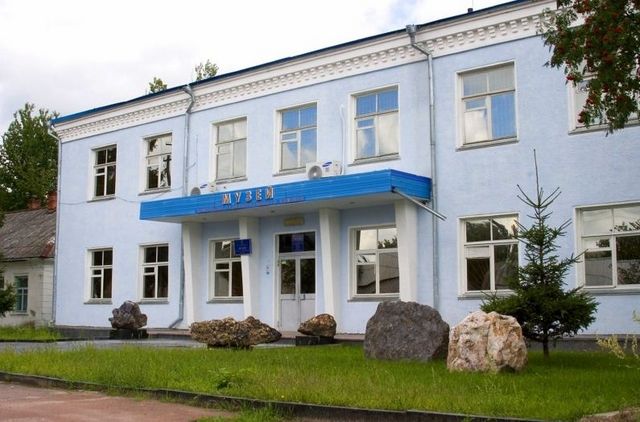
The museum is a rectangular structure, inside which is a cozy courtyard. The walls of the museum are made of bricks, and the outer facade is lined with a rare Inkerman stone. The central part of the building is decorated with a semicircular rizalit, and the carved sculptural frieze is located on the perimeter at the level of the third tier. Until now, a wonderful cast-iron fence, made according to the sketches of the architect Alexander Beretti, has been preserved.
The museum is unique in its kind, there are few such expositions in the world. Go inside the museum and see what interesting exhibits are exhibited in its halls. The funds of the Pedagogical Museum number more than forty thousand books, among which are ancient textbooks of the 15th and 17th centuries. The most interesting among them are the textbook of philosophy, dated 1488, the Lithuanian Charter of 1570, the Phraseological Dictionary of 1598, the Apostle of 1654, the Chronicle of Sarmatia of Europe and the Evangelion of the 17th century, the Gospel of Teachers of 1670 , "Rules of Political" in 1705, as well as many other equally valuable specimens.
Visiting this museum, you will learn how the system of Ukrainian education developed. Today, Teacher's House is the most important cultural center of Kyiv and a real treasure trove of unique pedagogical experience.
A huge museum exposition is conveniently arranged on a thematic-chronological basis: the ethnopedagogy of the ancient Slavs, the school of "book teaching of Kievan Rus, the history of book printing, the activities of fraternal schools in Ukraine of the 14th and 16th centuries, the pedagogical principles of the Kiev-Mohyla Academy, Cossack pedagogy, philosophical and pedagogical views of Gregory Frying pans. The exposition of the museum also has such sections as the development of higher education in Ukraine in the first half of the 19th century, preschool education and educational activities of Sophia Russova, education and pedagogical thought in Ukraine in 1920-1930, education in Ukraine during the Great Patriotic War.
Near the museum, at the corner of Vladimirskaya Street and Taras Shevchenko Boulevard, a monument to Mikhail Hrushevsky was erected. This location was chosen by its authors not by chance, because in the building of today's Teacher's House in the early 20th century the Central Rada was located, which was headed by this well-known political and cultural figure.
You can get to the Kiev Pedagogical Museum by metro, you need to go to the "Teatralnaya" or "Golden Gate" stations.