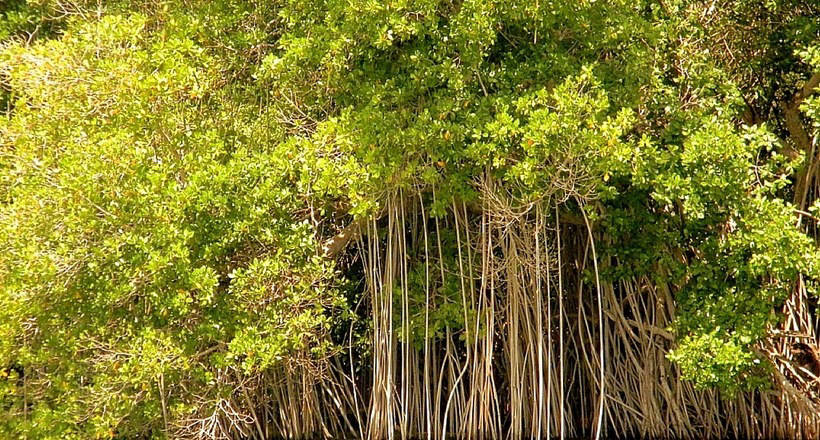
Mangrove forests are amazing ecosystems of the planet, common in equatorial and tropical belts. These trees are able to grow on the border of the ocean and land, submerged roots and trunks in salt water.
Mangroves: unique ecosystems in danger
Especially a lot of mangroves in Southeast Asia (Philippines, Indonesia, Taiwan, Thailand), Australia, Africa and the Americas. They grow in tidal zones up to a latitude of 30 °, and their life is inextricably linked to the ocean. Mangrove trees are about 20 different species belonging to different families, but united by the ability to live on the border of the ocean and land. Evergreen mangroves have thick branched roots that can hold them in a viscous unstable ground. Half of life these trees spend standing in salty sea water. At low tide the water leaves, exposing bizarre roots resembling stilts.
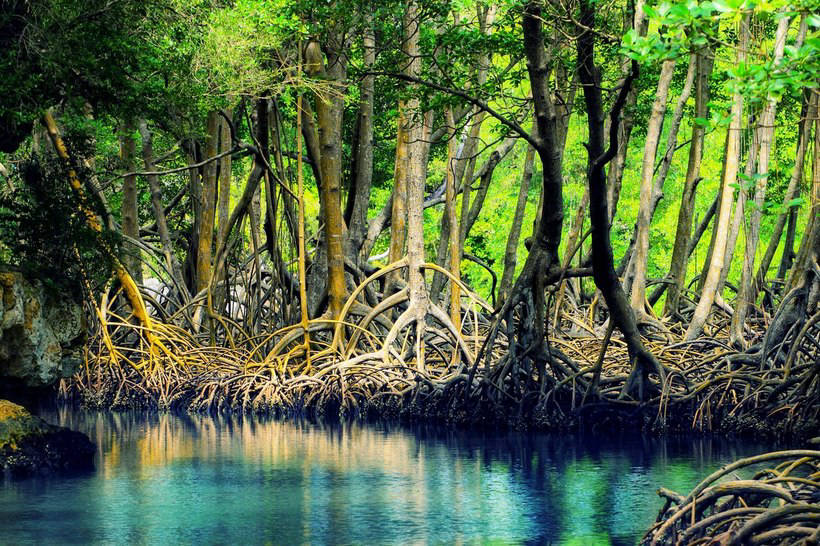
Mangroves are a very diverse world of the marine coast. Water inhabitants are attracted by the abundance of food in the form of organic remains. And in the crowns of trees, there are many species of birds and mammals whose existence depends entirely on the well-being of mangroves. Here are found crocodiles, fish, wood crabs, water snakes, a lot of birds, monkeys, ungulates and Bengal tiger.
Unfortunately, South-East Asia is a region with regular natural disasters. Tropical cyclones and tsunamis, caused by earthquakes, bring a lot of harm to the population of the coast. According to scientists, mangroves are able to soften the shock force of the wave. This, in particular, says research on damage to the island of Sri Lanka as a result of the tsunami in 2004. The coasts, protected by mangrove forests, suffered to a lesser extent. These unique trees also prevent the washing away of the soil and the destruction of the shoreline in the tidal zone.
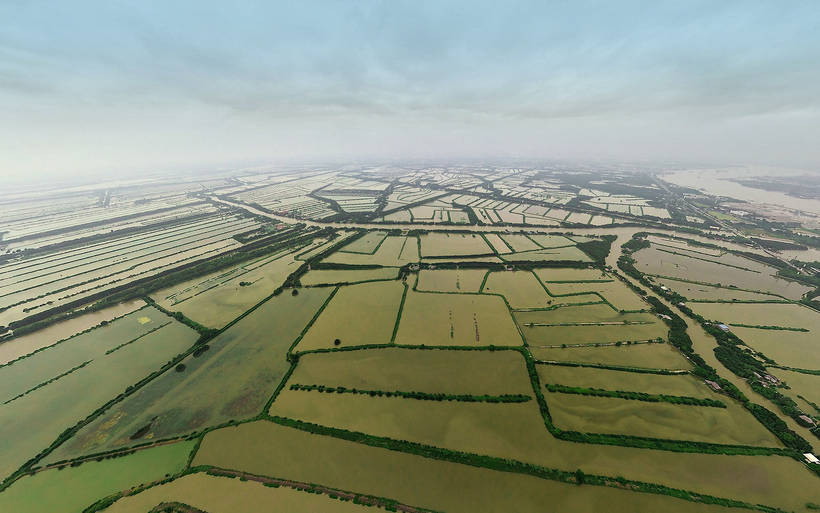
But in recent decades, mangrove areas are rapidly declining. We have already lost about 30% of the previous number of mangroves. Capable of surviving in salt water, they can not withstand the pollution of coastal waters with chemicals. Not the least role in this is the shrimp industry that has swept all the countries of the tropical region. Yes, it is the cultivation of shrimp, according to experts, causes irreparable damage to mangrove communities. Coastal forests are cut down for the arrangement of shrimp farms. But in a few years their owners throw the waste site and move further along the coast, again and again cutting out unnecessary mangroves. Sea water, without more barriers in the form of mangrove vegetation, penetrates the sands and makes nearby sources of drinking water unsuitable for use. A similar situation is observed in Brazil in the area of shrimp farms of Fortaleza. In addition, artificial shrimp farming is also environmentally dirty production. In reservoirs where shrimp is grown, poisonous substances are regularly added for the death of "weedy" fish species, as well as numerous feeds and nutrient mixtures. Before the sale, antibiotics are added to the water so that the caught shrimp are kept longer. All these substances that are not characteristic of sea water negatively affect coastal inhabitants, including mangroves.
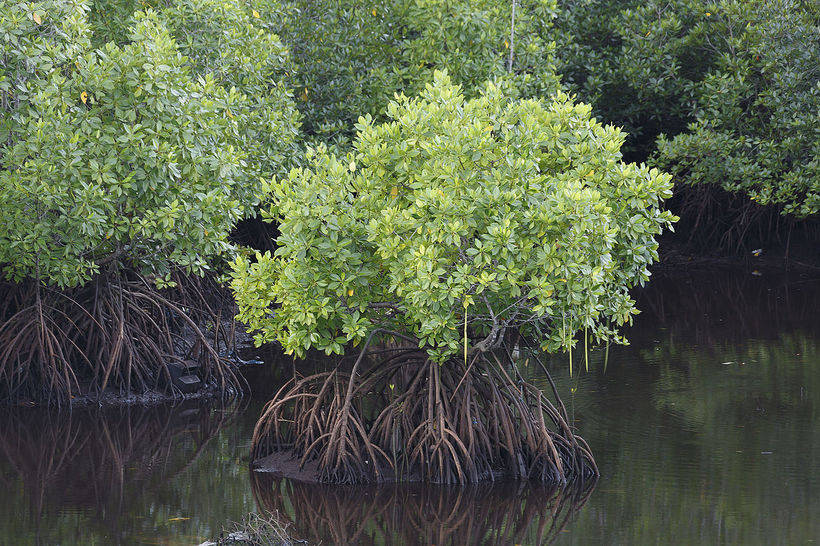
Activists of the mangrove rescue movement in many countries of the world are struggling with the further expansion of the area of shrimp farms and plant young mangroves. Perhaps, their efforts will be able to prevent the death of these unique natural communities and we will keep them for posterity.