Why rice fields are flooded with water, when rice grows well and on ordinary soil
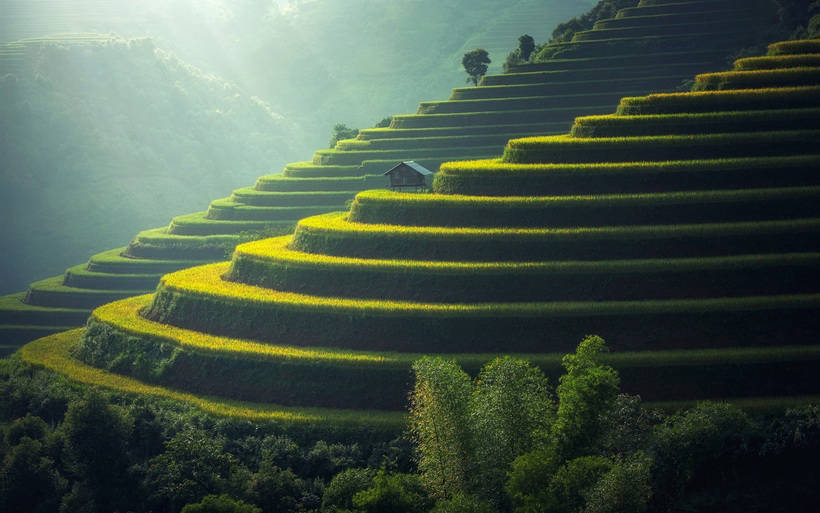
Everyone knows that rice is grown in water-filled fields. These can be flat agricultural plantations or characteristic terrain for mountainous areas. But the invariable attribute of rice fields is water.
It turns out that the planting of rice is not filled because the culture needs such a huge amount of moisture, and one of the directions of breeding is the breeding of resistant to decay varieties. Why, then, do rice suit such a "marshy life"?
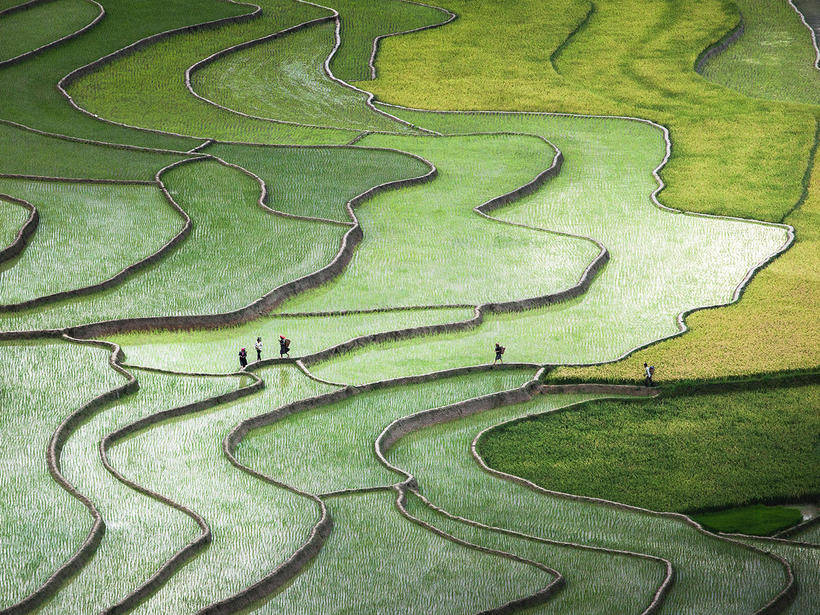
The history of rice growing has more than 7000 years, and the number of varieties of this cereal is amazing. In China alone, about 8,000 varieties of rice. This agricultural crop is in the first place in the diet of the majority of the inhabitants of South-East Asia, and rice production itself is the basis of the economy of many countries in the region.
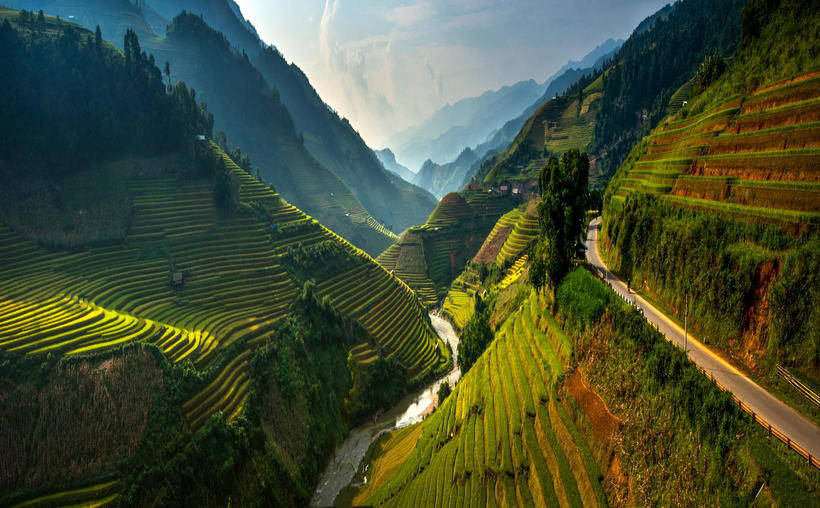
The largest amount of rice in the world (more than 140 million tons) is annually grown in China. It is followed by India, Indonesia, Bangladesh and Vietnam. In addition to Asia, rice is very popular in Brazil, and in this country it is also successfully grown, although the scale is somewhat more modest than Asian ones - only 12-15 million tons per year. Their rice plantations are available in the US, Australia, Turkey and even in Russia. In our country it is grown in Primorye and Krasnodar Territory.
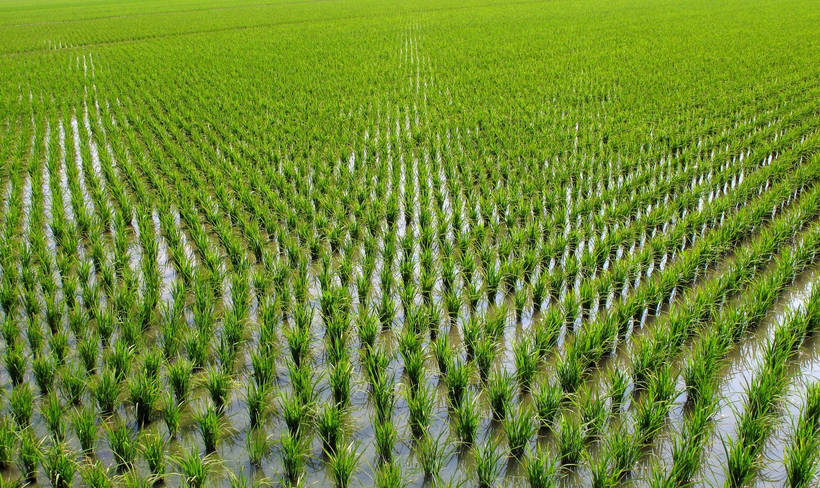
Most countries use pouring, or irrigation, for rice cultivation. With this technology, rice is grown on flooded fields, and two weeks before harvest, the water is drained. As a rule, rice is first germinated in special boxes, and then sprouted sprouts are planted on the field. In countries of South-East Asia, this is done manually, and in the USA, for example, it is practiced to sow seeds directly into the soil. In this case, aviation is most often used.
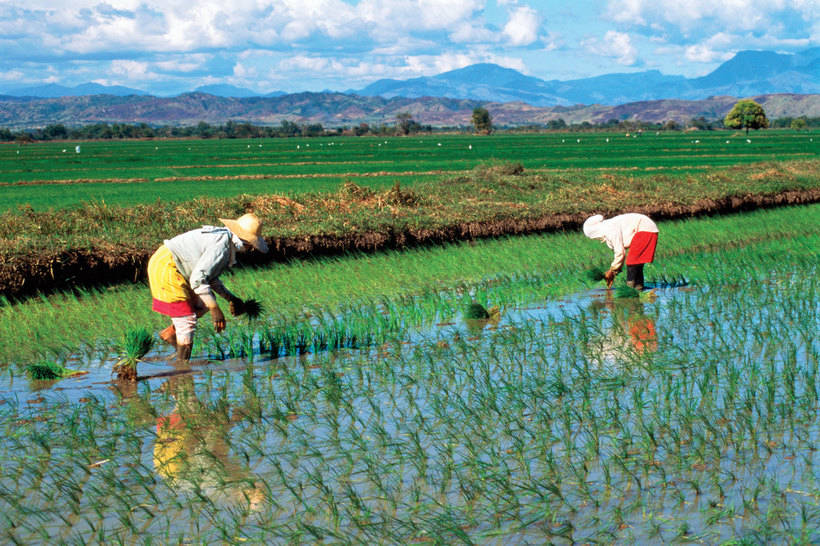
But the fields are flooded not because the rice needs so much moisture. Although wild forms of rice, on the basis of which modern varieties were bred, grow in damp places, for permanent varieties, permanent presence in water is not mandatory. But in this way farmers are struggling with weeds that reduce yield. The rice itself refers to hygrophilous plants and is able to tolerate being in a flooded place. But most of the weeds can not survive in such conditions. Some countries practice dry rice growing. With this technology, rice is grown on ordinary, non-seeded fields. And it feels great there. True, its yield is somewhat less, but not because of a lack of moisture, but due to pesky weeds.
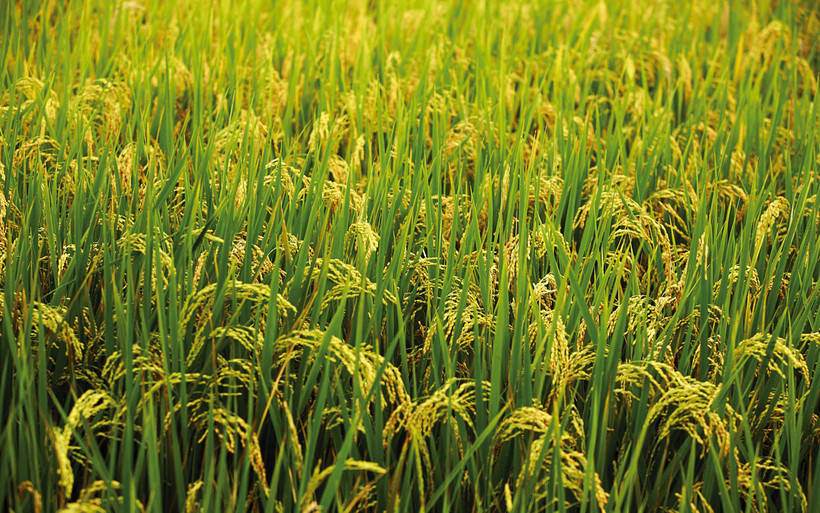
It turns out that the pouring rice from the ecological point of view is cleaner. Of course, fertilizers and pesticides, special pest control agents, are also used in water-flooded fields. But, at least, on such fields there is no need to introduce herbicides - drugs designed to fight weed vegetation.
Find the Best Professionals for Your Project
Expert repair, construction, and renovation specialists ready to help you right now
Recommended articles
More articles:
 15 photos from the filming of The Last Jedi, which must see the fans of Star Wars
 The power is there - no sword!
 The most attractive billionaires of the planet
 What dangers await inattentive divers in the coral reefs of the Red Sea
 16 photos proving that Montenegro is what you've always been looking for
 The 10 most instagram cities of 2017
 Uyuni saline: the largest mirror in the world and hotels asking not to lick the walls
 Project Eden - an incredible transformation of industrial quarry