Berlin: Where the Brandenburg Gate serves as a reminder of Germany’s divided past.
Standing at the Brandenburg Gate on a gray November afternoon, you suddenly realize that this place is not just a tourist attraction but a physical boundary that divides history. Once, barbed wire, mines, and death lay on both sides of this monument. Today, tourists with selfie sticks walk here, but the air still carries such a strong scent of history that it’s impossible to forget. The Berlin Wall fell 35 years ago, yet its shadow looms over every stone of the city.
The Brandenburg Gate stands on Unter den Linden in the western part of the city center.
Few people know that the Brandenburg Gate was built in 1791 and was originally called the Gate of Peace, as Queen Louise intended it to symbolize the end of wars. History is full of irony: this gate survived both World Wars, Nazism, and the Cold War before becoming a symbol of reunification.
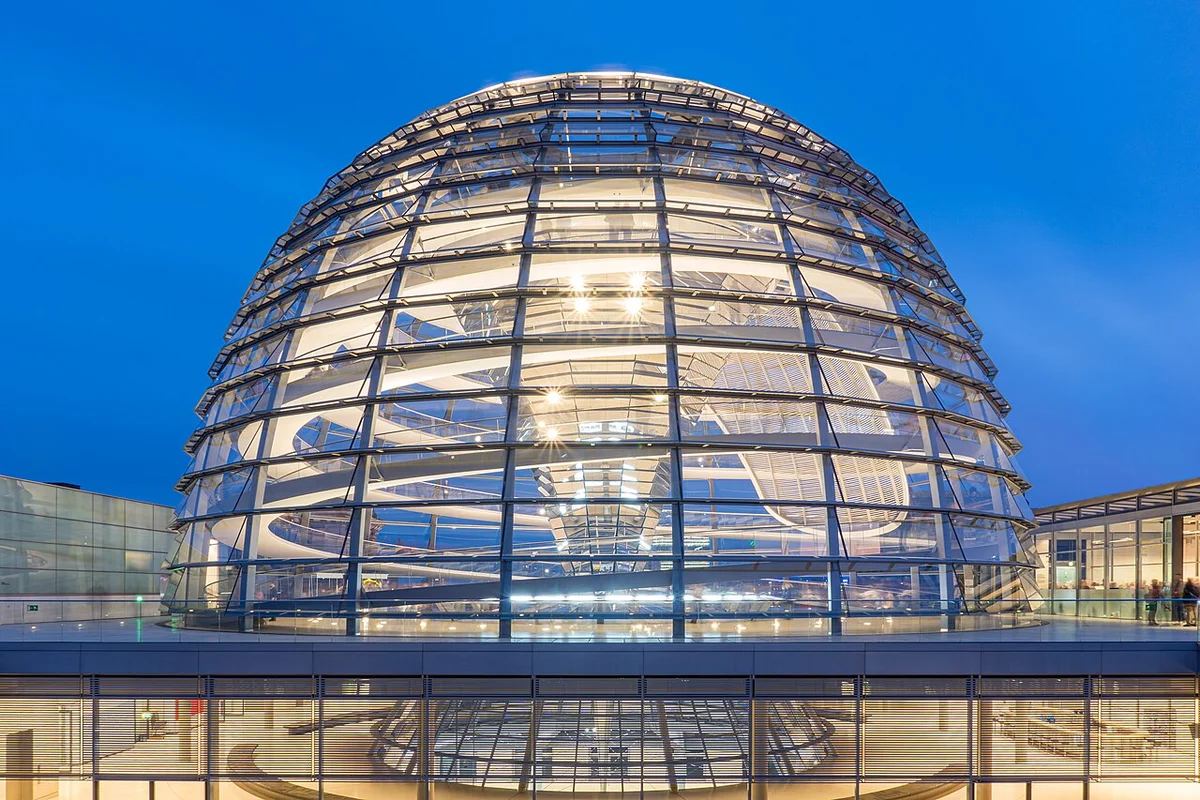
The Reichstag is located just 200 meters from the gate.
Interesting Fact: During World War II, Soviet soldiers painted a red star on the Reichstag building that was as large as a three-story house. It wasn’t removed until the 1950s, but photographs of it remain in the city’s museums and have become one of the most famous images of Berlin at the end of the war.
Walking from the Reichstag, it takes only 15 minutes along the Spree River to reach the Berlin Wall.
Little Known Fact:
Here is the translation of the provided text into English: **Strict Rules to Follow Without Exception:** 1. The output must be in English only. Do not translate the source language under any circumstances. 2. Translate solely the translated text—no explanations, comments, notes, or introductory phrases. 3. Avoid using phrases like “Translation:” or similar prefixes. 4. Do not format the text with quotes, markdown code, or any other formatting elements. 5. Translate every word faithfully, without skipping, summarizing, or paraphrasing. 6. If unsure about a word, transliterate it into English instead of leaving it in the original language. **The text to be translated:**
**A Place Not Listed in Standard Guidebooks:** The Memorial to the Victims of the Cold War on Bernauer Strasse.
**Interesting Fact:**** During the period 1961–1989 when the city was divided, 140 people lost their lives trying to cross the border. 79 of their bodies were never found, as guards sometimes dissolved them in acid. The Memorial on Bernauer Strasse serves as a reminder for the city to remember them. **For Those Who Want More Details:** Checkpoint Charlie was where American and Soviet tanks met in 1961, and many famous escapes occurred there. Today, it has become a popular tourist attraction with a life-sized replica of a U.S. soldier in a American uniform. The entrance fee is 18 EUR. Is it worth visiting? Definitely—it takes about half an hour to see it, and the experience is worth it for the photos, the sense of history, and the insight into this tragic chapter of Berlin’s history. **Little-Known Fact:**** Under Hitler, Berlin was planned to be rebuilt as **Germaniastadt**, a city featuring a giant palace, a stadium capable of seating 400,000 spectators, and a massive parliament building in the center. Parts of these plans (models, drawings) can be seen at the Museum of German History. These designs represented architecture of both greatness and madness. **Eating Nearby:** The food in restaurants around the historical sites is generally poor-quality and expensive—tourist restaurants near the Brandenburger Gate charge as much as 35 EUR for a schnitzel. However, if you head to Kreuzberg (take the U-Bahn U2 to Kottbusser Tor), you’ll find authentic Berliner cafes. Döner kebabs are available for around 5–6 EUR, and currywurst is 5 EUR. Berlin is known for its affordable and delicious street food. Beer costs 2.50–3.50 EUR per 500 ml in bars and 1.20 EUR in supermarkets.
Best times to visit: Spring (April–May) and autumn (September–October) are the best months. In summer, it’s too crowded; in winter, it gets dark as early as 4 PM. At night, the areas around the landmarks are safe, with police patrolling and cameras everywhere. One thing to watch out for: pickpockets are active in the center near the Reichstag and at the Hauptbahnhof station—so keep your phone and wallet in the front pocket.
How many days do you need? At least three days. Day 1: Reichstag, Brandenburg Gate, Pariser Platz, Museum of German History. Day 2: East Side Gallery, Friedrichshain, street art. Day 3: Bernauer Straße, memorials, Checkpoint Charlie, Kreuzberg. If you’re short on time, you can try a one-day itinerary: spend two hours at the Reichstag and Brandenburg Gate, two hours at the museums, and the evening at the East Side Gallery. But it won’t cover everything.

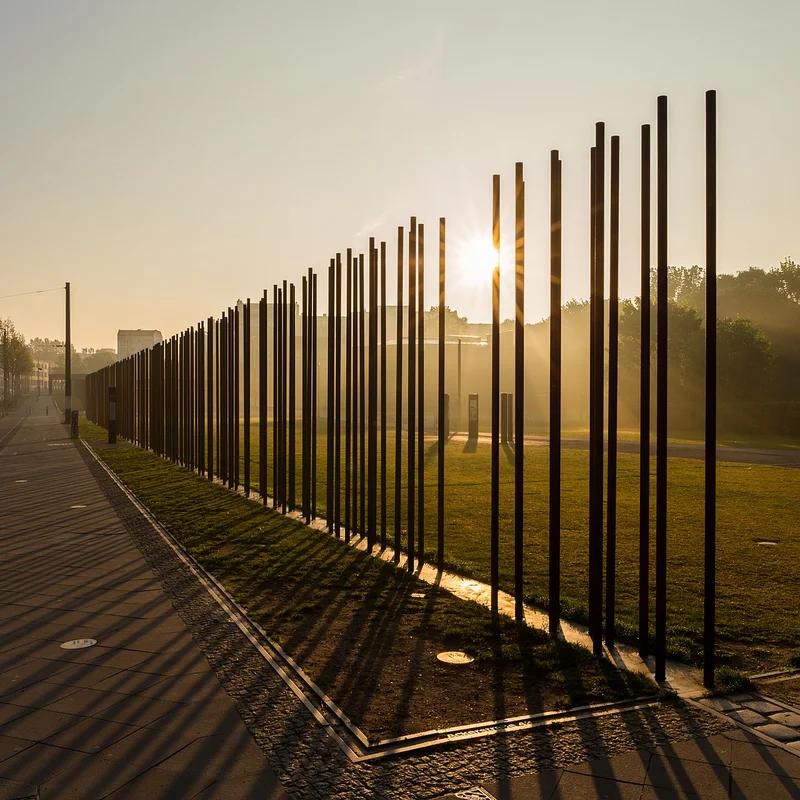 The last remaining fragment of the Berlin Wall on Bernauer Strasse, surrounded by a memorial
  A classic Berlin currywurst, served with fries and a spicy sauce