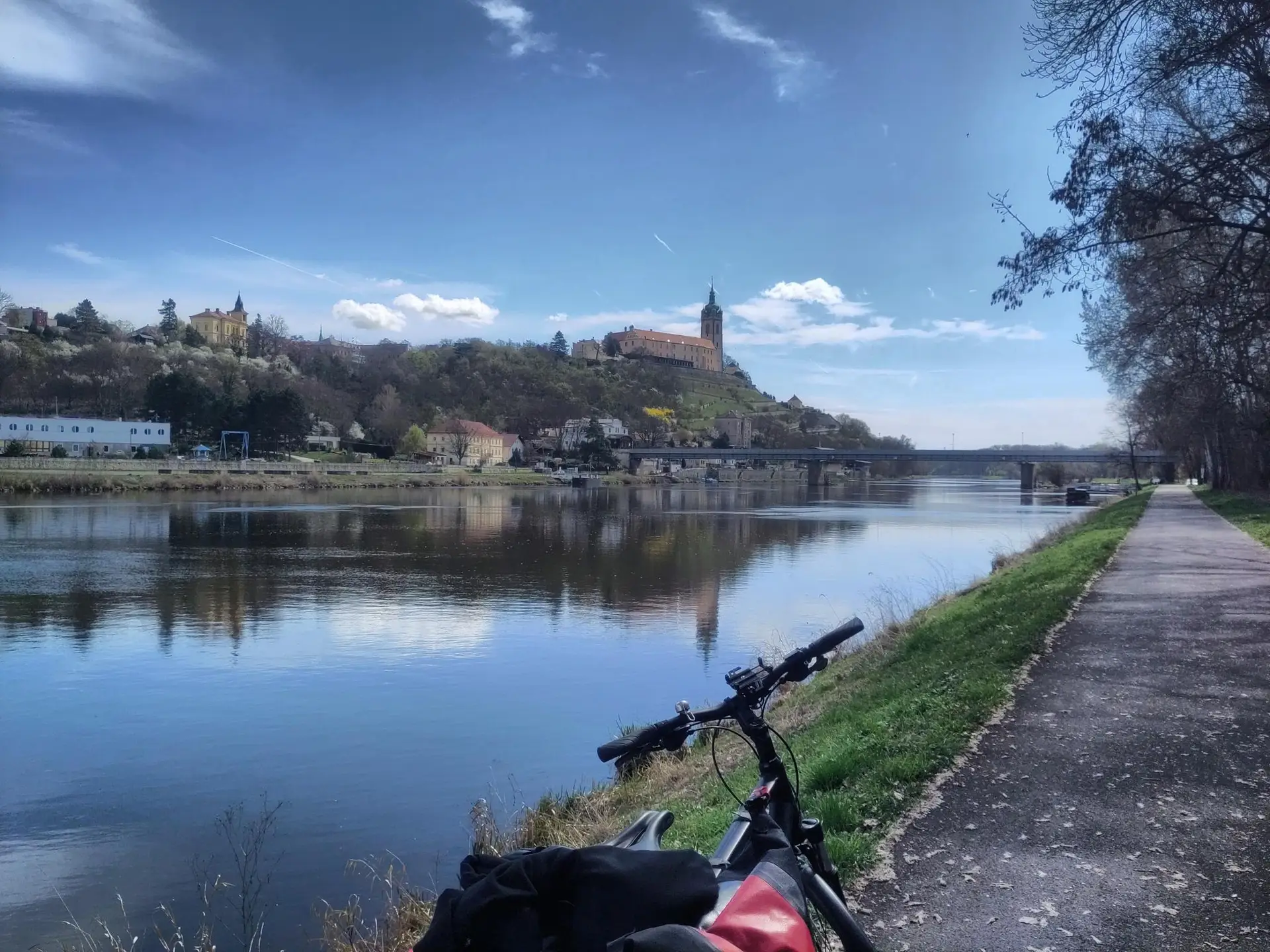
Melnik on the Vltava: a wine castle at the river confluence with 15th-century cellars.
Melnik is easily overlooked on the route from Prague to Dresden — it’s a small town 40 km northeast of the capital. But there’s one reason to make a detour there. After visiting, you’ll know two things: exactly where the Vltava and Elbe rivers meet, and why Czech wine from this region is considered the best in the country. The Castle of Melnik
The Castle Above the River Confluence: Why Wine History Begins Here
Melnik Castle
The castle entrance is paid: 240 Czech crowns (about 10 EUR) for just the exhibition, 300 crowns (12 EUR) with a guided tour. It is open daily from April to October from 10:00 to 18:00, and is closed on Mondays and Tuesdays in winter. The guided tour is available in Czech or German and lasts 50 minutes. If you only speak English, ask for an English-speaking guide in advance—the city’s tourism office arranges private tours for up to 10 people for 800 crowns (33 EUR).
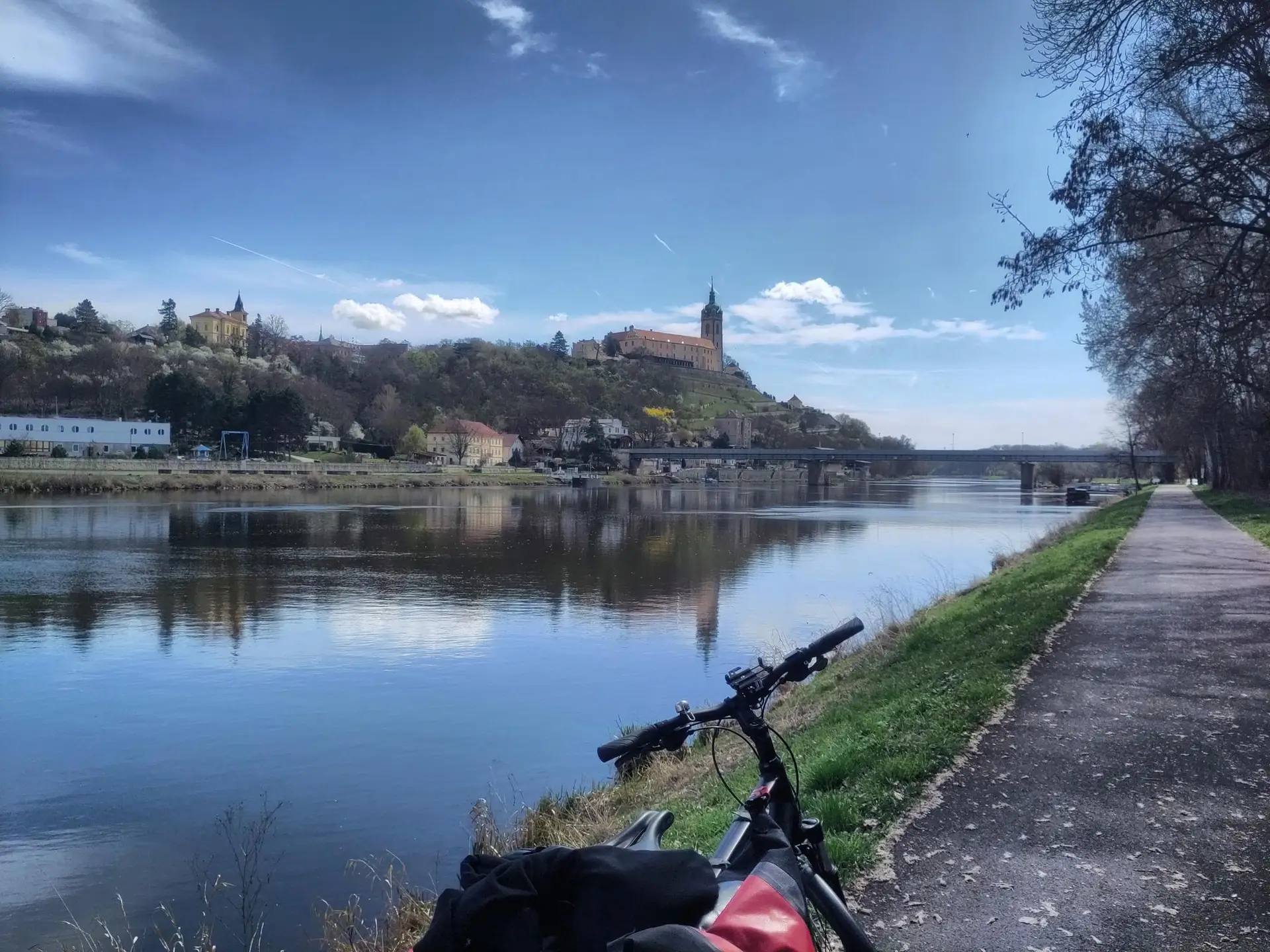
The castle’s observation deck offers a view down at an absolutely surreal landscape: a narrow strip of the city’s red rooftops, green vineyards, and below, two powerful streams of water that merge into one. The Vltava brings water from the center of Bohemia (from the Šumava region), while the Elbe comes from the German side. The meeting point of the rivers is clearly visible, and this is the only observation deck in all of Czechia from which this natural spectacle can be seen from such a height.
15th Century Wine Cellars: A Descent into the Dark Ages of History
The tour of the cellars begins in the main room of the castle. The guide leads you to a stone hatch, and you descend along a narrow staircase carved into the rock. The temperature drops from 15 to 8 degrees. The light from the lanterns glides over walls covered with a thin layer of white deposits—these are cryptogamic plants that grow only in conditions of constant humidity and no sunlight. Next to you on wooden shelves may lie modern wine bottles, while another 50 centimeters deeper in the stone, there are traces of medieval jugs carved there.
A fact often overlooked: the cellars of Melnik Castle are not a museum theater but an active winemaking facility. The wine you see here is truly aged under these conditions. Local wineries purchase wine that has spent 2-3 years underground in the castle, and it costs 30-40% more than wine from ordinary Melnik cellars.
After touring the castle, be sure to visit the Melnik Cellars
The Confluence Route: Vineyards Between Two Rivers
The best way to understand Melnik is to walk through the vineyards located in terraces between the castle and the river confluence. The route starts at the tourist information center
The “To the River Confluence” route takes 2.5 hours and gains a height of 150 meters. You walk uphill along a side slope, passing vineyards growing Müller-Thurgau, Riesling, and the local hybrid Severo-Kolombina. There is a small St. John chapel halfway up, offering a panoramic view of the two rivers. The route then descends to the actual confluence point, where there is a bench and a sign indicating that the Vltava and Elbe rivers merge here. It takes 2 hours to walk from Melnik to the confluence point, but it’s better to rent a bike from “Kolola Melnik” (address: Solnechnaya 234, 150 crowns per day / 6 EUR).
Where to try wine: wineries and winemaker’s restaurants
The “U Lvа” wine bar
The restaurant “Vіnаrnа Меlnіk”
If you want to buy wine to take with you: wines from Melník are rarely exported, so it’s pointless to look for them abroad. The best places are the “U Lvа” winery itself or the local winemaking cooperative store “Zеmská Vіnісе Меlnіk”
Things to know before your trip
- Melník was founded in the 10th century as a princely fortress, and wine production only began here in the 15th century — making it the youngest wine-making center in Czechia, though its cellars are considered the oldest.
- The confluence of the Vltava and Elbe creates the only place in Europe where two rivers meet with a height difference of over 100 meters — the Vltava flows 112 meters higher here than at its entrance to Melník.
- The Order of Malta owned Melnik Castle during the 17th and 18th centuries and established the first wine cooperative here — the predecessor to Melnik’s modern wine industry.
- Wine that is over 50 years old is stored in the castle’s cellars. It is never sold, but visitors can request the co-owner to show it during a premium tour for an additional fee (usually 200-300 crowns / 8-12 EUR).
- Melnik wines are rarely exported because they are produced by only 7-8 small wineries with an annual output of less than 500,000 bottles — 100 times less than what French wineries of similar size produce.
How to get there and how long it takes
The distance from Prague to Melnik is 40 km. By bus: From the Vltavská metro station (Red Line C), there is a direct bus No. 440 operated by ČSAD — travel time is 1 hour, and the ticket cost is 72 Czech crowns (3 EUR). Buses run every 30–60 minutes from 6:00 to 22:00. Check the schedule on the idos.sz website.
By car: From Prague, head north on highway I/8 toward Dresden, then take I/16 toward Melnik. Parking at the castle costs 60 crowns (2.5 EUR) per day; there are two parking lots near the entrance and one in the town center.
Minimum time: Castle + cellars + winery = 4–5 hours. Optimal duration: an entire day (8 hours) — including a wine tour through the vineyards and dinner at Vinařna Melnik. If traveling from Prague for a one-day trip, depart at 8:00 and return to Prague by 20:00.
The best time to visit is from May to September. Harvest takes place in October, and some wineries may be closed. In winter, the castle operates on a reduced schedule. Mělník is not crowded with tourists even during peak season — at most 50-70 people are there at any given time, whereas in Prague the number is in the thousands.
Local secrets that tourists often miss
Before going down to the castle’s cellars, ask your guide to stop by the wall of a room where traces of ancient jars can be seen. These are not just decorative grooves — they are unique “signatures” of winemakers from the 15th century. Each winemaker made the grooves in their own style, and they can reveal who stored the wine and when.
In the cellars of “U Lvа,” there is a side passage that leads directly to the altar of a medieval chapel located on the surface. This is the only place where you can descend into the cellar and emerge straight into a sacred space — it is rarely shown to tourists.
If you visit “Vіnаrnа Меlnіk” during lunch hours (11:30-13:00), ask for a “kоštоvku” — it is a tasting meal that costs 400-600 crowns (16-24 EUR) and includes three appetizers with three wines. It is not listed on the printed menu, but the owner, Vladimir, prepares it regularly for locals.