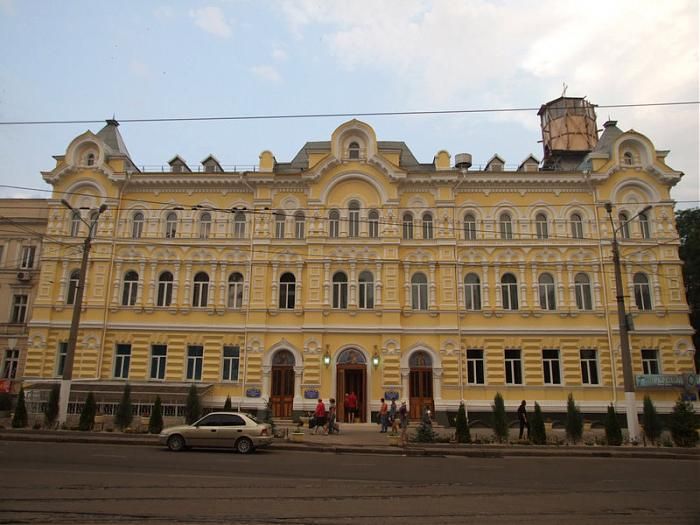
Hence, from the end of the 19th century, pilgrims from Russia set off to worship shrines on Athos, Constantinople, Jerusalem and other cities - the geography was vast. At the farmstead, which was called the Russian Andreevsky dormitory monastery, they spent the night, made out travel documents. There were about 300 pilgrims and about 50 monks lived there.
In the right wing of the building there were two churches: the lower one - in the name of the Apostle Andrew, and the upper, occupied the second and third floors - in honor of St. Sergius of Radonezh.
Under Soviet rule, the palace of culture of the tram and trolleybus administration was opened on the former farmstead. In October 1996, Metropolitan of Odessa and Izmail Agafangel won the return of the building of the Odessa diocese. And now on its first floor - a temple in honor of the Tikhvin icon of the Mother of God. The second floor is used for diocesan assemblies.
In addition to St. Andrew's, in Odessa before the revolution of 1917 there were two more farmsteads of Athos monastery: Panteleimonovskoe and Ilinskoe, on the site of which is now the St. Ilyinsky Monastery.