Monument of Glory
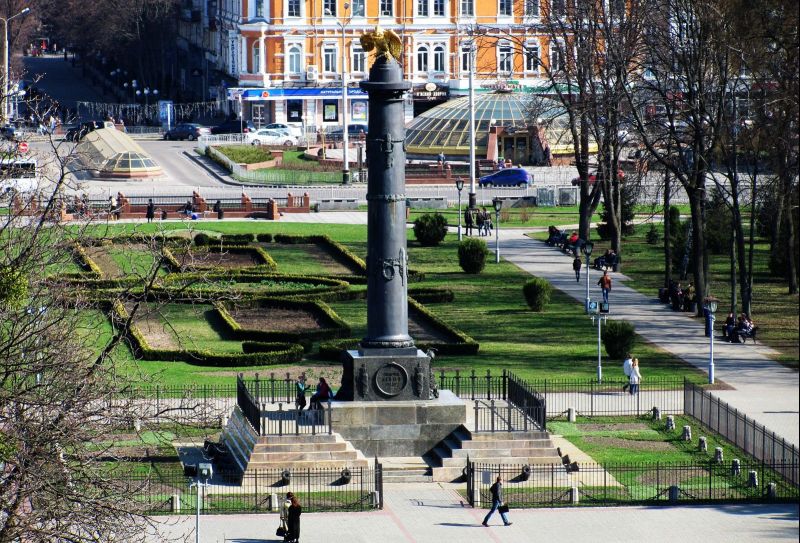
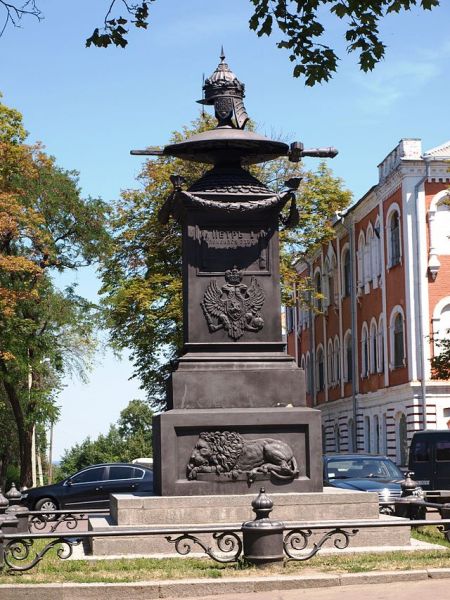
In the center of Poltava stands the monument of Glory erected on the spot where, according to legend, on June 28, 1709 inhabitants of the city of Poltava, its heroic garrison and Colonel Kelin met Peter I and the victorious Russian Army at their entrance to the city after the victory on the battlefield. Monument of Glory (also known as the Column of Glory) - a monument of monumental art of the early XIX century in the center of the Round Square in Poltava (Ukraine). Established in honor of the victory of the Russian army over the troops of the Swedish King Charles XII in the Battle of Poltava. One of the main attractions of the center of Poltava.
History of the monument
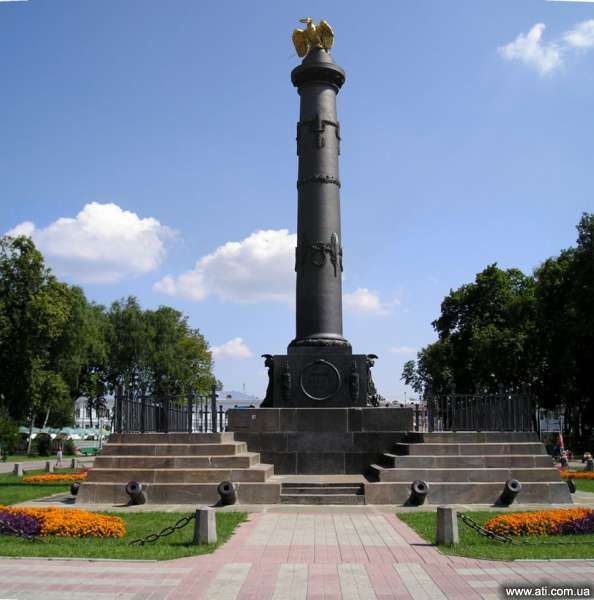
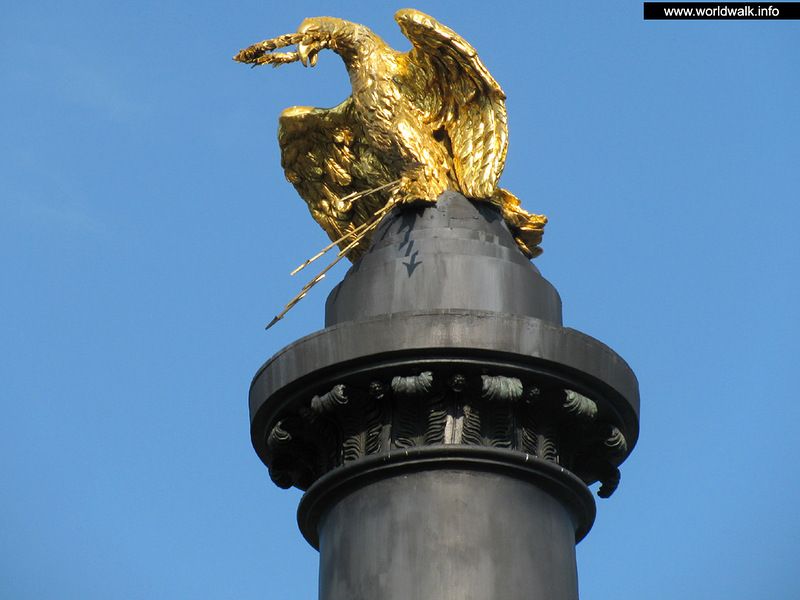
It was built in 1806-1811. in honor of the 100th anniversary of the Battle of Poltava. The authors of the monument are the architect J. Toma de Thomon, the sculptor F. F. Shchedrin. The monument is based on two original sketches, executed by the Poltava provincial architect MA Amvrosimov, in the form of a column crowned with an eagle, in the image of triumphal columns that celebrated the victories in ancient Rome. The foundation of the future monument was laid down on 27.06.1804. Sketches of M. A. Amvrosimov were sent to the Academy of Arts for consideration in St. Petersburg, where they were instructed to finish the architect J. Tom de Tomon. Although the inscription on the monument says that it was "completed in 1809", the discovery occurred on June 27, 1811. The monument is a cast-iron Tuscan column on a faceted pedestal crowned with a gilded bronze eagle with a laurel wreath in its beak and arrows in its claws facing the Poltava battlefield. The brick column is clad in four cast iron casings, the seams between which are covered with three belts in the form of wreaths of oak leaves. The column is mounted on a cubic granite pedestal, which stands on a stepped stylobate in the form of a four-sided bastion, which is based on 18 cannons - trophies of the Battle of Poltava (10 from Poltava fortress, 8 from Perevolochna).
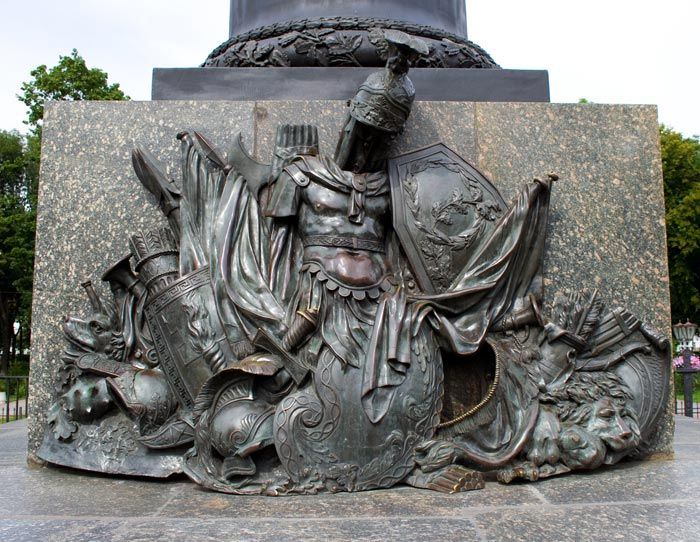
The upper platform is protected by a cast iron grate, the decorative racks of which are made in the form of sheathed swords, wrapped with a blade to the ground, which symbolized the end of hostilities. The pedestal of the column is decorated with bronze high relief compositions made of armor and banners with Roman military paraphernalia. In the center of the composition from the south-east and north-west sides - large bronze rings in the form of snakes holding their own tail - the so-called "rings of return" - the allegory of eternity and the frequency of the world. The top of the column is crowned with a bronze eagle bearing a laurel wreath in its beak, in the claws of an eagle the perones are the arrows of war. The view of the eagle is turned towards the Poltava battlefield. The total height of the majestic monument is about 17 m. The height of the column together with the capital is 10.35 meters, the eagle with the hemisphere is 2.11 meters, the wingspan of the eagle is about 3 meters, the bottom diameter of the column is 1.84 meters, the top one is 1.3 meters . You can reach it on any public transport going through the city center.