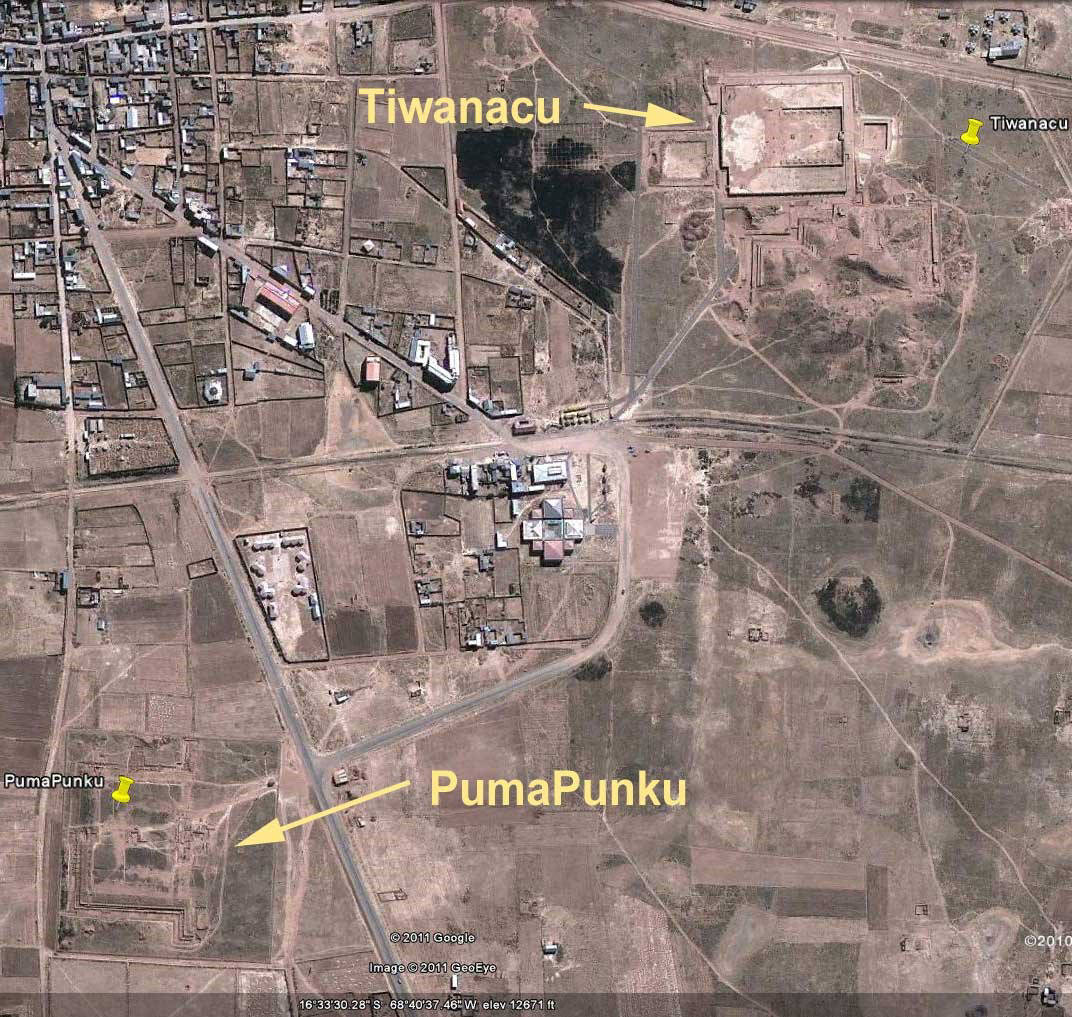
The famous archaeological site of Tiahuanaco in Bolivia now consists of two separate zones. A significant part of the megalithic structures is concentrated in a single - main zone, separately from which - approximately at a distance of eight hundred meters - there is an object called Puma-Punku.
Mysterious megaliths of Puma Punku
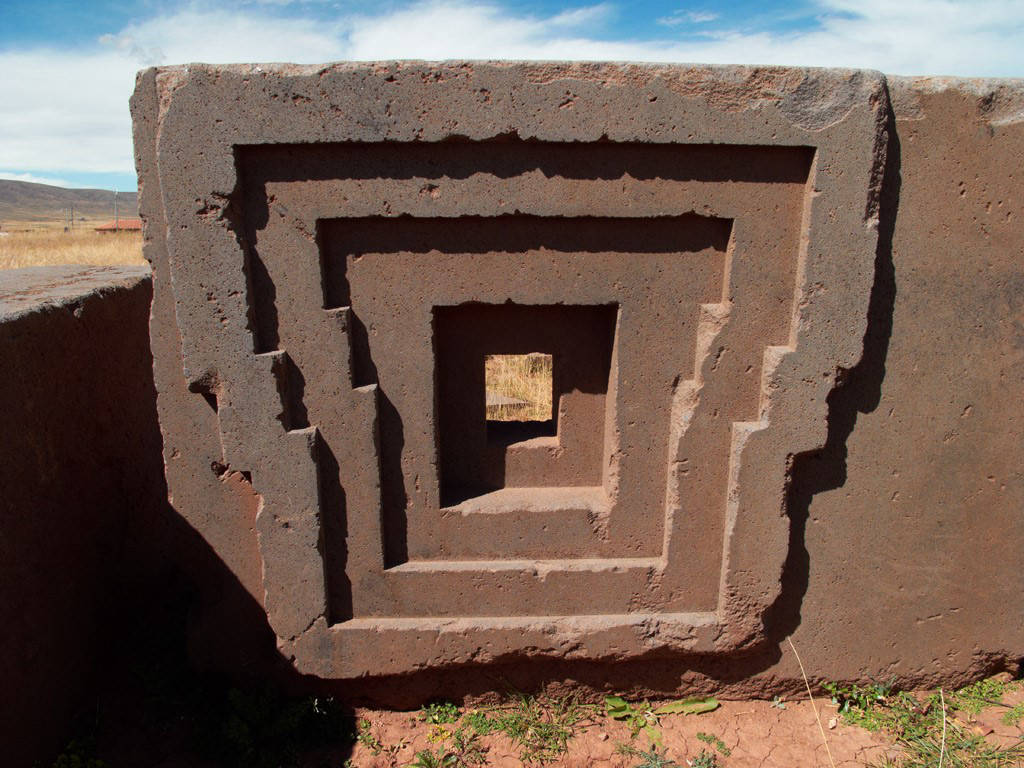 For quite a long time, large-scale archaeological works were not carried out on the Puma-Punku. All this time, the researchers could see only a small part of the designs, which did not give any complete idea of the original form of the structure. Because of this, and with the light hand of Arthur Poznansky - a Bolivian of Polish descent, who devoted almost all of his life to studying Tiahuanaco - his hypothesis that the Puma-Punk was one hundred years ago (and, as is now clear, erroneous)
Let's study this mysterious structure in more detail and get acquainted with the most incredible versions ...
Photo 2.
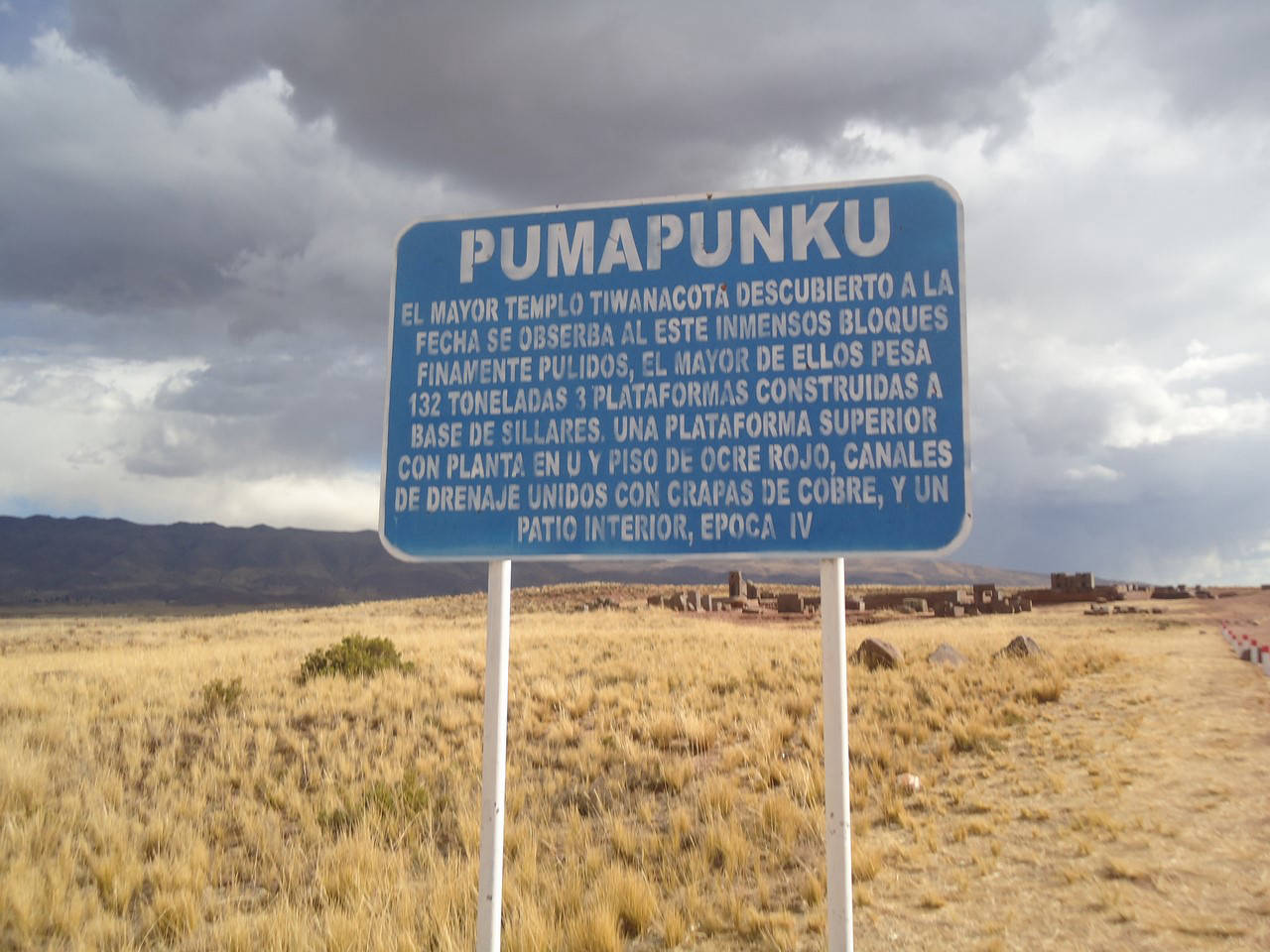
Now Lake Titicaca is located three dozen kilometers from Puma-Punku. Accordingly, this led to a version of the strong shallowing of the lake, which previously seemed to reach Tiaunako. However, in the second half of the 20th century, as a result of underwater research, remains of ancient structures were found on the bottom of Titicaki, which required not increasing the depth of the lake, but increasing with time. There was an obvious contradiction, which was solved by the hypothesis of periodic fluctuations of the water level in Titicaca with a rather large amplitude amplitude.
Photo 3.
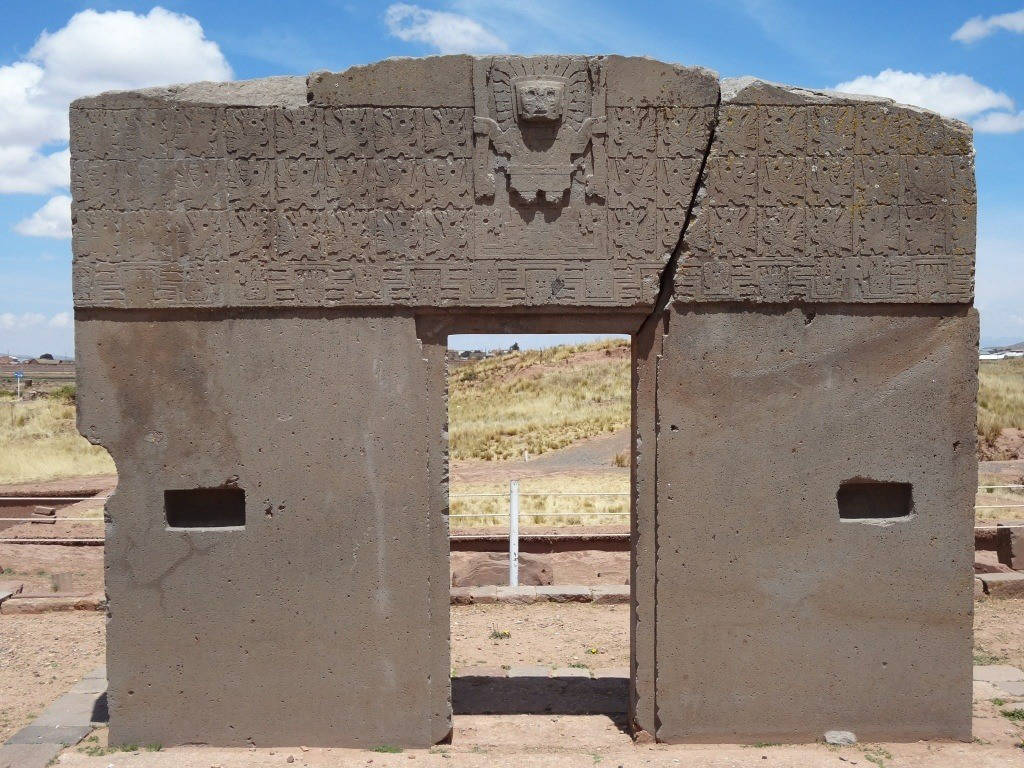
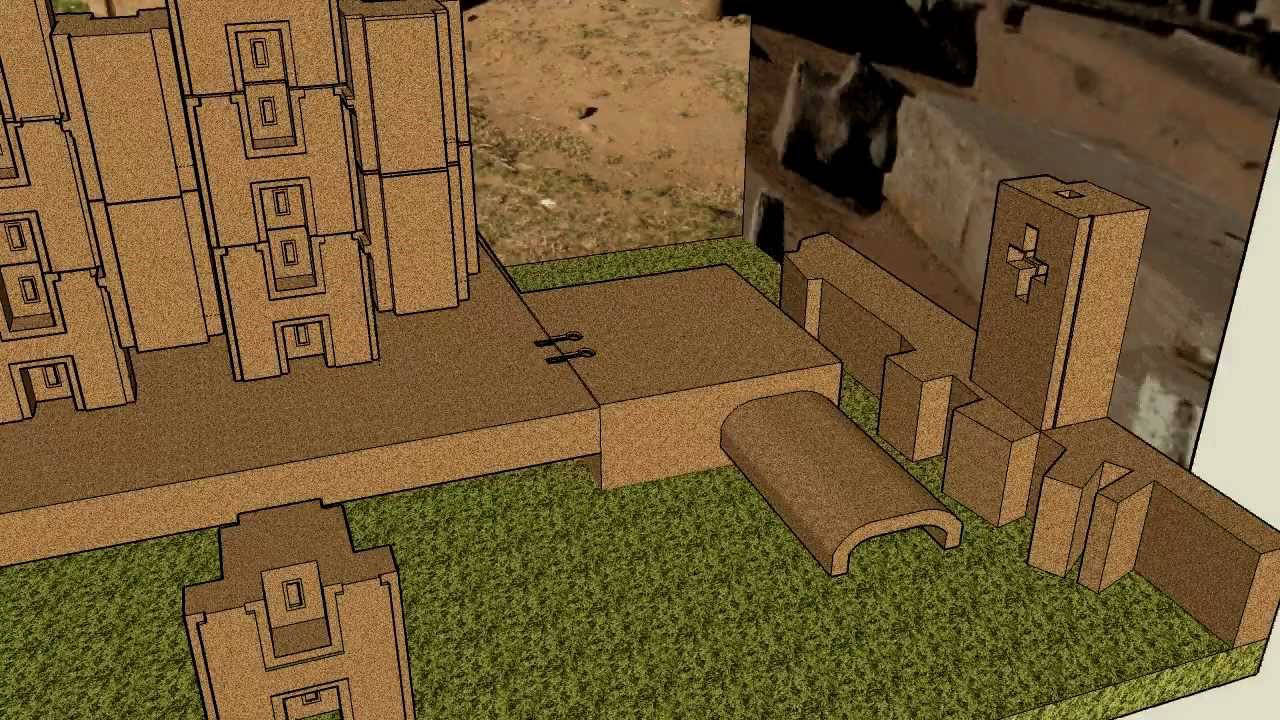
In the course of the excavations that started towards the end of the twentieth century and periodically continues to this day, was able to approximately reconstruct the original appearance of Puma Punku, which proved to be a group of buildings on the hill (apparently artificial origin), surrounded by stone walls and towering above the surrounding terrain in the form of a three-dimensional letter "T" with a thickened "leg". So it could not in any way be a port on the shore of the lake - if the water came here, it would encircle the Puma-Punk from all sides, and the complex would simply turn into an isolated island.
Alas. Despite all this, the statement about Puma-Punk as an ancient port on the shore of Lake Titicaca continues to wander from book to book ...
Photo 4.
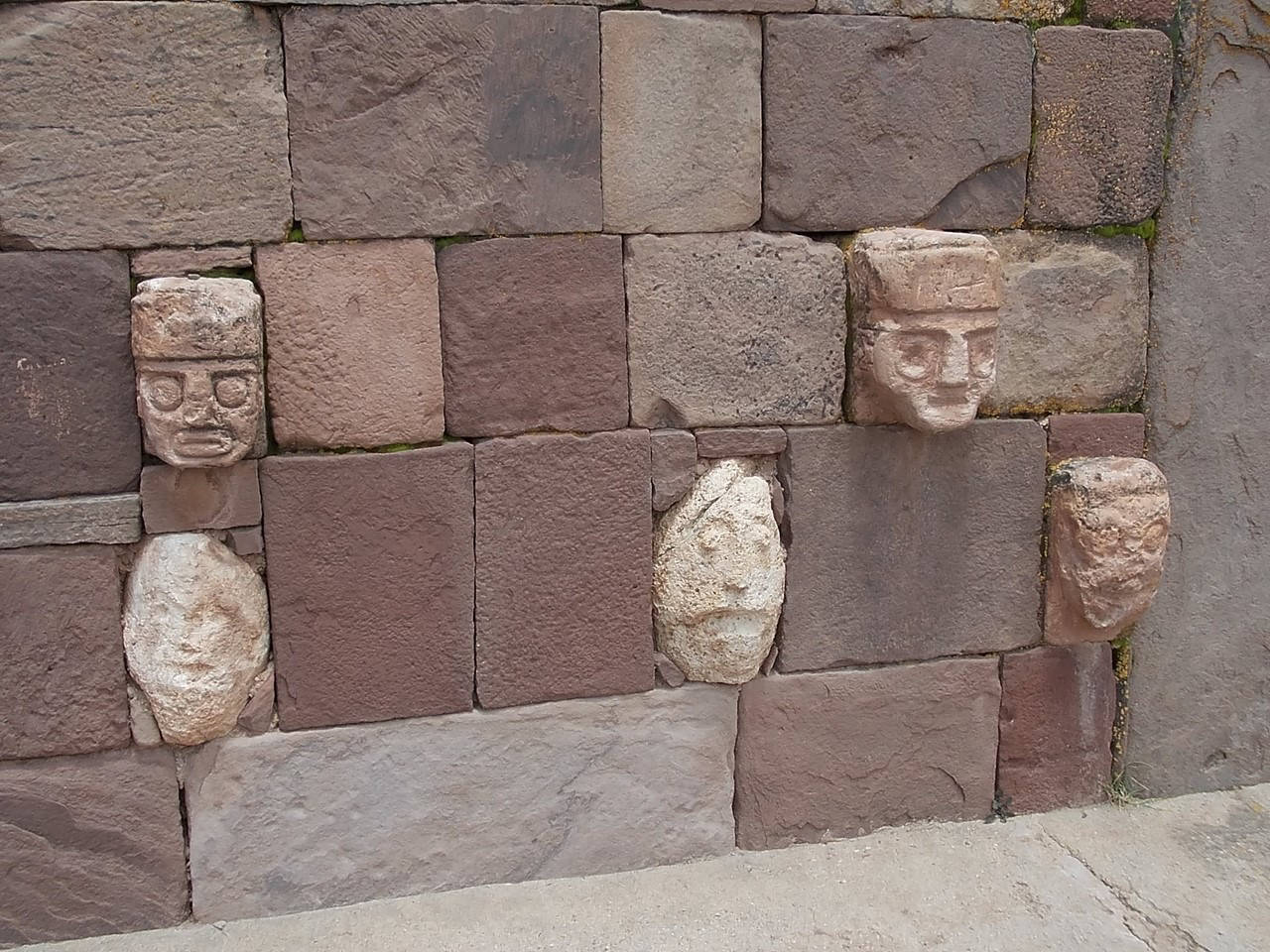
stone facing hill formed as two distinct layers of masonry viewed from the rectangular block relatively small size - only a few dozen, a maximum of hundreds of kilograms. Blocks are carefully adjusted to each other without any solution.
At first glance, the facing does not cause much interest. But a more detailed her examination - especially in the lower tier, where it is better preserved - reveals a number of curious and even bizarre details
First, the bulk of the units is made very high quality in the shape of a cuboid with very smooth. - sometimes even polished - facets. However, here and there in the masonry are found blocks that either the end or the upper side of the flat faces are not - they seemed not processed before the end of the
Secondly, with very qualitative general alignment across the lining blocks, that are either slightly protrude from the masonry, or slightly "pressed" inside it. And this "celebration" has the character of no damage over time (for example, due to earthquakes), but the original error. There is a feeling that it was important for builders to withstand only a common perimeter line, and "small details" were not important.
This, however, is quite logical, if, say, the lower tier was something of a type of foundation, submerged below the ground level. This assumption corresponds to a good preservation of the blocks, which in this way could be protected from external factors, respectively, and from erosion.
But what could the foundation of the lower tier? .. It is not clear ...
Photo 5.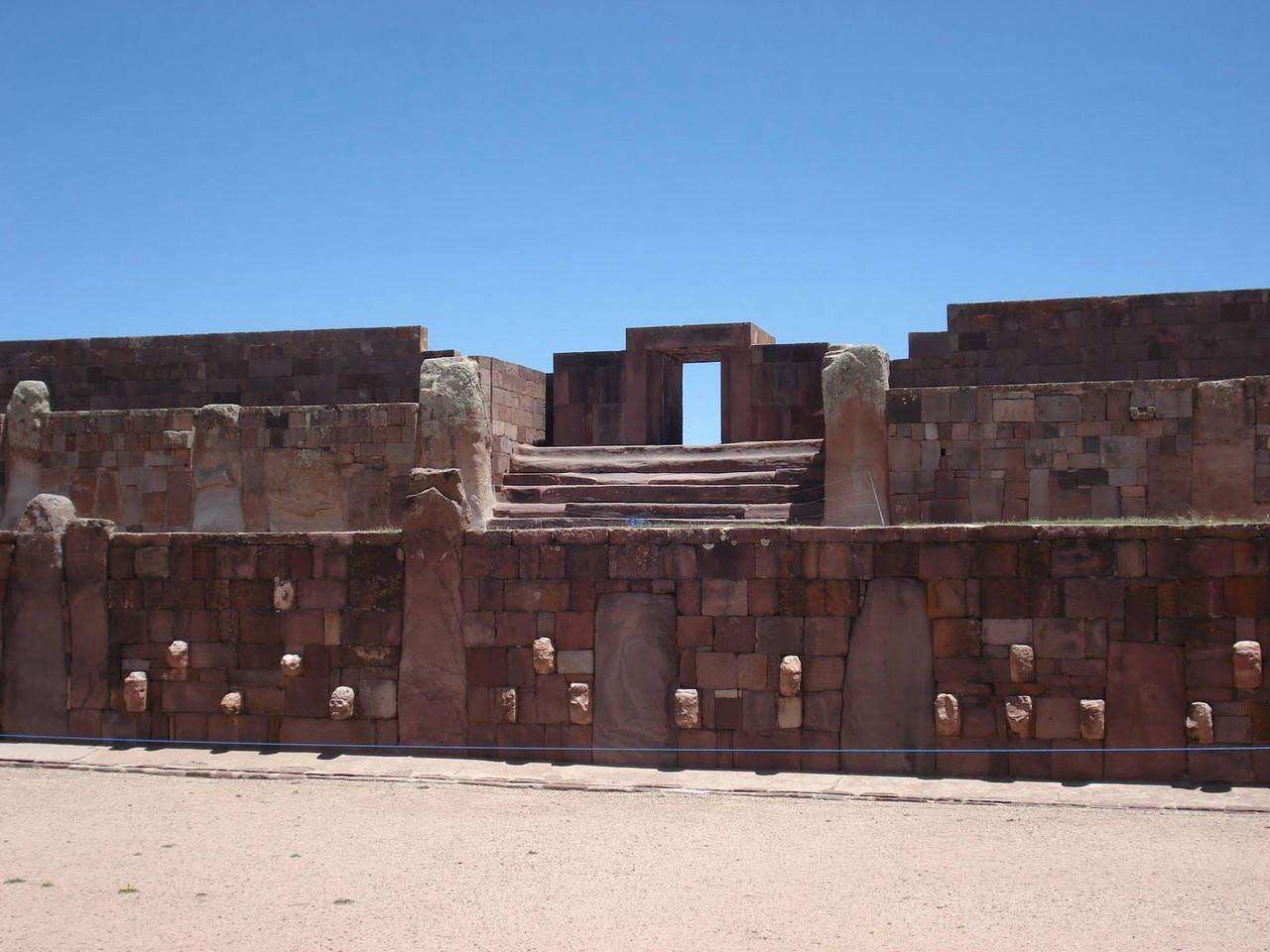
Thirdly, the upper level of the masonry (the lower tier) is formed by monoliths, which for some reason are shaped into two steps, and then additional blocks were laid on the lower of the two steps. The purpose of this obviously intentional constructive solution is also absolutely not clear. But it requires a lot of extra work. And this riddle is only strengthened by the presence at that level of periodic "lock-inserts" that clearly served to strengthen the masonry and did not have any two-level edge.
Fourthly, the upper edge of two-stage monoliths is most often not processed to end. There is a feeling of some kind of incompleteness of work, reinforced by the presence of blocks in some places where even steps are not completed ...
Photo 6.
This is absolutely impossible with manual work of the simplest tools that the Indians had in the territory at the time of the arrival of the Spaniards. This is possible only in the case of machine production. So, it should definitely be about a highly developed civilization in technical terms, and not at all about some Indian "Tiahuanaco culture", which historians attribute to the creation of the Puma-Punku.
However, the Indians here also put their hand - they were engaged in partial restoration of the ancient structure. This is particularly noticeable on the eastern side of the hill, where its lining is composed of completely arbitrary shapes of blocks, debris and even just a broken stone. In the clutch was even a fragment of the gate overlap, which the Indians laid here, confusing the top with the bottom.
Photo 7.
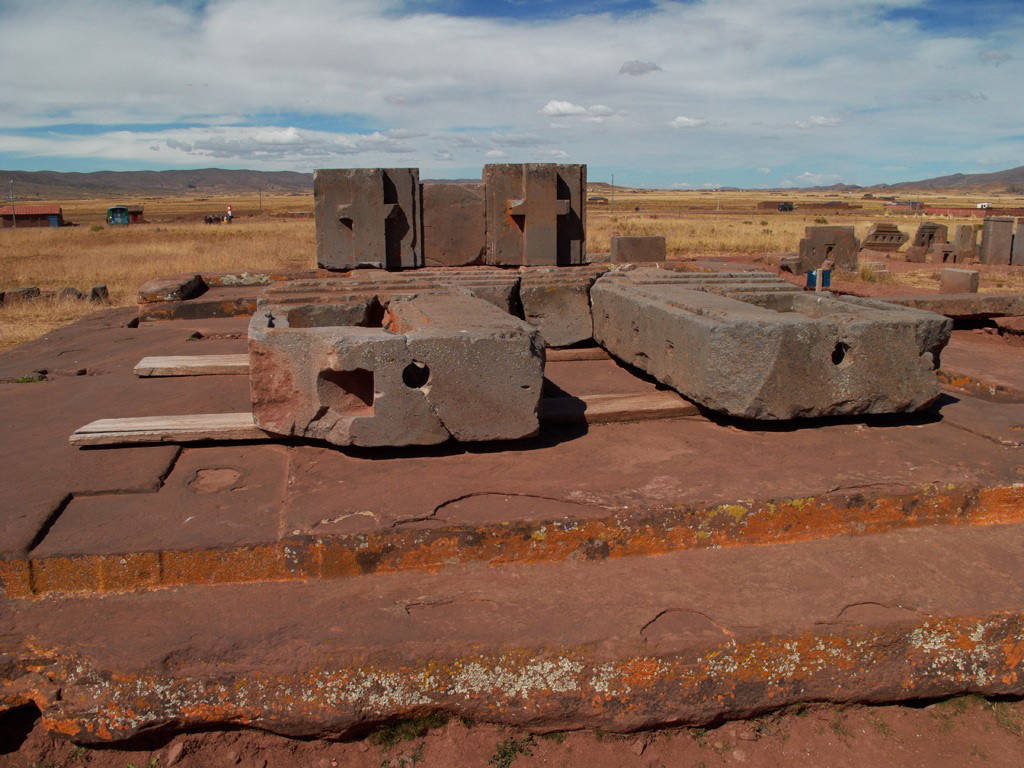
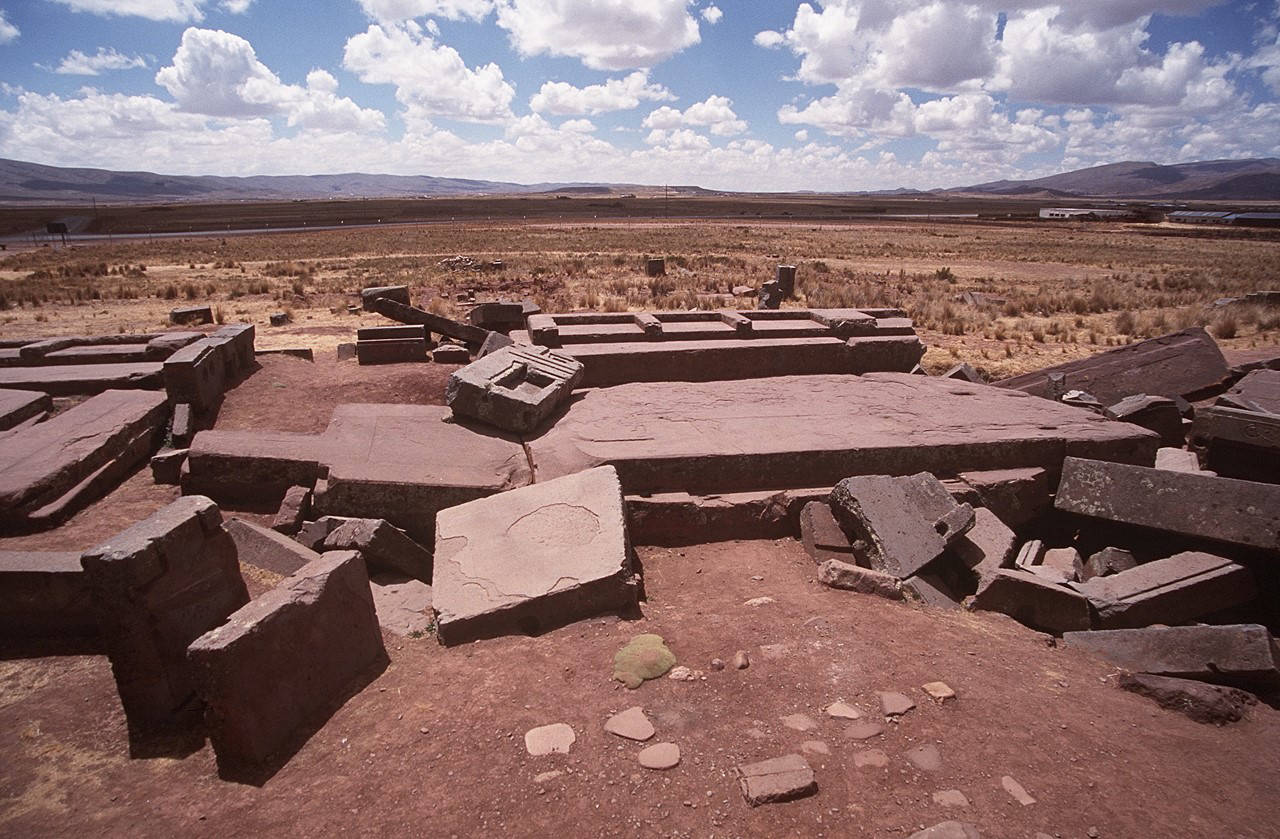
However, only the south side of the hill looks exactly and qualitatively, which archaeologists have clearly cleaned up to enable tourists admire its original form. They also unearthed the opposite northern side, but left a whole series of blocks, what is called, "in situ" - that is, in the position in which they were discovered. In order to preserve their position, they even left under them a kind of "columns" of soil, on which the blocks are now held. Thanks to this, archaeologists seem to have "photographed the state in which the remains of the ancient structure were found. And this is the state of complete chaos as a result of total destruction! ..
It is clear that the facing of the hill remained virtually intact. It was destroyed something that was higher. Including some of the structures that were located on the hill. In this, however, you can be sure, having risen on the hill itself.
A similar chaos of total destruction can be seen also where the excavation is made in the center of the hill on its summit. A large block of stone remained there, lying in the middle of the excavation, in the state in which it appeared as if after incredible somersaults in the air, although it weighs tens of tons. And from the walls of the excavation there are parts of blocks that also lie in a chaotically disorderly position.
Photo 8.
What could cause such a massive destruction? ..
A man would not have created chaos at this level. After his actions, enough compact heaps of ruins would remain, which archaeologists easily restore, and here they do not even undertake any reconstruction, since with this degree of destruction practically all traces of some initial forms were destroyed (except for masonry on perimeter of the hill).
Photo 9.
" Compact "consequences would have been in case of an earthquake. Even with a fairly large. The hill here is very low, and even with significant land movements, there is simply nowhere for the blocs to fly apart very much.
Of natural causes, only the impact of some powerful water flow remains. For example, during the events of the World Flood, when a huge tsunami hit the South America from the Pacific Ocean, traces of which came to us in Ollantaytambo and in the vicinity of the Nazca plateau (see earlier).
Earlier I already mentioned that archaeologists have long ago discovered in this region evidence of a global catastrophe, similar to the impact of a powerful mudflow. The fragments of skeletons of people and animals they found were often in chaotic disorder, along with processed stones, tools, lake sand and simple gravel. And the researchers have long noticed that the general picture looks as if all this was dragging, breaking and dumping into a bunch some kind of force, similar to the flood tsunami that came here from the Pacific. These events are also indicated by the presence in Lake Titicaca of representatives of not only freshwater, but also marine flora and fauna. And even a height of almost four kilometers here is not a particular obstacle, because the tsunami could quite reach several kilometers in height and break through the mountain chain using passes.
Photo 10.
So on the World Flood it could be written off and destruction in Puma-Punku. However, this is hampered by two things at once.
First, according to local traditions, Tiahuanaco (part of which is Puma-Punku) is the capital of Viracocha. God, who rules here not before, but after the Flood.
And secondly, judging by all available geological features, the Altiplano plateau itself was formed as such during the Flood events (see earlier). Tsunami, which broke through here, brought with it a lot of detrital material, earth and clay. All this was stuck between two mountain chains and settled down, forming a flat surface of the Altiplano in the future. And the Puma-Punk stands just on this surface. And more than that: the structures of the stone blocks were placed on a hill, which consists of the same mudflow material brought by the flooding tsunami. So the post-Flood origin of the Puma-Punk is undoubted. Otherwise, its ruins would not be on the surface, but at a considerable depth (in tens or even hundreds of meters) - under the entire powerful sedimentary layer that forms the Altiplano plateau.
Photo 11. p>
However , the version of some other, later water cataclysm, does not pass here, since the picture of destruction in Puma-Punk has a number of details that do not agree with the impact of the water flow. First of all: in the general picture of the devastation there is not the slightest sign of " sa "in a particular direction, which would correspond to the direction of water movement. In Ollantaytambo (see earlier), such a "skew" literally catches the eye, and it even manages to restore the course of the flow. And there is nothing like this - in Puma-Punk blocks are scattered almost evenly in different directions, although the water flow would inevitably demolish them in the course of their movement.
Everything is much more like the consequences of not a water cataclysm, but an explosion! .. And not even one, but a whole series of explosions! ..
Photo 12.
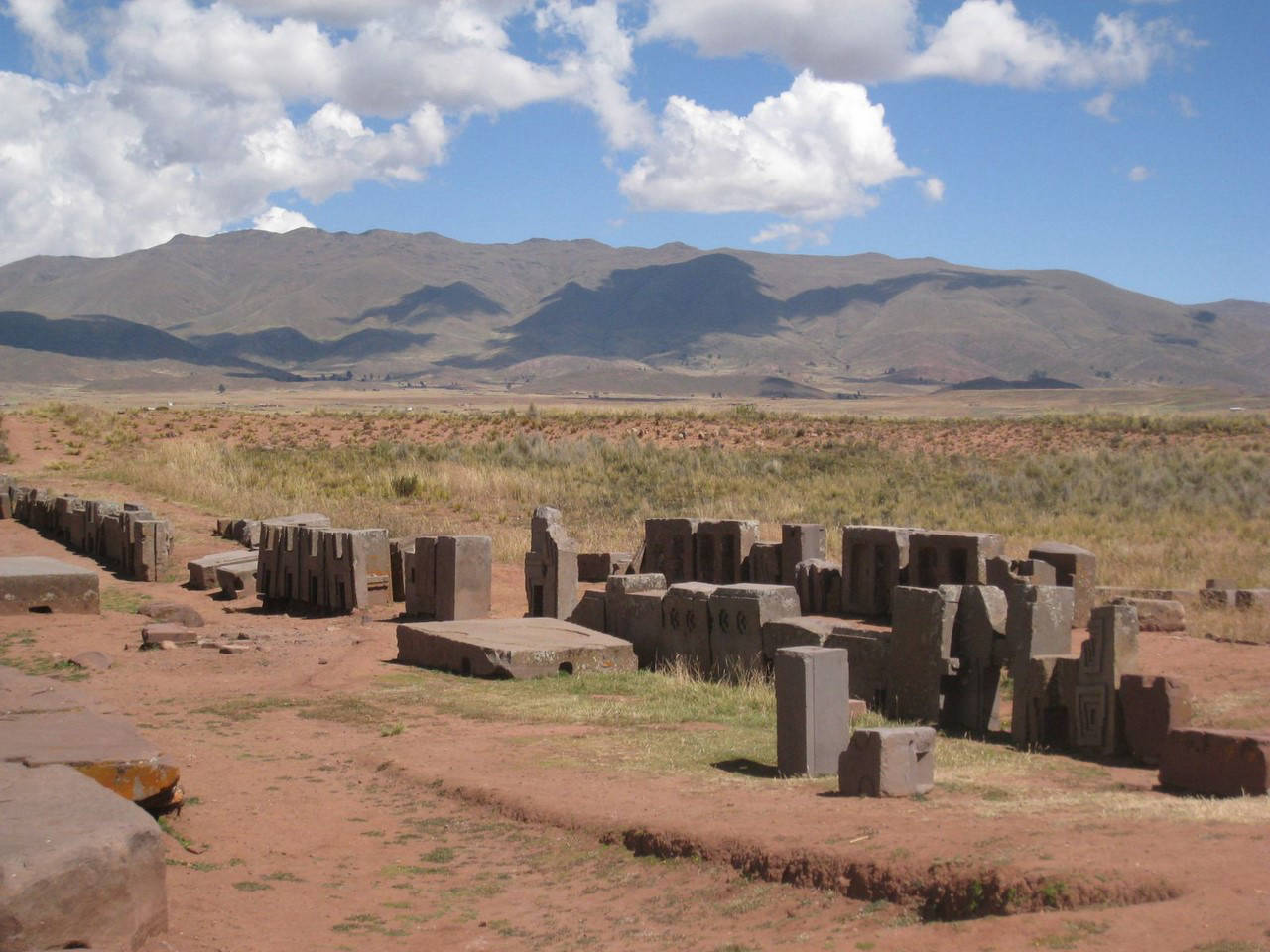
This is indicated, for example, by the location of the blocks on the the northern side of the hill, where first laying cladding covered with a layer of soil - the explosion did not reach the goal, but tossed into the air a lot of land, which covered this masonry. And only then, by a subsequent explosion (or explosions), some kind of stone block structure standing on a hill collapsed, which fell over a layer of soil that was blown down by the first explosion.
The explosive nature of the destruction is particularly evident in the eastern part of the The surface of the hill, where a platform of huge blocks, weighing up to four hundred tons, was located. This platform has experienced some kind of pinpoint effect, the epicenter of which is easily identified by a "failure" just south of its center. Here, from the multitone slab previously part of the platform, there is now only a piece that looks out of the earth at a slope of about 45 degrees to the horizon.
Photo 13.
Apparently, this platform served as the foundation of some structure, the fragments of which are scattered around. And if we proceed from the fact that here (as elsewhere in the Puma-Punku) archaeologists worked with minimal disruption of the original position of the stones, the explosion not only destroyed the structure, but also threw the blocks that made it a considerable distance. Around the destroyed part of the platform there are neither blocks, nor their fragments - they are all slightly apart and located virtually around the epicenter, as it should be in the explosion.
Photo 14.
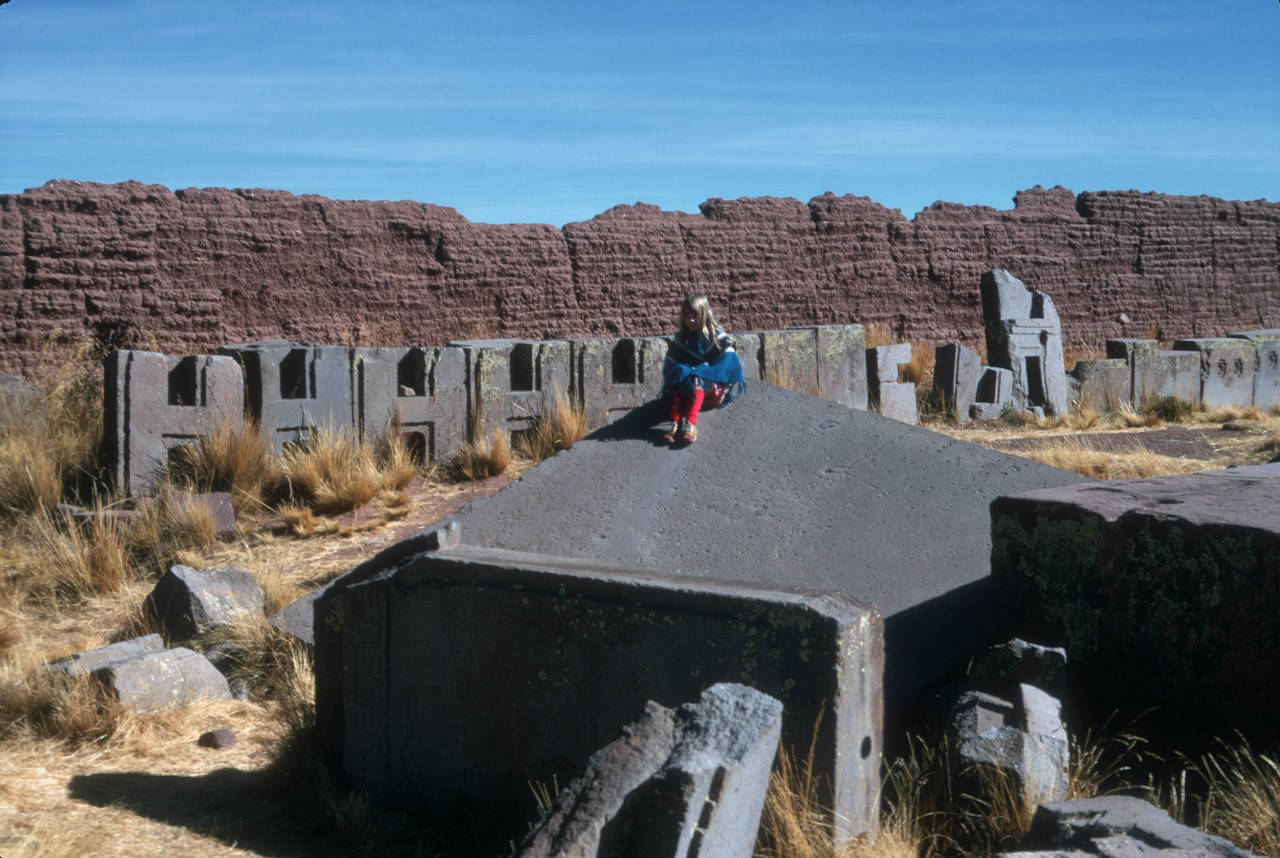
If you evaluate the picture of the destruction as a whole, then the explosion (or even several explosions) completely smashed the structures that were on the hill, and practically did not damage the masonry along its perimeter. Everything is very much like the impact of a targeted missile strike! ..
However, by that time we already had an opinion that in South America we are dealing with traces of a global armed conflict between representatives of an ancient highly developed civilization , which entered the ancient legends and legends of our ancestors and is called the "War of the Gods". The modern state of Puma-Punku finally convinced us that the "gods" who built the structures on the South American continent did not just take part in this armed conflict, but also turned out to be a loser, since nowhere - in Saksayuaman ("The Blown up Temple"), , nor in Kenko, nor even in Puma-Punku and the main complex of Tiahuanaco (see below), we found absolutely no signs indicating at least attempts of an ancient, highly developed civilization to restore the destruction of the "War of the Gods." p>
Photo 15.
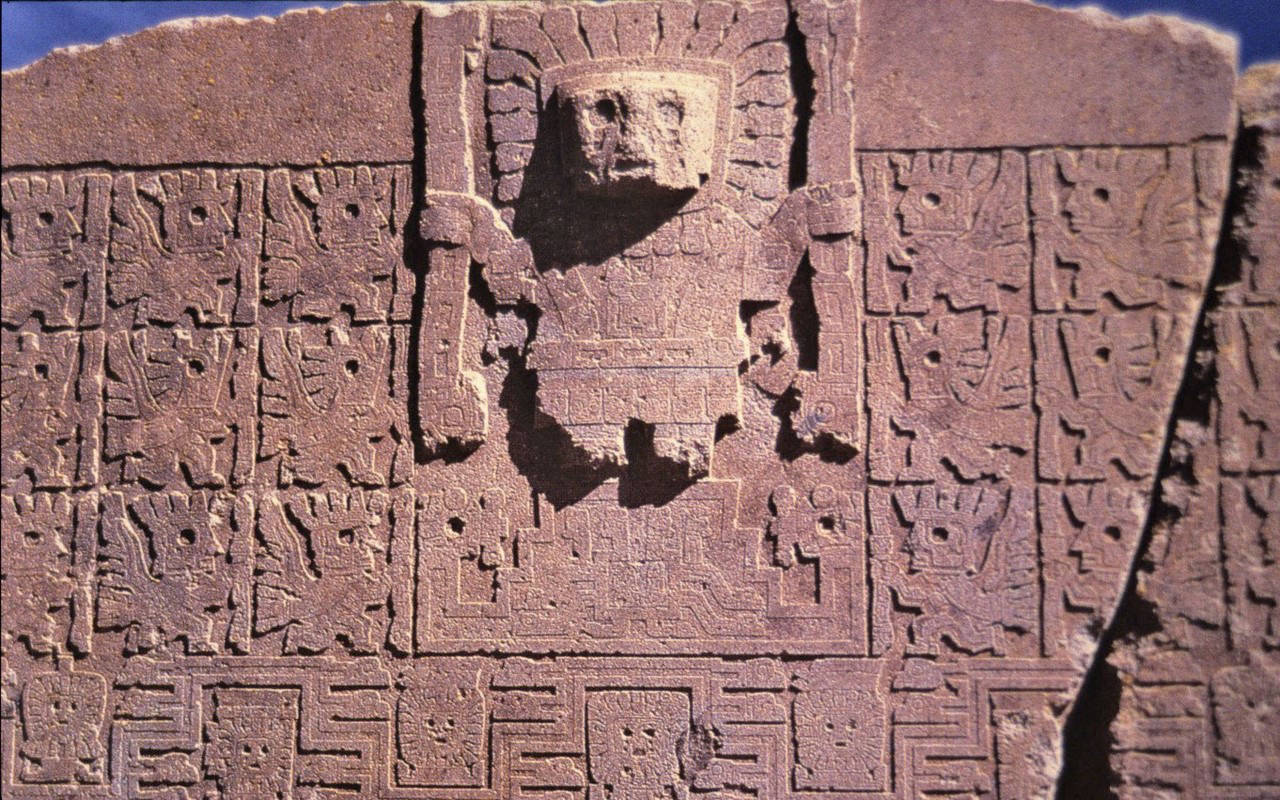
In the same way that we are dealing with traces of a civilization highly developed in the technical sense (and very highly developed), there are absolutely no doubts about Puma-Punk. Those samples of stone processing that are here go beyond all conceivable limits of the possibilities of those simple technologies and tools that were available to the Indians of South America, as well as beyond the possibilities of general manual processing.
Meanwhile, in a few hours Our stay in Puma-Punk was not visited by any tourist, although during this time a dozen or two or three buses from La Paz arrived. Organized excursions here do not drive, so that the Puma-Punku is most often empty. All tourists amicably rush to the main part of the Tiahuanaco complex. And in vain! .. After all, it is in the Puma-Punku are, perhaps, the most impressive examples of high-tech processing of granite.
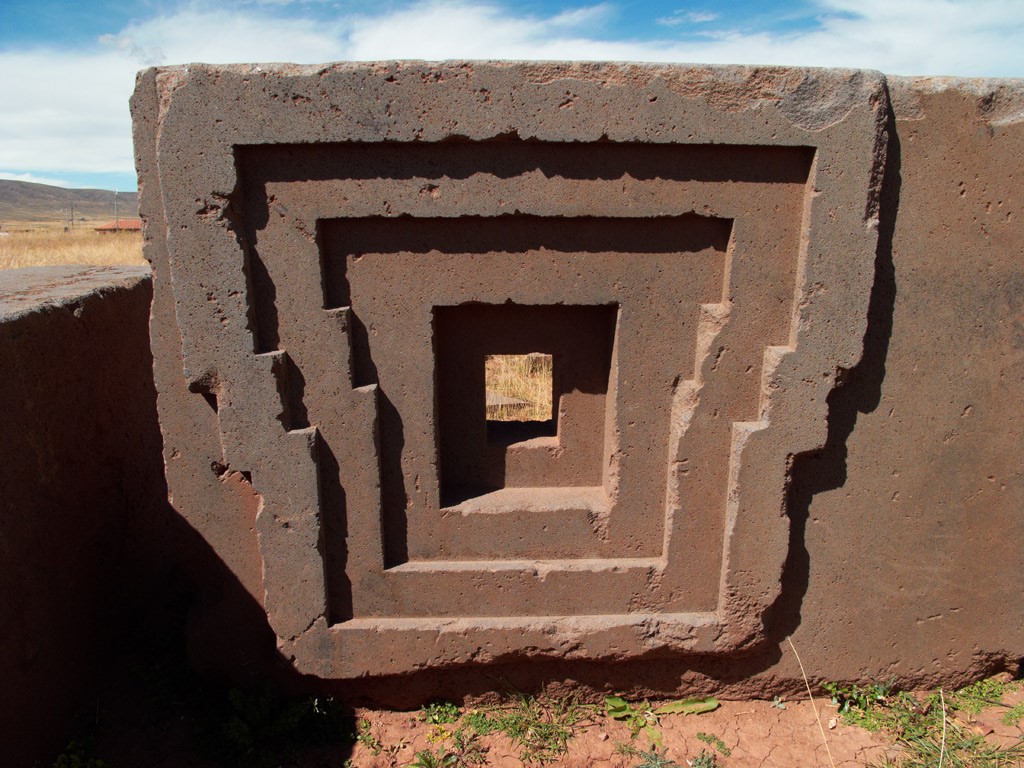
Puma-Punk is simply amazed by the quality of processing surfaces, faces, external and internal corners. Even in terms of the capabilities of modern industry, it is difficult to imagine how some blocks were made. Cutouts of various shapes, niches, figured ledges and other very complicated elements are made with excellent quality. The masters were not at all embarrassed that they were working with a hard rock like andesite - just a virtuosic technique for working with a stone.
Photo 16.
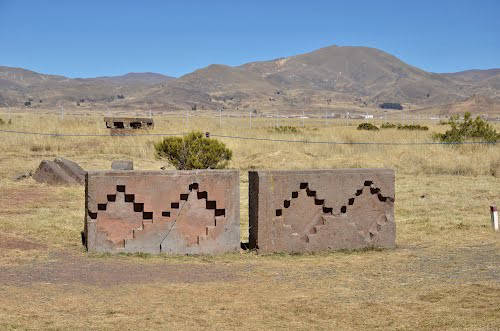
Photo 17.
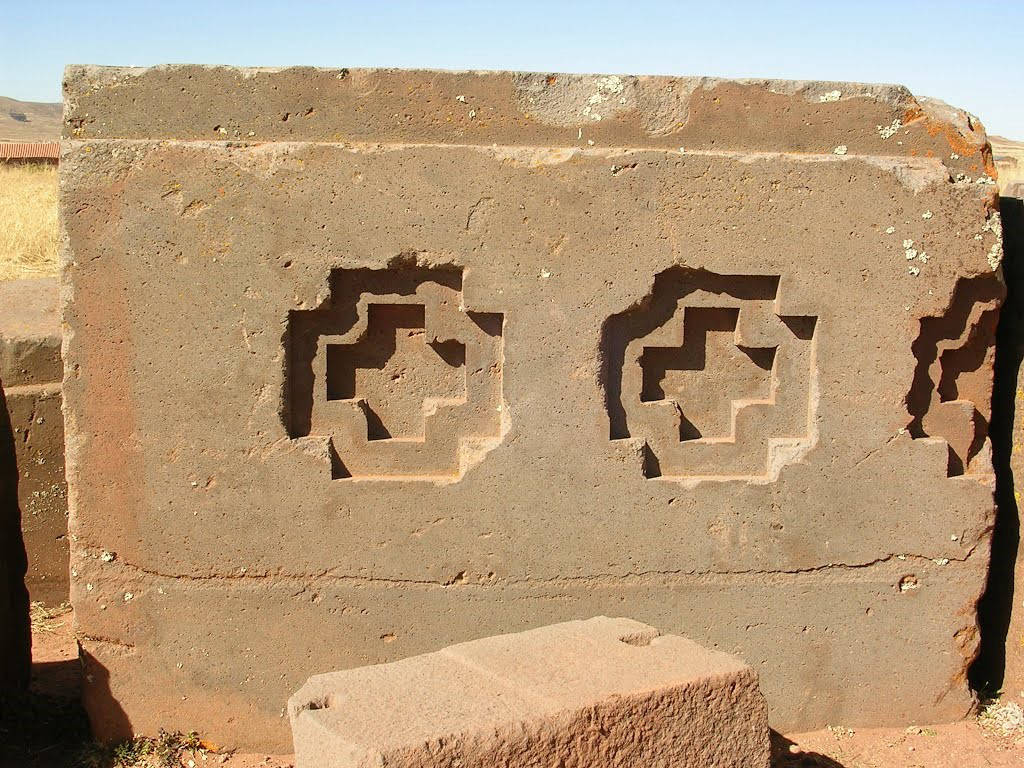
So this is not concrete, and andesite is a local variety The granite, which was delivered from the quarries in the half a hundred kilometers from here. And we are dealing not with casting, but with the mechanical processing of natural materials. And if you consider that andesite is a very hard rock, the processing quality is fantastic and often even exceeds the capabilities of modern technologies.
Photo 18.
Photo 20.
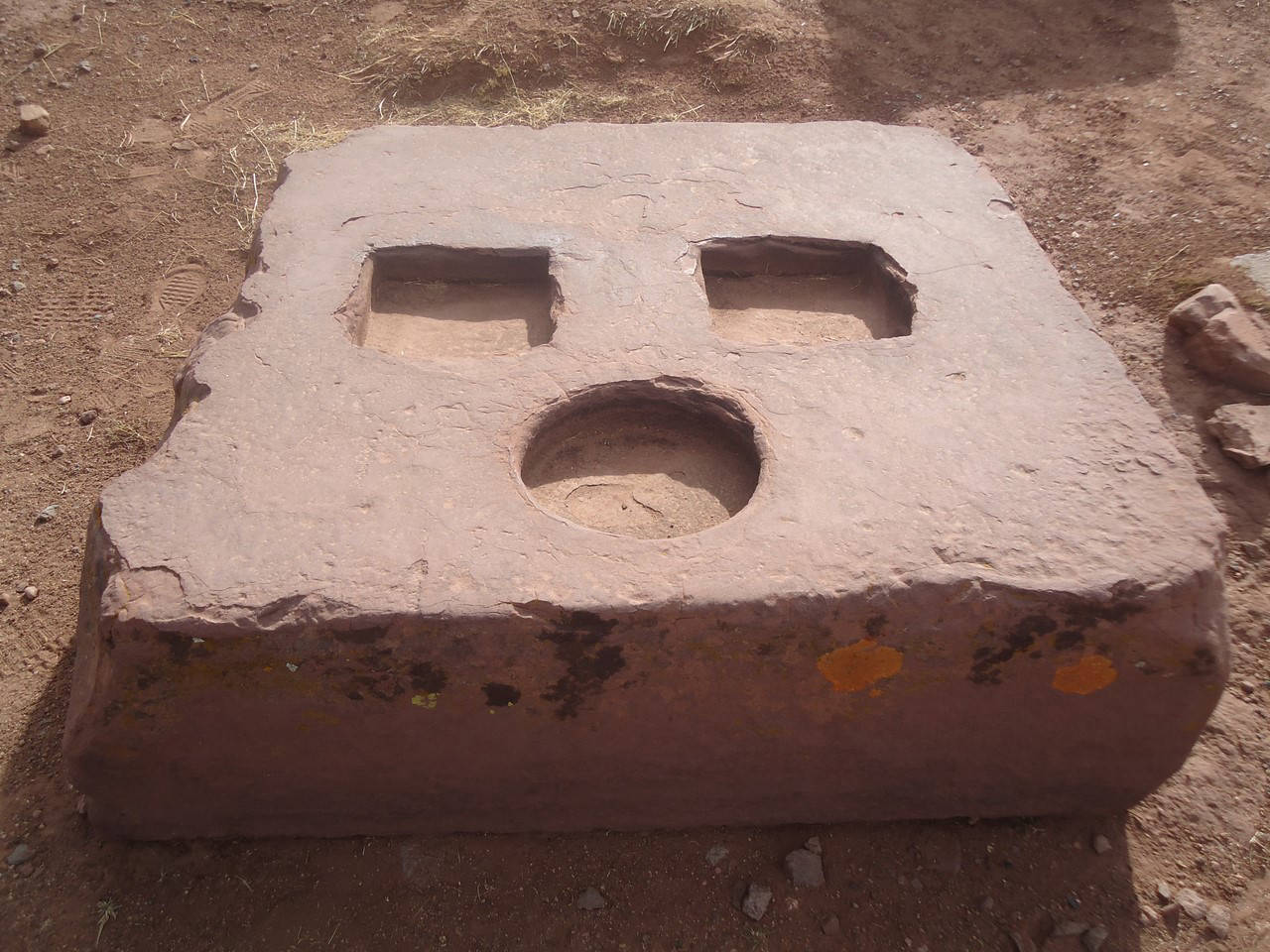
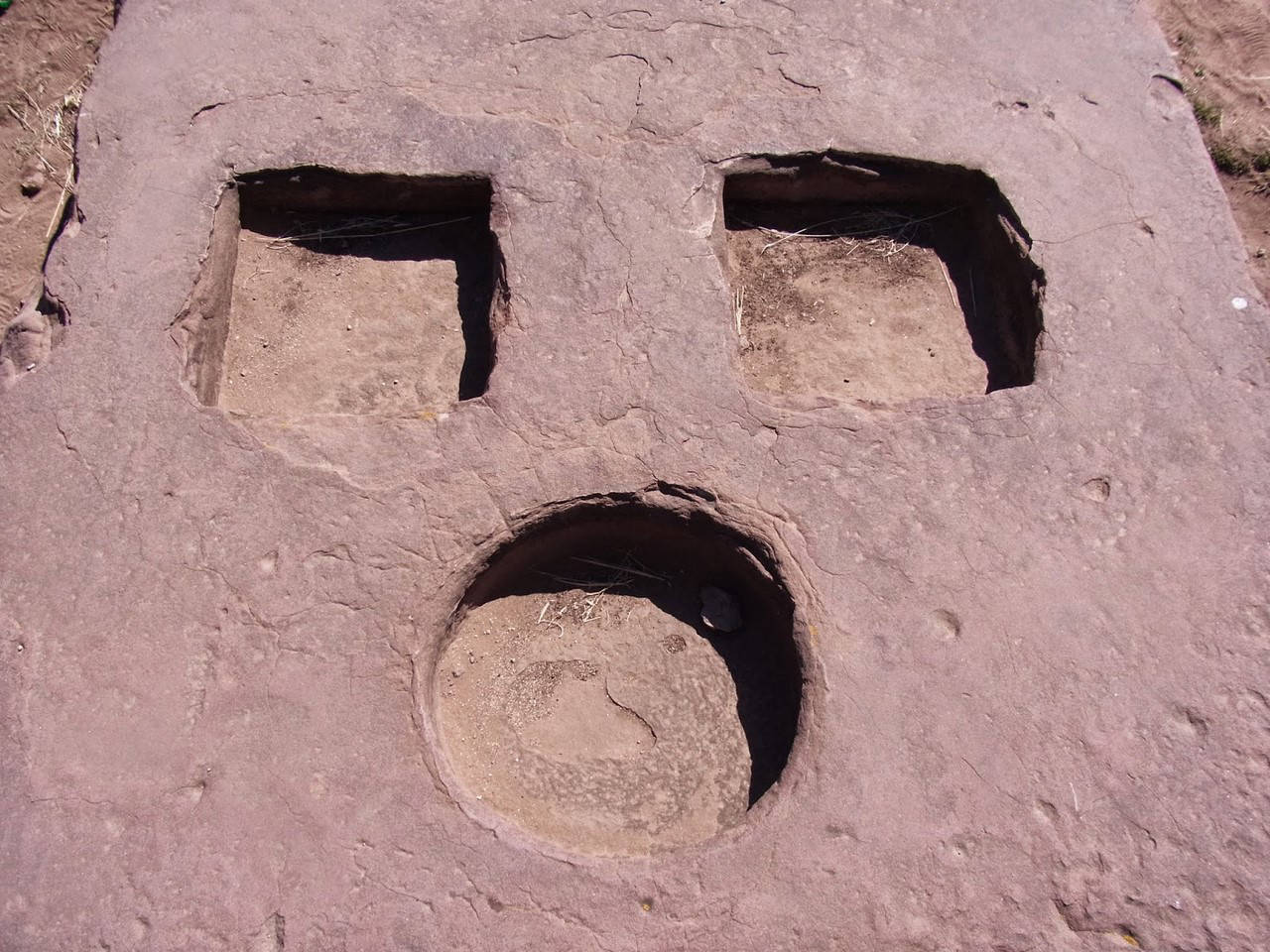
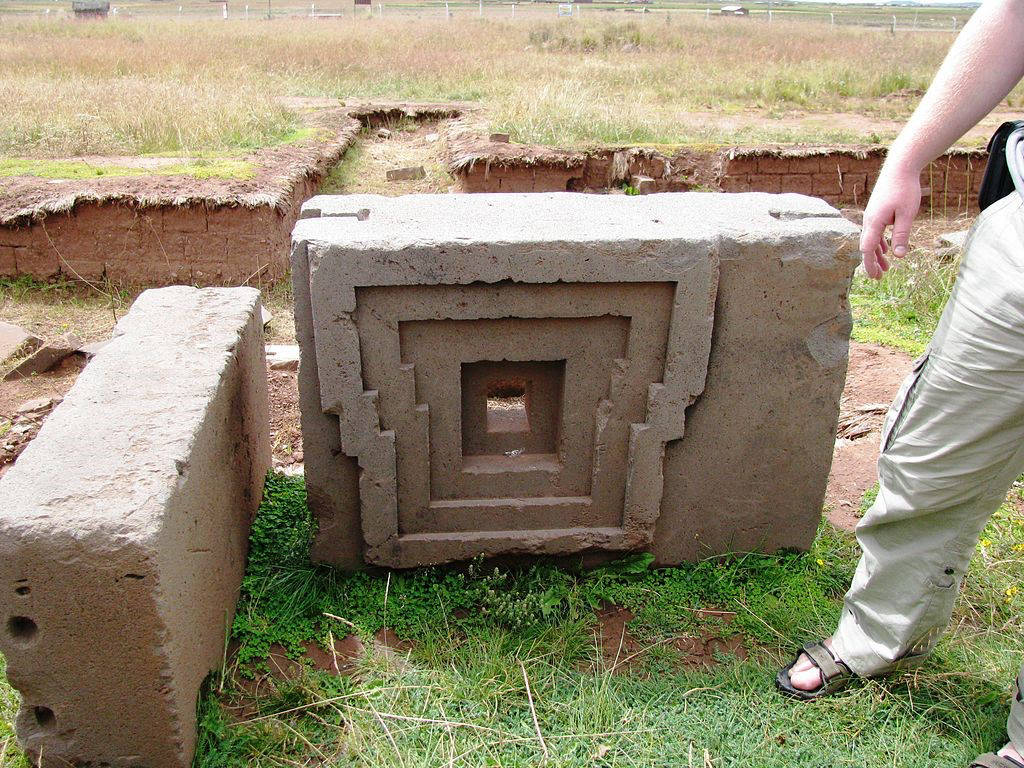
Find any intelligible version of the answer to the question, why would someone need to make a similar cut with holes, we could not. There is a claim that the details of South American designs in ancient times were decorated with gold, and these holes could serve to fasten such decorative elements, but not always the configuration of the arrangement of depressions corresponds to such a function. Therefore, we agreed only that we will conditionally regard them as "holes for fixing a grid that protects against large mosquitoes" ...
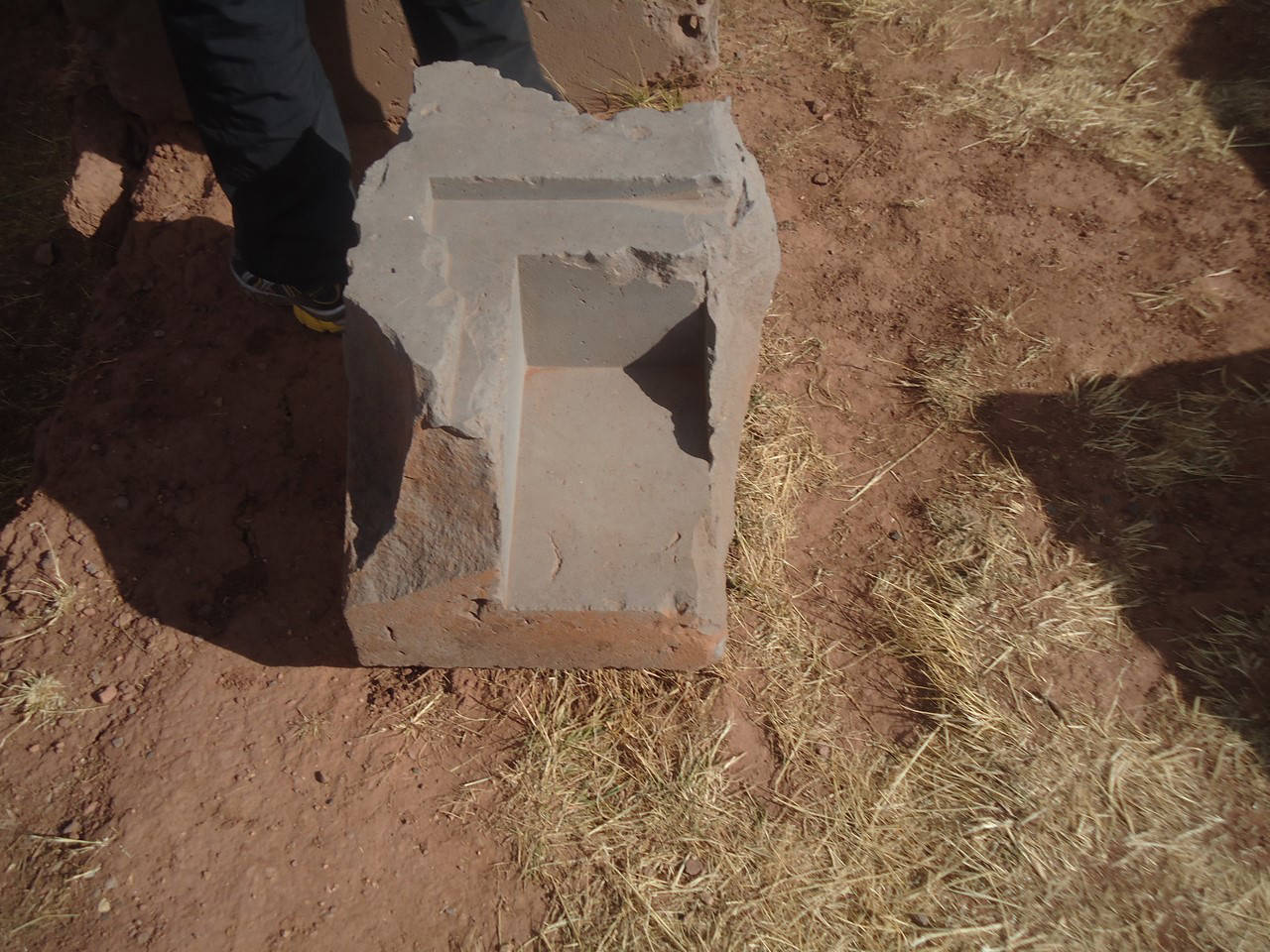
Another block with similar notches and holes lies nearby (very near the excavation at the top of the hill) . Explicitly executed using the same tools, he puzzled even more. Two parallel slots begin practically from nowhere - not from the edge, but from a completely arbitrary place on the block. The holes are located on different sides of the block, forming a completely meaningless chain of curvilinear shape. In addition, this block has in the center a figured cutout for fastening some power element (such as a screed) that can withstand an obviously very significant load.
Photo 21.
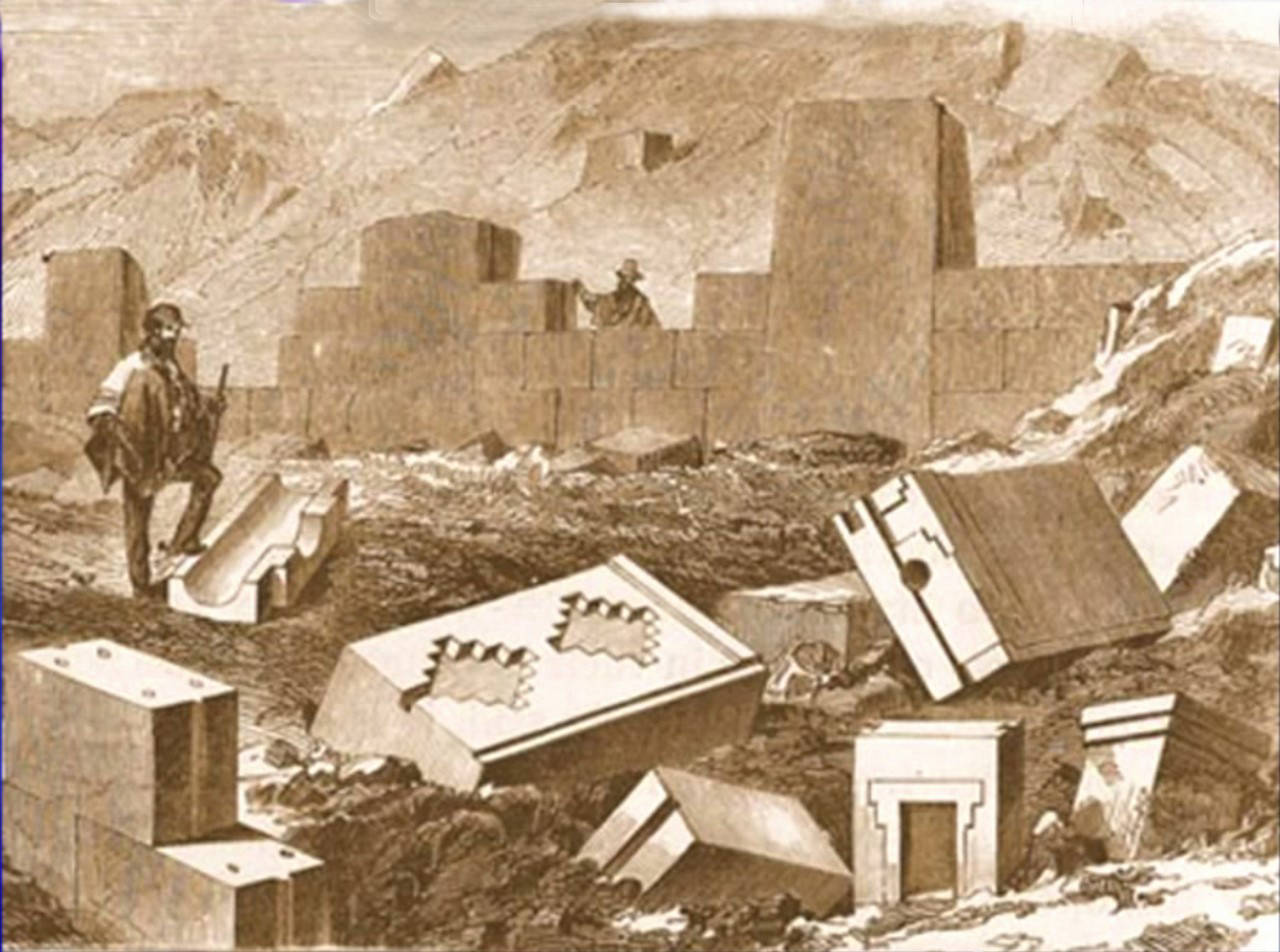
If the purpose of such" delights "manufacturers of these blocks has remained a complete mystery, then we did not have any doubts about the use of mechanical tools of ours here: too smooth cuts and grooves, as well as edges at them. Nothing like this is simply physically impossible to depict with any "shock" methods using simple copper and bronze tools that the local population had in ancient times. Moreover, the beginning of the slots "out of nowhere" on the second block indicates the use of something of the type of a disk, rather than a straight saw ... So here we have absolutely clear signs of the presence of a highly developed technically ancient civilization . And, if you rely on legends and legends, it is very, very ancient, since the "War of the Gods" can be roughly attributed to the period of the VII-V millennium BC. The magnificent preservation of facets and corners on many stone blocks of the Puma-Punku, despite their very respectable age, is due to the fact that they have not been subjected to the damaging effects of erosion all this time due to the fact that they were underground - they were only recently dug up by archaeologists. p>
Photo 22.
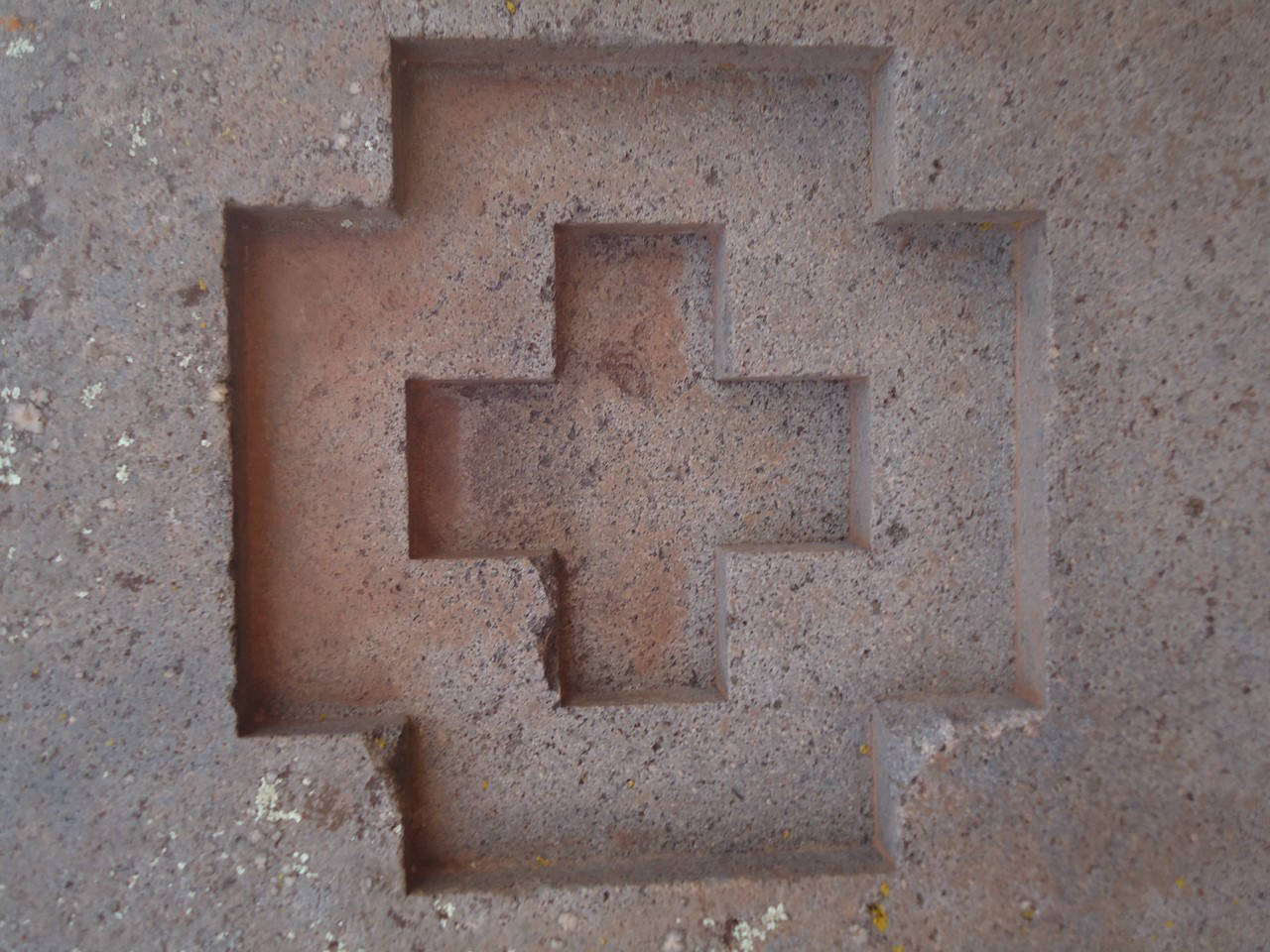
Although archaeologists have not been able to restore at least some of the buildings on the hill, curiosity is literally tearing. So I want to know what exactly could be located here to be subjected to such a massive blow in the course of the "War of the Gods."
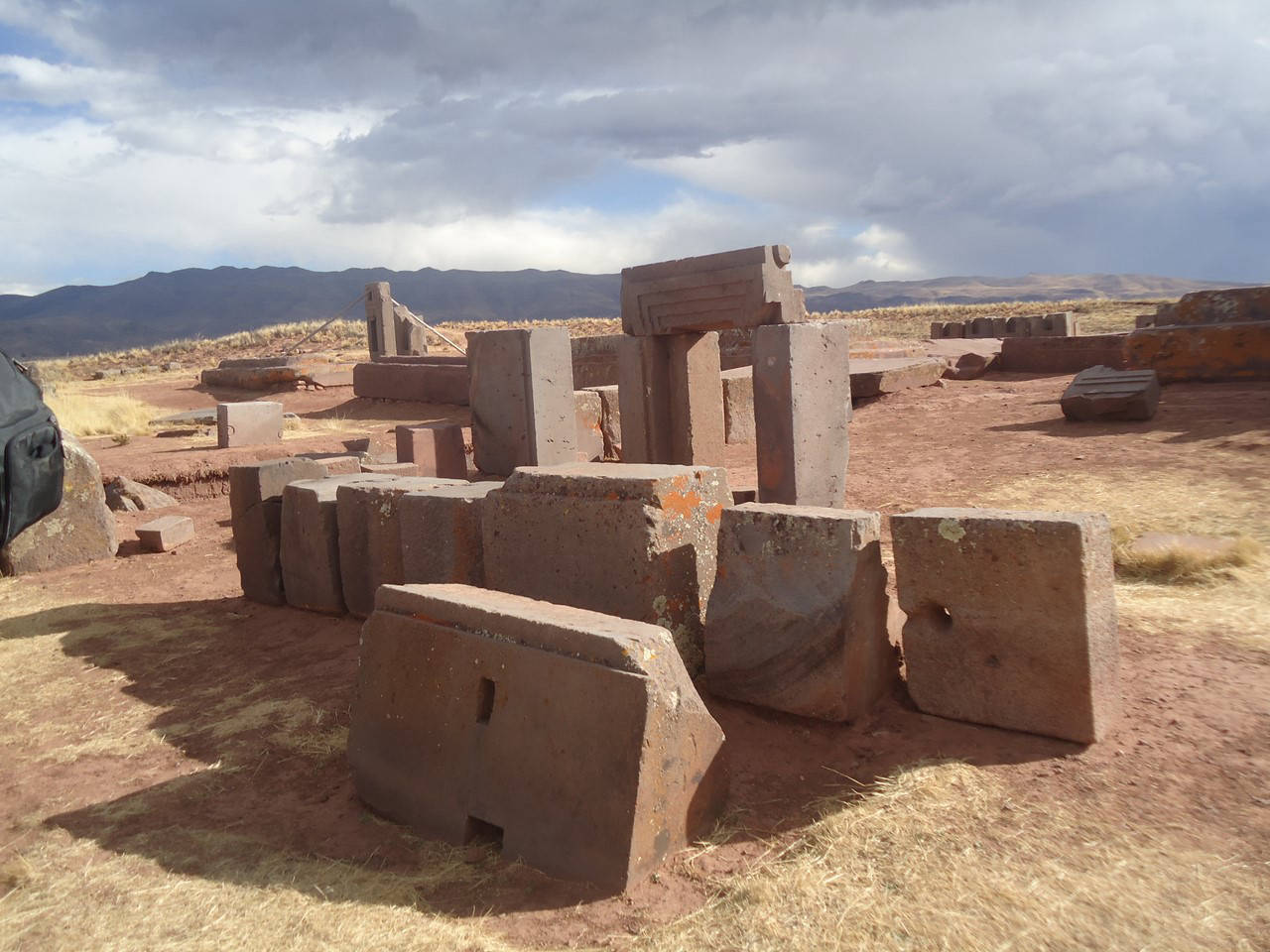
Naturally, first of all attract attention to powerful slabs located in the eastern part of the hill . They stand out sharply against the general background by their size. In addition, it is around this place that the most bizarre blocks are scattered, requiring very sophisticated technologies for their creation.
Photo 23.

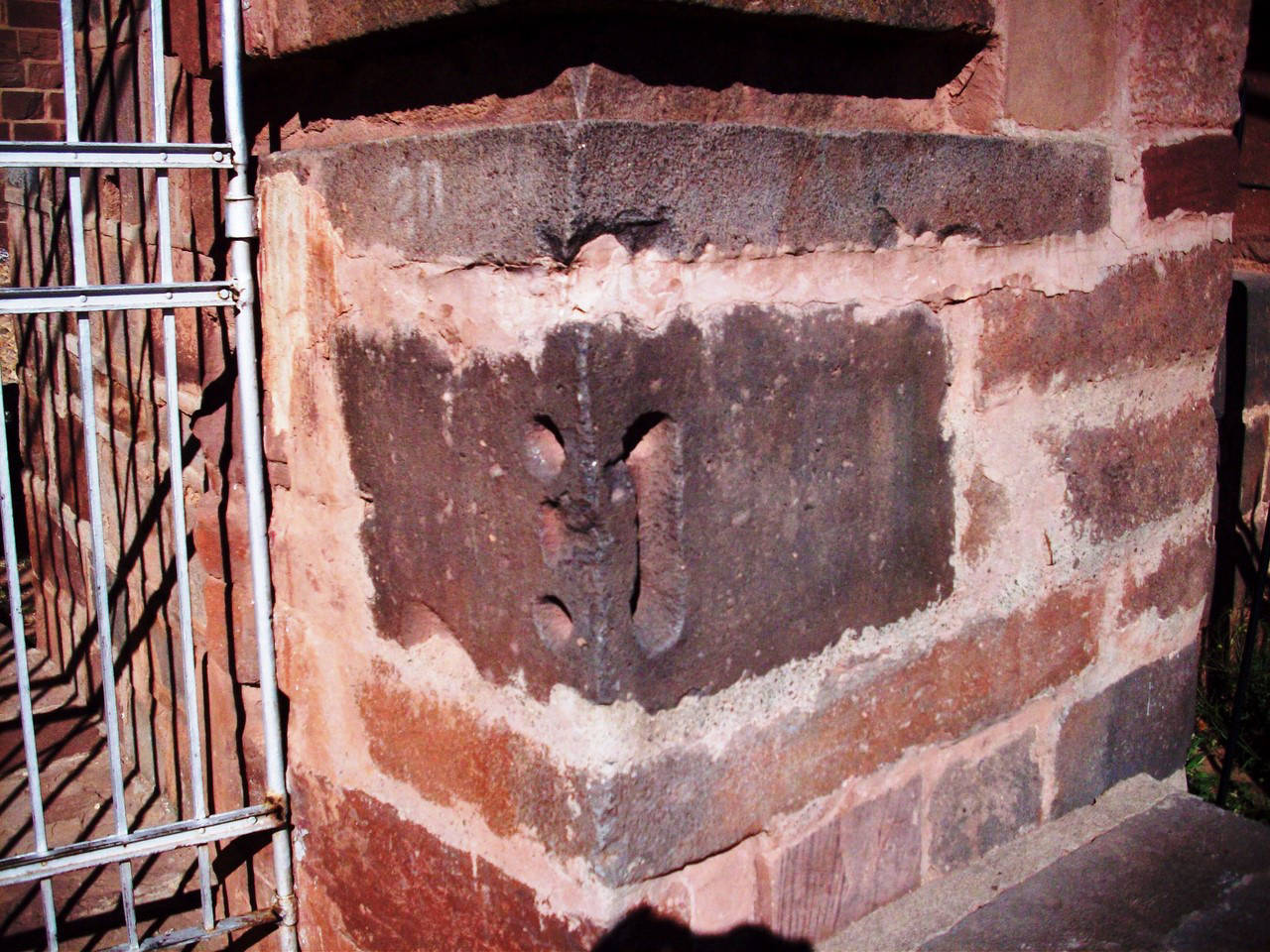
There is almost no doubt that massive slabs served as the foundation for a certain design. And the foundation, which was supposed to ensure the strength and reliability of the entire structure in such an earthquake-prone region. To do this, the platform blocks were additionally joined together by special metal ties - not only and not so much familiar to South America as the "T" -shaped form, which are more similar to the thick staples.
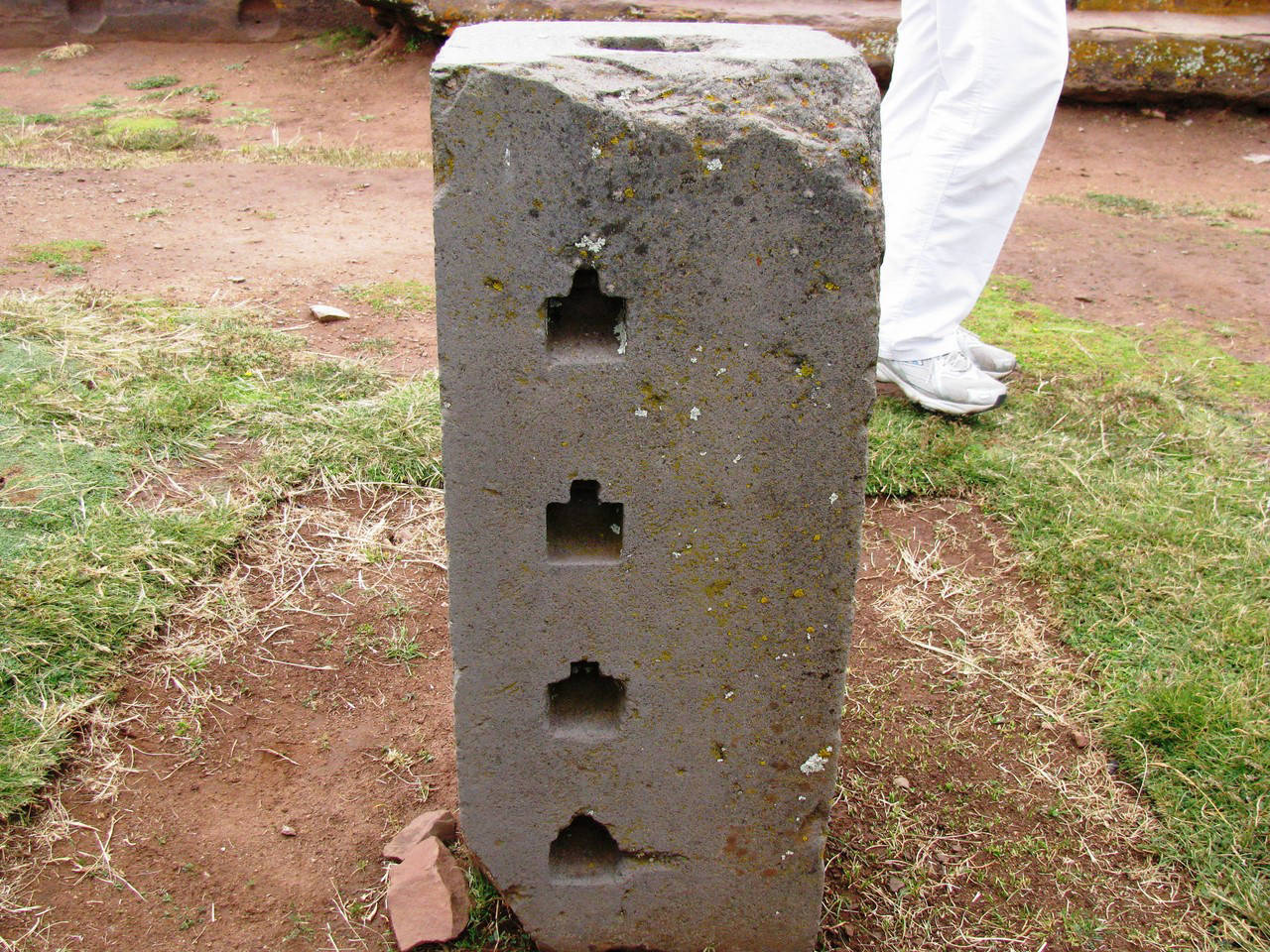
However, and on the mass of other blocks, which were previously no longer a foundation, but constructions at the top. And these notches here have a very diverse shape (there are even some that resemble recesses under modern armature).
Archaeologists have found some ties. According to the available information, the analysis of the chemical composition of the screed metal produced a very unexpected result: two percent of arsenic and nickel were added to copper. In principle, theoretically this should not have been something strange, since arsenic bronze has been melted since ancient times (arsenic significantly reduces the melting point of the ore), and nickel is a fairly common element in nature. The problem is that Bolivia still does not find any deposits that would contain all these three elements - especially in the appropriate proportions. But in the course of studies to determine the content of isotopes of other elements, it was found out that ancient local Indian products from this alloy (previously considered typical for this region) were obtained ... by melting down such ties! ..
Photo 24.
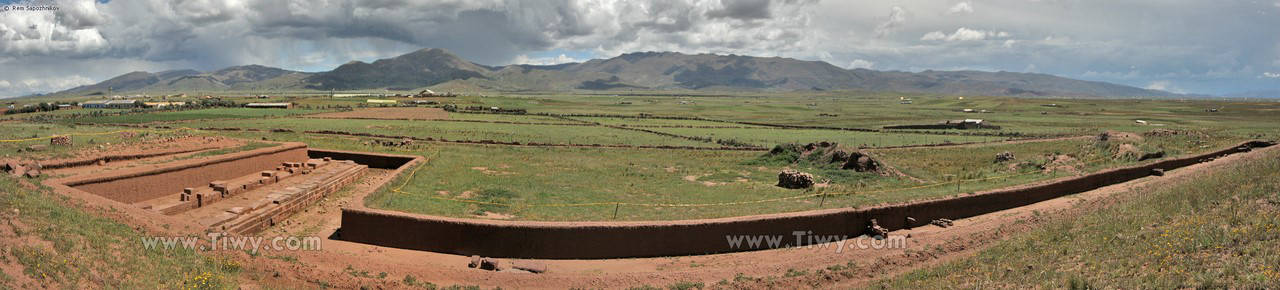
Judging by the variety of shapes, the screeds were not manufactured in advance - the molten metal was poured into the recesses directly on the site of installation. And the shape and thickness of the screed was set, based on the load that the screed should withstand. And it is quite natural that the widest notches are visible on the slabs that used to be the foundation of the structure.
Photo 25.
What was on such a powerful platform in Puma-Punku? ..
Historians and archaeologists, when faced with a megalithic structure, answer in advance - it was a temple or some other construction of a cult purpose. They can not suppose otherwise ...
However, if we are talking about the highest technologies in the processing of hard rocks and powerful explosions as a result of missile strikes, the version of the temple is at least not very appropriate. For a highly developed civilization of real living "gods", it is necessary to look for something else ...
Due to the severe destruction that scattered the blocks of the structure over a large area, it is unlikely to restore the original form of the structure that once stood on the platform possible. But it is possible to express some considerations about its functional purpose ...
The attention of researchers has long attracted a very unusual form of some blocks that are in the immediate vicinity of the platform. And especially those that resemble the letter "H". Not only do they have niches from below and from above - in the center of these niches there are still additional grooves that, at first glance, give the impression of purely decorative elements.
Photo 26.
< img alt="height = 858" src="/storage/images/pages/2017-11/0cb21418e5f14f46c602d2792debf3e4.jpg" vspace = "5" width="1280" />
Perhaps, the problem here is not even that the manufacture of these niches with "decorative" depressions requires very considerable effort. Ancient masters could do this and not such, obviously not experiencing special difficulties with the processing of such hard rock - there are plenty of examples.
The fact is that for the bulk of megalithic structures in South America, the so-called polygonal masonry , in which almost every block has its own size and shape. To build a masonry from similar "miscellaneous" blocks for ancient builders was a matter not only usual, but also expedient, as it provided high seismic stability of structures. And in Puma-Punku we come across a fundamentally different approach, where there is an obvious standardization and unification - blocks in the form of the letter "H" are extremely similar to each other not only in form but also in size (both in general and in detail)
Since these blocks strongly resemble a children's designer (or a Lego toy, as it is customarily called now), researchers have long suggested that they were used to create some composite structures. But what? ..
And then there was an additional problem: for all reasons, something was inserted into the niche (this version literally begs), however, what could be included in them - that is, the so-called the response parts of the design - in Puma-Punku no. And there is nothing at all like anything resembling such a response part.
Photo 27.
, the function of )
In fact, the answer is quite easy, if you give up the idea that the response part was made of stone and was generally monolithic. This counterpart really had a form that corresponded to the expanding niche, and was inserted from the butt. But on the back (back) side of the mating part there was a spring-type lock mechanism that corresponded to the shape of the "decorative" groove and acted according to the principle of all the familiar lock on bags and briefcases - when you pressed the lock it was heated inside, and the counter part could be inserted from the end into the niche of the block with the shape of the letter "H", and when the lock reaches the "decorative" recess, the spring is straightened and the lock goes into the recess, thus securing the mating part and preventing it from spontaneous end movements Nij. And if you make the lock a little rounded off the edges, then the response part will not only be inserted into the "letter H", but also if necessary to be removed from there if you apply the appropriate force ...
Photo 28.
A similar construction principle is used now, for example, in military equipment, when complex equipment and equipment are assembled on a special frame (or body) from individual blocks, which, if necessary, are quickly removed and inserted into standardized systems one hundred fastenings ...
And then everything converges. Blocks in the form of the letter "H" (located, most likely, "lying on their side", and not the way archaeologists put them now) performed the role of a frame or hull for equipment of standardized dimensions. The niche was used to house this very apparatus. Expansion of the niche prevented the loss of equipment from the "frame". And the "decorative" depressions were not decorative at all, but performed the function of the reciprocal part of the spring lock, finally fixing the equipment in its place.
That's why we do not find any response units in Puma-Punku now equipment, obviously of considerable value, was removed from here long ago, and the "mounting frame" in the form of stone blocks with the shape of the letter "H" was thrown as unnecessary - this "frame" obviously did not represent any value. And they did it, most likely, the "gods" are the winners. Trophies are trophies. In addition, do not throw the same complex equipment (albeit damaged) to the torment of "talking monkeys" ...
By the way, incidentally, it can also be explained that such blocks are concentrated near the platform - nowhere else in the Puma-Punk they are not. The main equipment - as we often practice and we - was collected in one place.
Photo 29.
So, we get the version that there was some construction in Puma-Punk, stuffed with complicated equipment. What exactly it was for the equipment - we can only guess. In the same way, how can we only guess about what was the construction in Puma-Punku - a point of space communication, a tracking station, a computer center, a scientific laboratory or something else. Be that as it may, this object was of some strategic interest in the "War of the Gods", as it was clearly deliberately destroyed in the course of hostilities ...
For sure, there is a reader who will say: "Well, why come up with some kind of "The War of the Gods" with missile strikes? .. A simple meteorite flew in - carried the Puma-Punku. And all! ..
However, this is by no means the only object in South America with traces of purposeful explosions. Some of them have already been mentioned earlier - these are the silustani in the Silustani, the "Blasted Temple" in Sacsayhuaman, Kenko-1 and Kenko-2. And for the following example, you do not even have to go far - just go through the very eight hundred meters that separate the Puma-Punku from the main Tiahuanaco complex.
Photo 30.
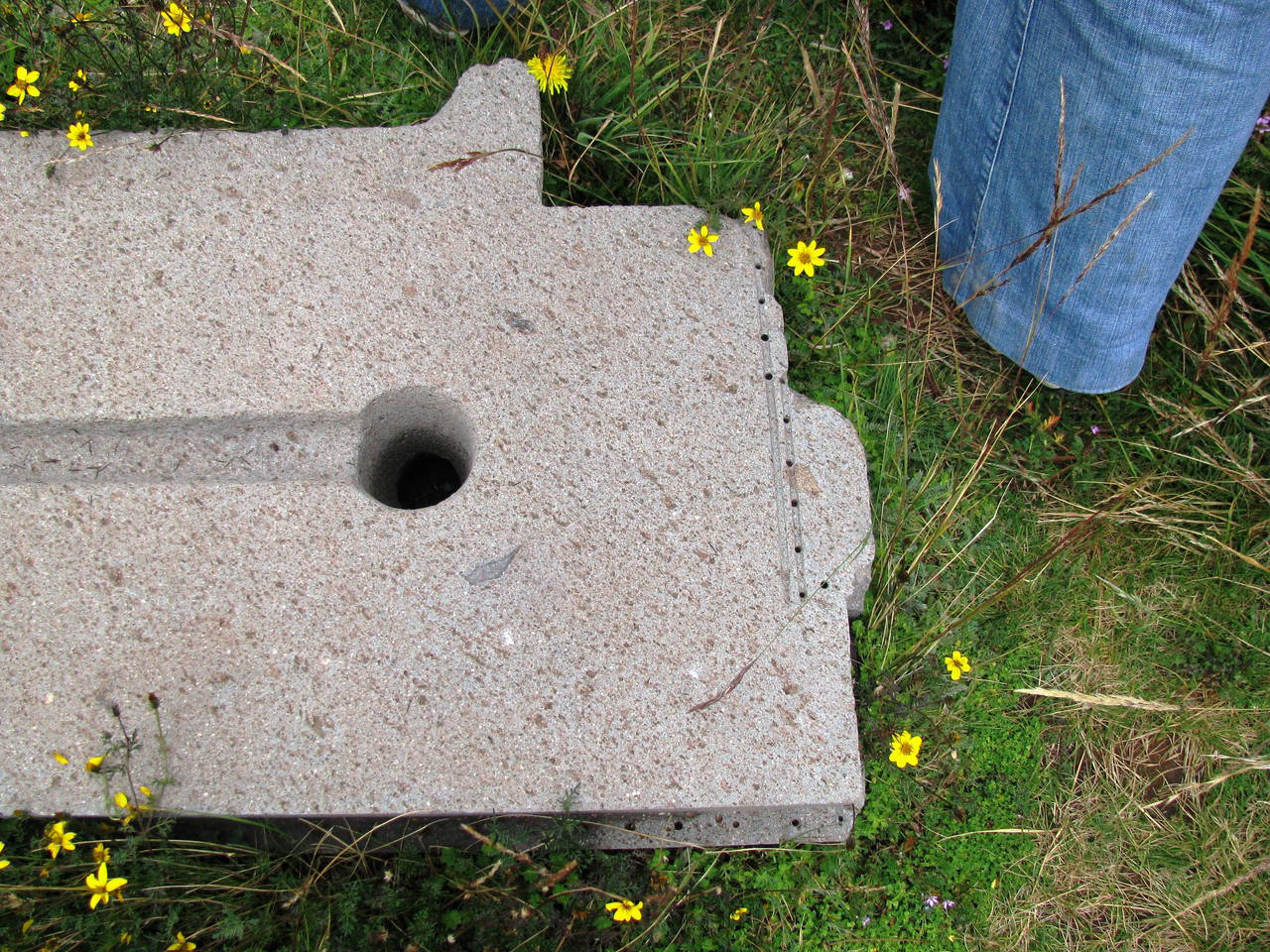
Photo 31.
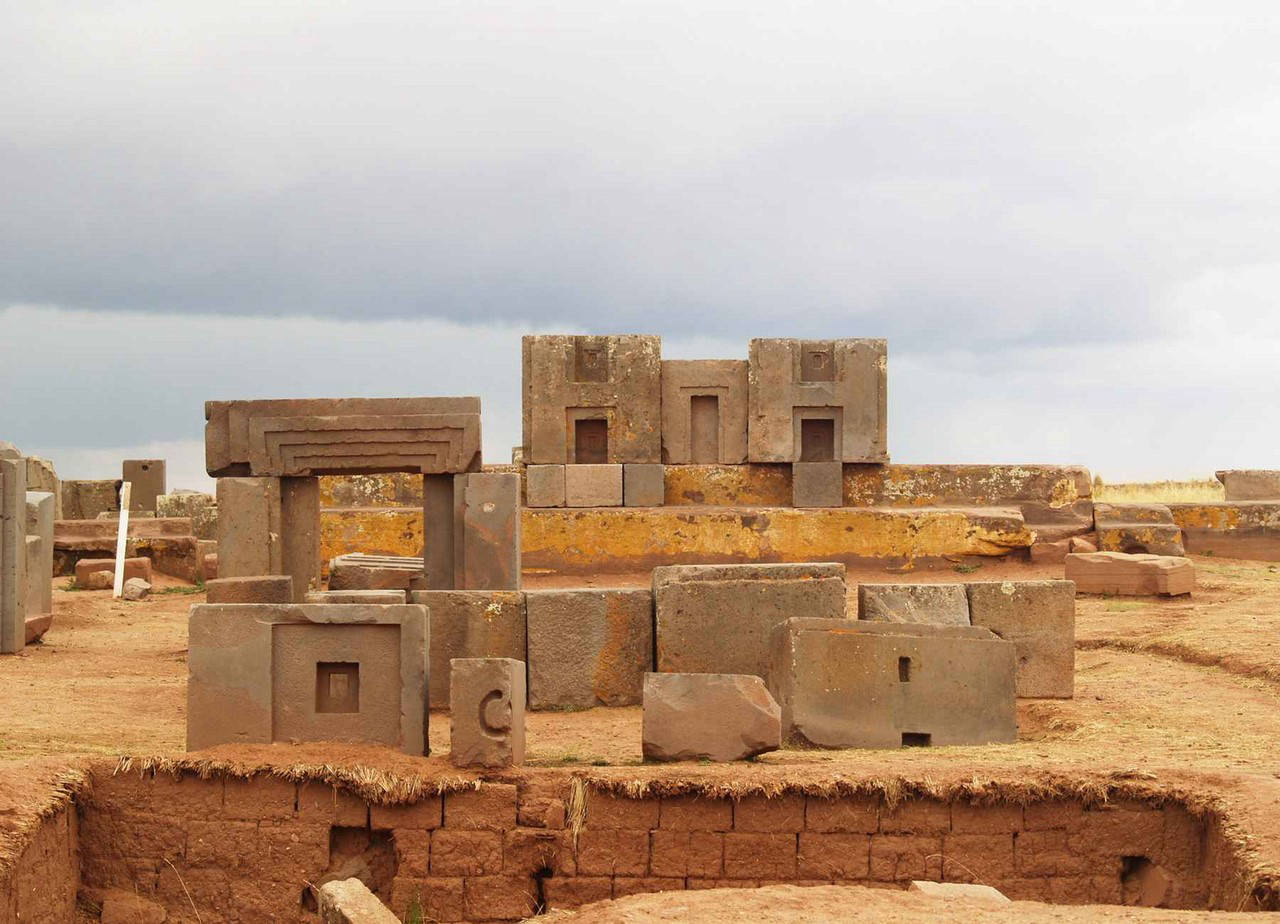
Photo 32.
Picture 33
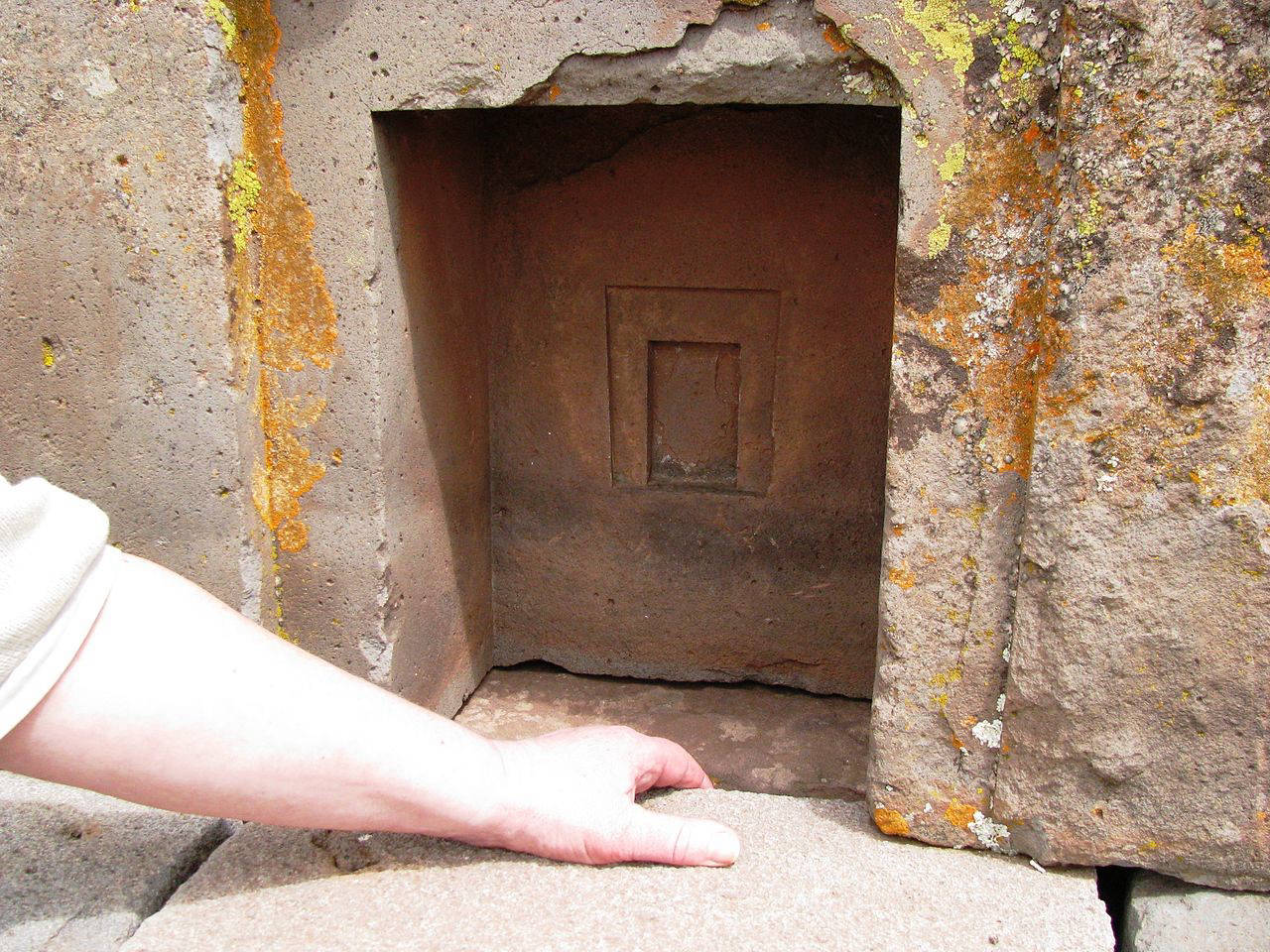
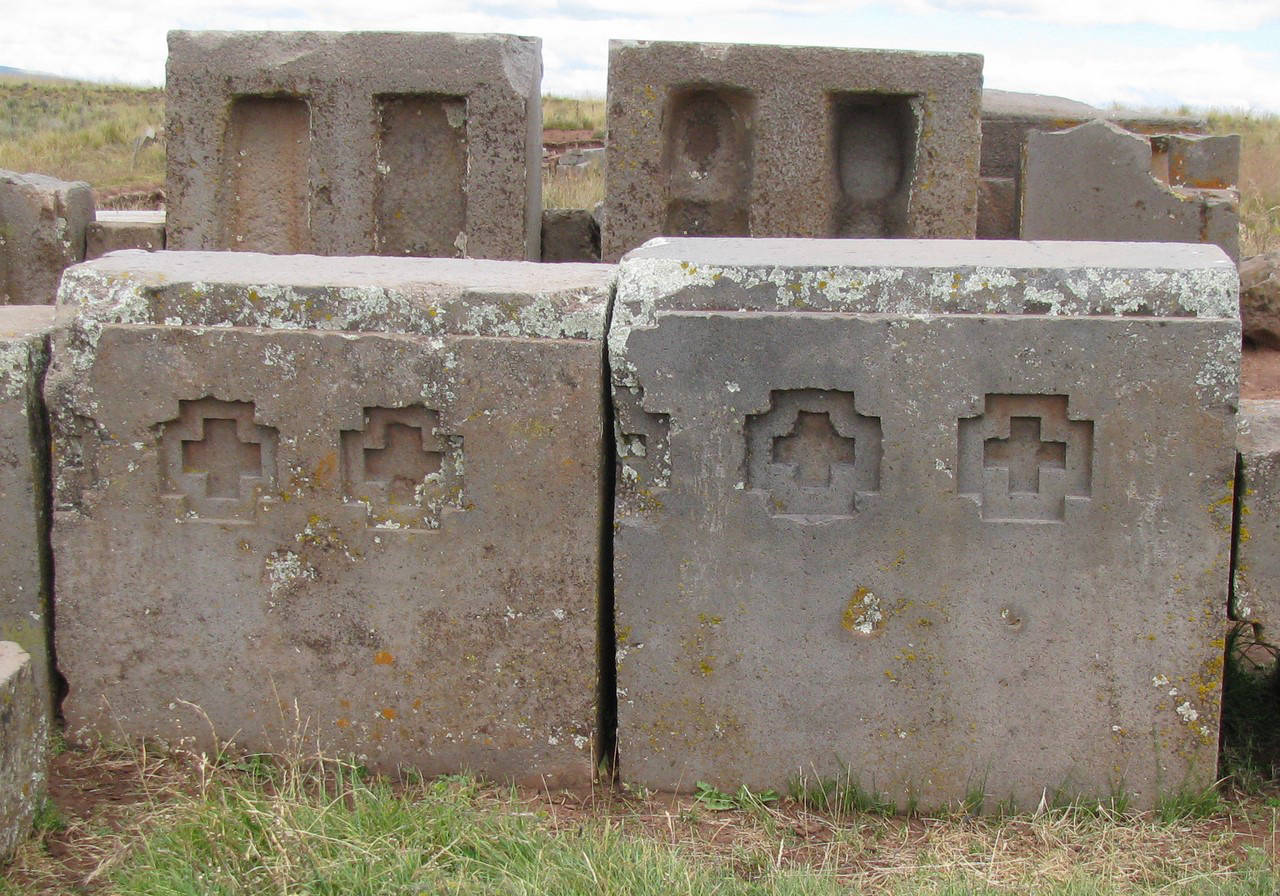
Photo 35.
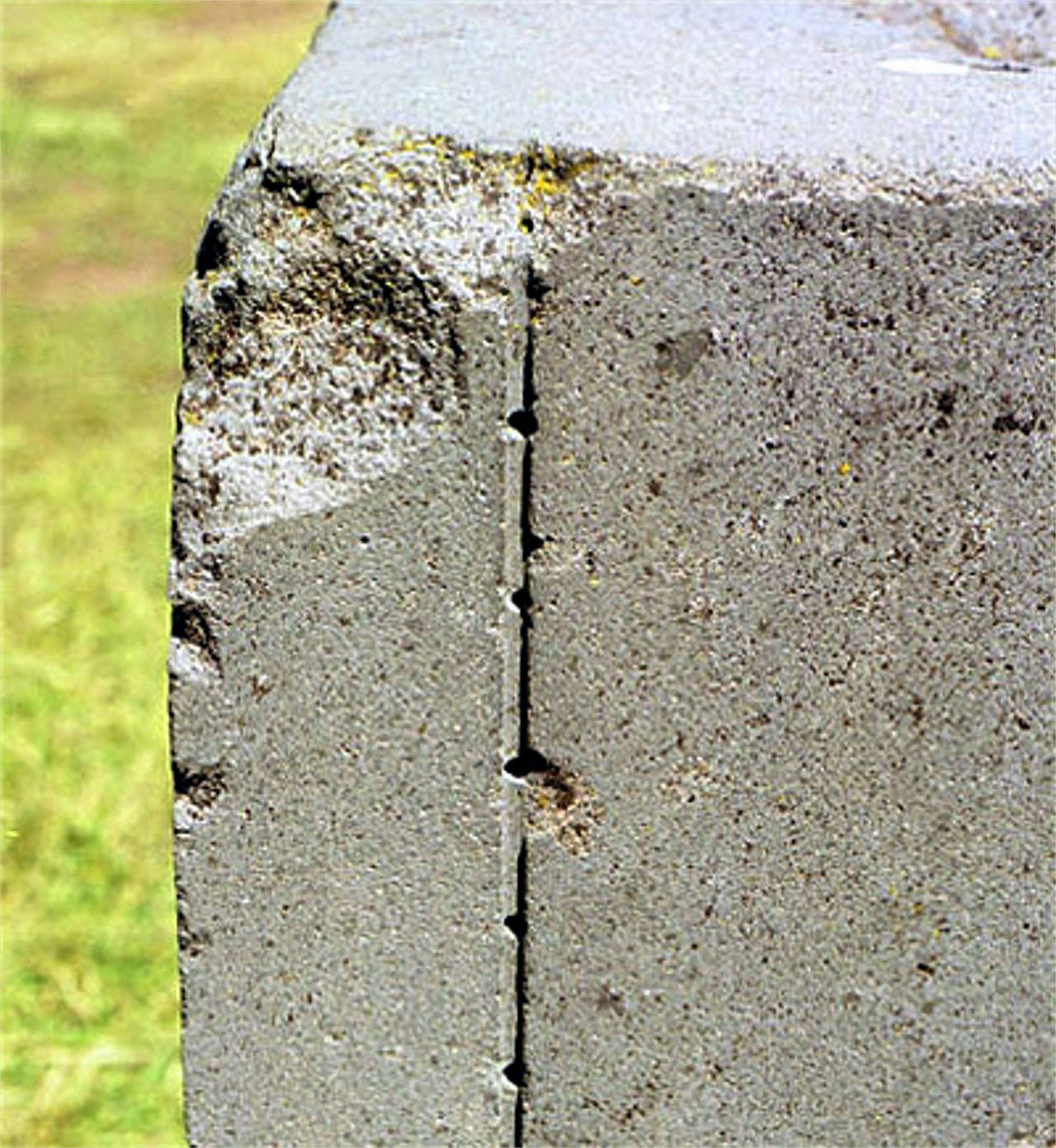
Photo 36.
Photos 37.
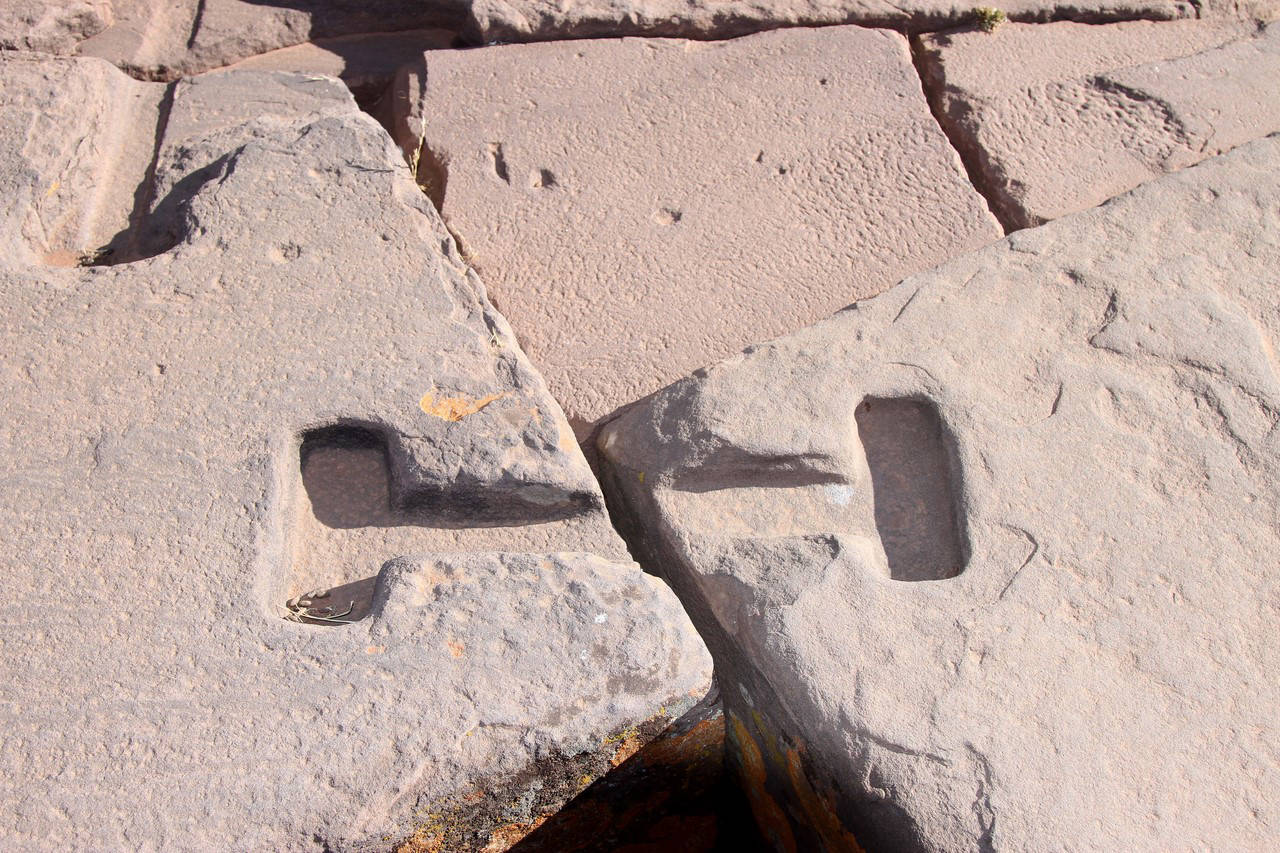
Photo 38." vspace = "5" width="1280" />
Photo 39.
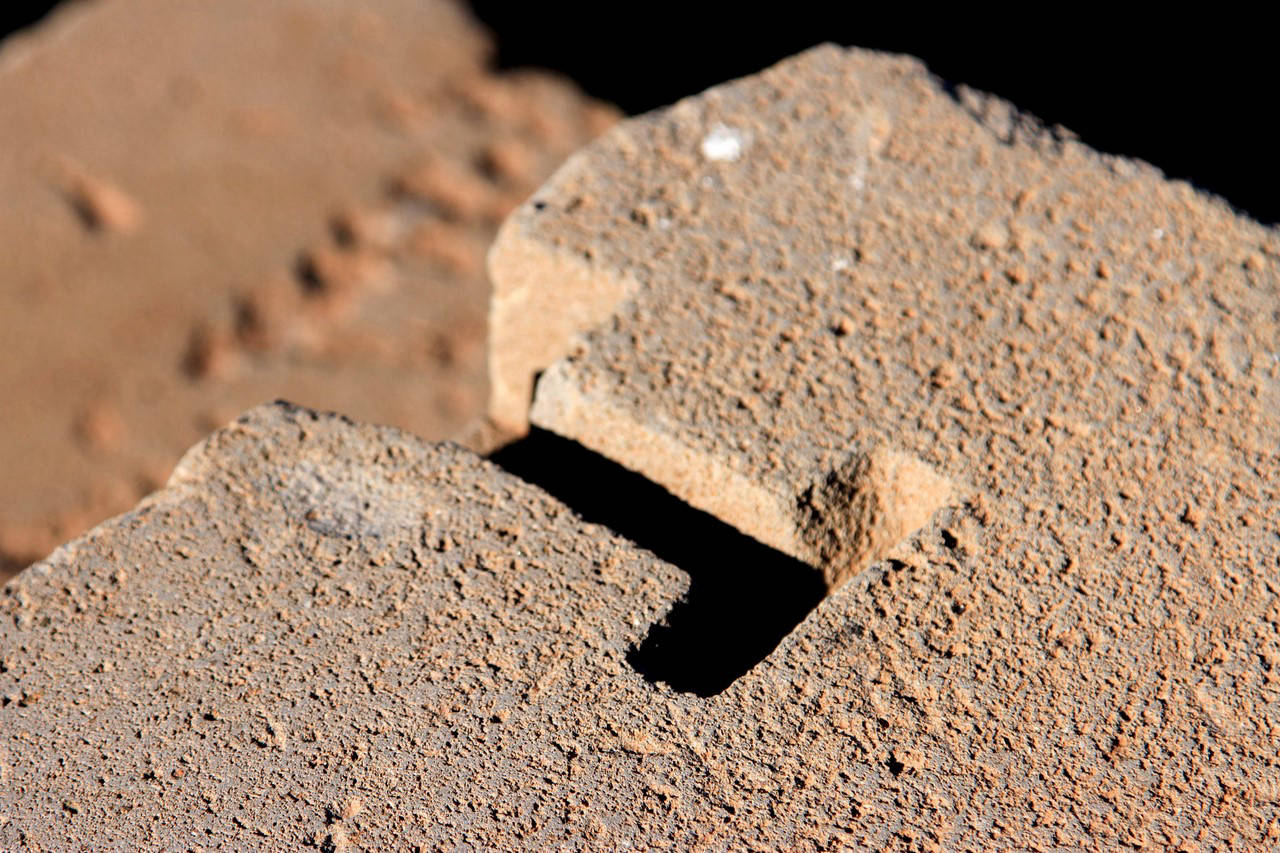
Photo 40.
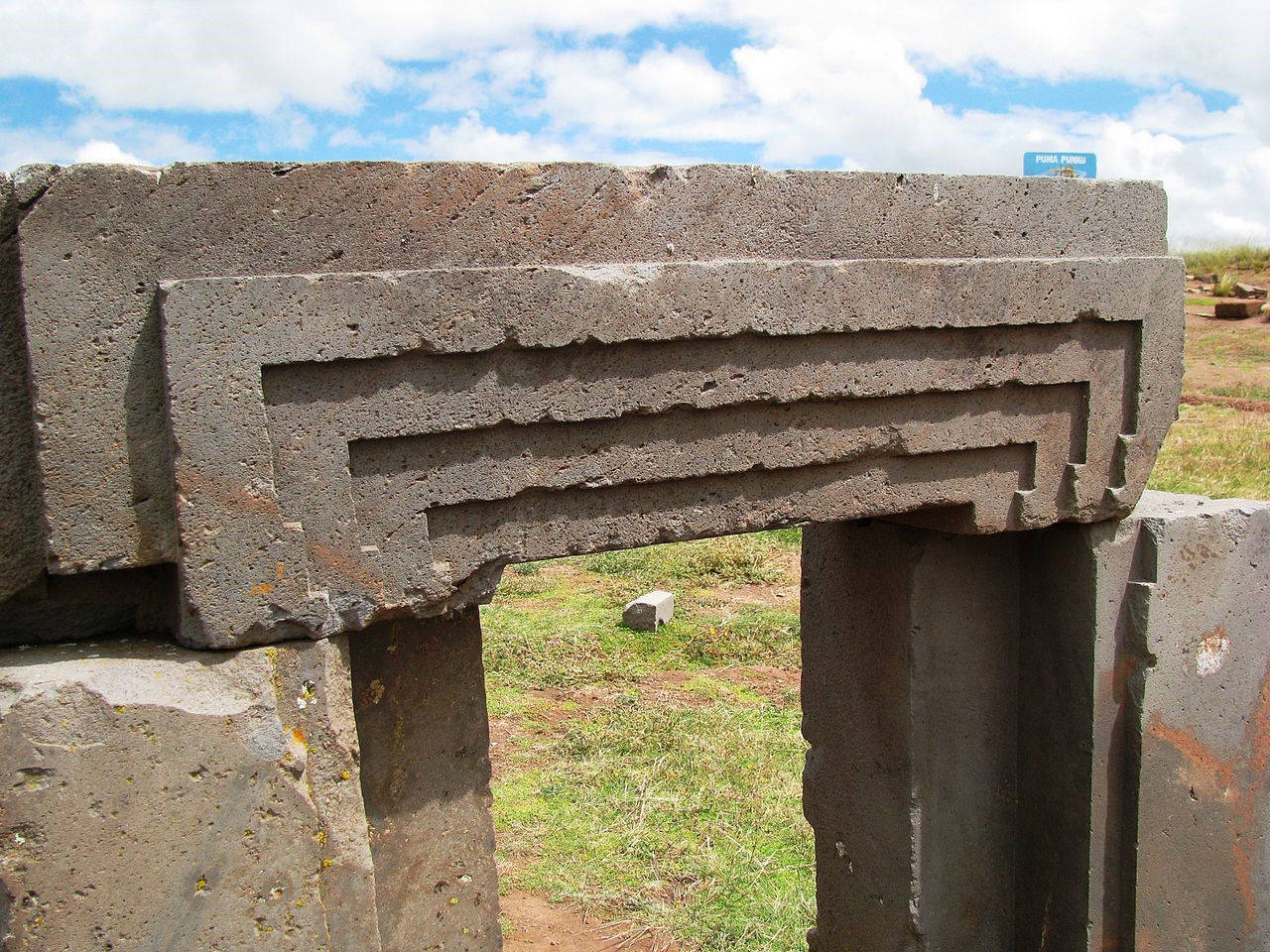
Photo 41.
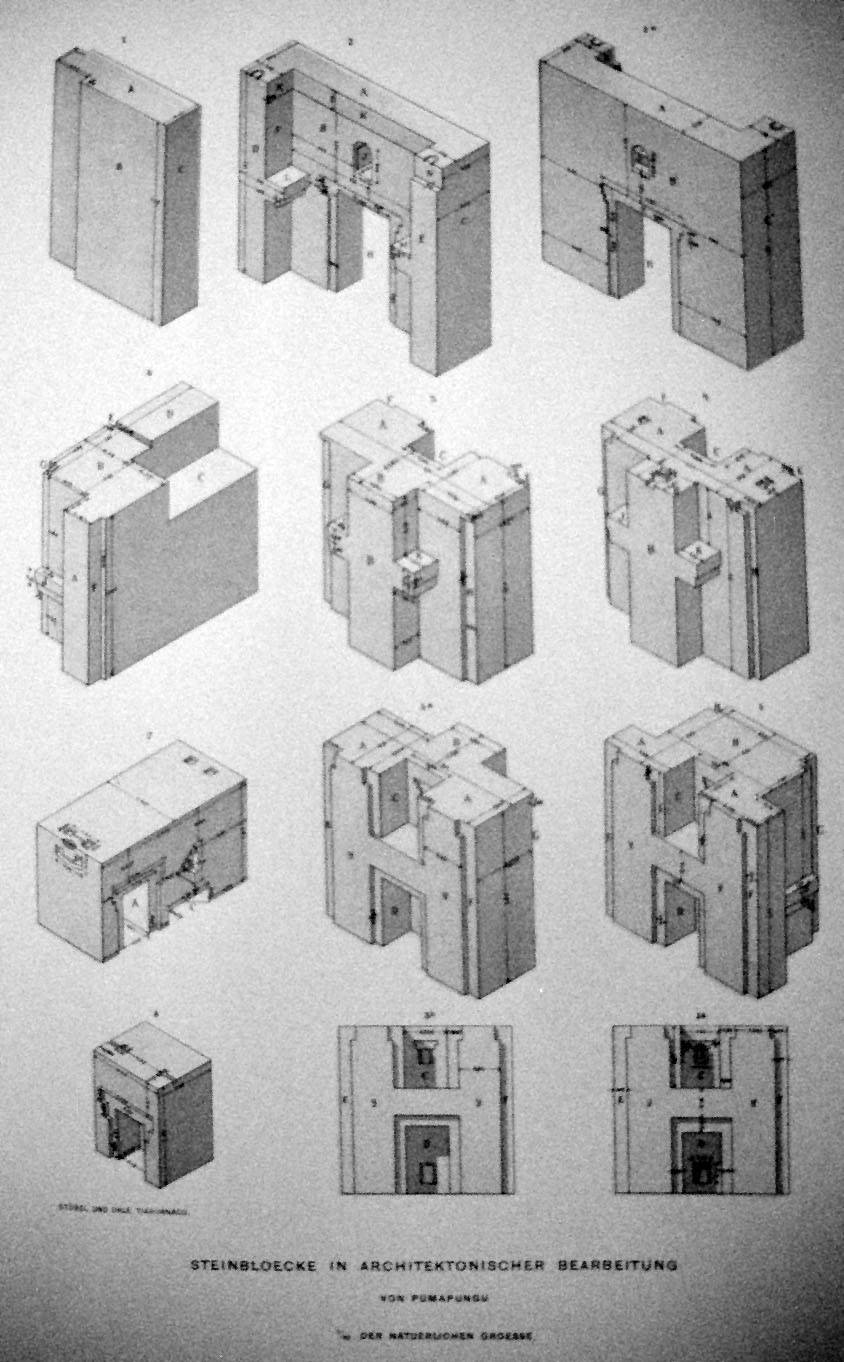
Photo 42.
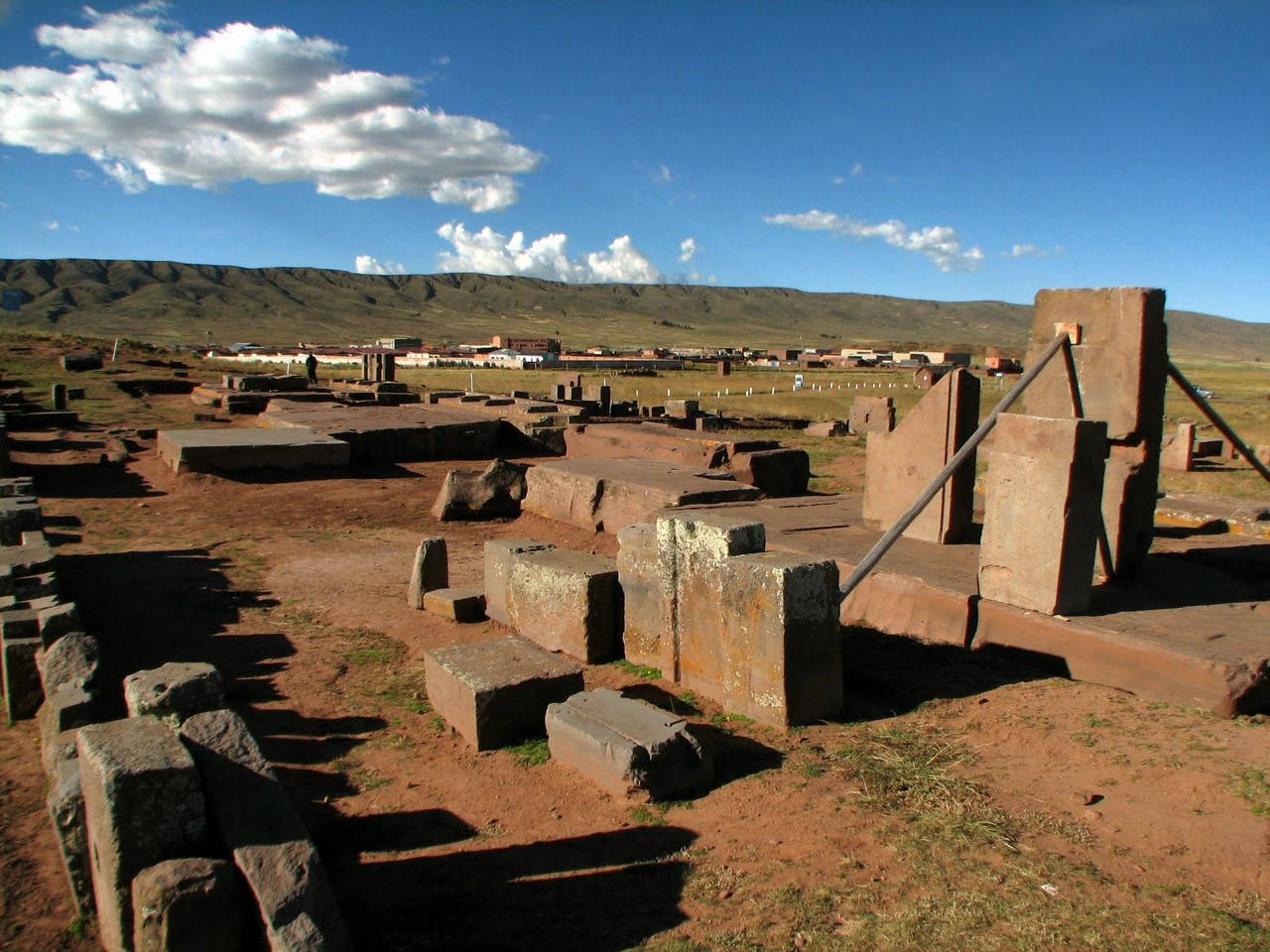
Photo 43.
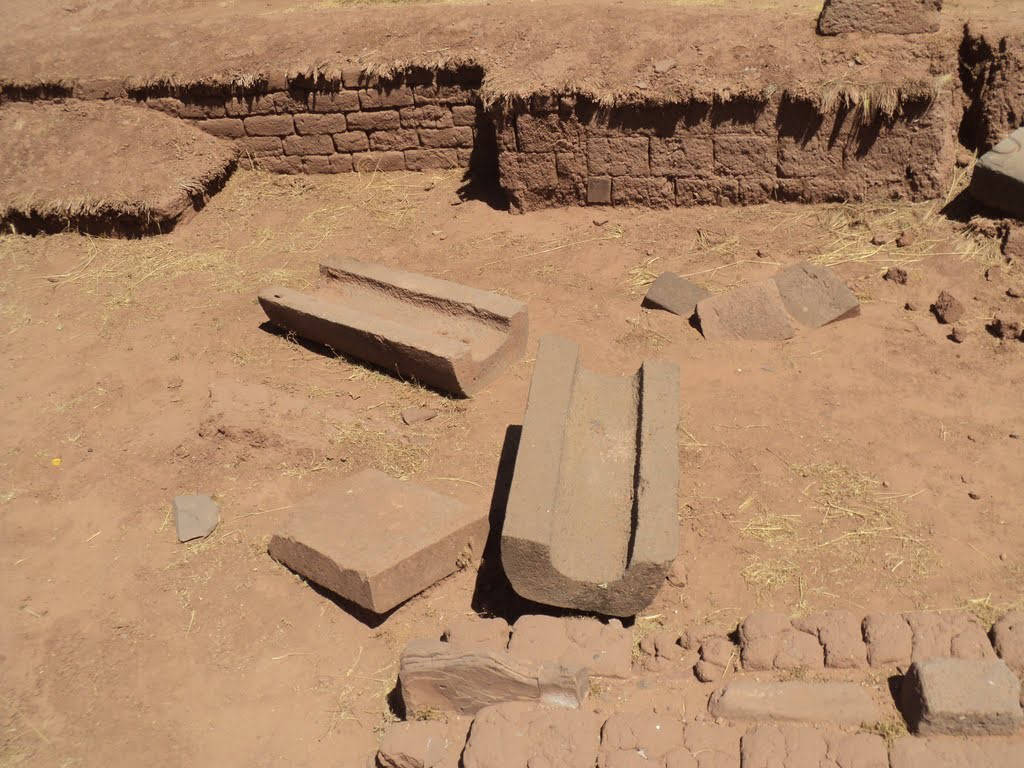
Photo 44.
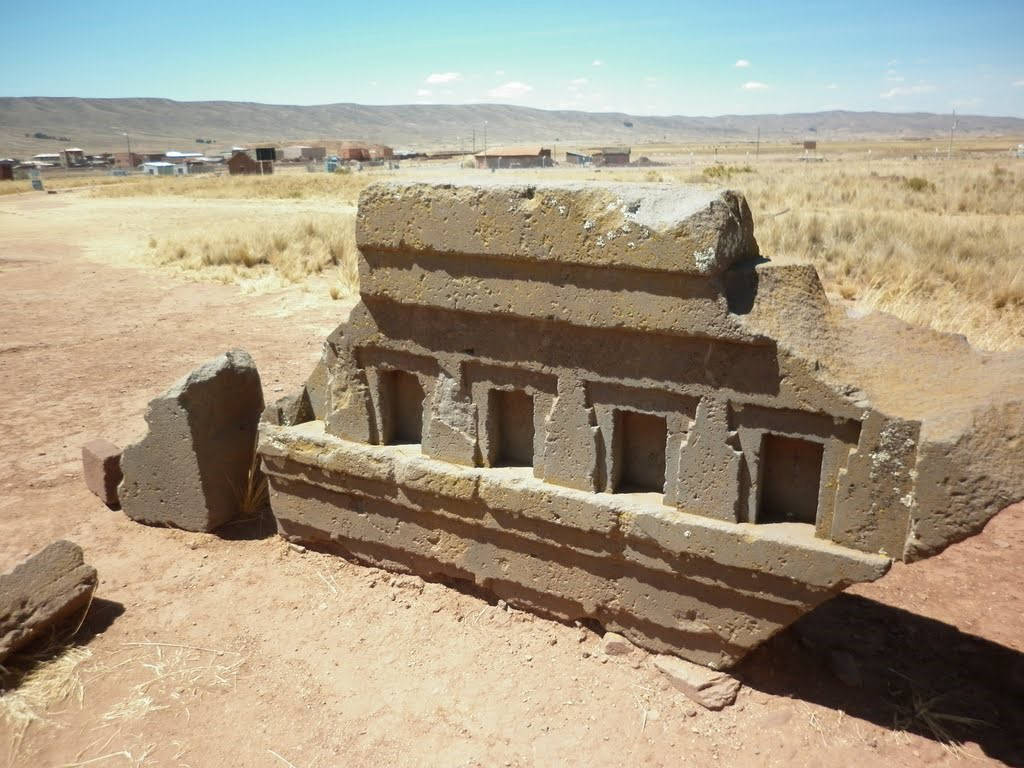
Photo 45. "vspace =" 5 " width="1024 " />