Karaite kenasy
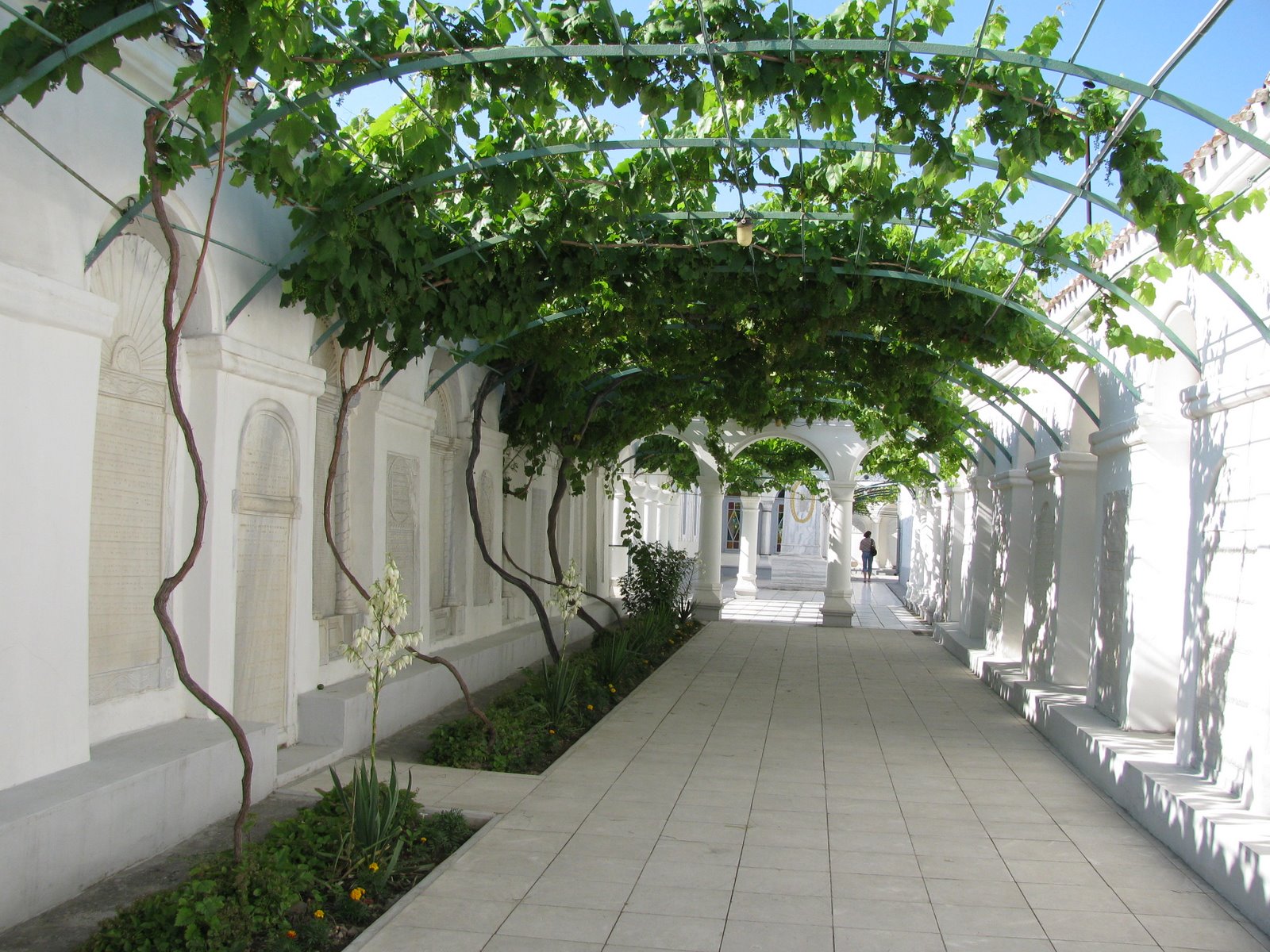
Karaite kenases & ndash; a monument of architecture, history and culture. Modern kenas buildings were built at the beginning of the last century by the project of the architects of the brothers Samuel and Solomon Babowicz. The whole complex consists of the building of the Big and Small kenas (prayer houses), the building of the religious school, the charitable canteen, the farmstead and several inner courtyards (Grape, Marble, Prayer Expectations, Ritual, Memorial). Long since it was the center of the religious life of the Karaites of Evpatoria and the Crimea. Since 1837 and before the revolution - the spiritual center of the Karaites of Russia. The most interesting marbles in the courtyards are marble fountains, 47 plates of white marble with texts cut out in ancient Biblical language. In the corner of the courtyard, formed by the eastern and northern walls, there is a granite base from the marble pillar with the sundial.
Cathedral or Cathedral kenasa & ndash; a rectangular building with separate features of Moorish architecture, has two portal with keeled arches, which are decorated with stone carvings and equipped with folding wooden doors.
Both in the Cathedral and in the Lesser Kenas there were choir races for women, which could be climbed by stairs leading from separate courtyards. Small kenasa, designed for everyday days, reminds the Cathedral in a reduced form.
During the time of its existence, kenases have been repeatedly altered. In the middle of the XIX century. Three buttresses were attached to the walls of the western and southern sides. At the end of the XIX century, the old gates were replaced with the existing ones. In the 1930s. the internal layout of the cathedral kenasy was completely changed: from a large hall a two-storeyed building was built with a dozen rooms and corridors.
In 1859, in honor of visiting the kenas by Emperor Alexander I, a marble obelisk was erected.
In 1927, both churches were closed. In 1942, during the German occupation, was opened Malaya kenasa, at the same time in the Great Kenas was reconstructed the museum of the Karaites. The last closing of the temple occurred in 1959.
In different years, various Soviet institutions were located in the buildings of the complex: an anti-religious museum, nurses' courses, sports sections, a kindergarten, a technical inventory office, a museum of local lore.
The complex of Karaite kenas is a magnificent example of the cultural architecture of the Karaite people. Perfection of architectural decisions and elegance of finishing the Evpatoria kenasy differ from similar cult constructions of this small people.
The Gyzlov fortress
Turkish traveler Evliya Celebi ascribes the beginning of the construction of the Gezlev fortress to the vizier of Kafa of the late 15th century Sanjivan & ndash; Pasha. Presumably built up city fortifications were in the beginning of the XVI century.

Odun Bazar Capusu (Wooden Gateway) (gate at the corner of Karaite and Karaev streets): they have a tower and a small door called Teshik, on which are carved double female breasts as an emblem.
Odun Bazar Kapusu (Wooden Bazaar Gate), were the largest of the five gates of the Tataro, Turkish Geslev, they were located in the eastern, trade & craft area of the fortress. The width of the gate was more than 12 m, and the length of the passage was 13.5 m. Presumably the height of the gate is & ndash; about 20 meters.
In the 19th century the gates had another name: "Kemer-kapu & raquo; - & laquo; Arched gates & raquo ;, their aperture 3.75 m wide was covered by a cylindrical arch reinforced by arches. The height of the opening was 3.62 m. In 1947 the monument was inspected and taken into account by the Crimean Regional Committee for Construction and Architecture.
But in 1959, under the pretext that the gates impeded the traffic on Matveev Street (Karaite), they were demolished with the help of technology. Unfortunately, at the same time, the cultural layer on the territory adjacent to the monument was removed, which does not allow us to specify the dating of the structure.