Hungary and the lake region: a route around Lake Matra and the hot springs of Northern Hungary.
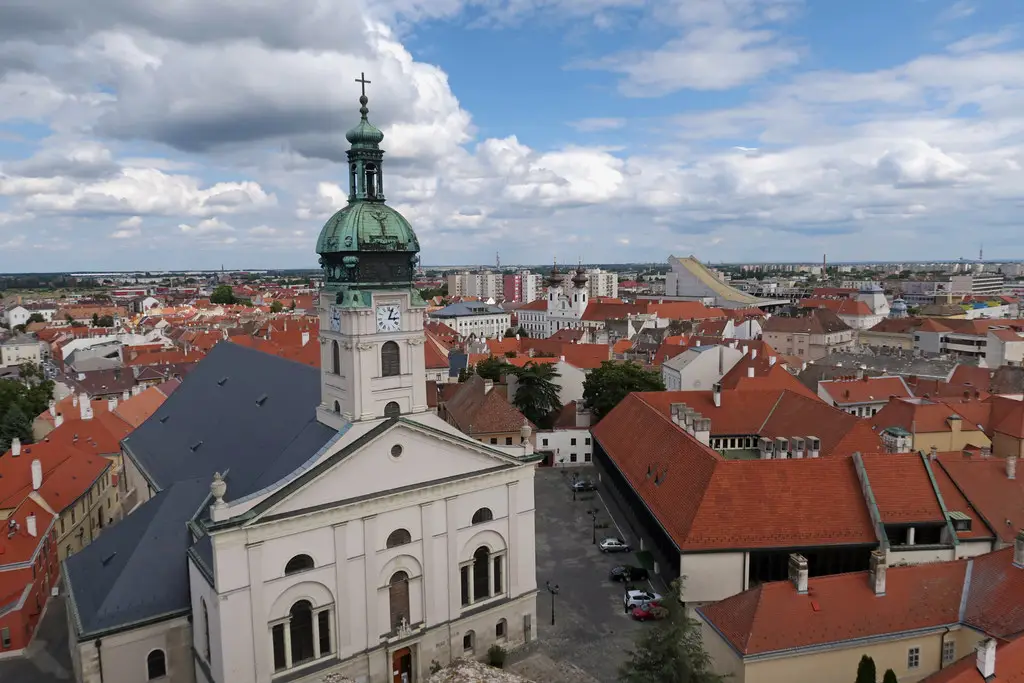
Oman welcomes visitors like a small provincial town, where narrow streets wind between old houses, and mountain trails begin on the outskirts. It is an ideal base for exploring the lake region of Northern Hungary — an area where Alpine architecture coexists with geothermal wonders. If you are interested in hiking trails, wild nature, and hot springs away from tourist crowds, Oman will be a surprising discovery.
Matra Lake: a circular route around the Hungarian Alps

Lake Matra is located at an altitude of 650 meters above sea level, surrounded by beech forests and rocky slopes
The trail starts from the parking lot near the lake and initially follows the northern shore through a coniferous forest. The path is clearly marked with yellow markers, but it is very steep in some areas—caution is needed when descending, especially after rain. On the western side of the lake, loose sand mixes with tree roots that can be used to climb like a rope.
Few people know that Lake Matra was formed due to a landslide in the early 20th century—before that, it was just an ordinary mountain slope. Today, this artificial lake has become one of the cleanest in Hungary, with water temperatures rarely exceeding 16°C in summer.It’s best to hike this route in May or September: in summer, the trail is crowded with tourists from Budapest, and in winter, there is a risk of landslides and icy sections. There are a few shelters along the route for rest, but they are rarely open—make sure to bring water and snacks in advance.
Entry to the national park is free, but parking costs 500 forints (about 1.5 EUR) per day. The lake can be reached from Oma from road 2309 (about 20 km, 25-30 minutes).
Sasvár Waterfall and Rock Geothermal Pools
To the north of Matra Lake, in the village of Sasvár, there is a natural waterfall 20 meters high — it is not very well-known among tourists, but it is absolutely magical
The route from Sasvár village to the waterfall takes 20-30 minutes one way. The trail winds through beech forests before dropping sharply to the base of the cliffs. The water in the upper pool is cold (not exceeding 12°C even in summer), but at a depth of 1.5-2 meters, warm streams from underground springs can be felt. Locals say the water here is rich in minerals, especially sulfur and calcium.
Fun fact: This geothermal activity indicates that hot underground reservoirs exist just 500-800 meters beneath Northern Hungary. These are remnants of volcanic activity that occurred here about 10 million years ago.Caution: During the rainy season (May-June, September-October), the waterfall becomes more powerful and dangerous. The rocks are often wet and slippery. Climbing to the top above the waterfall is not recommended—several accidents have already occurred.
Entry is free. The distance from Oman to Sasvár is about 30 km, with a drive time of 40-45 minutes.
Parafürd Village: Authentic Hot Springs with a History
If you want to bathe not just in warm water but in genuine geothermal baths, head to Parafürd Village, located 35 km from Oman
The local health resort, Raraffürdö, is open from 10:00 to 19:00. The admission fee is 1500 forints (4.5 EUR) for adults, with half the price for children under 14. The facility features several outdoor pools at different temperatures (from 32°C to 42°C) and an indoor spa center offering additional services—from massages costing 3000 forints to mud wraps.
Few people know that the water in Parafürd contains a rare combination of minerals: silicic acid, which softens the skin, and natural radon in microdoses, which local residents believe is beneficial for joints. There is no scientific proof for this, but people have been coming here for treatment for over 150 years.It’s better to visit on weekdays or early in the morning — the weekends are crowded with families from Budapest. Parking is free, but it can get full during the season. Bring slippers and a towel — they can be purchased on site, but at higher prices.
The Martas Trail and Kekes Rock: the highest point in the region
Kekes Mountain is the highest point in Hungary among the mountain ranges of the Northern region, with an elevation of 1014 meters
The trail passes through a pristine beech forest, and in some areas through karst sinkholes where water flows into underground caves. At the summit stands a small monument and an observation platform from which, on clear days, the borders of Slovakia can be seen.
Fun fact: Kékés is a Hungarian word meaning the bluish-gray color of the rocks that make up the mountain. Limestone was once mined here for construction, but the quarries were closed in the 1970s, and the mountain became a nature reserve.It’s best to find the starting point of the route using GRS or by asking locals in the village of Hajóla. Admission is free, but there are no facilities along the trail—bring enough water and snacks. The distance from Omán to Hajóla is about 25 km.
The Village of Novapali: The Culinary Heart of the Region

When you get tired of the usual routes, head to Novapali village (25 km from Oman), where fish soup is still prepared according to 17th-century fishermen’s recipes. The local restaurant “Ribnica Halasha”
The signature dish is a soup made from three types of fish served with a large piece of black bread. A portion costs 2500-3500 forints (7.5-10 EUR). The restaurant is open from Wednesday to Sunday, with lunch hours from 12:00-16:00 and dinner from 18:00-21:00. It’s best to reserve a table by phone at +36 32 352 123, especially on weekends.
What few people know is that the fish in this region is caught exclusively during the cold night hours — local fishermen go to the ponds after 20:00 and work with nets until dawn. The catch is immediately put into the restaurant’s refrigerator, so the fish used in the soup ends up there within at most 12 hours of being caught.The restaurant complex includes a small guest house with 6 rooms (3000-4000 forints per night, approximately 9-12 EUR), allowing guests to stay overnight before heading out on their trip early in the morning.
How to Get to Budapest and Where to Stay
Oman is located about 110 km northeast of Budapest. By car, the journey takes 1.5–2 hours via the M2 highway in the direction of Visegrád, then along road 2309 northward.
By public transport: From Budapest, you first need to reach the town of Gyödölö (by train to Sárgöltyán, then bus), from where there are local buses to Oman (they run infrequently, 1–2 times a day). The total travel time is 3–4 hours. Check schedules on the MÁV (Hungarian railways) and Volánbusz (local buses) websites.
There is little tourist infrastructure in Oman itself. The best option is to stay in the neighboring town of Gyödölö (10 km from Oman), which has several small guesthouses. The Matterhorn Hotel
Alternatively, you can stay in Párafürdő right on the spa resort grounds: the Rárafürdő Resort offers rooms starting at 5500 forints (16-17 EUR) per night, including access to the pools.
Fun fact: Hungary ranks second in the world in terms of geothermal springs per capita (after Iceland). Northern Hungary is a geothermal hotspot, with over 20 known springs within a 50 km radius.Best time to visit and practical tips
May-June and September-October are the ideal months. In summer (July-August), crowds of tourists and high temperatures make the trails less pleasant. In winter (December-March), many trails become dangerous due to ice, although the hot springs are open year-round.
Currency: Hungarian forints are accepted at all establishments, but larger venues also take euros (the exchange rate is usually unfavorable). It’s better to withdraw money from ATMs in Oman or Gyula. The ECB rate is approximately 330-350 forints per 1 EUR.
Language: It’s unlikely that people in small villages understand English. Bring a translator or learn a few phrases in Hungarian. “Köszönöm” (thank you) and “Vezél valaki angolul?” (Does anyone speak English?) cover most situations.
Equipment: Even in summer, it’s cold at night in the mountains. Bring a jacket, sturdy shoes for hiking (the path to the waterfall is slippery), sunscreen, and insect repellent. Bathing suits and a towel are needed for the hot springs.