African safari. How it happens
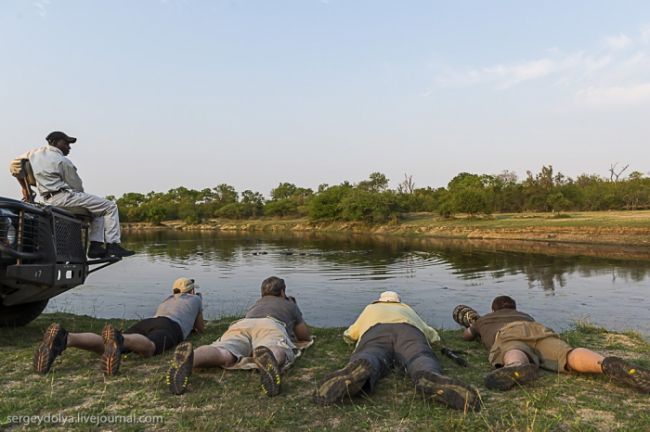
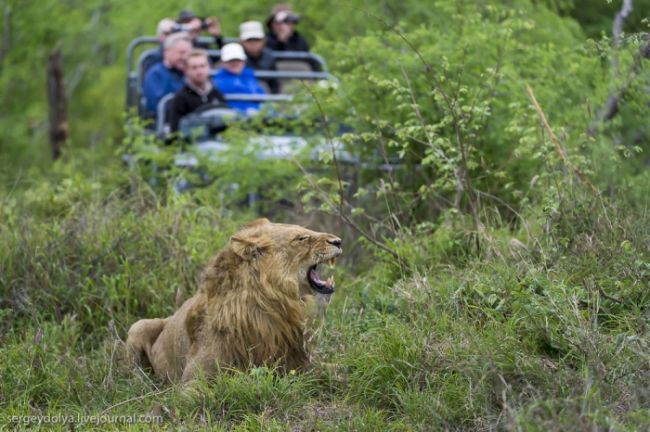
How the safari takes place: you are put in an open car without windows and roofs and driven by wild forest nature or through the national park. When the animals come on the way, the guide turns off the car and gives an opportunity to view animals in their natural habitat. It looks pretty dangerous, especially when you drive up to the elephant, which starts to blow and roll in your direction. Or sit next to a lion when he is 2-3 meters away, and not a single trainer is around. It is believed that predators do not perceive the car as a hypothetical prey, and if you sit quietly, without sticking out of the car, everything will be fine. Safari organizers, of course, guarantee complete safety, but judging by the way we sailed on the edge of the Victoria Falls or flown by helicopter in the canyon, the concept of security for Africans is very, very relative & hellip;
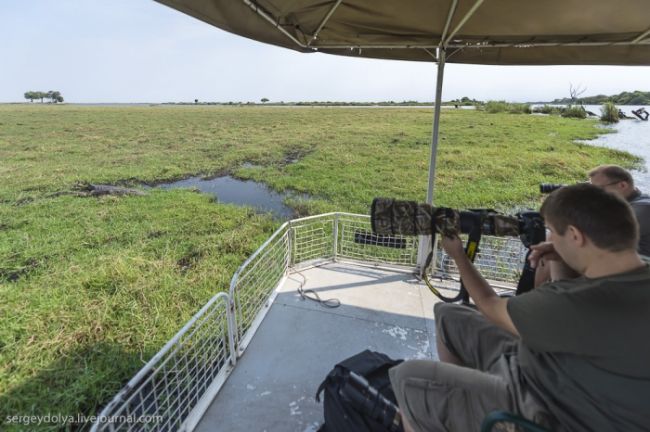
After the water safari we went deep into Botswana. We drove six hours by car from the border of Zambia. On the way there were small parking lots where you could stop and go "to the bushes". Or - in African, - "in the baobabs"
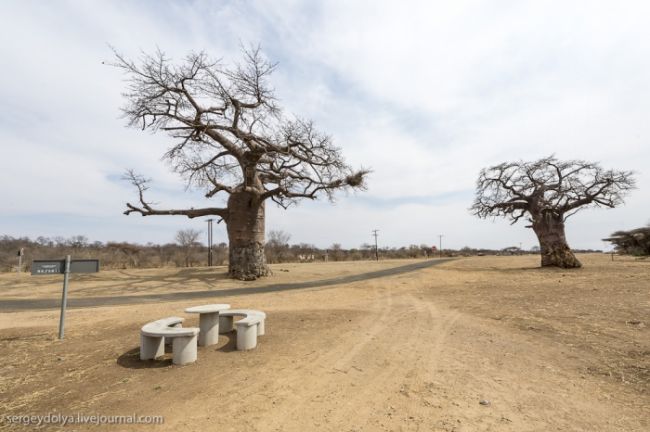
Then we drove into the forest and another two hours sawed it. The African forest is a rather meager and dull sight: lonely trees, a little yellow grass and a couple of bush
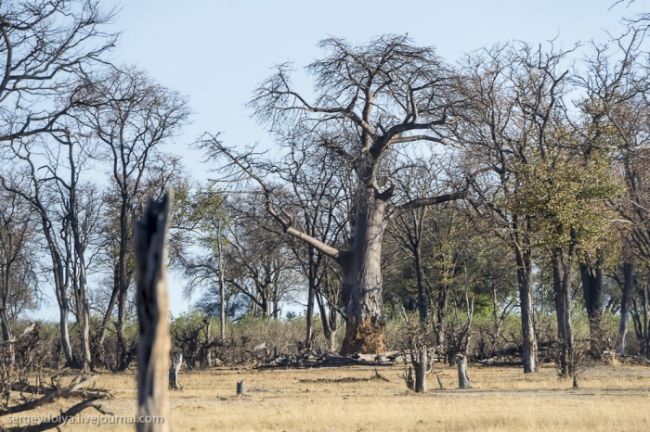
The transparency of the forest further emphasizes the drought season, during which all trees are thrown off the foliage. But the month of October for the trip was chosen on purpose: behind the bare branches it is better to see animals
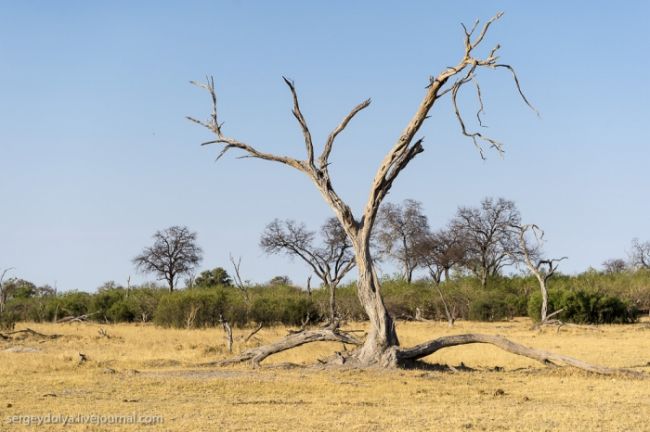
There are many termites in the forest
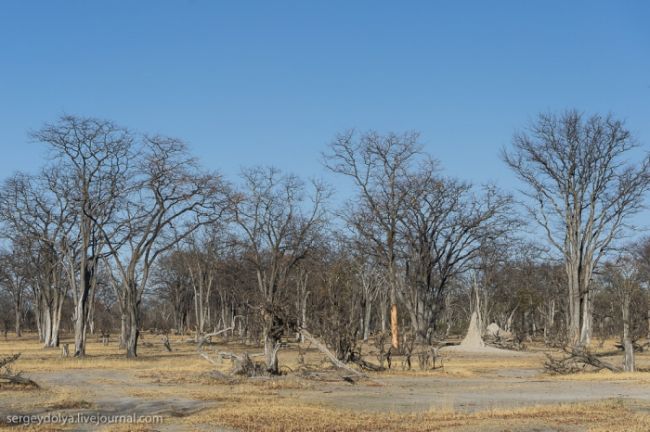
We did not see the termites themselves - they live in the depths of their homes. The guide said that one can often see on the termites of lions and different predators: they climb on the hard ledges of these hills and look for their victims from a high point
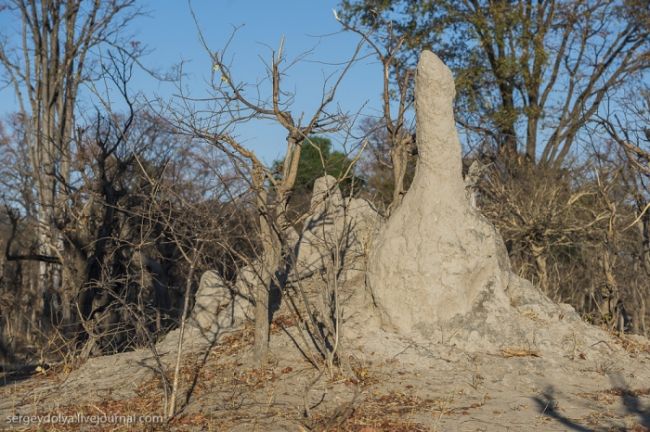
Typical landscapes of Botswana
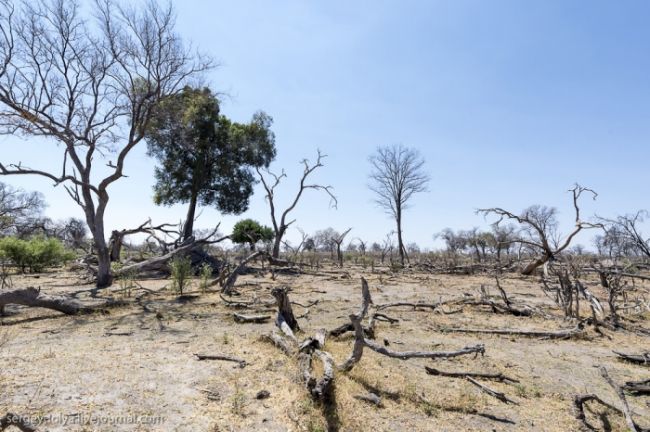
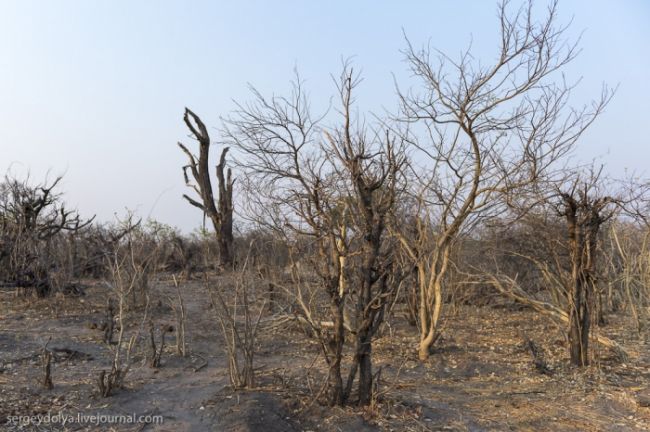
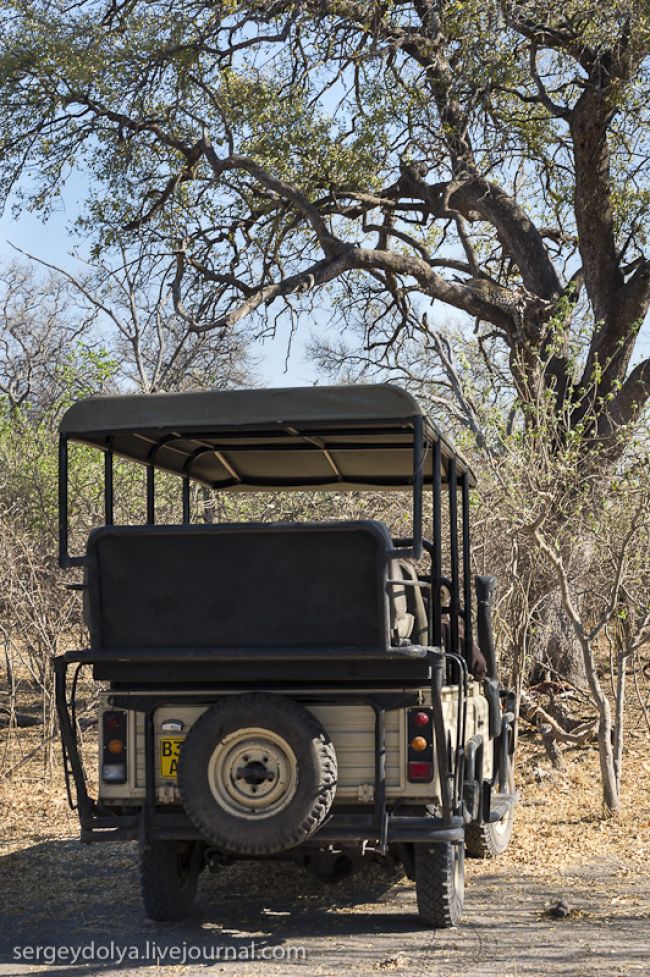
8 people took part in the safari, they went by this car. You can leave it only after the guide has studied the terrain and gives the command. In general, much depends on the guide, including the notorious African security. If, for example, accidentally placing a car between an elephant and an elephant, it is guaranteed that the elephant will turn over and crush the car:
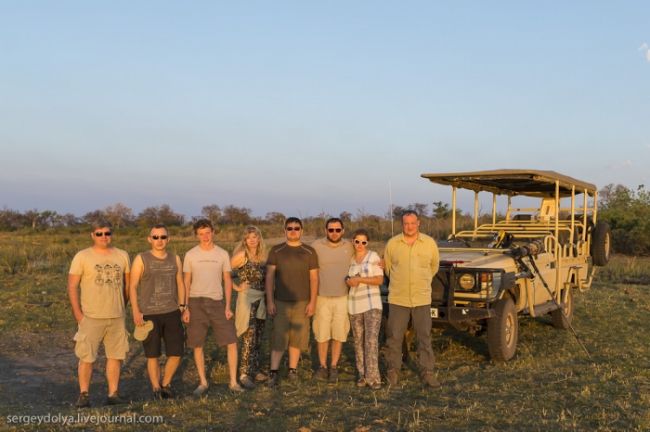
On the safari we went every day twice - the first exit was at dawn, the second before sunset. During these periods, animals are active: predators hunt, herbivores eat and run away from predators, etc. In the afternoon, the heat comes, and the animals sleep peacefully in the shadow of stunted bushes. We also tried to sleep between departures, but sleeping at + 40 is quite hard:
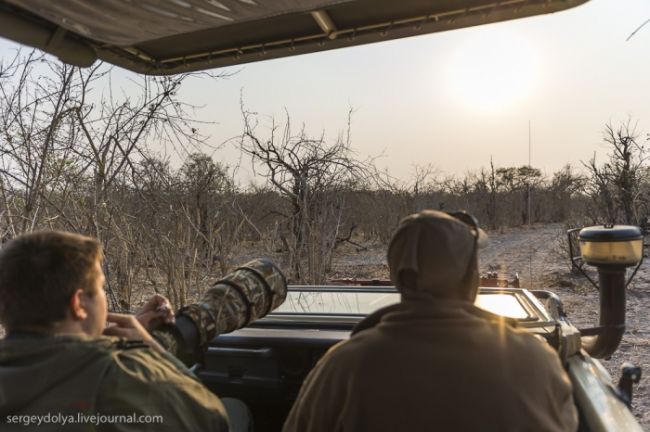
There are roads in the forest that we drove and searched for animals:
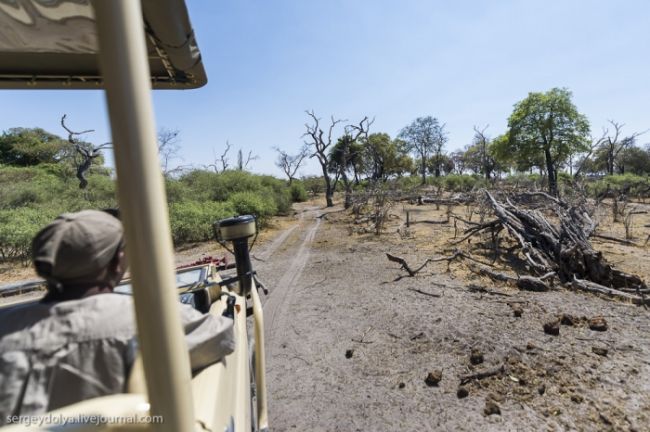
Discovering representatives of African fauna, the guide silenced the engine. We had time to see and shoot. Since we were in the usual forest, and not in a national park, you could leave the road and wade through the bushes, chasing a lion or a leopard in the footsteps. Often the guide drove the car through the virgin thickets to get close to the animals as close as possible:
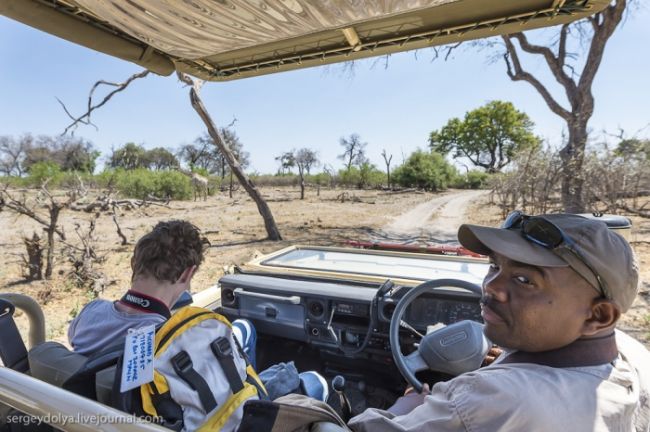
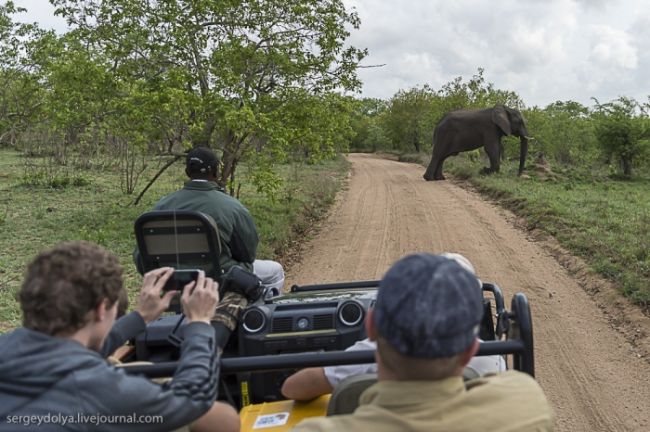
The most unpleasant animals were elephants: first, there were a lot of them, and secondly, the African elephant is not as friendly and manual as the Asian one. They are very aggressive and constantly reacted to the car with undisguised dislike:
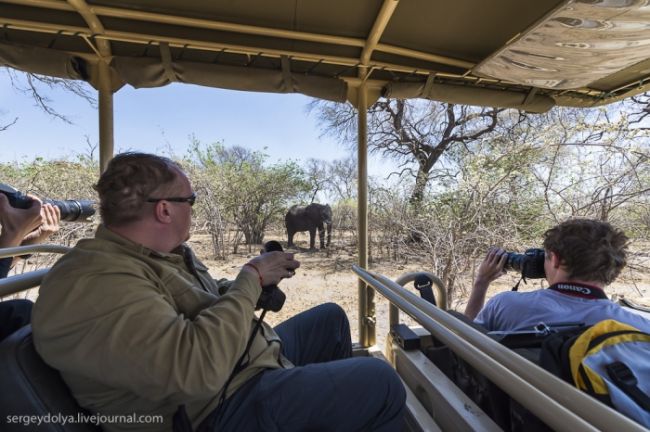
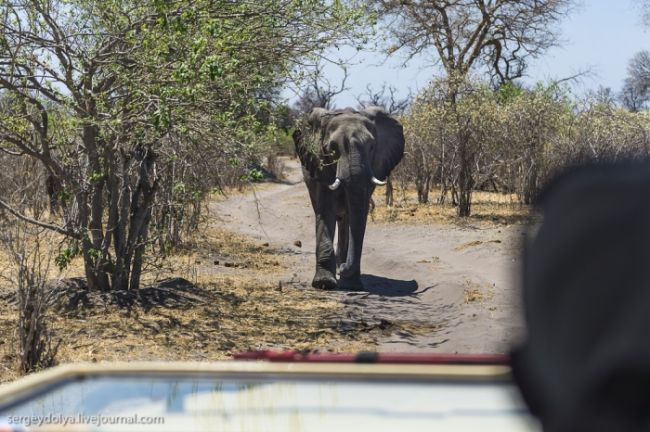
Since the elephants do not see the difference between the road and the forest, we often rested on them on our way. We had to stop and wait for the elephant to leave. Elephants looked at us disapprovingly, and several times even started to throw. The elephant attacks as follows: he starts clapping his ears, snorting, blowing and waving his head, warning of the impending attack. You can not go on it - collisions in this case can not be avoided - but you can not leave quickly, because the elephant will race after it. And he runs, as I said, not bad. I had to growl in response to the ignition, which frightened the animal and it receded:
But leopards are not at all scary, they could get close enough. Sometimes they threw puzzled looks at our company, but as a rule, it all ended (find the leopard in the photo):
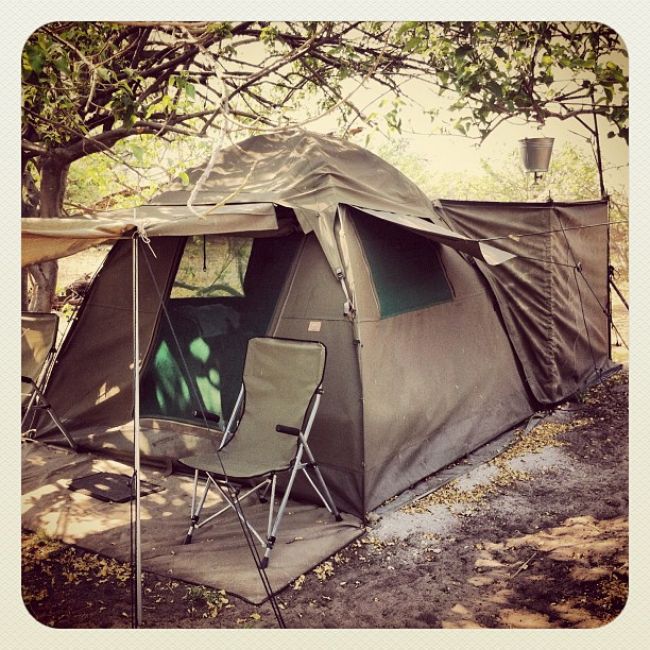
In Botswana, we were placed in tents, broken at the edge of the forest. There was no fence around them, and all night long around us someone grunted, growled, squealed, stomped or rustled. In addition, the guides said that leaving the tents at night is dangerous: those who had to really get out, blew into the whistle, urging the escort. According to the program in Botswana, we had planned three camps, between which we had to navigate by airplanes. Honestly, out of eight people six decided to leave the first camp, without waiting for acquaintance with the other two:
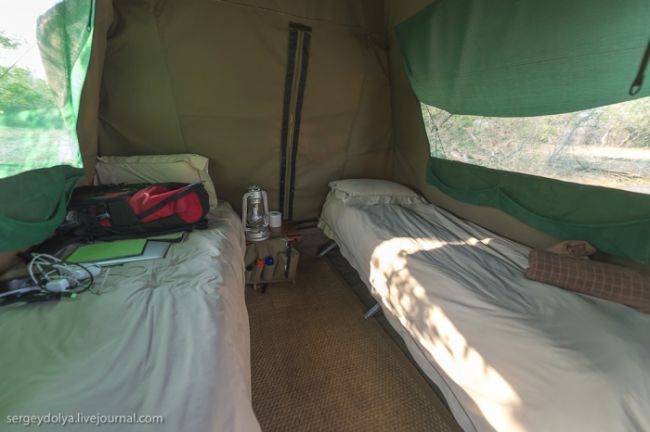
The modest arrangement of our tents included two beds with linens. Through the zipper in the back wall you could go to the "add-on", where the conveniences were:
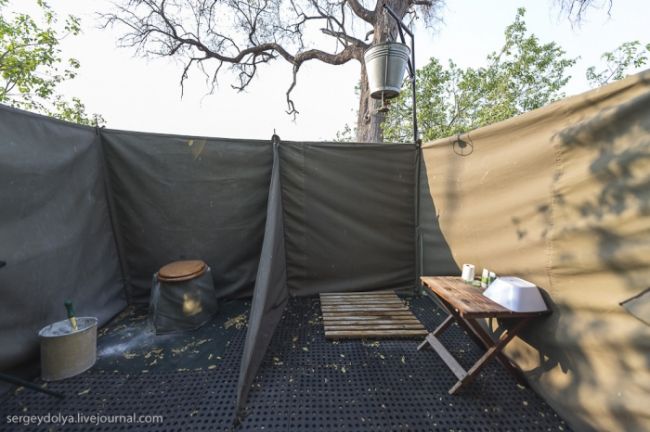
To the right of the shower - a bucket of water, - on the left toilet - a barrel with ash. We spent two nights in this camp, almost no one slept, everyone listened to the night rustles. Arina stayed two nights with manicure scissors in the hands in case of a fight with leopards. And, it is worth noting, we slept in total darkness, so as not to attract animals. In the morning near the tents found traces of hyenas, hippos and leopards. On the second day we thanked our guides, saying that we had received enough impressions and ordered a plane ...
The plane looked again at the African forest:
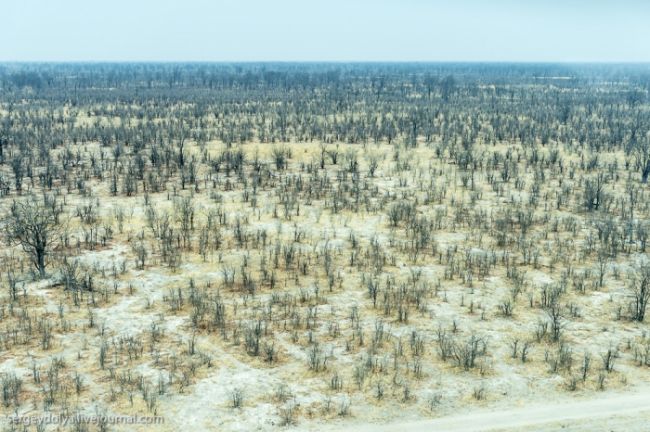
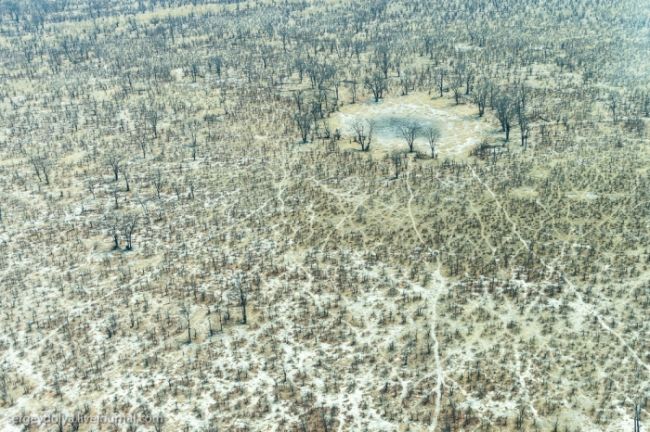
Narrow strips similar to cracks in dry ground are animal trails to a dried up watering:
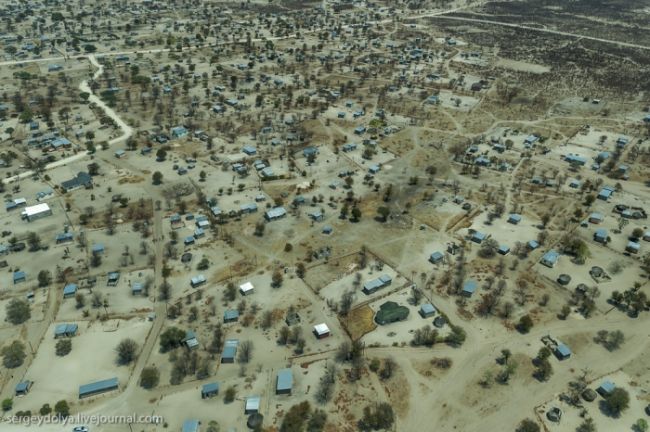
And this is the city in Botswana, from where we flew back to South Africa:
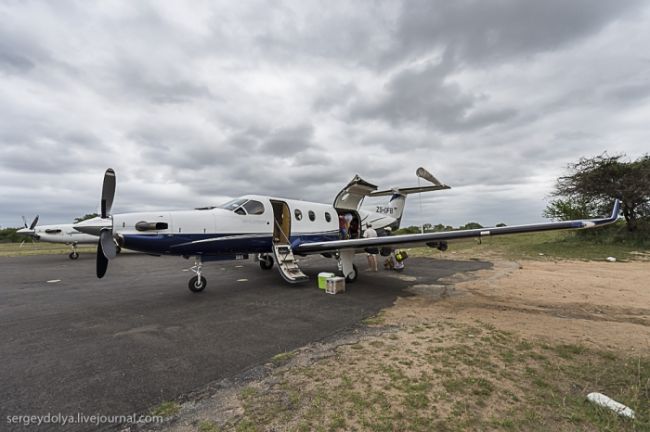
On the last three days of our trip, we reunited with the brave guys who stayed in Botswana, and visited another safari in Kruger Park, a reserve on the border with Mozambique. There we flew by plane, and by the way, all the traffic in Africa is carried out mainly by air. Small aviation is highly developed in the country. The aircraft was small, for six seats:
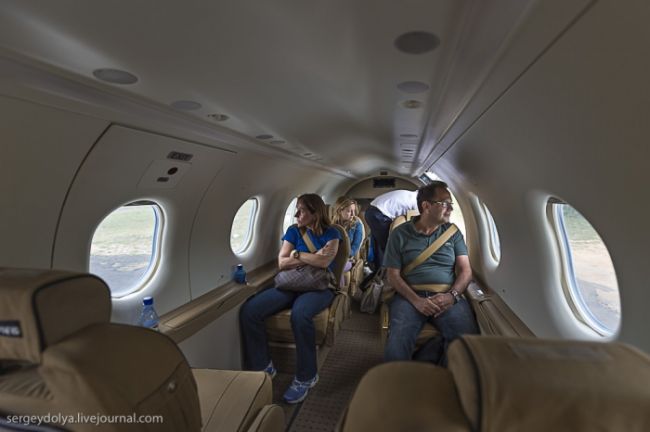
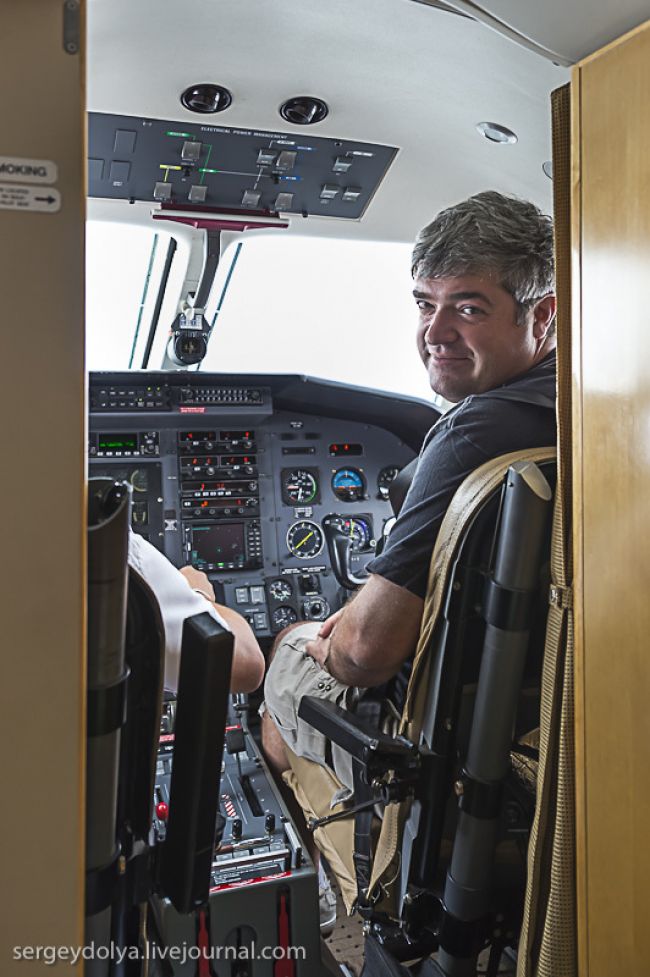
But since there were seven of us, I flew in the cockpit of the pilot:
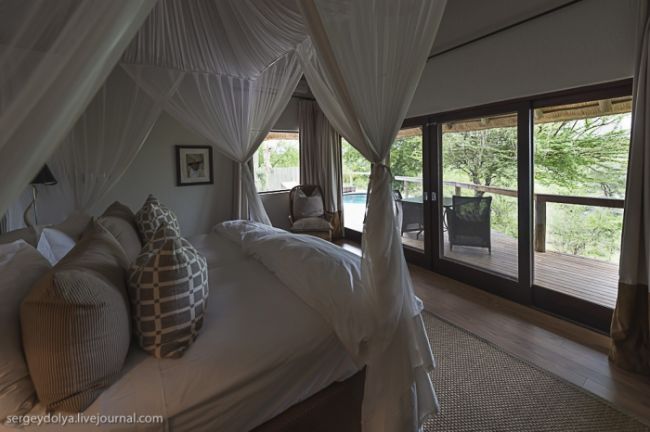
The last camp had completely different conditions. We lived in houses, and, although there was no fence around the camp, the presence of walls and windows gave confidence in safety. This is the bedroom:
The bathroom. On the street there are showers and a private pool:
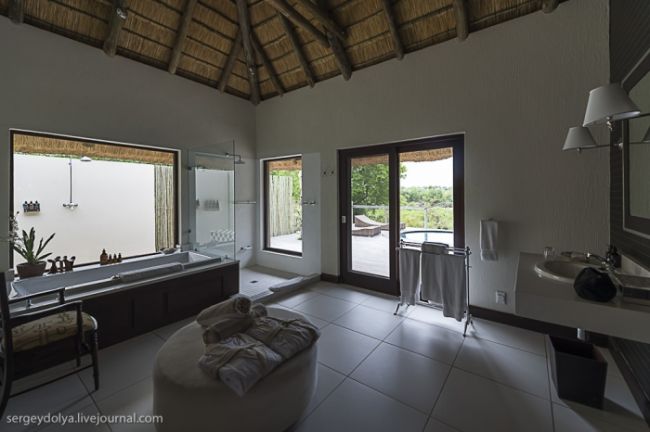
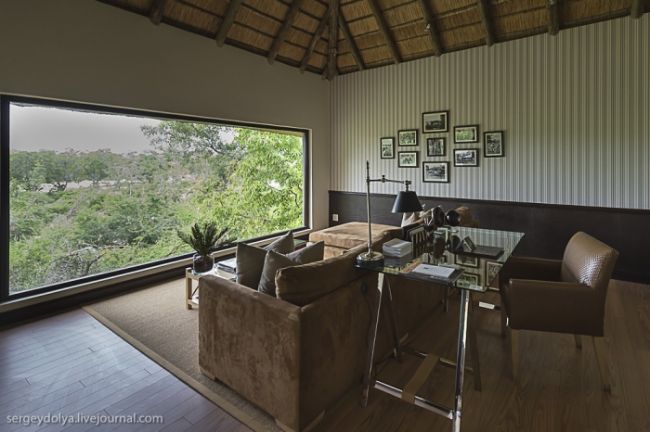
Office with a view of the forest. And - most importantly - in the house was air conditioning
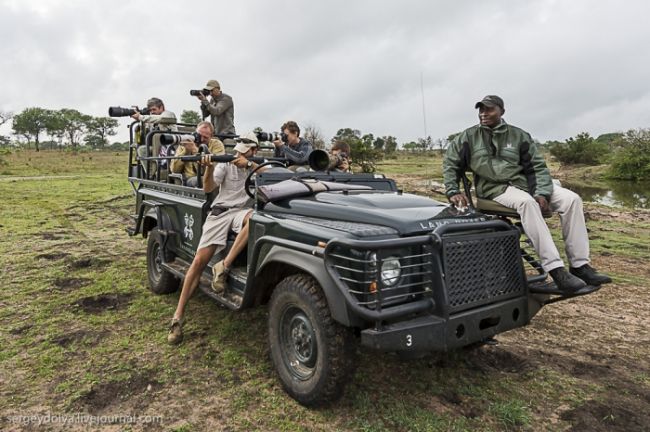
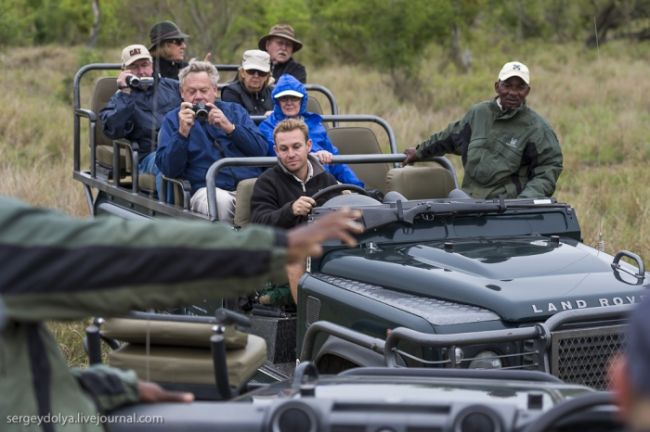
We moved in a car without a roof, but in the last camp we had a ranger with a gun and a local tracker who was sitting on the hood and looking for traces of animals:
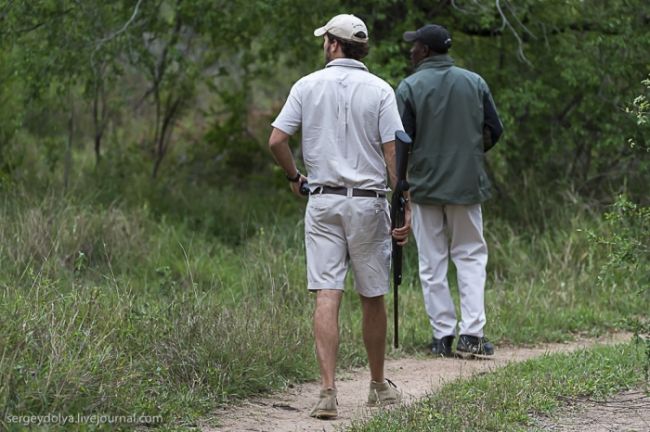
As soon as the tracks were, they both got out of the car and went into the forest, leaving us for 15 minutes:
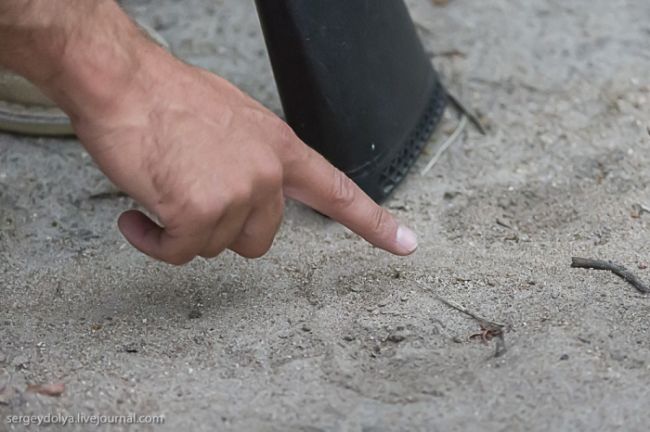
The leopard's trace:
Animals, of course, are everywhere the same, but on this safari the process of monitoring them was more comfortable:
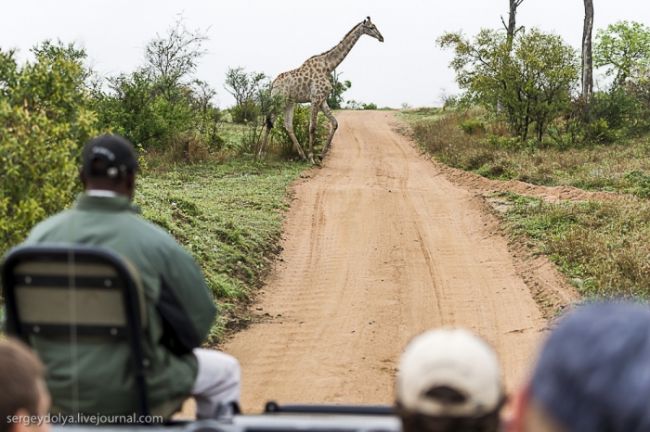
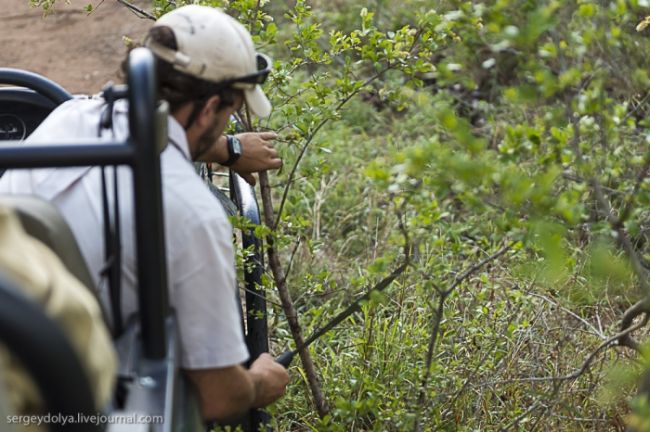
Sometimes, like in Botswana, we made our way through the bushes - the ranger took out a machete and chopped the road in the thickets:
Once we chased the lion and jumped on the stone. Nearby was another car and we were safely pushed out onto the road:
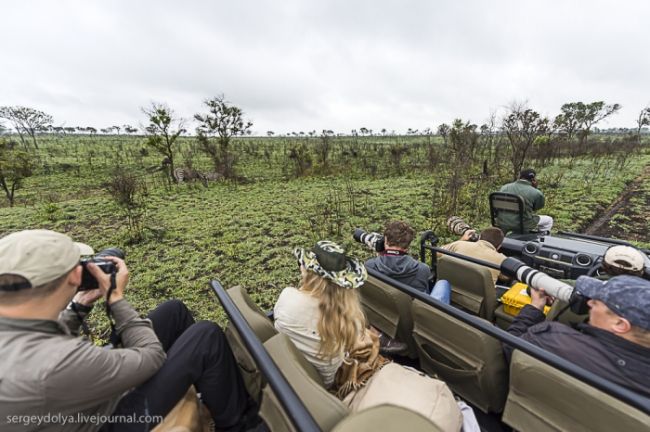
The landscape in South Africa was different from what we saw in Botswana:
Here we saw the big African five: an elephant, a rhinoceros, a buffalo, a lion and a leopard:
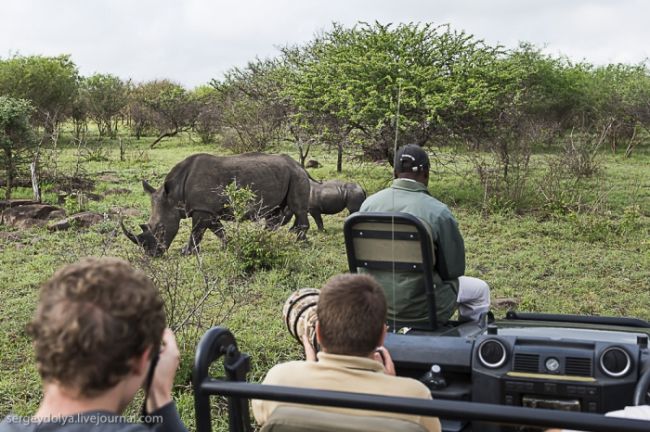
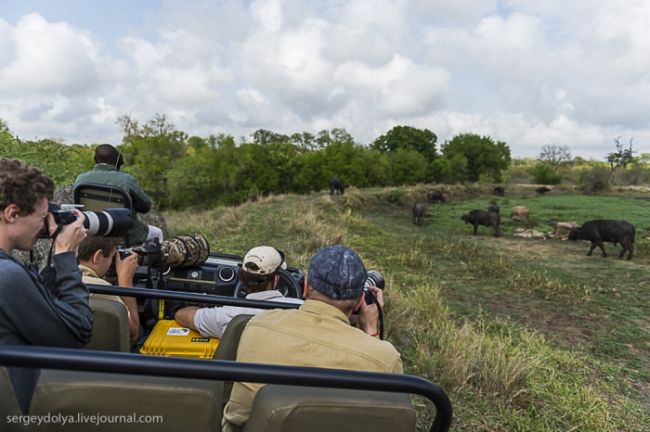
Once we were even allowed to get out of the car, in violation of all safety standards and take off the hippos from the bottom.
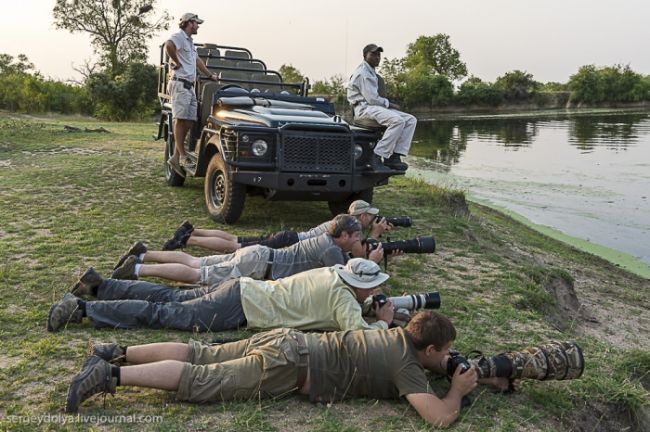
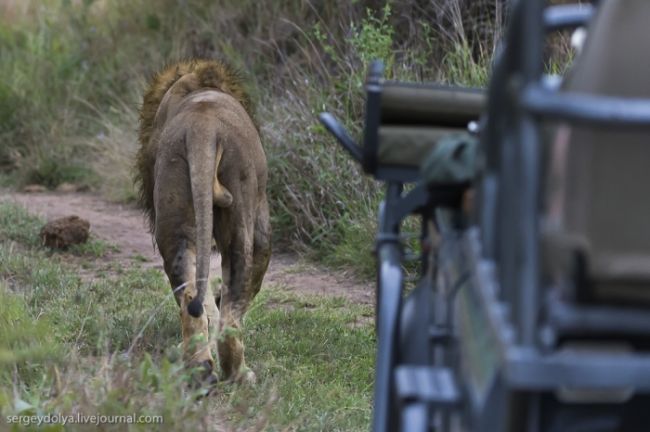
And this is the pursuit of a young lion. He went to someone else's territory, for which three adult local males decided to kill him. The young lion was already rumpled and scratched: he ran first, followed by three others and then we were in the car.
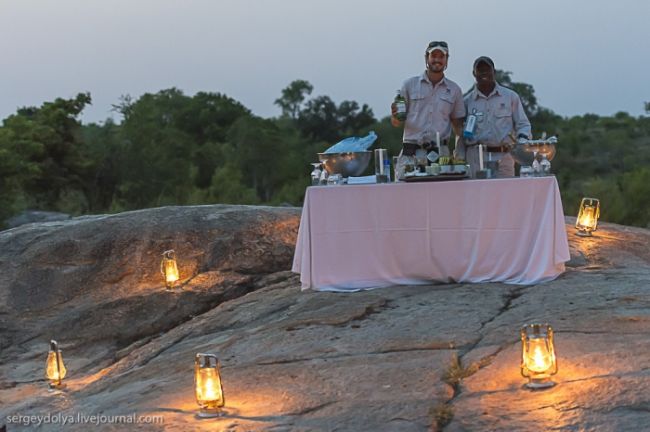
One evening we prepared a "grand piano in the bushes" - a sudden corner of civilization and African hospitality. The obligatory component of such a table is gin and tonic, which, according to legend, is considered an antidote for malaria:
Stay Tuned!
Find the Best Professionals for Your Project
Expert repair, construction, and renovation specialists ready to help you right now
Recommended articles
More articles:
 Vintage Vehicles
 “Twilight” received nominations in all categories of the “Golden Raspberry” award ceremony.
 Interesting Facts about Friendship
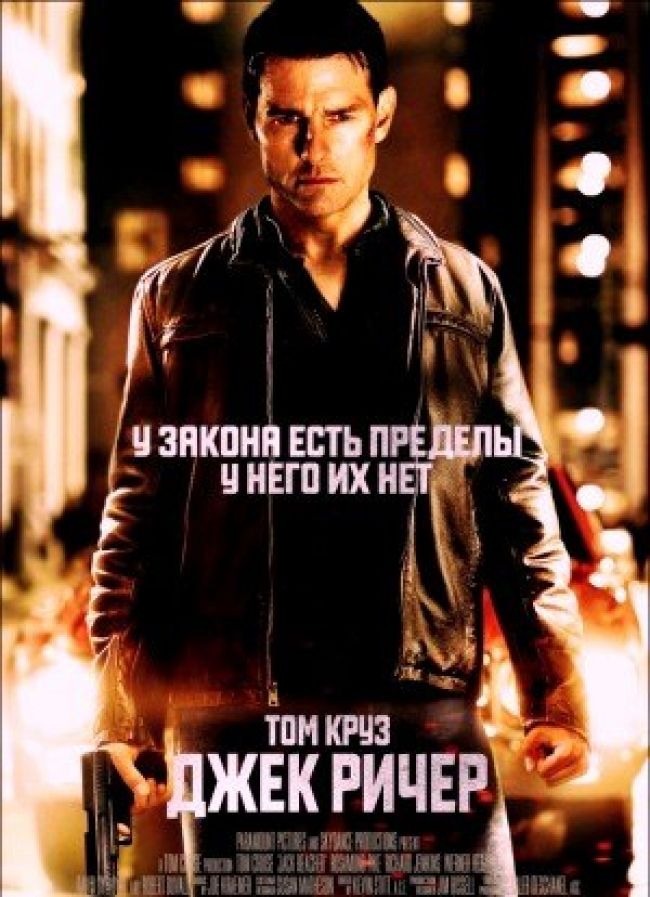 “Jack Reacher” starring Tom Cruise is released in theaters on January 10th.
 Nominations for the “Oscars” have been announced.
 Joseph Gordon-Levitt will appear in the sequel of "Sin City".
 Blade" will be rebooted without Wesley Snipes.
 Tolkin’s son condemns Peter Jackson’s film adaptations