The much-anticipated Crysis 2
Yes, it has happened. The long-awaited Crysis 2 has finally been released (in the United States), and, as is tradition, on the first day of its release, a flood of reviews of this new game appeared from various gaming media outlets. Nearly two dozen reviews have already been published by well-known reviewers. The average score for Crysis 2 on Metacritic is 87 out of 100. So far, no one has dared to give the game a score lower than “80”.
March 23, 2011 – that was the day Crysis 2 was released, the sequel to the most technologically advanced first-person shooter in the world! Without exaggeration, it was the most highly anticipated blockbuster of its genre. In 2007, German developers Crytek made a technological breakthrough in the gaming industry by introducing the fantastic first-person shooter Crysis. For four years thereafter, no one has been able to surpass it in terms of graphics; however, whether the gameplay was truly engaging is debatable. Nevertheless, the stunningly beautiful tropical island setting, the ability to destroy almost anything in your path, and especially the protagonist’s nanosuit ensured the long-lasting success of both the game and its powerful CryEngine 3 engine. Interestingly, since their debut with Far Cry in 2004, Crytek has consistently incorporated this “Cry” element into all their games. But enough about that… 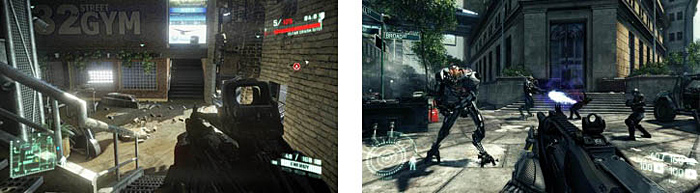 If you’re curious about how the story evolved, moving from the tropical jungle to a concrete metropolis and how the focus shifted from technological innovation to a Hollywood-style invasion of New York, then Crysis 2 will probably leave on you an impression similar to that of the second Transformers movie. It’s visually stunning and technically impressive… but only for once. On the other hand, those who want to compare it to the original game and see how far Germany has progressed in correcting its previous mistakes will find plenty to consider. Repeating the plot of the sequel is pointless; after all, it’s just another first-person sci-fi shooter set in a half-destructed New York under alien attack. The protagonist, equipped with the improved Nanosuit 2.0, must navigate through the chaos on the city streets. Completing Crysis 2 should take no more than 12 hours.
 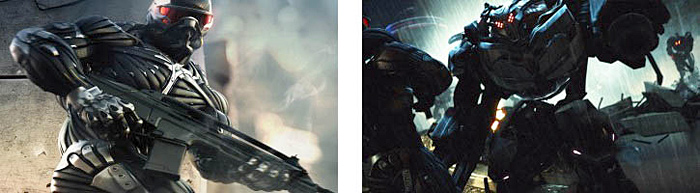 To enhance the cinematic feel and dynamic action reminiscent of Call of Duty, Crytek limited the player’s movement freedom, essentially adopting a rail shooter format. Given that the original game’s free-roaming system didn’t always work smoothly, this was a logical decision. Each level (there are around 15 in total) is filled with numerous objects that players can interact with, and some of them can even be examined using the scanner built into the helmet. According to the developers, this design is intended to immerse players further in the apocalyptic atmosphere. The story is gradually revealed through conversations with key characters, encounters with alien technologies, and the aforementioned scanning system. While their effort to make the game as engaging as possible is commendable, Crytek’s true strength lies in its technological innovations, not in its Hollywood-style storytelling. Therefore, whether it’s the numerous visual effects powered by the engine, the music composed by renowned composer Cimmer, or any other aspects, none of them truly matters when it comes to what makes a game great: the gameplay itself. In both Crysis games, it is the innovative Nanosuit that gives the protagonist the upper hand in battles. In this version, there’s no need to manually adjust settings for strength and speed, which makes fighting against hordes of enemies much easier. The ability to run fast, jump high, and become invisible makes shooting the enemies truly unique – and they are everywhere in this game. Unfortunately, the variety of enemies is rather limited: military patrols, occasional ambushes using jeeps and tanks, and just two types of aliens… that’s about it, compared to the flying “calamars” and identical-looking Korean characters in the first part.
 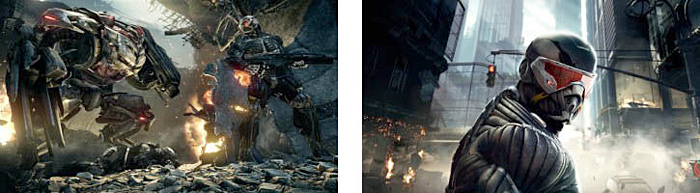 The arsenal is decent, but the developers stuck strictly within the genre’s conventions: standard pistols, shotguns, several rifles, a machine gun, and a bazooka. They also included a weirdly designed “nuclear cannon.” The minigun was removed, perhaps to enhance realism (though it doesn’t make much sense in a sci-fi setting) or because the protagonist, Alcatraz, can handle any enemy anyway. On the positive side, they added the cool ability to detach the machine gun from its base and use it to shoot at enemies from afar. Since the game’s setting has changed from a tropical island to a cluttered urban environment, vehicles are practically useless. The ability to drive cars or tanks is there merely for formality’s sake; they control just like toy models and offer no real interest to players.
 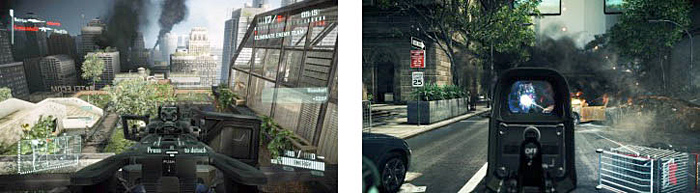 Overall, Crysis 2 differs from its predecessor in many ways, though it still retains one essential characteristic: it remains incredibly visually stunning and is still the most technologically advanced game of its time. Changing the setting to an urban environment allowed for better optimization; even with a mediocre computer, lag is virtually non-existent. Rendering a detailed city like New York with minimal damage effects is much easier than dealing with a tropical island filled with debris and countless destructible objects. Unfortunately, there are still some annoying flaws: occasionally appearing trees out of nowhere, poor texture rendering next to high-quality graphics, and sometimes glitchy physics. As for the enemies’ intelligence – which was promised to be the highest in game history – well, it’s far from perfect. They sometimes bump into walls, get stuck right in front of the player, and yet manage to avoid being hit by bullets even when fired at from all sides. Nevertheless, Crytek is moving in the right direction. Even if the in-game videos are somewhat forced (for true masterpieces, turn to Capcom), and the story itself is just another banal tale about a global war set in an American city, the progress made compared to the original game is undeniable. More characters, more diverse locations, a decent plot involving the protagonist and the Nanosuit, better music… And, of course, the best graphics in the genre – although at times Crysis 2 reminds me of F.E.A.R. 2 with its dark corridors and blurred visuals. Will people want to play it again? That’s a big question. But for a one-time experience, as a way to enjoy an expensive and visually stunning sci-fi shooter, it’s definitely worth it!
If you’re curious about how the story evolved, moving from the tropical jungle to a concrete metropolis and how the focus shifted from technological innovation to a Hollywood-style invasion of New York, then Crysis 2 will probably leave on you an impression similar to that of the second Transformers movie. It’s visually stunning and technically impressive… but only for once. On the other hand, those who want to compare it to the original game and see how far Germany has progressed in correcting its previous mistakes will find plenty to consider. Repeating the plot of the sequel is pointless; after all, it’s just another first-person sci-fi shooter set in a half-destructed New York under alien attack. The protagonist, equipped with the improved Nanosuit 2.0, must navigate through the chaos on the city streets. Completing Crysis 2 should take no more than 12 hours. To enhance the cinematic feel and dynamic action reminiscent of Call of Duty, Crytek limited the player’s movement freedom, essentially adopting a rail shooter format. Given that the original game’s free-roaming system didn’t always work smoothly, this was a logical decision. Each level (there are around 15 in total) is filled with numerous objects that players can interact with, and some of them can even be examined using the scanner built into the helmet. According to the developers, this design is intended to immerse players further in the apocalyptic atmosphere. The story is gradually revealed through conversations with key characters, encounters with alien technologies, and the aforementioned scanning system. While their effort to make the game as engaging as possible is commendable, Crytek’s true strength lies in its technological innovations, not in its Hollywood-style storytelling. Therefore, whether it’s the numerous visual effects powered by the engine, the music composed by renowned composer Cimmer, or any other aspects, none of them truly matters when it comes to what makes a game great: the gameplay itself. In both Crysis games, it is the innovative Nanosuit that gives the protagonist the upper hand in battles. In this version, there’s no need to manually adjust settings for strength and speed, which makes fighting against hordes of enemies much easier. The ability to run fast, jump high, and become invisible makes shooting the enemies truly unique – and they are everywhere in this game. Unfortunately, the variety of enemies is rather limited: military patrols, occasional ambushes using jeeps and tanks, and just two types of aliens… that’s about it, compared to the flying “calamars” and identical-looking Korean characters in the first part. The arsenal is decent, but the developers stuck strictly within the genre’s conventions: standard pistols, shotguns, several rifles, a machine gun, and a bazooka. They also included a weirdly designed “nuclear cannon.” The minigun was removed, perhaps to enhance realism (though it doesn’t make much sense in a sci-fi setting) or because the protagonist, Alcatraz, can handle any enemy anyway. On the positive side, they added the cool ability to detach the machine gun from its base and use it to shoot at enemies from afar. Since the game’s setting has changed from a tropical island to a cluttered urban environment, vehicles are practically useless. The ability to drive cars or tanks is there merely for formality’s sake; they control just like toy models and offer no real interest to players. Overall, Crysis 2 differs from its predecessor in many ways, though it still retains one essential characteristic: it remains incredibly visually stunning and is still the most technologically advanced game of its time. Changing the setting to an urban environment allowed for better optimization; even with a mediocre computer, lag is virtually non-existent. Rendering a detailed city like New York with minimal damage effects is much easier than dealing with a tropical island filled with debris and countless destructible objects. Unfortunately, there are still some annoying flaws: occasionally appearing trees out of nowhere, poor texture rendering next to high-quality graphics, and sometimes glitchy physics. As for the enemies’ intelligence – which was promised to be the highest in game history – well, it’s far from perfect. They sometimes bump into walls, get stuck right in front of the player, and yet manage to avoid being hit by bullets even when fired at from all sides. Nevertheless, Crytek is moving in the right direction. Even if the in-game videos are somewhat forced (for true masterpieces, turn to Capcom), and the story itself is just another banal tale about a global war set in an American city, the progress made compared to the original game is undeniable. More characters, more diverse locations, a decent plot involving the protagonist and the Nanosuit, better music… And, of course, the best graphics in the genre – although at times Crysis 2 reminds me of F.E.A.R. 2 with its dark corridors and blurred visuals. Will people want to play it again? That’s a big question. But for a one-time experience, as a way to enjoy an expensive and visually stunning sci-fi shooter, it’s definitely worth it!Find the Best Professionals for Your Project
Expert repair, construction, and renovation specialists ready to help you right now
Recommended articles
More articles:
 Packing up the suitcases!
 Friday the 13th… Are you ready?
 Mmmmm… You’re going to end up kissing the monitor!
 The same color throughout both winter and summer.
 NEW RELEASES IN UKRAINE’S CINEMATOGRAPHICAL INDUSTRY
 10 of the Best Domestic Films
 What stands out about last football season?
 NEW RELEASES IN THE THEATRES: September 9th