DK “Pishchevik”6 photos
DK “Pishchevik”
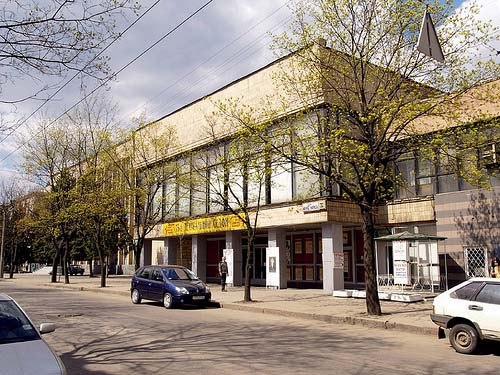
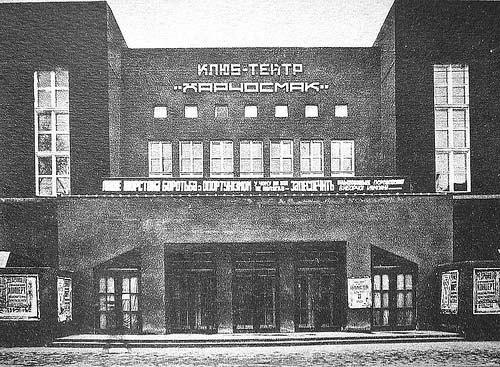
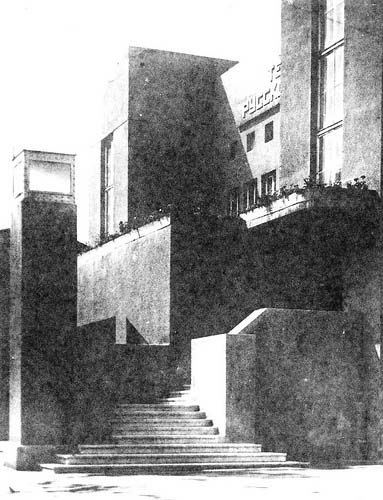
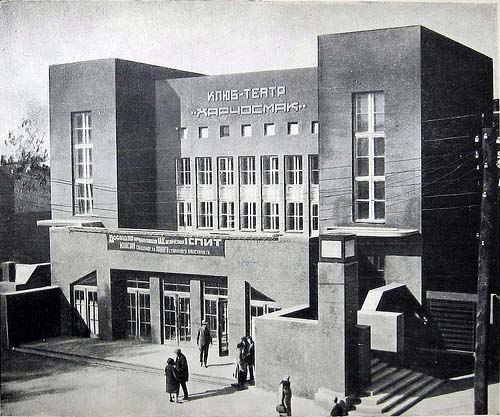
In 1926, the union “Kharchosmak” decided to build its central club on the site of the former “Tivoli” garden. In 1929, the technical and construction committee under the Ukrainian Soviet Socialist Republic’s Ministry of Internal Affairs reviewed the architectural design submitted by architect A.V. Linetsky and granted permission to proceed with the construction work.
On May 2, 1930, the club-theater was officially opened in a ceremony held to mark this occasion.
The building, constructed in the style of constructivism, housed a large auditorium with a stage designed for performances by professional artists and amateur performers, as well as lecture halls, sports facilities, and rooms for playing chess, table tennis, and billiards. It also contained well-equipped spaces for artistic groups to use for their activities.<
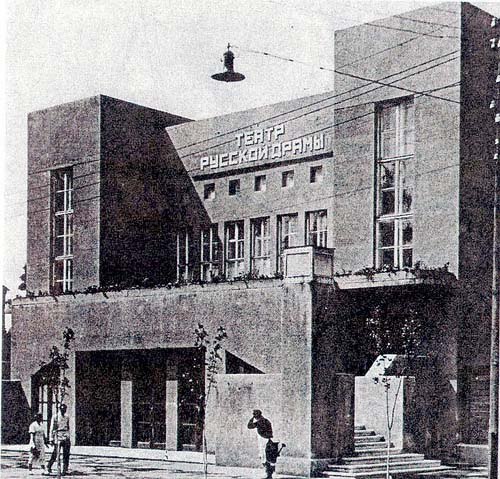
Due to the excellent acoustics and advanced stage facilities, the building was often used by professional theaters when needed. Such necessity arose frequently in the club’s history. Before the war (1939–1941), the Russian Drama Theater, which had been closed in 1926, reopened here in 1939.
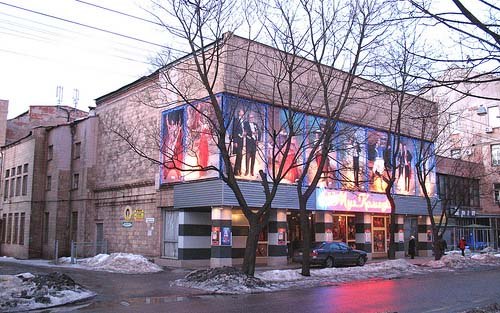
After the liberation of Kharkov, the building was temporarily used for railway station-related purposes. Once the new railway station was completed, it was returned to the “Pishchevik” union and underwent reconstruction. In 1974, a second round of renovations was carried out, altering the facade, expanding the lobby, and increasing the seating capacity of the auditorium.
#1solica_history
In 1926, the union “Kharchosmak” decided to build its central club on the site of the former “Tivoli” garden. In 1929, the technical and construction committee under the Ukrainian Soviet Socialist Republic’s Ministry of Internal Affairs reviewed the architectural design submitted by architect A.V. Linetsky and granted permission to proceed with the construction work.
On May 2, 1930, the club-theater was officially opened in a ceremony held to mark this occasion.
The building, constructed in the style of constructivism, housed a large auditorium with a stage designed for performances by professional artists and amateur performers, as well as lecture halls, sports facilities, and rooms for playing chess, table tennis, and billiards. It also contained well-equipped spaces for artistic groups to use for their activities.<
Due to the excellent acoustics and advanced stage facilities, the building was often used by professional theaters when needed. Such necessity arose frequently in the club’s history. Before the war (1939–1941), the Russian Drama Theater, which had been closed in 1926, reopened here in 1939.
After the liberation of Kharkov, the building was temporarily used for railway station-related purposes. Once the new railway station was completed, it was returned to the “Pishchevik” union and underwent reconstruction. In 1974, a second round of renovations was carried out, altering the facade, expanding the lobby, and increasing the seating capacity of the auditorium.
#1solica_history
Find the Best Professionals for Your Project
Expert repair, construction, and renovation specialists ready to help you right now
Recommended Galleries
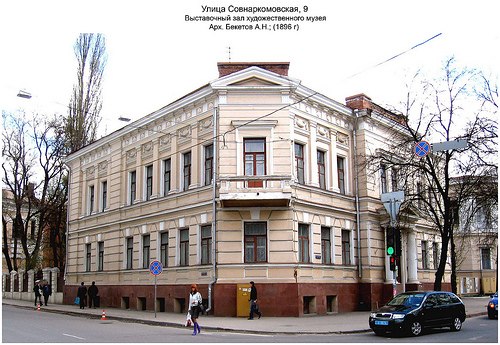
Corner of Sovnarkoomovskaya Street and Chernyshevsky Street, 18.
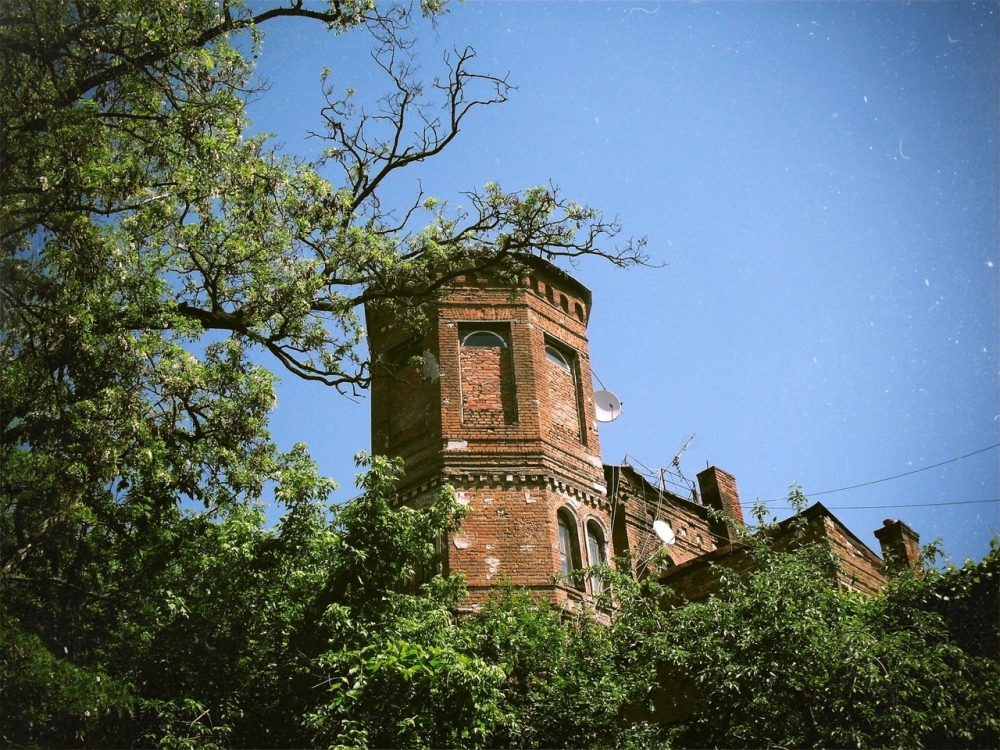
The courtyards in Kharkiv contain many interesting houses and places. One such courtyard is located in Summerovskiy Alley. It intersects with Kravtsov Street and is situated approximately in the middle, between Klokchkovska Street and Rymskaya Street. It was established…
#### Student Town „Giant“
#### Construction Boom 100 Years Ago
Recommended articles



More Galleries
- Corner of Sovnarkoomovskaya Street and Chernyshevsky Street, 18.
- The courtyards in Kharkiv contain many interesting houses and places. One such courtyard is located in Summerovskiy Alley. It intersects with Kravtsov Street and is situated approximately in the middle, between Klokchkovska Street and Rymskaya Street. It was established…
- #### Student Town „Giant“
- #### Construction Boom 100 Years Ago
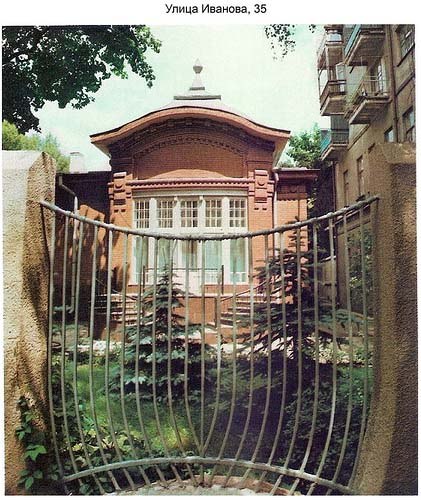 35 Ivanova Street
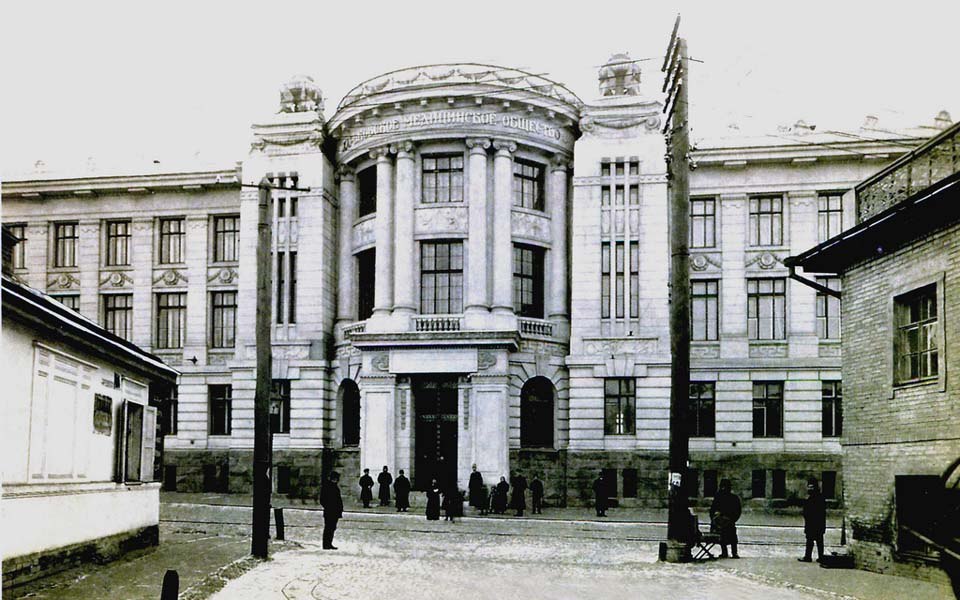 Pushkinskaya 16
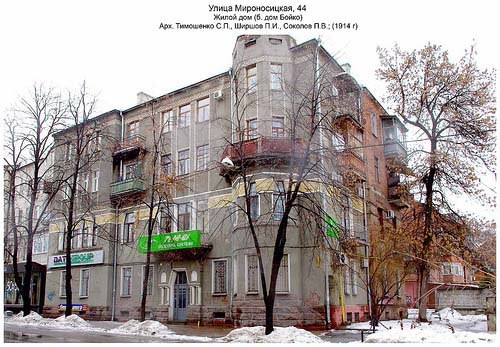 Mironosinskaya 44
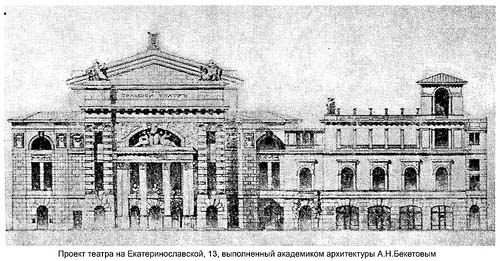 Poltava Road, No. 13
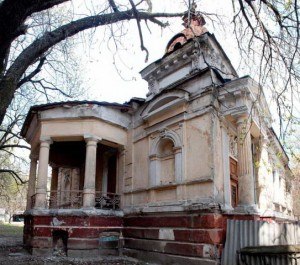 The Surukchi House – a mansion where F. I. Shalyapin stayed for many years.
 assistant
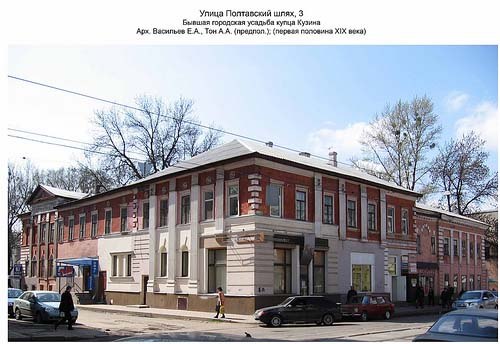 Poltava Street, 3 (formerly Ekaterinoslavskaya Street)
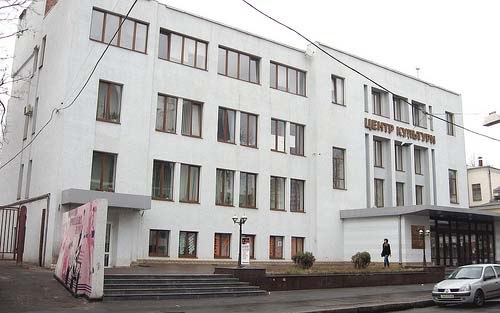 Staff Communications Club ("Communication Club")