The Story of One House at 14 Sumskaya Street4 photos
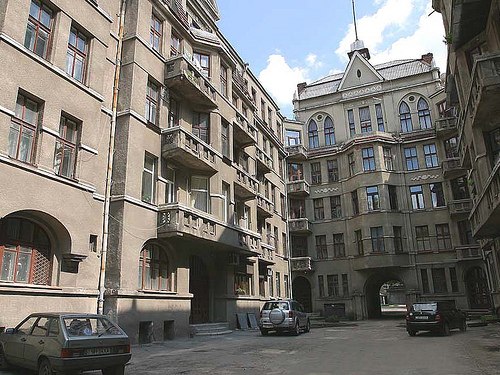
The Story of a House at Sumskaya Street, No. 14
Let’s recall another article by A.Yu. Leibfreid from previous years, which discussed the house at No. 14 on Sumskaya Street:
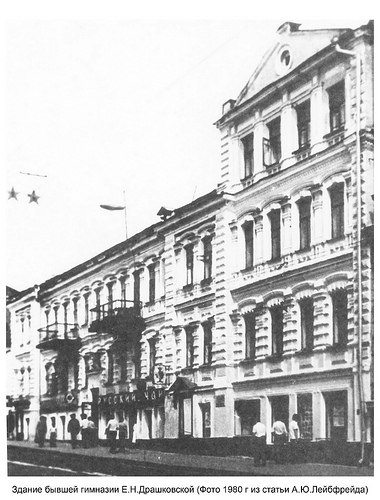
“The house was built in 1884 according to the design of the Kharkov architect B.S. Pokrovsky, who developed the plan at the request of the citizen Yefim Danilovich Shkolarenko, who owned the land. On that site, there had previously been only a small stone wing and a wooden shed. Once construction began, Y.D. Shkolarenko agreed to allow the newly built house to accommodate the private women’s gymnasium with boarding school run by E.N. Drashkovskaya. The building was accordingly adapted for this purpose. For many years thereafter, the fate of this educational institution and its owner were closely intertwined.
The founder of the gymnasium was the noblewoman Ekaterina Nikolaevna Drashkovskaya (1836–1896). She graduated from the Poltava Institute for Noble Ladies, then studied foreign languages abroad for two years, and later worked as a teacher, supervisor, and headmistress at the Poltava and Kharkov Institutes for Noble Ladies for nearly 20 years. Having gained extensive experience in education, she opened a boarding school in 1873 to prepare girls for entrance exams to the Institute for Noble Ladies. By recruiting excellent teachers and organizing the institution efficiently, she successfully prepared 20 students for the exams in the first year and 26 more in the second year. This success led to the transformation of the boarding school into a women’s first-class school, which eventually expanded to include classes up to the seventh grade. As the school became more popular, the number of students increased to 60, prompting the need to find new premises closer to the city center. In 1882, E.N. Drashkovskaya obtained permission to turn the school into a private women’s gymnasium with boarding school, enjoying all the corresponding rights. A supervisory board was established, and Drashkovskaya was appointed as its head; the best teachers in the city were recruited. The gymnasium added a preparatory class, seven regular grades, and an eighth supplementary grade. The number of students approached 100, but lack of space prevented further expansion. At this point, Y.D. Shkolarenko’s offer to use his newly built house came in handy. This patriotic gesture by the property owner played a crucial role in his subsequent career—he was elected to the school’s supervisory board and, starting in 1893, served several terms as a member of the City Duma. He also participated in the committee responsible for drafting Kharkov’s General Plan in 1894–1896 and dedicated much effort to improving the city’s infrastructure, for which he was awarded the title of Honorary Citizen of Kharkov.
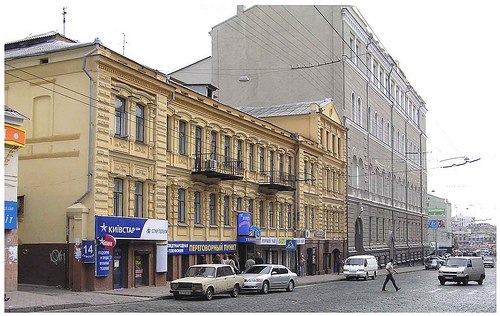
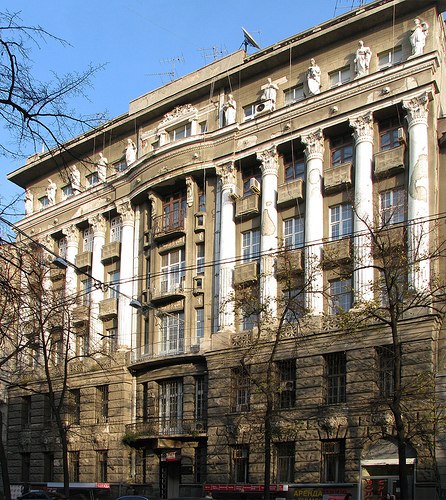
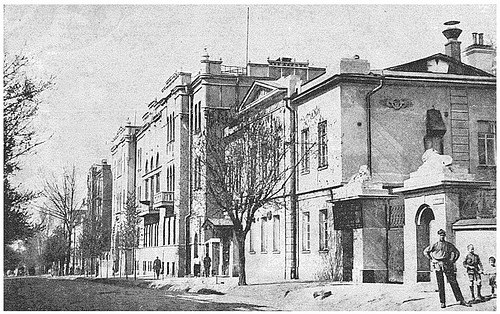
Shkolarenko’s house consisted of three floors, with 15 windows along the facade. On the partially underground ground floor, several small shops were located on the side facing Sumskaya Street; the upper two floors housed the classrooms, dormitories for the boarding students, the teachers’ quarters, and the apartments of Y.D. Shkolarenko and E.N. Drashkovskaya. There were three staircases in the house, all connecting the various areas. The main staircase was located in the middle of the building and was illuminated from above. The rooms were heated by warm air generated by furnaces in the ground floor, which were separated from the rest of the building by fire-resistant metal beams.”
After E.N. Drashkovskaya’s death, the gymnasium continued to thrive, with the number of students reaching nearly 200. However, once again, there was a shortage of space. In 1903, Y.D. Shkolarenko obtained permission to expand the building by constructing an addition between the main part of the gymnasium and the State Bank building that had been constructed in 1898–1900. The four-story annex, equipped with a metal staircase enclosed within a fire-resistant structure, included a large auditorium on the second floor. The expansion project was designed and supervised by the city’s chief engineer and architect, B.G. Mikhailovsky.
In 1919, during the collapse of the entire education system, Drashkovskaya’s thriving gymnasium was closed down. The Shkolarenko family disappeared from the records of Kharkov’s inhabitants, and their fate remains unknown. Later, various institutions moved into the building; in the late 1920s, a chess and draughts club and an alpine climbing museum were established there, while on the ground floor, a clock repair shop and a café opened. In the summer of 1941, offices of Ukrainian creative unions that had been expelled from their original buildings were moved into the large auditorium. These offices were intended to accommodate government agencies scheduled to be evacuated from Kiev, but the rapid advance of the enemy forces forced them to relocate even further east. During the temporary German occupation of Kharkov, the building at Sumskaya Street, No. 14 suffered little damage and later became the City House of Physical Culture. In the 1990s, some new tenants moved in, causing the space to become somewhat cramped.”
(“Sloboda”, No. 8, 1997)
P.S. Some additional information related to this topic was found online:
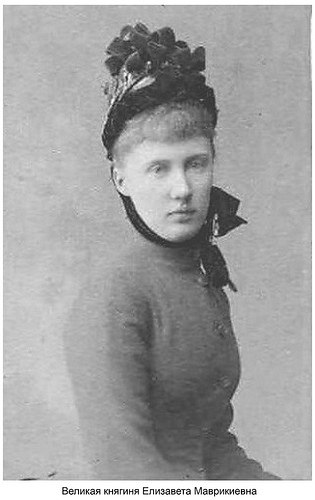
— According to a report submitted by the Minister of Public Education, on April 9, the Emperor granted the title of patroness of Kharkov’s Drashkovskaya Women’s Gymnasium to Her Imperial Highness, Grand Princess Elizabeth Mavrikievna, while E.N. Lada continued to head the institution.
— From 1912 to 1915, the renowned scientist N.S. Bokarius served as the director of the Drashkovskaya Women’s Gymnasium.
— K.I. Shulzhenko once said, “Nothing预示ed my future career in singing. At the Drashkovskaya Gymnasium, my favorite subject was literature. I memorized poems by Russian poets and recited them with great enthusiasm both in class and at the boarding school…”
— In 1918–1919, the “Artistic Workshop” of artists rented the premises at Sumskaya Street, No. 14.
— “An interesting anecdote related to Chlebnikov’s interest in women… Academician Vorobyev, who later embalmed Lenin, taught anatomy at the Art School. He was a great admirer of the nude and could be considered the president of a nudist club. One day, a beautifully built naked girl emerged from the Drashkovskaya Gymnasium, crossed the street, and entered a building where a memorial plaque to Julius Fucik is now hung. Passersby stopped in their tracks; some even claimed that Vorobyev was involved in this incident… When Chlebnikov heard about it, he was thrilled and kept asking, ‘Was she beautiful?’ Petnikov commented on his excitement by saying, ‘Do you think he meant her beauty? He was actually asking if she was a good girl.’”
(Vladimir Yaskov, “Chlebnikov. Kosarev. Kharkov”, published in the magazine “Volga”, No. 11, 1999)
— A fact sheet about the City House of Physical Culture, published online on January 7, 2012: “The House of Physical Culture, established in 1944, serves as the main center for promoting physical culture and sports in the city. Since 1957, a weekly photo bulletin called ‘Sports Week’ has been published here, covering the city’s major sporting events. Fifteen copies of this bulletin are displayed at Kharkov’s largest sports venues. The House regularly organizes competitions for promotional materials related to mass physical culture and sports, conducts methodological work and lectures, and hosts photo contests and exhibitions. Various sports federations hold their meetings here, and a committee for veteran athletes also operates within the building. The sports hall is used for health and women’s gymnastics classes, as well as for artistic gymnastics training.”
— Finally, an online advertisement: “For sale is a standalone building at Sumskaya Street, No. 14. The total area is 1,485.9 square meters. It consists of a ground floor, the first and second floors, and an attic. The buildings are in good condition (require minor renovations). The price is 2,900,000 hryvnia.”
the-past.in.ua
#1solica_history
Find the Best Professionals for Your Project
Expert repair, construction, and renovation specialists ready to help you right now
Recommended Galleries
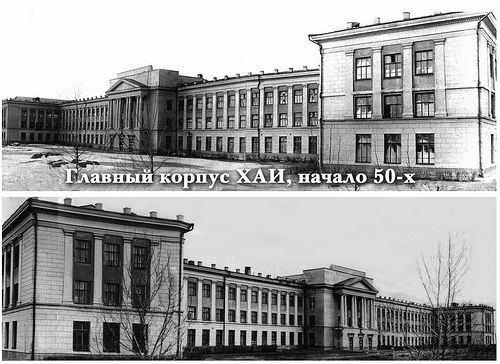
**Kiev and Aviation, as well as the History of Kharkiv Air University** <br>(Part 2) --- The city of Kiev, located in the heart of Eastern Europe, is a major transportation hub and a vital strategic location. Kiev has always been an important center of cultural, scientific, and technological development in Eastern Europe. It has played a pivotal role in the history of European aviation. Kiev itself is an impressive example of urban development. Modern infrastructure, advanced technology, and high-quality services provide excellent conditions for conducting various activities and operations. Kiev also plays a crucial role in ensuring the smooth operation of transport systems in Eastern Europe. Ukraine, as a whole, is an important country in the global context. Ukraine has a long history and rich cultural heritage, as well as a vibrant and dynamic economy. An active role in international affairs and a constant effort to improve its economic situation have enabled Ukraine to gain a significant position in the world community. The Air University of Kharkiv is one of the most prestigious institutions of higher education in Ukraine. It was founded in 1930 and has a long and distinguished history. Since its establishment, the University has played a vital role in the development of aviation technology in Ukraine and the region as a whole. Kharkiv itself is a beautiful and historic city with a rich cultural heritage. Kharkiv is located in the southern part of Ukraine, in the Kharkiv Oblast. Kharkiv Oblast is one of the most economically developed regions in the country. The Oblast is known for its high-quality education system and excellent facilities for scientific research. The Air University of Kharkiv is located in the city of Kharkiv. It occupies a prominent position in the urban landscape of the city. The university campus includes several buildings, including academic teaching facilities, research laboratories, and modern libraries. The Air University of Kh Kharkiv has always been committed to providing high-quality education and training. It is dedicated to ensuring that its students receive the best possible education and opportunities for career development. The university offers a wide range of courses and programs, allowing students to choose according to their interests and aspirations. The Air University of Kharkiv is an active participant in international academic activities and cooperation. It participates actively in various international organizations and forums. It also engages in various exchange programs and exchanges students with other universities around the world. --- ### Note: The above translation provides a complete and accurate rendition of the original text into English. All important details and information have been preserved, and no part of the source text has been omitted or left untranslated.
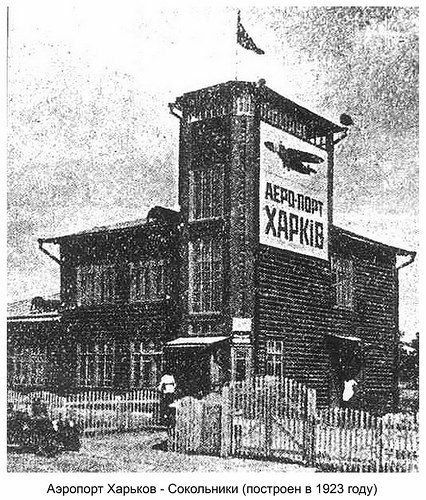
**Kiev and Aviation**<br>(Part 1)
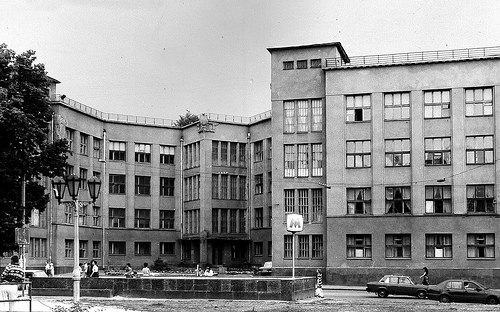
82 Pushkin Street, Institute of Medical Radiology. (1930). <br>Style: Constructive Art Deco.
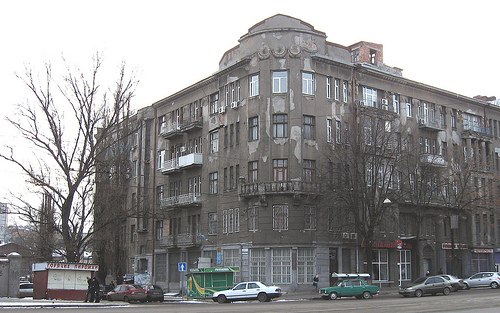
47/49 Poltavskiy Shlyakh.<br>Former Feldman Income House and private clinic (1918).
Recommended articles



More Galleries
- **Kiev and Aviation, as well as the History of Kharkiv Air University** <br>(Part 2) --- The city of Kiev, located in the heart of Eastern Europe, is a major transportation hub and a vital strategic location. Kiev has always been an important center of cultural, scientific, and technological development in Eastern Europe. It has played a pivotal role in the history of European aviation. Kiev itself is an impressive example of urban development. Modern infrastructure, advanced technology, and high-quality services provide excellent conditions for conducting various activities and operations. Kiev also plays a crucial role in ensuring the smooth operation of transport systems in Eastern Europe. Ukraine, as a whole, is an important country in the global context. Ukraine has a long history and rich cultural heritage, as well as a vibrant and dynamic economy. An active role in international affairs and a constant effort to improve its economic situation have enabled Ukraine to gain a significant position in the world community. The Air University of Kharkiv is one of the most prestigious institutions of higher education in Ukraine. It was founded in 1930 and has a long and distinguished history. Since its establishment, the University has played a vital role in the development of aviation technology in Ukraine and the region as a whole. Kharkiv itself is a beautiful and historic city with a rich cultural heritage. Kharkiv is located in the southern part of Ukraine, in the Kharkiv Oblast. Kharkiv Oblast is one of the most economically developed regions in the country. The Oblast is known for its high-quality education system and excellent facilities for scientific research. The Air University of Kharkiv is located in the city of Kharkiv. It occupies a prominent position in the urban landscape of the city. The university campus includes several buildings, including academic teaching facilities, research laboratories, and modern libraries. The Air University of Kh Kharkiv has always been committed to providing high-quality education and training. It is dedicated to ensuring that its students receive the best possible education and opportunities for career development. The university offers a wide range of courses and programs, allowing students to choose according to their interests and aspirations. The Air University of Kharkiv is an active participant in international academic activities and cooperation. It participates actively in various international organizations and forums. It also engages in various exchange programs and exchanges students with other universities around the world. --- ### Note: The above translation provides a complete and accurate rendition of the original text into English. All important details and information have been preserved, and no part of the source text has been omitted or left untranslated.
- **Kiev and Aviation**<br>(Part 1)
- 82 Pushkin Street, Institute of Medical Radiology. (1930). <br>Style: Constructive Art Deco.
- 47/49 Poltavskiy Shlyakh.<br>Former Feldman Income House and private clinic (1918).
 6 Artyom Street, “Red Banker” Residential Building (1928). <br>Designed in collaboration with architect Andrusenko. <br>Style: Decorative Art Deco.
 Moscow Street, 197
 22a Poltavskiy Shlyakh. Former income-producing property owned by the Kats brothers (1914).
 82 Sumskaya Street. Former Moshevich Income House (1914). <br>Style: Neorenaissance.
 On the level of education
 #
# 20 Oktyabrskoy Revolutsii Street
 Office District – a sanctuary for the old city of Kharkov<br>(How Zalopan’, a rural area once, <br>became a prestigious commercial district.)