**Kiev and Aviation**<br>(Part 1)8 photos
Kharkov and Aviation
(Part 1)
Aviation plays a very important role in the life of Kharkov, not only as a means of transportation but also as the site of operations for numerous industrial enterprises, scientific research organizations, and educational institutions, which significantly influences the city’s development plans.
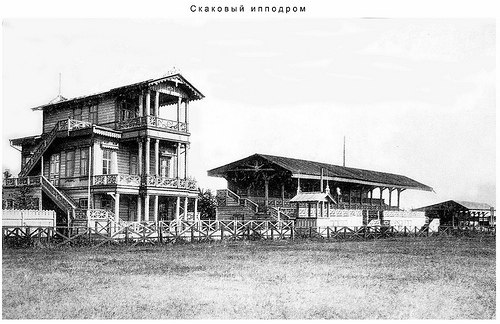
The birthplace of aviation in Kharkov was the former racetrack, located in the northern part of the city, near the Belgorod highway.
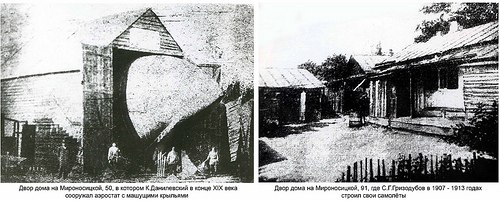
In 1874, the aviator M. Lavrentyev conducted demonstration flights there using an airship of his own design. In 1897–1898, Dr. K. Danilevsky, a medical scientist and inventor, tested aircraft with moving wings; he collaborated with mechanic K. Koskov in designing these models in the backyard of his house at No. 50 Mironositskaya Street.
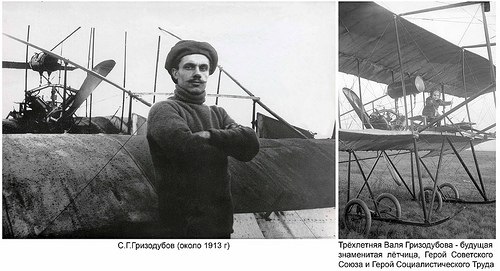
At the beginning of the 20th century, as the era of aircraft began, demonstration flights by famous local and visiting pilots—S. Zaykin, S. Utotchkin, V. Dubovskiy, and others, including Kharkovite S. G. Grizodubov, a designer and aviator whose name holds a place of honor in the history of Russian aviation—were held at this racetrack from 1910 to 1914, in front of large crowds.
In 1907, S. G. Grizodubov displayed his first airplane, built in 1907–1908, in the backyard of his house at No. 91 Mironositskaya Street. In May 1911, he took to the air for the first time at the racetrack aboard an G-3 model.
Engineer A. K. Lelye, a contemporary of Grizodubov and owner of a mechanical workshop at No. 6 Voskresenskaya Square, also attempted to build an airplane, but it failed to take off. Public interest in this new field was further stirred in 1907 when the Bommer brothers’ oldest cinema in Kharkov (now the Dzerzhinsky Cinema on Sverdlov Street) showed a film about the Wright brothers’ flights.
In 1909, under the auspices of the Technical Society of students at Kharkov Technological Institute, an aviation section was established where scientific research in the field of aeronautics was conducted under the leadership of future academician G. F. Proskura.
In 1910, the Kharkov branch of the Russian Chemical Society set up an aviation department led by enthusiastic volunteers—engineers V. E. Morokhovets and G. L. Okulich-Kazarin. From August 23 to September 14, 1911, the first Ukrainian aviation exhibition was held in a building at No. 18 Sumskaya Street, where aircraft of various types were displayed, including I. I. Sikorsky’s plane. The designer and pilot, who was from Kyiv, served as a guest of honor at the exhibition, which attracted 8,500 visitors. In 1911–1912, the department published a monthly magazine called “Heavy Air,” established a pilot training school, and founded the first Ukrainian aviation club.
During the First World War and the revolution that followed, the development of aviation was driven by military needs. A new phase began in 1923 when the joint-stock company Ukravоздухпуть was established in Kharkov, then the capital of Ukraine. Regular postal and passenger flights between Kharkov and other cities commenced in 1924.
The former racetrack, now devoid of stands, was converted into an airfield, where hangars and workshops were built.
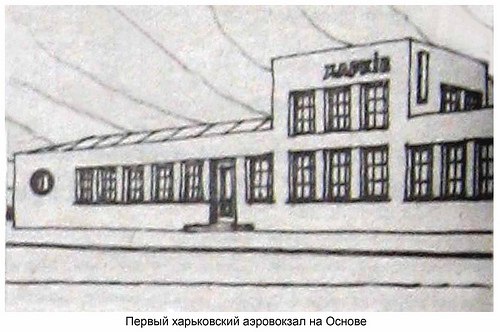
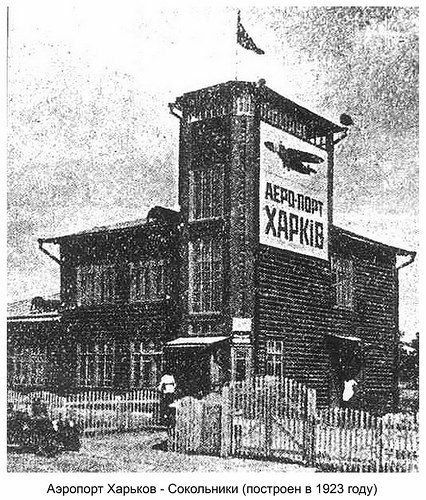
However, the growth of air traffic and the development of aviation technology made it necessary to build a new, more modern airport. A site was selected on the southern outskirts of the city, near the Osnova railway station. By 1928, a small terminal building and various supporting facilities had been constructed there.
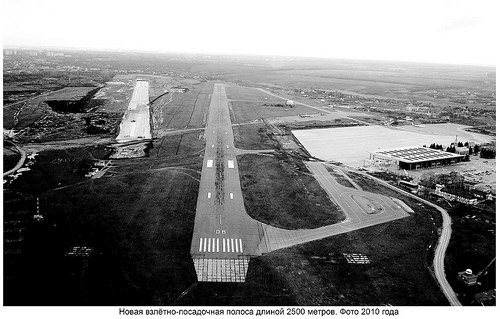
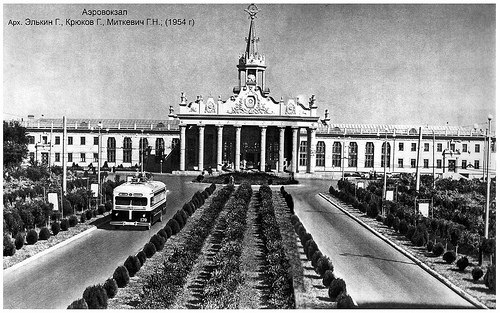
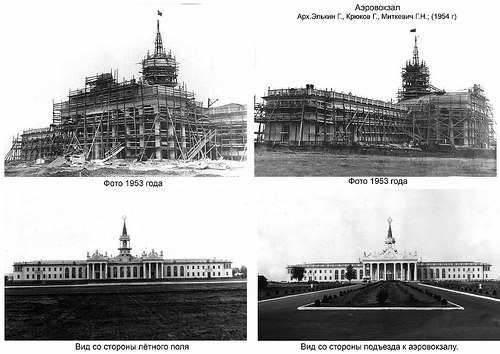
During the 1941–1945 war, all these facilities were destroyed, and the airport had to be rebuilt from scratch: a concrete runway was constructed, and by 1954, a beautiful new terminal building was completed. A well-developed aviation town with numerous supporting structures also emerged.
However, even this new airport soon began to show signs of wear and tear, and despite major renovations, it was unable to handle long-distance and international flights or accommodate modern large passenger and cargo aircraft.
Finding a location for a new high-class airport that meets safety and environmental standards has proven an extremely difficult task—research on this issue has been ongoing for over twenty years. A potentially suitable site was identified in the Poleyva area of the Derzhachivsky District, but several preliminary design proposals were never realized due to a lack of sufficient funding. Currently, a new option is being considered: building the airport on the existing military airfield in Chuhuiv. Time will tell how this vital issue for Kharkov will be resolved. It is likely that the current airport will continue to operate for some time, but only with limited capabilities—something evident from the experiences of other cities, as well as the fate of Kharkov’s first military airfield, which served as the foundation for the local aviation industry in 1926. The first director and chief designer of this airfield was the renowned aircraft engineer K. A. Kalinin.
vk.cc/YAELB
#1stolica_history
(Part 1)
Aviation plays a very important role in the life of Kharkov, not only as a means of transportation but also as the site of operations for numerous industrial enterprises, scientific research organizations, and educational institutions, which significantly influences the city’s development plans.
The birthplace of aviation in Kharkov was the former racetrack, located in the northern part of the city, near the Belgorod highway.
In 1874, the aviator M. Lavrentyev conducted demonstration flights there using an airship of his own design. In 1897–1898, Dr. K. Danilevsky, a medical scientist and inventor, tested aircraft with moving wings; he collaborated with mechanic K. Koskov in designing these models in the backyard of his house at No. 50 Mironositskaya Street.
At the beginning of the 20th century, as the era of aircraft began, demonstration flights by famous local and visiting pilots—S. Zaykin, S. Utotchkin, V. Dubovskiy, and others, including Kharkovite S. G. Grizodubov, a designer and aviator whose name holds a place of honor in the history of Russian aviation—were held at this racetrack from 1910 to 1914, in front of large crowds.
In 1907, S. G. Grizodubov displayed his first airplane, built in 1907–1908, in the backyard of his house at No. 91 Mironositskaya Street. In May 1911, he took to the air for the first time at the racetrack aboard an G-3 model.
Engineer A. K. Lelye, a contemporary of Grizodubov and owner of a mechanical workshop at No. 6 Voskresenskaya Square, also attempted to build an airplane, but it failed to take off. Public interest in this new field was further stirred in 1907 when the Bommer brothers’ oldest cinema in Kharkov (now the Dzerzhinsky Cinema on Sverdlov Street) showed a film about the Wright brothers’ flights.
In 1909, under the auspices of the Technical Society of students at Kharkov Technological Institute, an aviation section was established where scientific research in the field of aeronautics was conducted under the leadership of future academician G. F. Proskura.
In 1910, the Kharkov branch of the Russian Chemical Society set up an aviation department led by enthusiastic volunteers—engineers V. E. Morokhovets and G. L. Okulich-Kazarin. From August 23 to September 14, 1911, the first Ukrainian aviation exhibition was held in a building at No. 18 Sumskaya Street, where aircraft of various types were displayed, including I. I. Sikorsky’s plane. The designer and pilot, who was from Kyiv, served as a guest of honor at the exhibition, which attracted 8,500 visitors. In 1911–1912, the department published a monthly magazine called “Heavy Air,” established a pilot training school, and founded the first Ukrainian aviation club.
During the First World War and the revolution that followed, the development of aviation was driven by military needs. A new phase began in 1923 when the joint-stock company Ukravоздухпуть was established in Kharkov, then the capital of Ukraine. Regular postal and passenger flights between Kharkov and other cities commenced in 1924.
The former racetrack, now devoid of stands, was converted into an airfield, where hangars and workshops were built.
However, the growth of air traffic and the development of aviation technology made it necessary to build a new, more modern airport. A site was selected on the southern outskirts of the city, near the Osnova railway station. By 1928, a small terminal building and various supporting facilities had been constructed there.
During the 1941–1945 war, all these facilities were destroyed, and the airport had to be rebuilt from scratch: a concrete runway was constructed, and by 1954, a beautiful new terminal building was completed. A well-developed aviation town with numerous supporting structures also emerged.
However, even this new airport soon began to show signs of wear and tear, and despite major renovations, it was unable to handle long-distance and international flights or accommodate modern large passenger and cargo aircraft.
Finding a location for a new high-class airport that meets safety and environmental standards has proven an extremely difficult task—research on this issue has been ongoing for over twenty years. A potentially suitable site was identified in the Poleyva area of the Derzhachivsky District, but several preliminary design proposals were never realized due to a lack of sufficient funding. Currently, a new option is being considered: building the airport on the existing military airfield in Chuhuiv. Time will tell how this vital issue for Kharkov will be resolved. It is likely that the current airport will continue to operate for some time, but only with limited capabilities—something evident from the experiences of other cities, as well as the fate of Kharkov’s first military airfield, which served as the foundation for the local aviation industry in 1926. The first director and chief designer of this airfield was the renowned aircraft engineer K. A. Kalinin.
vk.cc/YAELB
#1stolica_history
Find the Best Professionals for Your Project
Expert repair, construction, and renovation specialists ready to help you right now
Recommended Galleries
Recommended articles



More Galleries
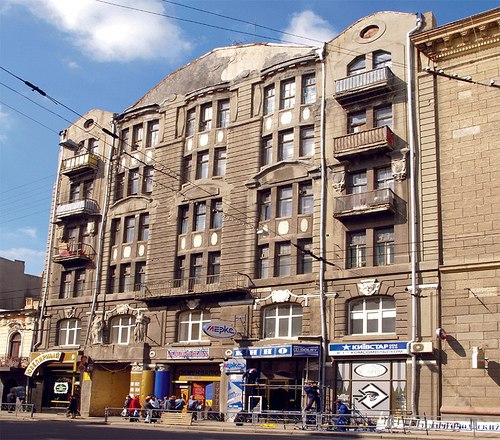 The former apartment building owned by Haritonov and the “Amper” cinema. Designed by architect A.I. Gorokhov (1913). Location: Sumskaya Street, 5.
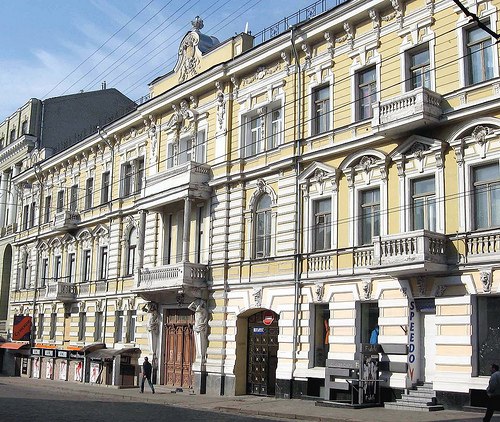 Former income-generating property of the “Life” Insurance Company.<br>(19 Sumskaya Street)
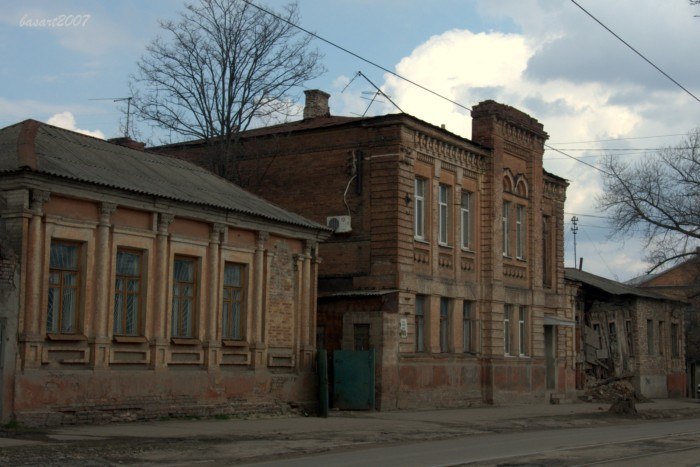 Vasily Krichevsky and Moskalievka
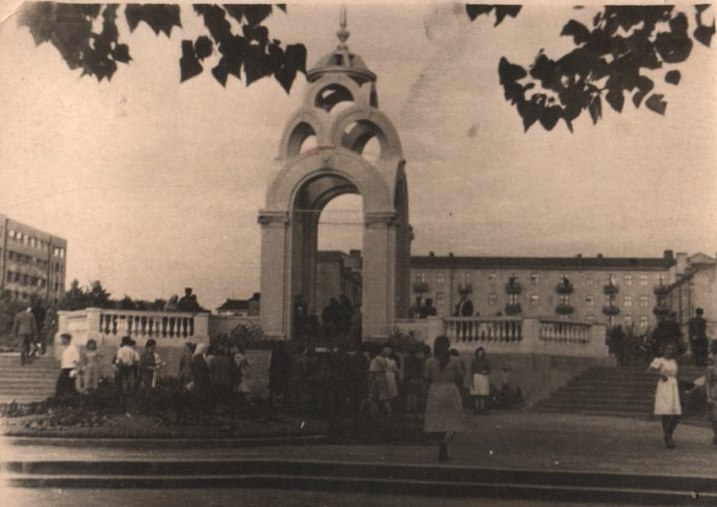 Glass Stream
 Vladimir Mayakovsky and Kharkov.
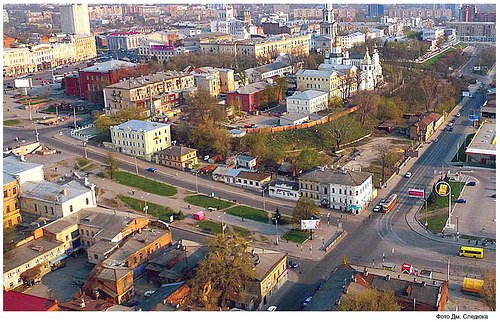 Bursaatsky Slope
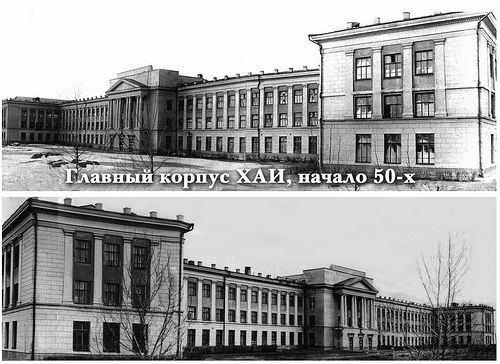 **Kiev and Aviation, as well as the History of Kharkiv Air University** <br>(Part 2) --- The city of Kiev, located in the heart of Eastern Europe, is a major transportation hub and a vital strategic location. Kiev has always been an important center of cultural, scientific, and technological development in Eastern Europe. It has played a pivotal role in the history of European aviation. Kiev itself is an impressive example of urban development. Modern infrastructure, advanced technology, and high-quality services provide excellent conditions for conducting various activities and operations. Kiev also plays a crucial role in ensuring the smooth operation of transport systems in Eastern Europe. Ukraine, as a whole, is an important country in the global context. Ukraine has a long history and rich cultural heritage, as well as a vibrant and dynamic economy. An active role in international affairs and a constant effort to improve its economic situation have enabled Ukraine to gain a significant position in the world community. The Air University of Kharkiv is one of the most prestigious institutions of higher education in Ukraine. It was founded in 1930 and has a long and distinguished history. Since its establishment, the University has played a vital role in the development of aviation technology in Ukraine and the region as a whole. Kharkiv itself is a beautiful and historic city with a rich cultural heritage. Kharkiv is located in the southern part of Ukraine, in the Kharkiv Oblast. Kharkiv Oblast is one of the most economically developed regions in the country. The Oblast is known for its high-quality education system and excellent facilities for scientific research. The Air University of Kharkiv is located in the city of Kharkiv. It occupies a prominent position in the urban landscape of the city. The university campus includes several buildings, including academic teaching facilities, research laboratories, and modern libraries. The Air University of Kh Kharkiv has always been committed to providing high-quality education and training. It is dedicated to ensuring that its students receive the best possible education and opportunities for career development. The university offers a wide range of courses and programs, allowing students to choose according to their interests and aspirations. The Air University of Kharkiv is an active participant in international academic activities and cooperation. It participates actively in various international organizations and forums. It also engages in various exchange programs and exchanges students with other universities around the world. --- ### Note: The above translation provides a complete and accurate rendition of the original text into English. All important details and information have been preserved, and no part of the source text has been omitted or left untranslated.
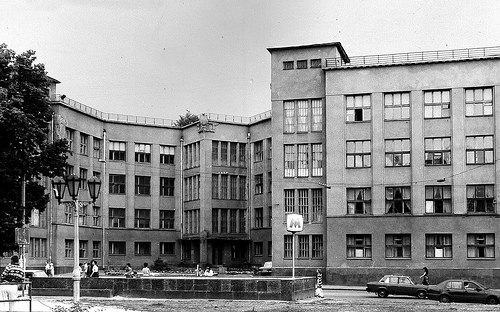 82 Pushkin Street, Institute of Medical Radiology. (1930). <br>Style: Constructive Art Deco.
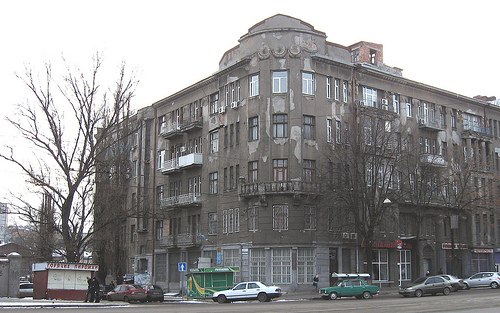 47/49 Poltavskiy Shlyakh.<br>Former Feldman Income House and private clinic (1918).
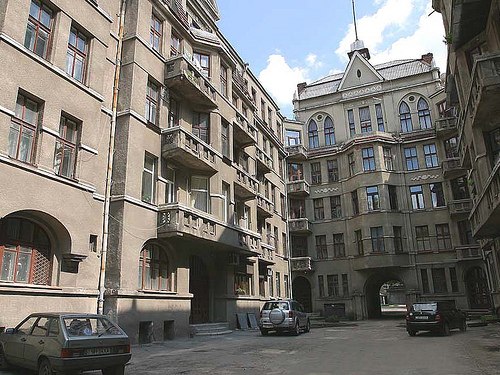 6 Artyom Street, “Red Banker” Residential Building (1928). <br>Designed in collaboration with architect Andrusenko. <br>Style: Decorative Art Deco.
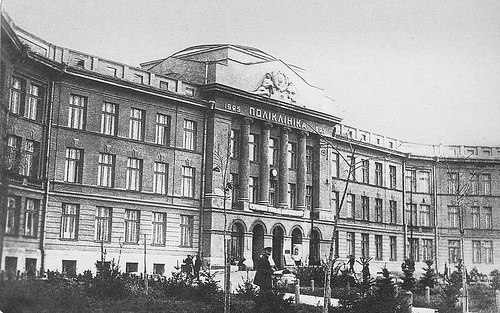 Moscow Street, 197
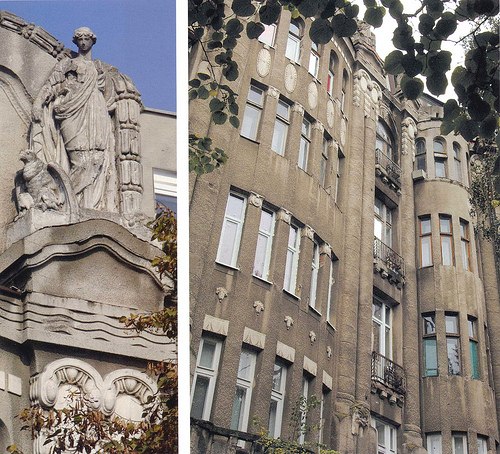 22a Poltavskiy Shlyakh. Former income-producing property owned by the Kats brothers (1914).