--- África: un safari. Cómo funciona todo esto --- Return ONLY the translated text. No include any additional elements or information.
---
As follows is how a safari goes: you are placed in an open-top vehicle without windows or a roof, and then driven through the dense forests or national parks. When animals come into sight, the guide shuts down the engine to allow you to observe them in their natural environment. It sounds quite dangerous, especially when approaching an elephant that starts trumpeting and charging towards you, or when sitting next to a lion just a few meters away with no trainer in sight. It is believed that predators don’t consider the vehicle a potential threat, so as long as you stay quiet and inside the car, everything will be fine. Of course, the safari organizers guarantee complete safety, but considering our experiences swimming near the Victoria Falls or flying over canyons in a helicopter, it seems that the concept of safety in Africa is rather relative...
After the river safari, we headed deeper into Botswana. We traveled for six hours by car from the Zambia border. Along the way, there were several small stops where we could get out and “go into the bushes”… or, in African terms, “under the baobab trees”.
Then we entered the forest and drove through it for another two hours. The African forest is a rather desolate sight: scattered trees, some yellow grass, and a few shrubs.
The bareness of the forest is even more noticeable during the dry season, when all the trees lose their leaves. However, October was specifically chosen for this trip because the bare branches make it easier to spot animals.
There are many termite mounds in the forest.
We never saw the termites themselves, as they live deep inside their nests. The guide explained that it is common to see lions and other predators lurking near termite mounds, waiting to prey on animals that come there.
Typical landscapes of Botswana...
Eight people participated in the safari, and we rode in a vehicle like this. You could only get out of it after the guide had examined the area and given the go-ahead. In short, the guide played a crucial role in ensuring our safety—after all, putting the car between an elephant and its calf, for example, would surely result in the elephant knocking over the vehicle.
We went on safaris twice a day during our stay: once at dawn and once before sunset. These are the times when animals are most active—predators hunt, herbivores feed and try to avoid being hunted. During the day, it gets extremely hot, so the animals rest in the shade of the sparse bushes.
There were prepared paths through the forest that we followed while looking for animals.
Whenever we spotted an animal, the guide would turn off the engine. We then had the chance to observe it and take pictures. Since we were in a regular forest, not a national park, we could get out of the vehicle and follow the traces of the animals through the bushes.
The most troublesome animals were, without a doubt, the elephants. First, there were countless of them; second, African elephants are not as friendly and tame as Asian elephants. They are much more aggressive and always display clear hostility towards the vehicle.
Since elephants can’t distinguish between a road and a forest, we often ended up running into them. We had to stop and wait for them to move on. They looked at us with displeasure, and in some cases, they even tried to attack us. An elephant attacks by first shaking its ears violently, snorting, trumpeting, and swinging its head back and forth—these are all clear signs of an impending attack. You can’t approach such an animal; a collision is inevitable. But you also can’t drive away quickly, because the elephant will chase you. And, believe me, it can run fast. So we had to respond by starting the engine again, which usually scared the elephant and made it back off.
Leopards, on the other hand, were not scary at all; you could get quite close to them. Sometimes they would give us puzzled looks, but that was usually all.
In Botswana, we were accommodated in tents set up on the edge of the forest. There were no fences around them, so all night long, we could hear various sounds of animals: grunting, roaring, screaming, and more. The guides also warned us that it was dangerous to leave the tents at night. If someone really needed to go out, they had to blow a whistle to call for help.
Our simple tents consisted of two beds with bedding. There was a passage behind the back wall that led to a small area where the necessary facilities were located.
On the right was a shower, consisting of a bucket of water and a simple plumbing setup; on the left was a toilet, which was just a bucket with sand inside. We spent two nights there, but almost no one slept properly. We were all too aware of the surrounding noises. Arina even kept nail clippers within reach, in case we needed to defend ourselves against lions.
In the last day of our trip, we rejoined the other brave fellows who had stayed in Botswana and went on another safari in the Kruger National Park, located on the border with Mozambique. We flew there by plane, and, truth be said, most of our travels across Africa were done by air. Private aviation is very developed in this country. The plane was small, with only six seats.
However, since there were seven of us, I got to sit in the pilot’s cabin.
The conditions in the last camp were completely different. We stayed in small houses, and although there were no fences around them, the walls and windows provided a sense of security. This was the bedroom.
The bathroom. Outside, you could see showers and a private swimming pool.
In the last camp, we also had a air conditioner in our house.
We still drove around in an open-top vehicle, but this time, a ranger with a gun and a local tracker accompanied us. They would get out of the car and go into the forest to search for animal tracks.
As soon as they found any traces, they would leave the car and head into the forest, leaving us alone for around 15 minutes at a time.
This is the track of a leopard.
Of course, animals are the same everywhere, but on this safari, observing them was much more comfortable.
Sometimes, just like in Botswana, we had to cut through the bushes. The ranger would then take out a machete and clear a path for us.
Once, while chasing a lion, we hit a rock. Another car happened to be nearby, and its drivers helped us get back on the road.
The landscape in South Africa was different from what we had seen in Botswana. Here, we were able to see all the typical African animals: elephants, rhinos, buffaloes, lions, and leopards.
Here we saw even the “big five” of African wildlife: elephant, rhino, buffalo, lion, and leopard.
Once, we were even allowed to get out of the vehicle, going against all safety rules, just to get a closer look at the buffaloes from below.
And this was our chase of a young lion. It had entered someone else’s territory, so three adult male lions decided to kill it. The young lion was already badly injured and covered in scratches; it ran first, followed by the three lions, and then we in the car.
One evening, we enjoyed a “royal treatment” in the bushes: a surprise display of African hospitality and civilization. The essential component of such a gathering was gin and tonic, which, according to legend, is supposed to prevent malaria.
Stay tuned!
Encuentre los mejores profesionales para su proyecto
Especialistas en reparación, construcción y renovación listos para ayudarle
Artículos recomendados
Más artículos:
 Vehículos antiguos
 “Sombras” fue nominada en todas las categorías de los premio antipremio “Zolotaya Malina”.
 Curiosos datos sobre la amistad
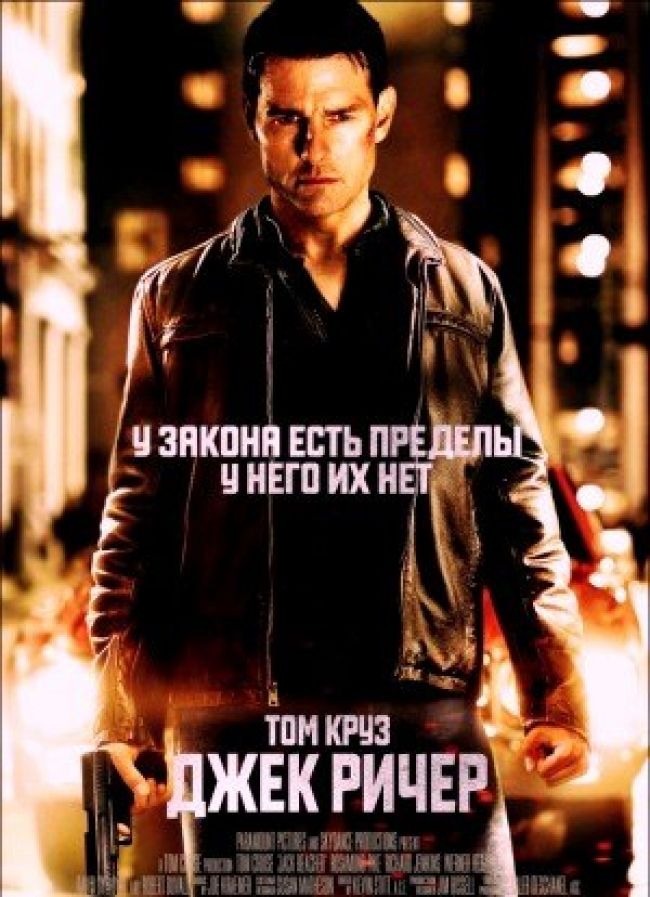 “Jack Reacher” con Tom Cruise se estrena el 10 de enero.
 Se han anunciado los nominados al “Oscar”.
 Joseph Gordon-Levitt interpretará un papel en la secuela de “Ciudades del pecado”.
 “Blade” se volverá a lanzar sin Wesley Snipes.
 El hijo de Tolkien condena las adaptaciones cinematográficas de Peter Jackson