Vienne gastronomique.
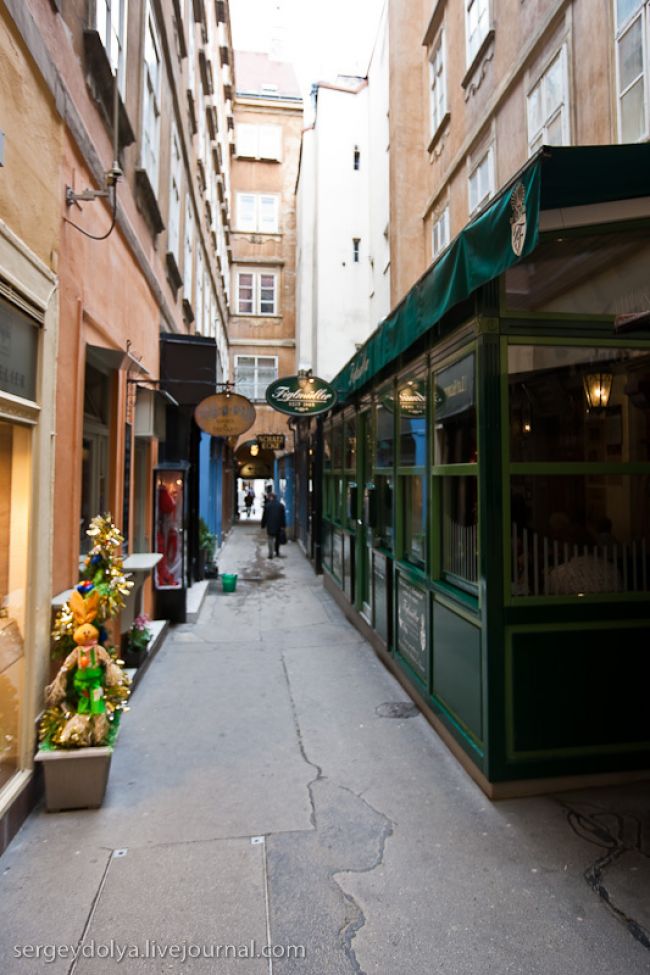
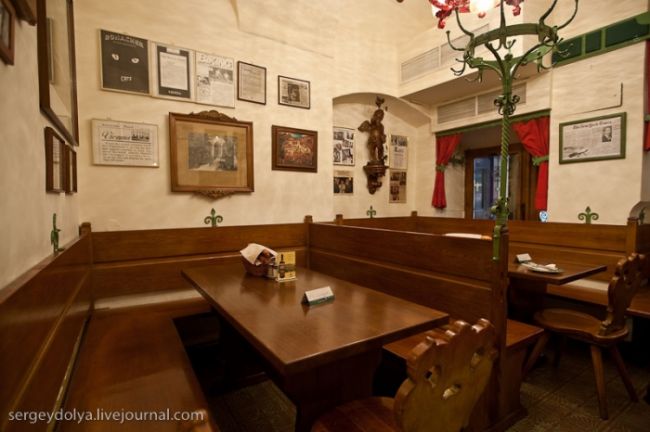
It’s a very small establishment; the toilet is even located “outside”, since there wasn’t enough space inside for it:
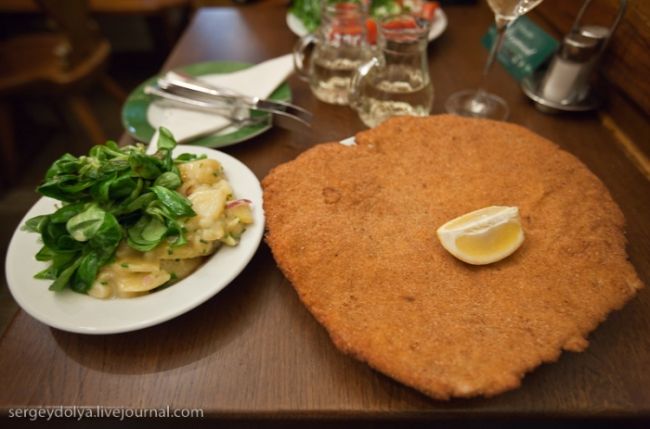
The meat is thinly sliced, coated with breadcrumbs and then fried in hot oil. This restaurant has been open since 1905 and is famous for its huge schnitzel, which weighs at least 250 grams. Potato salad is served alongside it. The local version of this schnitzel is made using extremely tender meat, so the pores close quickly, keeping it exceptionally juicy:
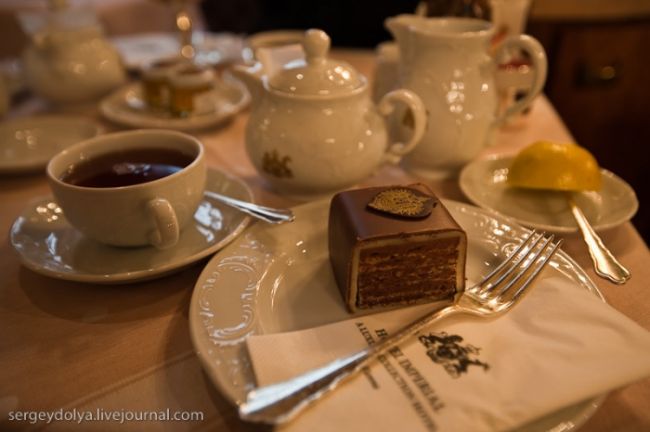
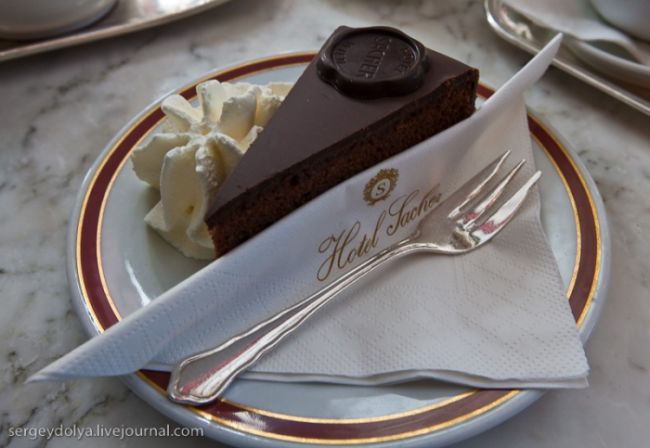
For dessert, I went to the Imperial Hotel. I had already written about Vienna’s most popular pastry, the Sachertorte, which is served at the restaurant of one of Vienna’s most expensive and prestigious hotels, the Sachertorte Hotel. This time, I decided to try Vienna’s second most popular pastry, the Imperial Torte, at the café of the same-name hotel:
I much preferred this torte to the Sachertorte. It was first created in honor of Emperor Franz Joseph I and presented to the public at the official opening of the hotel. Inside, it’s similar to our Ukrainian Kiev Cake, mixed with truffles. On the outside, it’s covered in chocolate and has a layer of marzipan:
For dinner, I went to the famous Vienna restaurant Plachutta. It is known for its “imperial” Tafelspiitz, a dish made of boiled beef. This is the favorite food of the Austrian emperors, and it is served in this restaurant just as it was prepared for the kings. The Tafelspiitz is considered an authentic Austrian dish. The trick here is that the meat is simmered over low heat for 5 hours, which makes it extremely tender and juicy. It is served in a saucepan with rich broth, fried potatoes, spinach, cabbage, and two sauces: mashed apples with horseradish and whipped cream sauce with horseradish:
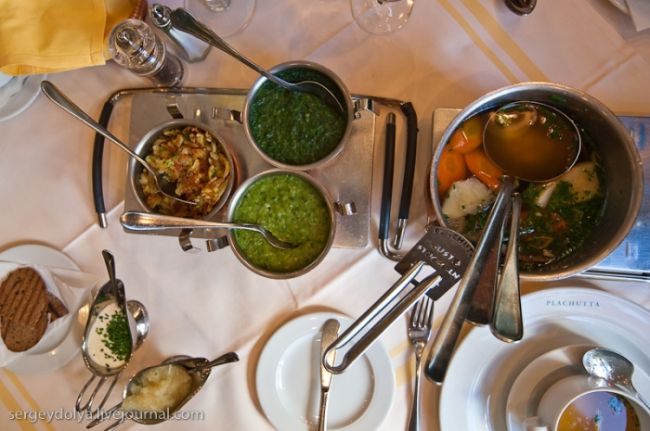
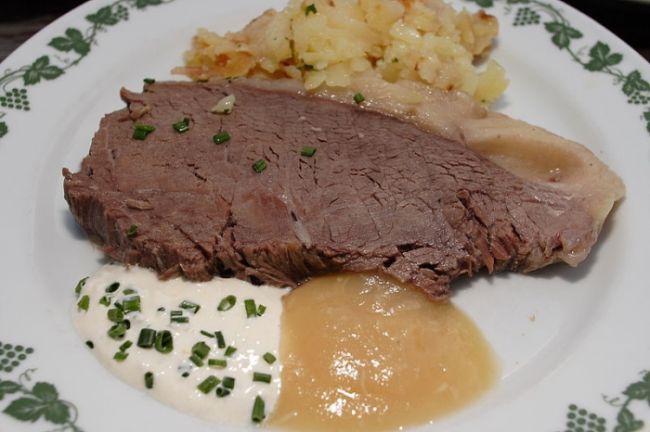
I’ve probably never eaten such a rich broth before in my life. I couldn’t resist and had two bowls full! After that, the waiter took out a large piece of meat from the saucepan and placed it on my plate. Before taking a photo, I decided to taste it first. The meat was absolutely delicious – tender, delicate, and melting in the mouth. I couldn’t stop eating it, so the photo I’m showing you is not mine, but one from Wikipedia:
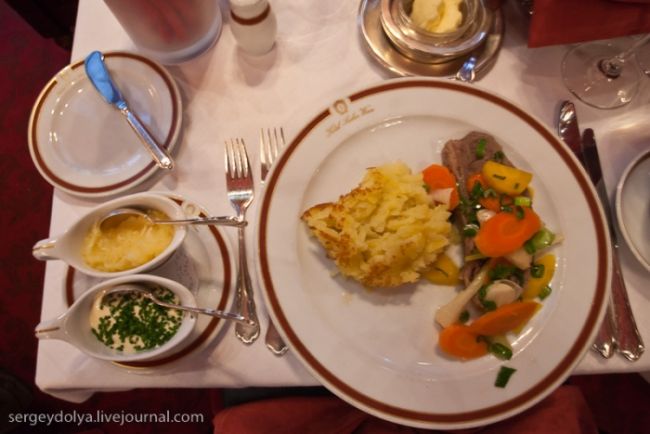
Do you remember the cartoon “Ratatouille” where the critic tries the dish prepared by the little mouse and is reminded of his childhood? Well, I had the same experience when I tasted this meat broth. It reminded me of my mother’s soup with a piece of meat in it. I remembered how my brother and I used to scoop it out of the pot with spoons, and how our father used to call us “Lochankinis”. At that time, I hadn’t read “The Golden Calf” and didn’t understand what it was about. I loved the Tafelspiitz so much that the next day I ate it again for lunch, this time in another restaurant. I read online about a debate between the Plachutta restaurant and the Sachertorte Hotel restaurant over which version of the Tafelspiitz is the authentic one. I decided to try it myself and form my own opinion. The soup at the Sachertorte Hotel restaurant was much more “formal”, but the meat there was significantly less delicious, even though it was just as tender. The broth there was less rich, and the meat itself seemed a bit too bland:
After that, I couldn’t resist and had another piece of Sachertorte...
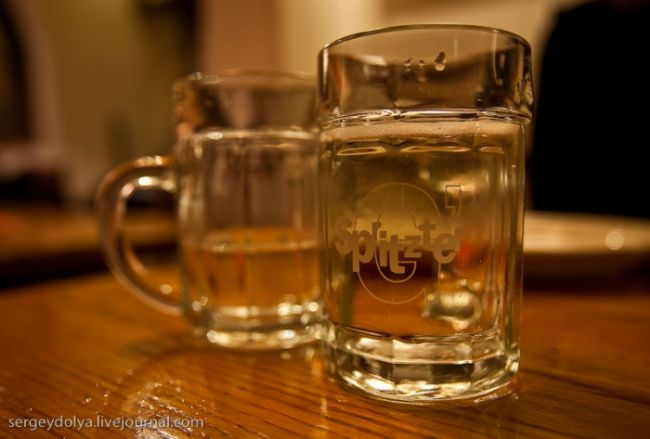
For dinner, I also went to a traditional Austrian restaurant, the Hoeriger. The name “Hoeriger” means “this year” in German. These restaurants serve young wine and local delicacies. It’s very popular to mix wine with soda water; this drink is called Gespritzt:
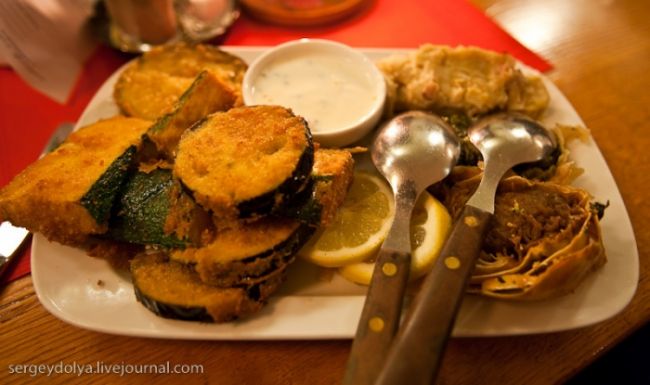
There is a salad bar at the entrance of the restaurant. The wine is brought to the table, and you have to go there to get more if you want some. During my meal, I chose a traditional Austrian appetizer:
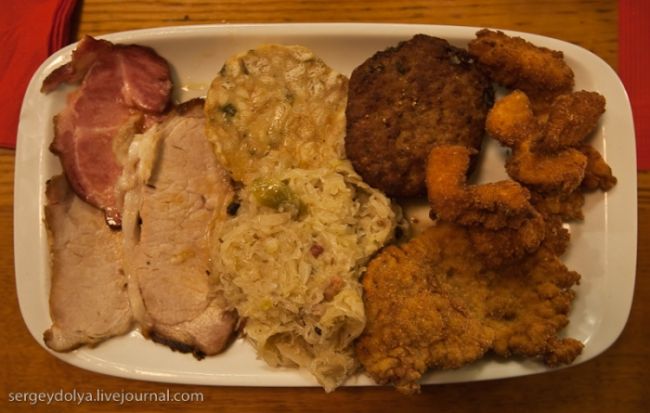
And as main course, I chose several Austrian meat dishes:
The next day, I went to the Schönbrunn Palace. It was raining, so I stopped by a local café. Down in the basement, a workshop on preparing Vienna strudel was being held. Since this trip was purely gastronomic in nature, I bought a ticket and attended the demonstration. Although the strudel is associated with Austrian cuisine, its recipe actually originated elsewhere. 300 years ago, several Turkish travelers brought it to Vienna, where it became popular. I will provide the detailed recipe at the end of this article; for now, here are some explanations. At the beginning, our chef took a piece of dough that had been sitting in oil for 30 minutes, dusted his hands with flour, and began rolling out the dough on a kitchen towel:
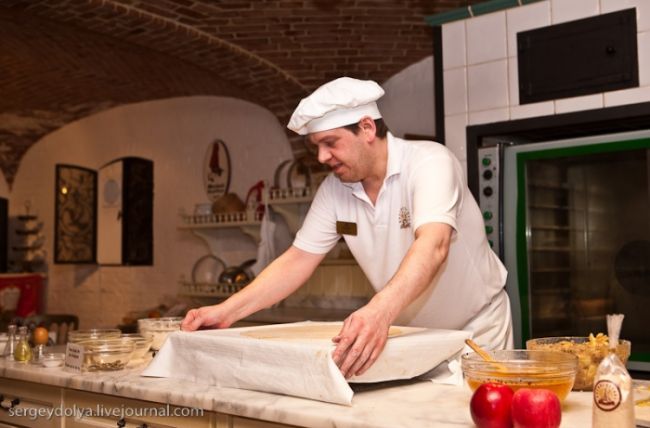
Instead of using a rolling pin, he started stretching the dough by throwing it into the air. He also actively used his elbows to help stretch it out.
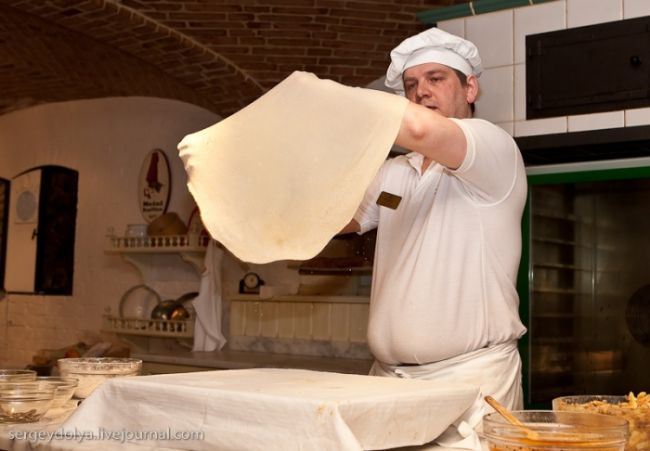
Once the dough was stretched out, he laid it on a towel and cut off the thick edges. Then he poured the prepared filling onto it:
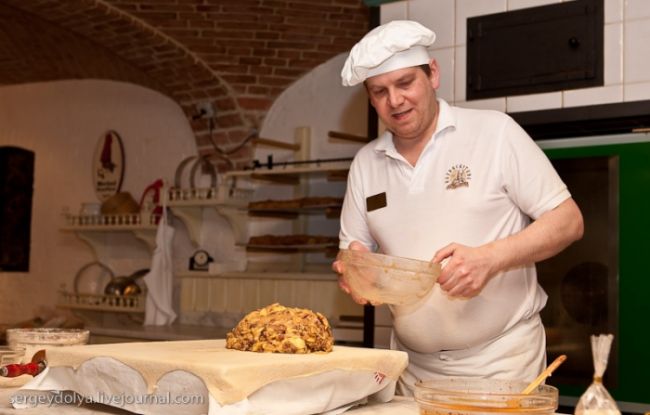
The secret to preparing a good strudel lies in its wrapping. Our chef skillfully did this using a kitchen towel:
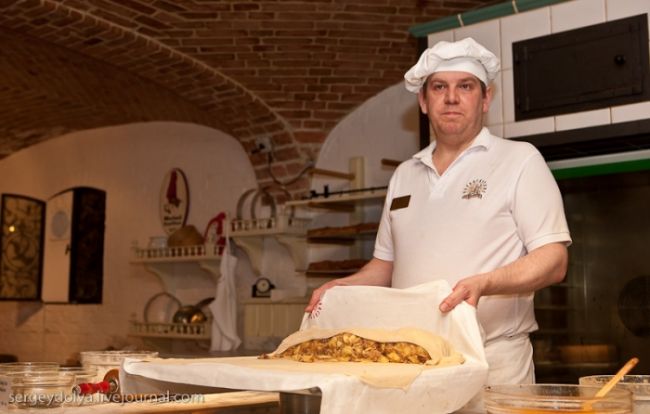
As a result, we got a roll of strudel, which he generously coated with oil on top:
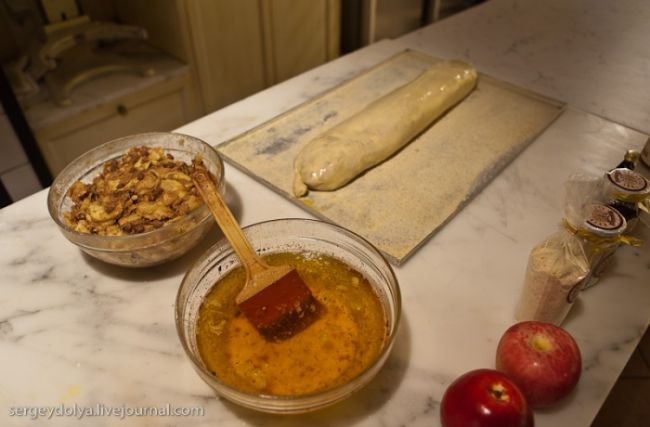
In the end, we were served a wonderful strudel:
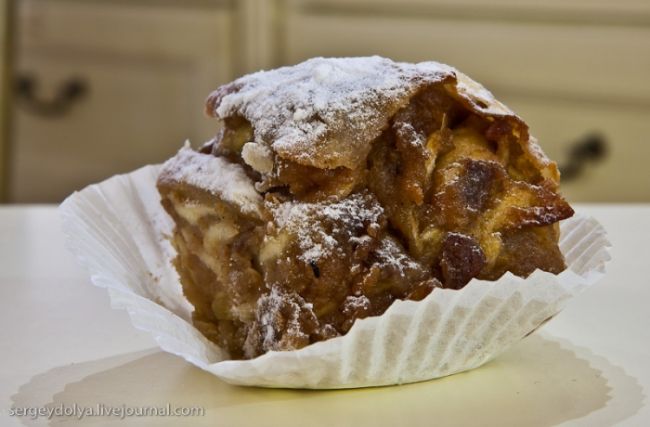
Here is the recipe we were given after the demonstration: **Strudel dough:** 250 grams of flour with a fine grain size (700 degree mesh), 2 grams of salt, 50 grams of eggs, 100 grams of water at room temperature, 20 grams of vegetable oil. Mix all these ingredients together until you get a soft dough that doesn’t stick to your hands or the table. Form the dough into a ball, rub it with some vegetable oil, and let it rest for 20–30 minutes. Then roll it out on a clean, floured surface into a square shape, and stretch it as thin as possible using the back of your hands. Brush the surface of the strudel with butter.
**Pancake crumbs:** 100 grams of panko bread crumbs, 50 grams of vegetable oil. Melt the oil in a pan, add the panko crumbs and fry them until they become golden brown.
**Brown sugar:** 140 grams of fine crystalline sugar, 10 grams of cinnamon. Mix these ingredients together in their dry state.
**Filling:** 150 grams of panko bread crumbs, 150 grams of brown sugar, 170 grams of raisins, 10 grams of lemon juice, 1100 grams of apples of an acidic variety, peeled and cored, cut into slices, plus a little rum. Mix all these ingredients together well.
Then place the filling on the rolled out dough, cut off the thick edges, and carefully roll up the strudel using a clean kitchen towel. Transfer it onto a buttered baking sheet and bake it at around 190 degrees Celsius until it becomes golden brown. **Recommendation:** Immediately after baking, brush the strudel with hot butter.
Finally, here is a photo of a typical Viennese café visitor:
You can find more recipes like these here – http://modno.ua/kiev/cook
Trouvez les meilleurs professionnels pour votre projet
Des spécialistes en réparation, construction et rénovation prêts à vous aider
Articles recommandés
Plus d'articles:
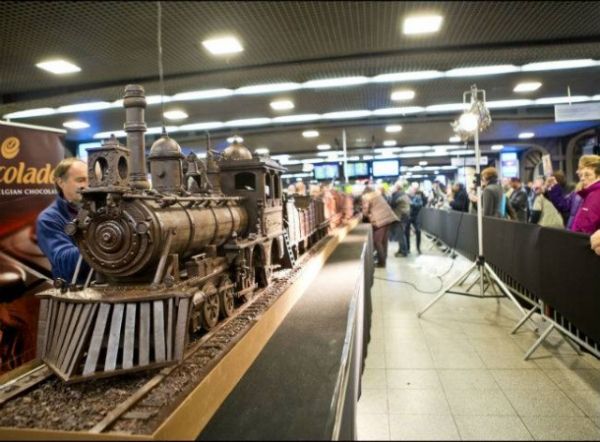 Le plus grand train au monde fait entièrement de chocolat.
 Célébrités et d’autres personnalités lors du défilé pour la Journée du Thanksgiving
 Quels films regarder au cinéma ? Les premières sorties à partir du 29 novembre.
 Exclusivités de l’Osteria Pinocchio
 Mariage au restaurant Tradition
 Championnat d'Amérique du Sud de half-dance 2012
 20 merveilleuses œuvres des participants au concours photo de National Geographic
 Dar-al-Hajjar : un palais sur une falaise