Chufut-Kale
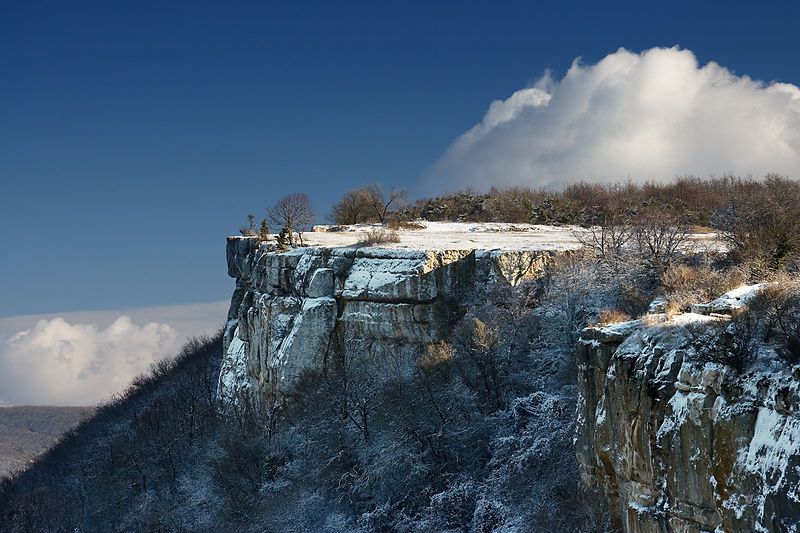
The earliest settlements in the territory of modern Ukraine appeared on the Crimean Peninsula. These settlements generally had a defensive, fortified character. The “cave city” of Chufut-Kale was no exception. Located on a plateau at an altitude of 500 meters and surrounded on three sides by wide valleys, it remains unknown exactly who founded this city. It is speculated that in the 11th century, the Khazars and Alans inhabited this area. Later, the Tatars conquered these lands, and by the beginning of the 16th century, Chufut-Kale served as the residence of the Crimean khans. As early as the 14th century, Karaim craftsmen began settling in this region. Over time, the Tatars left this area and made Bahchisaray their capital. In the 19th century, the Karaim people moved to other cities in Crimea because living conditions there were better. Thus, Chufut-Kale was left without its last inhabitants; however, tourists interested in exploring its ancient history continue to visit this place.
Hidden in the heart of Southern Crimea, this “cave city” is a popular tourist attraction. The path to the medieval town of Chufut-Kale involves steep ascents, narrow trails, and steps. Visitors will see the Assumption Church, a monastery, a cemetery, and a spring with holy water.
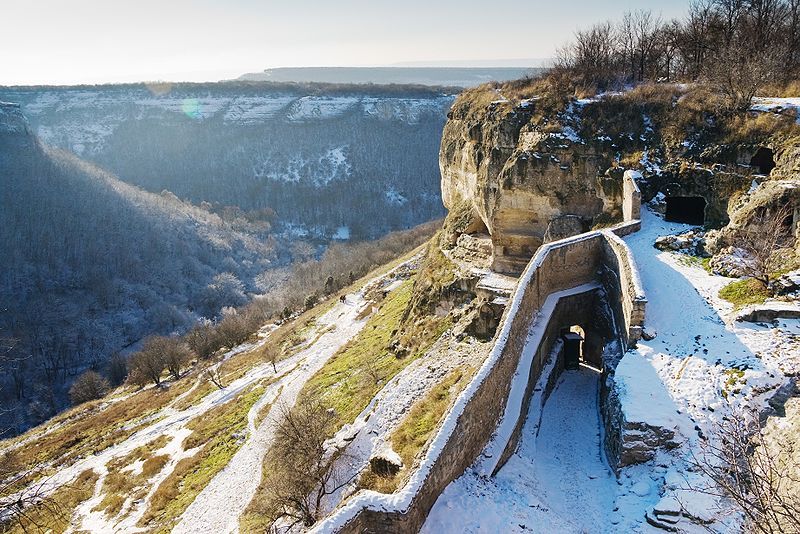
We enter the city through the massive ancient Southern (or Minor) Gates, which were built on the site of earlier wooden ones. While most of the ancient city has been destroyed, the fortress walls, towers, as well as the Southern and Eastern Gates—through which chariots used to enter the city—have survived. The streets with narrow sidewalks, residential houses, Karaim prayer halls (kenases), remnants of the khan’s palace, mosques, a mint, and the mausoleum of Khan Tohtamish’s daughter can also be seen today. Behind the mausoleum, the plateau drops sharply, offering stunning views of the Crimean Mountains, including their highest peak, Roman-Kosh. Near the prayer halls, there were terraces where believers could rest while waiting for services to begin; these places were also used to address various important societal issues.
In the 1730s, the first printing house in Crimea was established in the territory of Chufut-Kale, where books primarily of religious content were printed.
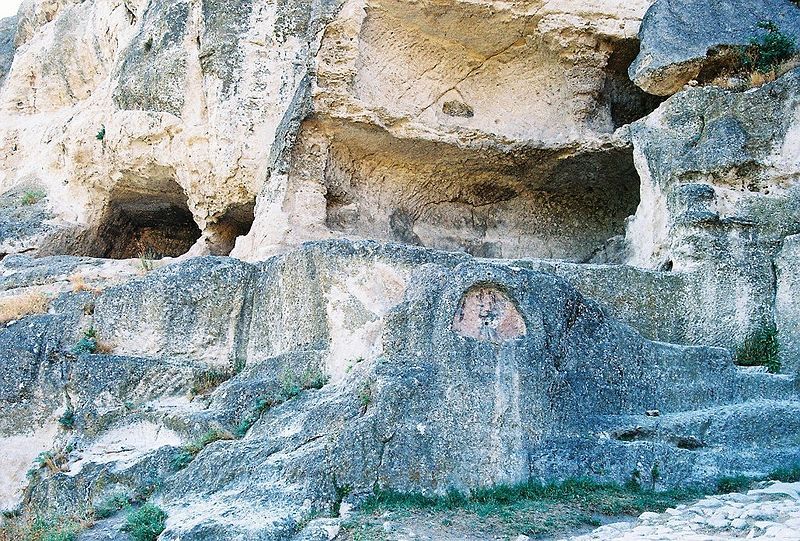
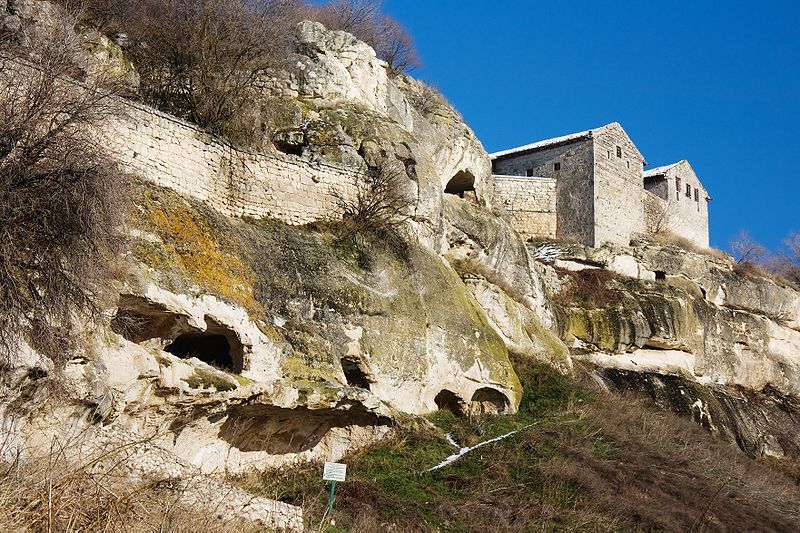
The cave complexes in the rocks are quite interesting. You will see an entire network of caves that served a defensive purpose during enemy attacks. It is also speculated that a cave monastery may have existed here during the pre-Tatar period.
The Yosfat Valley is particularly impressive for visitors, as it contains a Karaite cemetery. It is said that ancient oaks once grew here, and cutting them down was strictly forbidden. Today, in the quiet amidst the trees, you can find headstones with various inscriptions. The issue of water supply in the city was quite relevant in the past; it was believed that water had to be transported into the city, and rainwater was also used for domestic purposes. This theory was only disproven in the 21st century when archaeologists discovered a unique well near Chufut-Kale—no such well exists in Ukraine. The well, located in the rock, is approximately 40 meters deep. Today, tours to this well are offered for all those who seek thrilling experiences.
Visit the medieval city of Chufut-Kale, where life was once bustling two centuries ago. Everything here exudes an air of antiquity and is shrouded in mystery.