Portuguese Bethlehem, or where the geographical discoveries began
What is the slightest relation to the sacred city where Jesus Christ was born, can have to Portugal? Palestine and the Iberian Peninsula are separated not one thousand kilometers, the rivers Tejo and Jordan are not connected, and the nation of the discoverers aspired, on the contrary, for the seas and oceans, and not to make a pilgrimage to the biblical lands
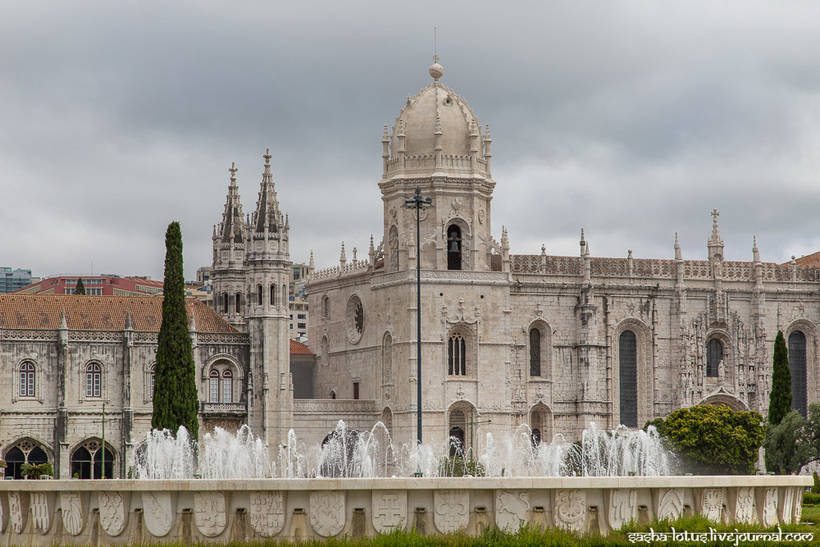
And yet in one of the regions of Lisbon, in an amazing way, the events of the era of great geographical discoveries are intertwined with biblical and religious themes. Before hugging, perhaps the last time a wife and children, solemnly promise the king that through the storms and hurricanes you will return unscathed with the outlines of distant shores on the map and justify the fabulous investments in building ships, the salaries of the crew and the provisions, the brave pioneers kneeling in a tiny chapel, founded by Henry the Navigator on the deserted bank of the Tagus. The fatal two-year campaign of Vasco da Gama to open the sea route to India around the African continent also began from here, from the harbor of Rastela.
And here is Bethlehem? After the triumphant return of Vasco da Gama, which gave a powerful impetus to the continuation of the exploration of distant lands and opened the streams of gold and spices to the state treasury in order to thank the Holy Virgin for her patronage on a difficult journey, where the seafarer had to try on himself the role of Captain Jack Sparrow, boarding other ships and shelling coastal African towns, the king decided to establish on the site of the chapel a majestic monastery, the monks of which would give a blessing to all the sending camping in the sea in the name of well-being and prosperity of Portugal. Thus, at the beginning of the 16th century, the construction of the architectural pearl of Lisbon - the monastery of Jeronimos began - and the area around it, baptized by the local Santa Maria de Belen, began to develop rapidly. Belem (in Portuguese sounds more like Bylin or Belen) - derived from the name of the biblical city of Bethlehem. Over the centuries, it was transmitted thousands of times from mouth to mouth, was read in different ways, misprints from negligent writers crept in, and reached the Pyrenees in a slightly distorted form.
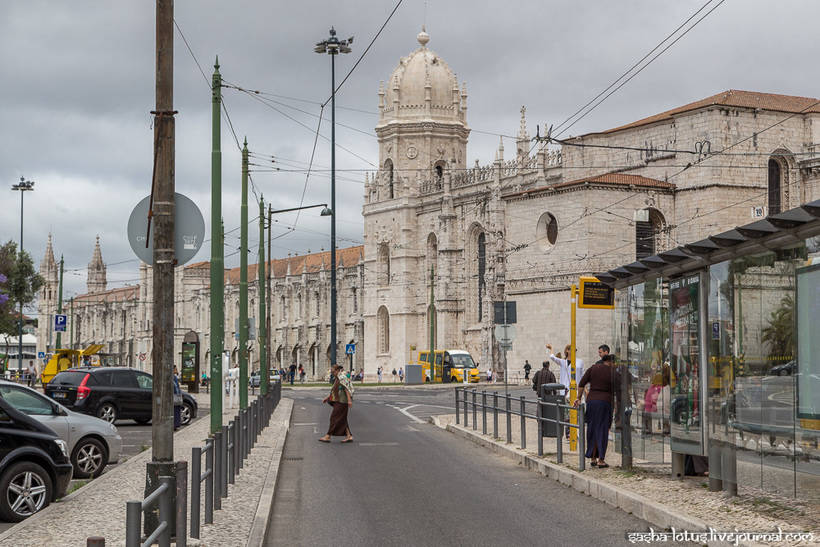
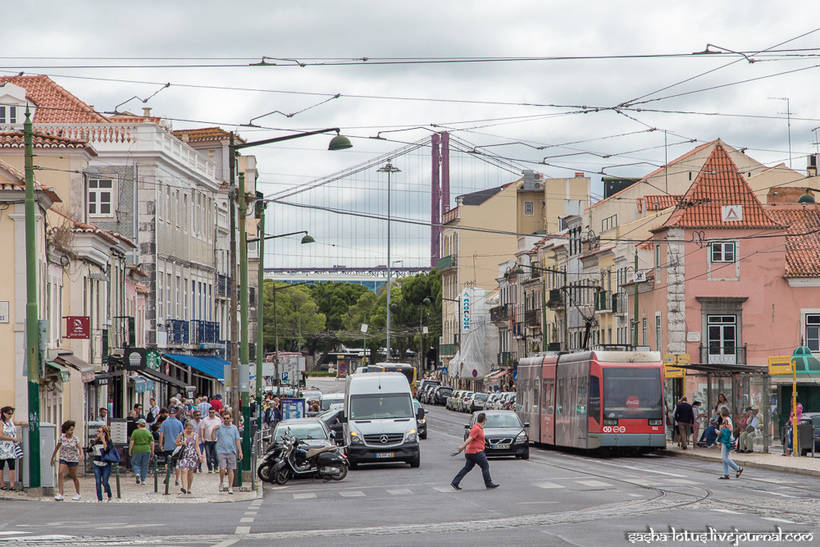
Tram number 15 in the early cloudy morning brought us to the suburb of Belem, connected to Lisbon, where, in addition to the monastery of Jeronimos, several important buildings and symbols of the city are concentrated for the guest of the Portuguese capital. Of the remaining from the school bench in the head fragments of knowledge about the era of great geographical discoveries, in addition to Vasco da Gama, the names surfaced except that Fernand Magellan and Christopher Columbus, and Marco Polo roamed a couple of centuries earlier. Who is this Henry the Navigator who founded the chapel, and at the head of the monument on the embankment looks into the distance, as if anticipating the success of another overseas expedition?
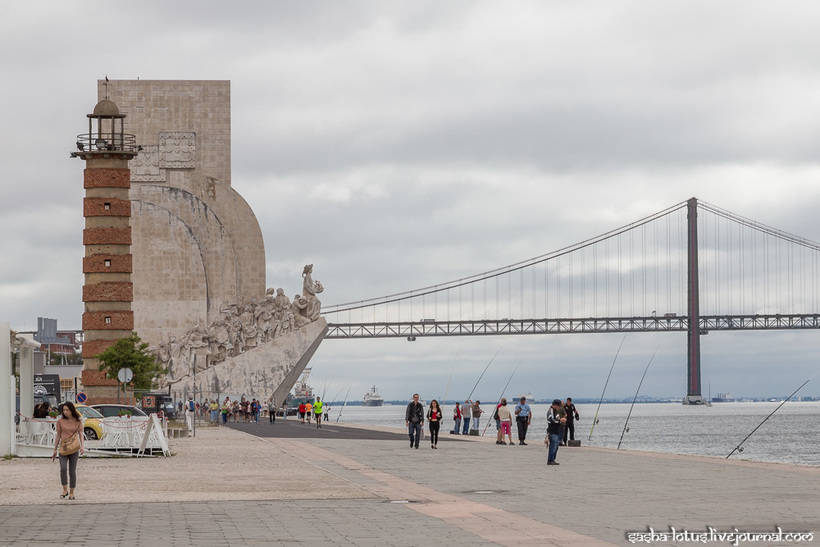
Any need to begin, and especially to such responsible matters as the opening of new lands, the establishment of trade relations and the establishment of colonial settlements, need a cold-blooded manager that will attract sponsors, promising to hang banners with the names of their trading houses along the boards of expedition caravels, and specialists in navigation and talented cartographers will find that the ships in the Atlantic do not get lost, leaving a hole in the budget from the loss of ships, personnel and from upholstered rapids and crying widows who demand disability benefits e family breadwinners. What is important is enthusiasm, sincere belief in success, and robust adventurism.
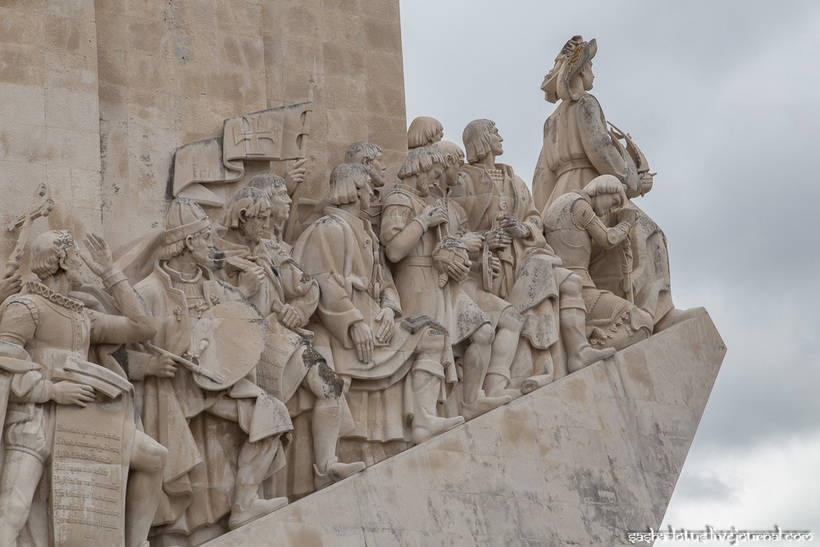
Fortunately, in Portugal, found his hero - the son of King Joao I named Henry, after several naval campaigns with his father dedicated his life to the office work on the organization of reconnaissance expeditions. "A land rat," said the experienced tattooed sailor, spitting on the floor, a snuffle. But in history, despite the displeasure of ordinary sailors, Henry entered with the prefix of the Navigator, and 500 years after his death in Belem they opened a monument with a viewing platform at the top.
Expedition ships are not leaving the shore of the Tagus at sea, the girls do not wave their handkerchiefs and do not send air kisses to their beloved. And each of them in those days returned home as a hero and more than one evening for a mug of rum, embracing and without extra modesty, a grasping young lady who sat on her knees, could, in the best measure, harbor countless tales of swimming in the Indian seas and battles with pirates.
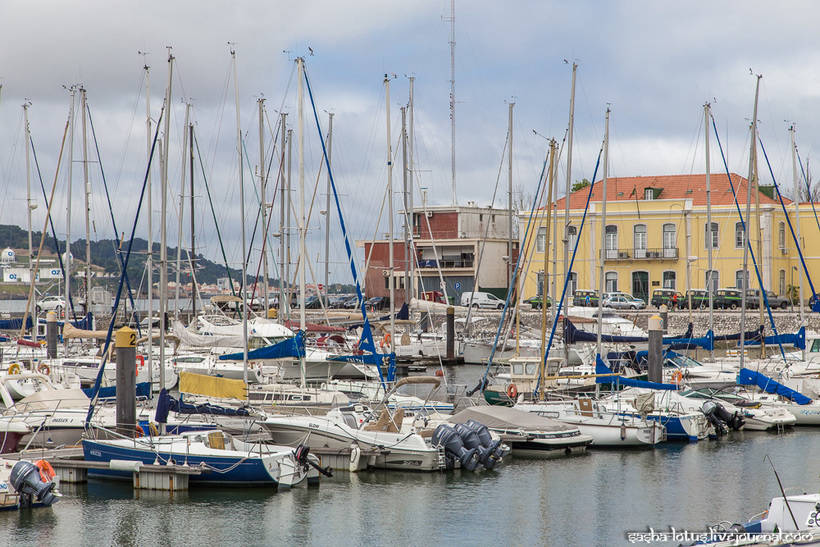
The opening of the road in India further strengthened the status of Portugal as one of the leading maritime powers in the world. Portuguese navigators founded one colony after another and brought complete holds of spices, gold and all sorts of strange things to Lisbon, not only to look at at least one eye on which almost everyone dreamed, but would like to get them into their possession in a good or illegal way. The front gate to the capital, the mouth of the Tagus River, sooner or later could not contain the flow of uninvited guests, eager for easy money and unearthly riches. And not solid for the new status of the country, that the first naval redoubt for a long time served as a flooded ship in the middle of the river. King Manuel I ordered to find a talented architect who was able to erect a fortress to inspire fear and respect to any vessel approaching the harbor. The fantasy project of the giant statue of Titan, akin to the one that welcomes the guests of the free city of Braavos from the "Game of Thrones", was immediately rejected because of the complexity of the execution and the lack of funds - the monastery of Geronimos, no less important for Belem, was erected next door in the neighborhood.
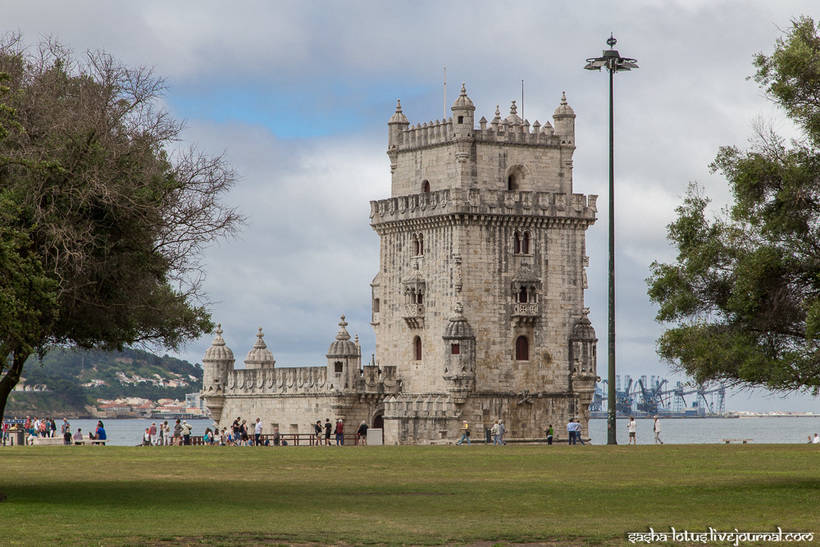
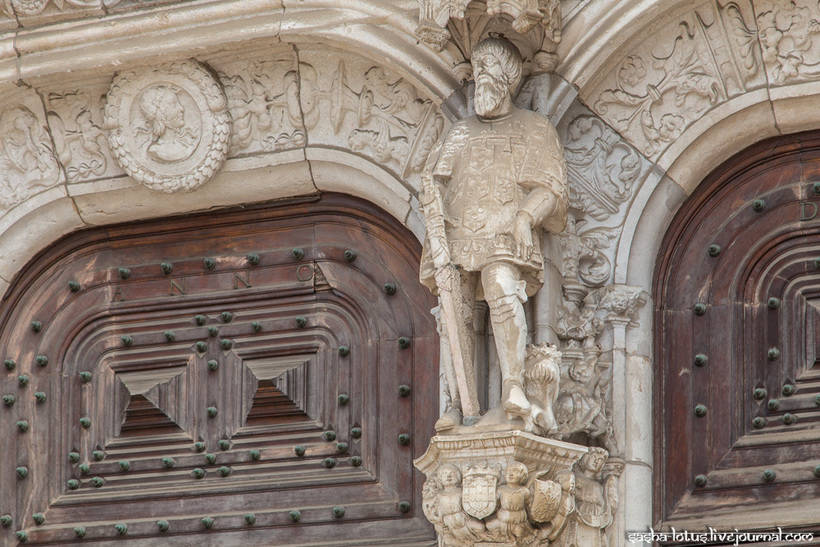
From Morocco, he successfully succeeded in building the forts Francisco de Arroud, and he again did not hit the face in the mud, did not run away in advance to the Berbers, did not arrange a budget cut with a constant change of contractors, and erected in just 6 years in the middle of the Tagus estuary and elegant a powerful fortress tower, named after one of the patrons of Lisbon, St. Vincent. The late Gothic, Renaissance and oriental motifs are intertwined in the architectural style of Manuelino (which was born in Portugal at the beginning of the 16th century) and the oriental motifs: the splendor and openwork of forms and ornaments adjoins with sharp spiers and statues on the facade, next to crosses of the Order of the Knights Templar, it is easy to distinguish shells, ropes and other sea symbols designed to perpetuate the power and power of Portugal as the "queen of the seas".
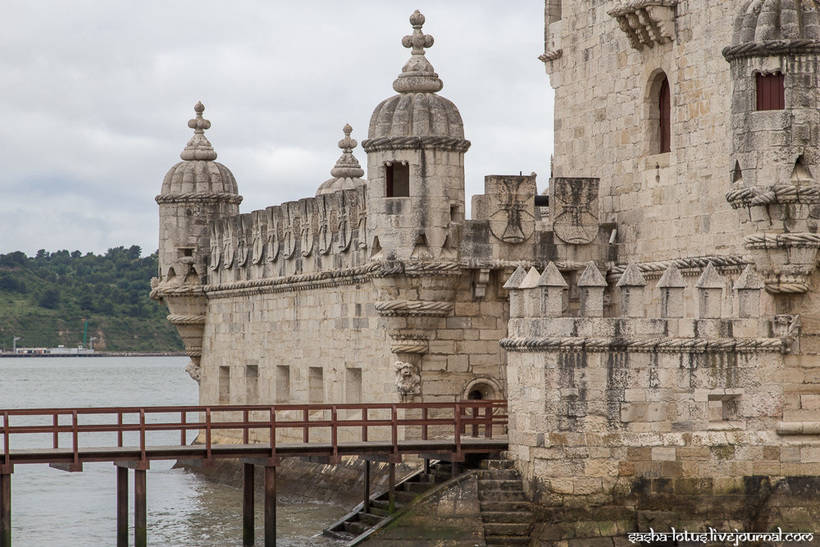
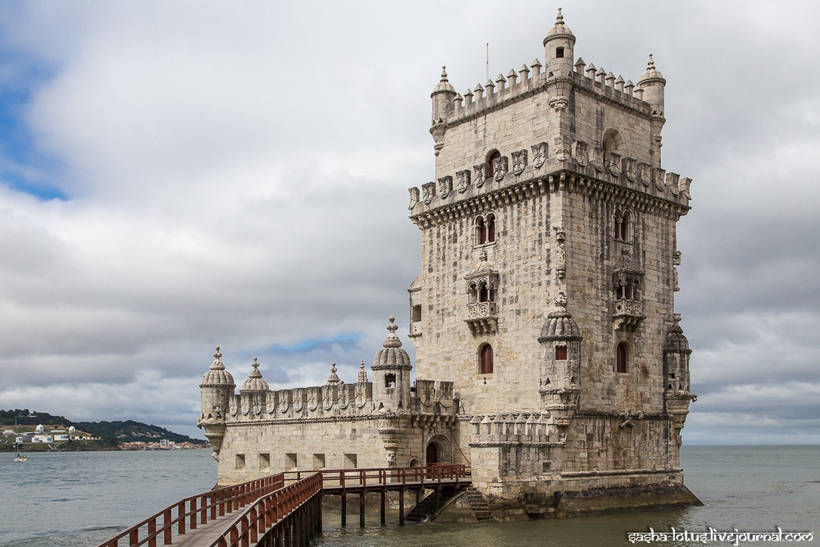
Torre de Belém, or the Bethlehem Tower, was able to survive the devastating earthquake of 1755, which erased almost the whole of Lisbon from the face of the earth. However, after the cataclysm, because of the powerful tsunami, naturally shifting the coast line, the fortress was only a few hundred meters from the monastery of Jeronimos. During its history the tower managed to stay both as a defensive fort, and as a customs house, as a beacon, as a prison, as a post of telegraph service, and later it became a national monument, a UNESCO World Heritage Site and a museum.
Unlike his neighbor, another model of the Manueline style - the monastery of Jeronimos - for a long time headed ratings of long-term construction. Construction continued throughout the XVI century, although King Manuel I wholeheartedly wished to thank the Holy Virgin Mary for the patronage of Vasco da Gama and invested in the project huge at the time, sacrificed much of the taxes received from trade with the countries of Africa and Asia, equivalent to 70 kilograms of gold in year.
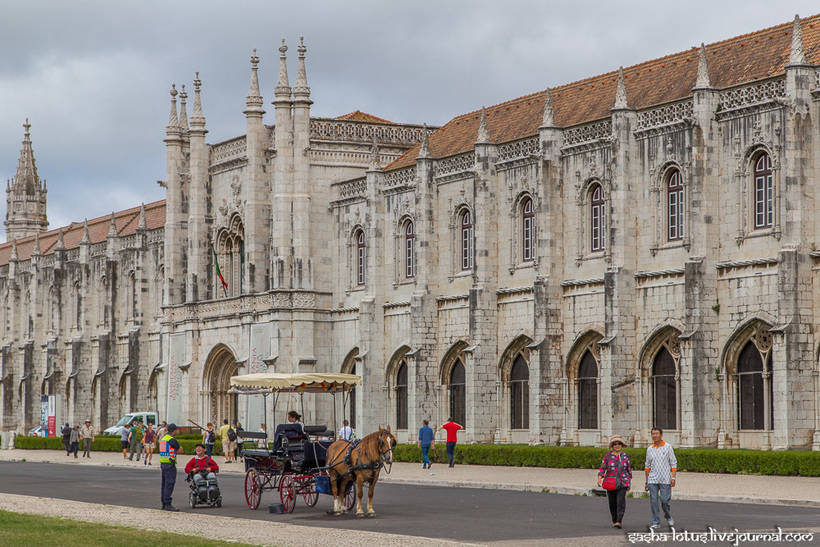
To serve in the monastery, the king chose monks of the Order of Hieronyms who prayed for his health and well-being and provided spiritual support to mariners traveling to overseas lands for rare artifacts, spices and riches. Hieronyms this state of affairs more than satisfied, because serving God in such a unique monastery and with the direct support of the monarch is a good thing. But all good things come to an end sooner or later. After the revolution of 1820, monasteries in Portugal were closed one after another, the same fate did not escape the monks of Jeronimus, finding themselves on the street. All past merits and prayers for a calm sea, a favorable wind and no obstacles in the glorious years of geographical discoveries were instantly forgotten.
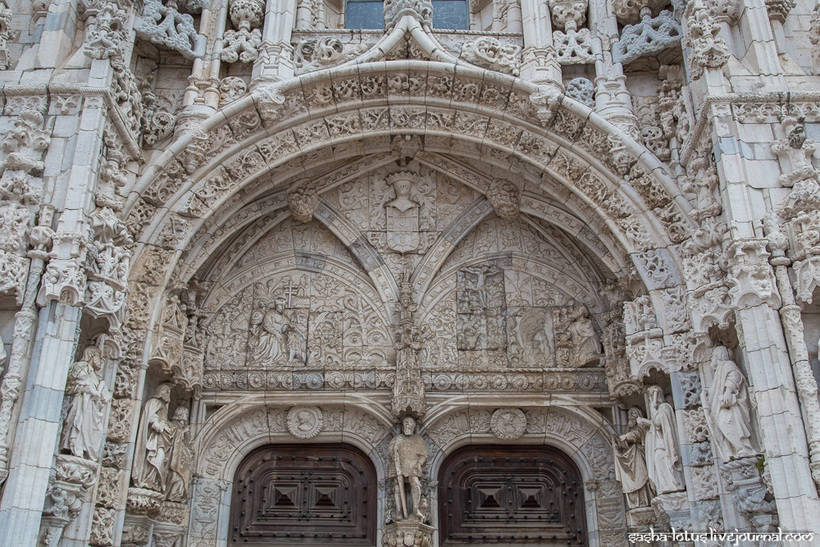
The community of Hieronyms was dismissed, and the building was given into use by the royal shelter for orphans. Soon began its restructuring and restoration, and Geronimus took on that majestic image that we can contemplate now. In the walls of the former monastery, next to the tombs of Portuguese monarchs and monks of the community, there are the remains of Vasco da Gama, famous poets and writers of non-royal blood.
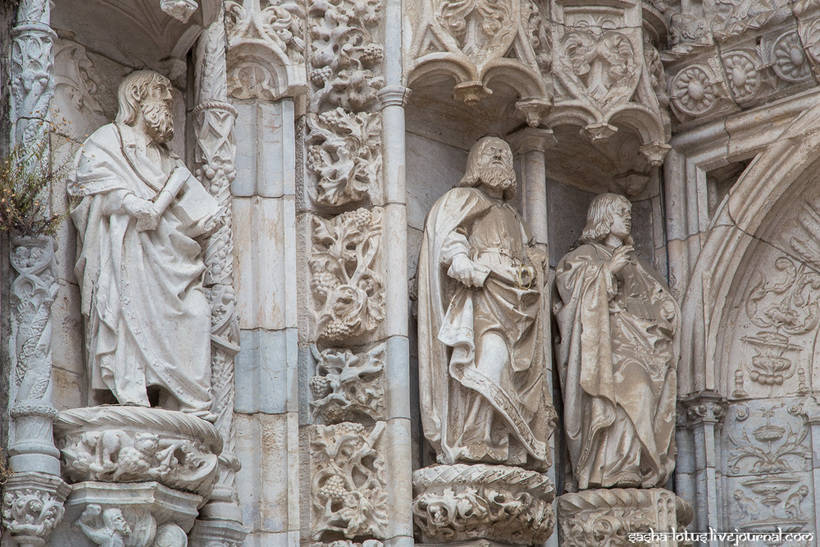
Geronimush sheltered the Maritime Museum and the National Museum of Archeology and, having been protected by UNESCO, entered its name in the modern history of Europe already twice. First in 1984, they signed here on the inclusion of Portugal in the European Union, and in 2007, during the summit, they approved a new Constitution of the European Union, which went down in history under the name of the Lisbon Treaty.
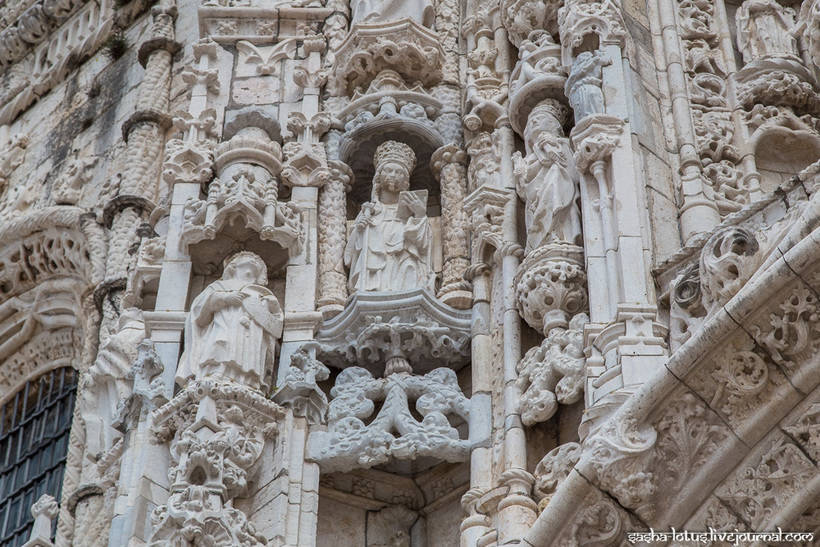
To raise your head up, looking at the bas-reliefs, statues and lacy ornaments of Manueline, it's time to go inside. It was here that the main miscalculation of your stay in Lisbon, an epic feil, awaited us, if you please. After walking up the Baixa and Alfama, we went to Sintra, in Belem, on the very last day, which fell on Monday. "They would take Mondays and cancel", - I hummed Mironov's voice when I saw the sign "Closed". It has managed to arrive in Geronimos exactly on the day when it is closed for visiting. Oh, I had to go to seize sadness in the nearest historical pasty.
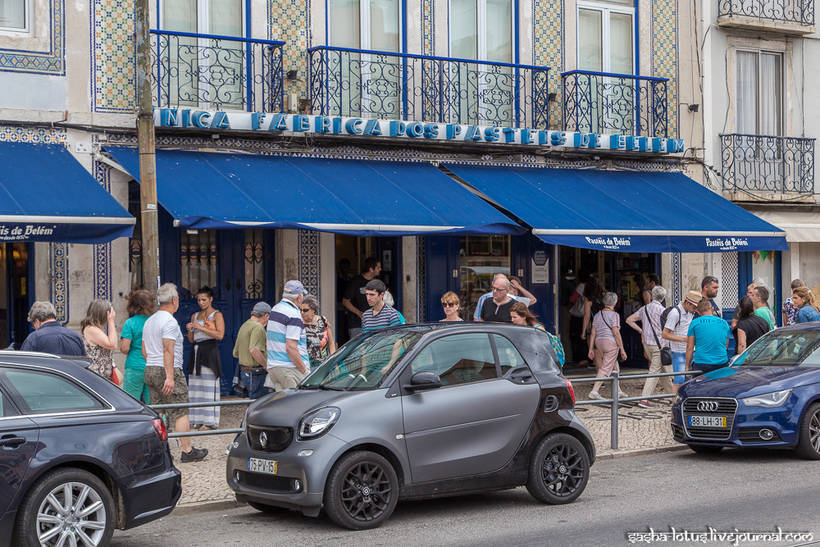
Monks-Hieronymus, to somehow make ends meet, began to sell in the grocery store next door to the monastery a sweet pastry - baskets of puff pastry with custard. The original recipe has been kept secret for 180 years, although patetes are sold all over Portugal, and they do not differ in taste, but the Chinese like to take home branded blue-and-white boxes with sweet tarts from Belem. Past the cafeteria and shops to pass extremely difficult, there is an early morning in the queue, and the stop of the tram is located exactly opposite.
Find the Best Professionals for Your Project
Expert repair, construction, and renovation specialists ready to help you right now
Recommended articles
More articles:
 Sunken Atlantis: where the stone road leads off the coast of the Bahamas
 Valley of whales in Egypt: once in the Sahara lapped a warm sea
 The pearl of the desert: the 7 most beautiful oases of the world
 7 hotels with the most extravagant services
 Eresund Bridge: the most unusual bridge in Europe, which goes under the water
 The Channel: the longest underwater tunnel in the world, which turned out to be unprofitable. <p>The construction of a tunnel that would connect continental Europe and island Britain dreamed of at the beginning of the XIX century. But the grandiose plan to build the world's longest submarine rail tu
 20 inventions that the Soviet Union stole from the West and issued for their
 Palace of Winds in India: Maharaja's harem, with 950 windows and no stairs