Olympic and Britannic: how the fate of the twin cruisers of the Titanic
The tragic fate of the cruise liner "Titanic", sunk after a collision with an iceberg, is known to many. But, it turns out, he had two twin brothers: the liner "Olympic" and the liner "Britannic". All three vessels were built by the same company under the same drawings and were almost identical at the time of creation. But they were waiting for such a different future. "Titanic" is unlucky most of all, but about how the fate of the other two ships has developed, we will tell in our review.
All three vessels were built at the shipyard in Belfast, Northern Ireland, commissioned by the largest British company, White Star Line (White Star Line). At the time of its creation, all three ships belonging to the class of ocean liners "Olympic" were the safest, most capacious in terms of the number of passengers and, of course, had the most luxurious design from all such cruise ships that existed at that time. Because of their grandiose size, the receiving ports had to even modernize so that ships could approach the pier.
"Olympic"
The first of the three ships to the water was the Olympic liner. This happened in October 1910, and in June 1911 he set off on his first voyage across the Atlantic to the port of New York. The route from Southampton to the United States was overtaken by the vessel in 8 days. During the first sailing of the Olympic liner, there were small shortcomings that were eliminated on the Titanic, the next ship of the White Star Line company.
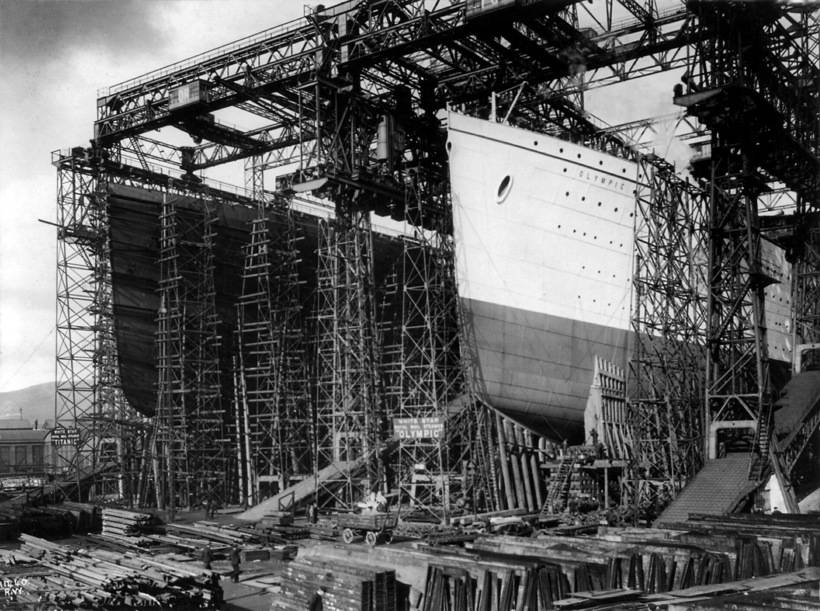
Interestingly, the captain of the "Olympic" was originally Edward John Smith, who was the most experienced captain of the company. But after the construction of the second twin liner, he was transferred to the Titanic. "Olympic" was modernized in connection with the Titanic disaster: new lifeboats were installed on the liner, and the hull shell became more durable.
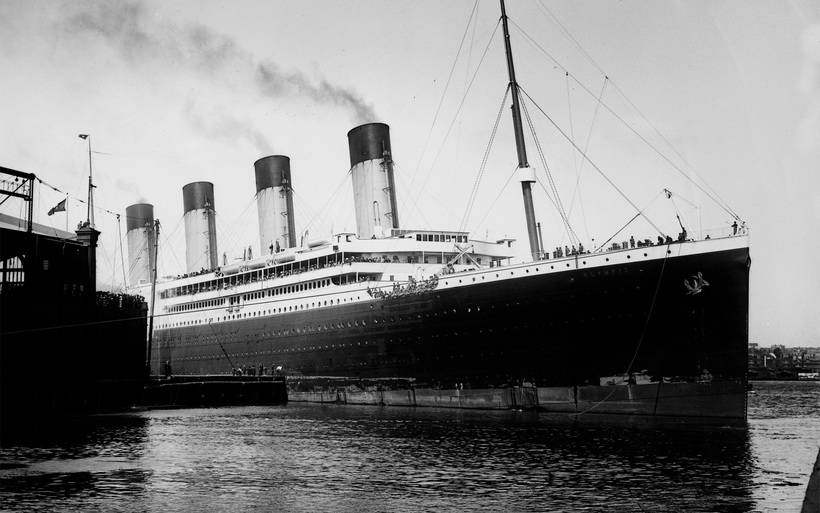
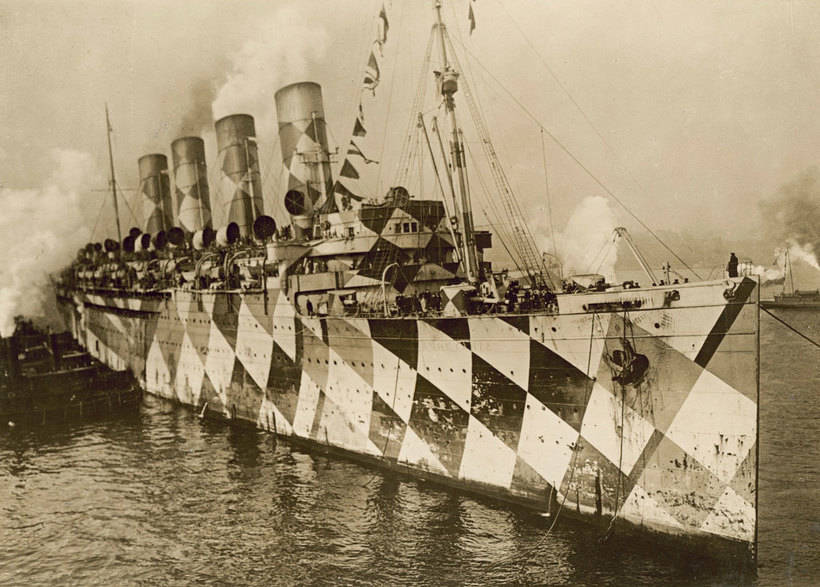
But with the onset of World War I, in 1914, the ship was not used as a cruise liner, but served the country's good, making flights across the Mediterranean. Swim in the seas with minefields, submarines and under enemy aircraft was unsafe. Therefore, the "Olympic" was installed weapons, and the ship itself is repainted in camouflage colors. Moreover, the "Olympic" even participated in the battle and sank a German submarine in the English Channel.
"Olympique" resumed flights across the Atlantic in 1920 after another upgrade and worked as a cruise liner until 1935, when it was decommissioned and sold for scrap. Almost all of its internal situation was sold off the auction. In total, the "Olympic" was afloat for 25 years and by these indicators was far ahead of its twin brothers.
"Titanic"
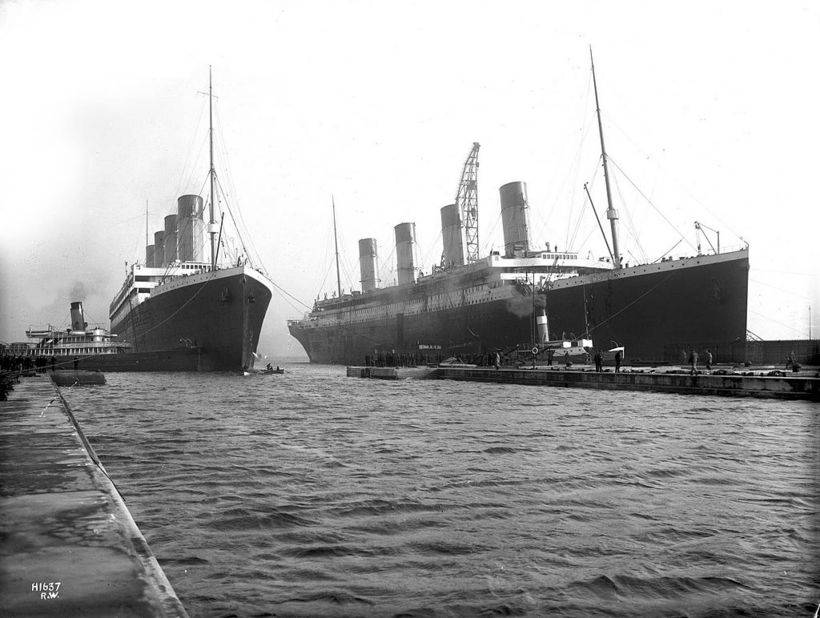
"Titanic" was built almost simultaneously with the "Olympic" and was launched in 1911, and in his first and last flight went in April 1912. The liner sank after a collision with the iceberg, which caused the death of more than 1,400 people.
"Britannicus"
The third vessel from the class of liners "Olympic" was "Britannic", whose fate also developed tragically. Construction of the ship began in November 1911, and originally it was planned to be called "Giant". After the Titanic disaster, there have been significant changes in the design of the ship, concerning its safety. And if, in the case of Olimpik, a superficial modernization was carried out, the third liner was only at an early stage of construction, and therefore it was possible to implement more ambitious structural changes. So, for example, the number of partitions was increased, and the number of insulated watertight compartments was 17, against 16 at Olympique and Titanic.
The ship, which received the name "Britannic" upon completion of the construction, was launched in February 1914. But he was not destined to make any cruise as a cruise liner. The First World War began and the ship was requisitioned by the British Admiralty for use as a military hospital. The Britannic was repainted and refitted to fulfill new tasks, and in December 1915 the ship set off on its first voyage through the Mediterranean.
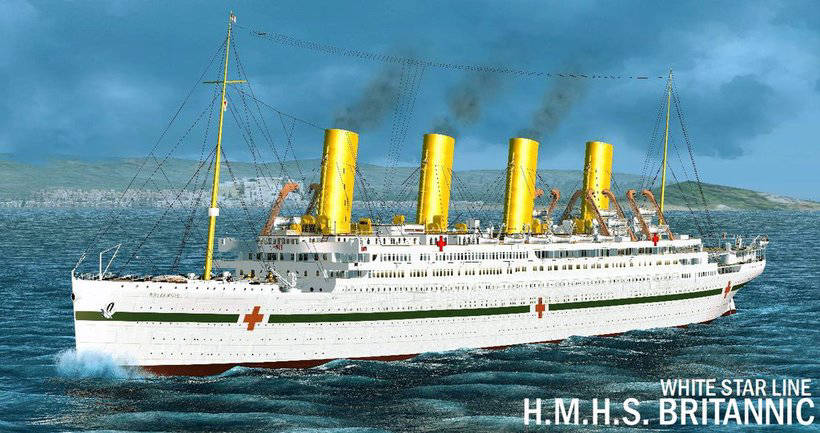
In November 1916, after several successful voyages, the ship received a hole off the coast of Greece, and even the most advanced security measures did not help. According to the prevailing version, it was an underwater mine abandoned by a German submarine, but there are also opinions that the cause of the ship's collapse could be a torpedo. 55 minutes after the explosion, "Britannicus" went to the bottom, but most of the passengers managed to escape, and they were evacuated to the ships that came to the rescue. It was saved 1036 passengers of a military hospital, 30 people were killed.
An interesting fact is connected with all three liners of the "Olympic" series. On all these vessels worked stewardess Violet Jessop. First she served on the liner "Olympic", then was on the "Titanic" and survived in a terrible shipwreck. During the First World War, the girl worked as a nurse and got on board the Britannica, where she also managed to survive after the shipwreck. After the war, she still worked as a stewardess on cruise liners and even twice made a round-the-world trip.

Find the Best Professionals for Your Project
Expert repair, construction, and renovation specialists ready to help you right now
Recommended articles
Eresund Bridge: the most unusual bridge in Europe, which goes under the water
The Channel: the longest underwater tunnel in the world, which turned out to be unprofitable. <p>The construction of a tunnel that would connect continental Europe and island Britain dreamed of at the beginning of the XIX century. But the grandiose plan to build the world's longest submarine rail tu
20 inventions that the Soviet Union stole from the West and issued for their
Palace of Winds in India: Maharaja's harem, with 950 windows and no stairs
More articles:
- Eresund Bridge: the most unusual bridge in Europe, which goes under the water
- The Channel: the longest underwater tunnel in the world, which turned out to be unprofitable. <p>The construction of a tunnel that would connect continental Europe and island Britain dreamed of at the beginning of the XIX century. But the grandiose plan to build the world's longest submarine rail tu
- 20 inventions that the Soviet Union stole from the West and issued for their
- Palace of Winds in India: Maharaja's harem, with 950 windows and no stairs
 10 phenomenally beautiful landscapes of the USA
 The best islands in Europe, where you should definitely visit
 Well of the Torah: not even the most reckless divers here dive
 Lanka Erebor: the eighth wonder of the world - lonely lion mountain-fortress Sigiriya