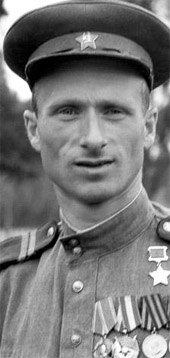
Meliton Kantaria2 photos
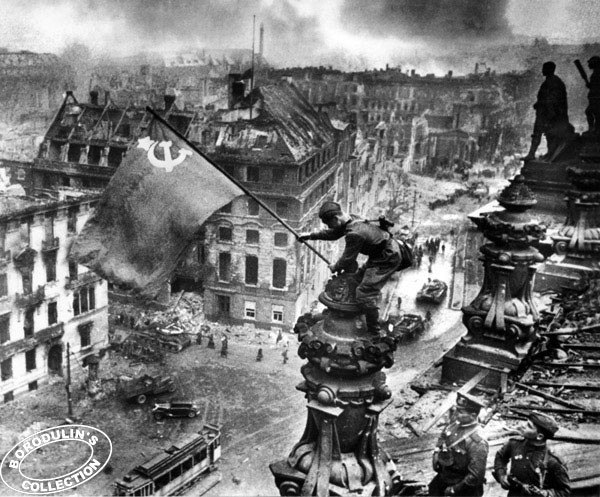
He became known for raising the Flag of Victory on the roof of the Reichstag together with Sergeant Mikhail Egorov. The team was led by Lieutenant Aleksey Berezest.
Meliton Varlamovich Kantaria was born on October 5, 1920, into a peasant family in Jvari, a village (now a city) in western Georgia, located on the Inguri River. When he was 17 years old, he moved to the Abkhazian city of Ochamchira, where he met his first wife. In 1938, Meliton was drafted into the army, and it was there that the war caught up with him. He began participating in battles in December 1941 and ended the war as a junior sergeant in the 756th Infantry Regiment of the 150th Infantry Division, part of the 3rd Shock Army of the 1st Belarusian Front, where he served as a scout.
He became known for raising the Flag of Victory on the roof of the Reichstag together with Sergeant Mikhail Egorov. The team was led by Lieutenant Aleksey Berezest.
If official accounts are to be believed, on the early morning of May 1, 1941, Sergeant Egorov and Kantaria raised a red flag over the dome of the Reichstag. The flag was hastily made, and quite a number of them were produced—according to military cinematographer Boris Alexandrovich Sokolov, who filmed those events, there were more than forty. Since fierce battles were taking place behind the Reichstag and German soldiers held their defenses tenaciously, it was not feasible to rely on just one flag. Although it was installed, fighting continued throughout the day and did not end until night on May 2, when the Reichstag garrison surrendered.
Thus, this simple, hastily constructed flag became a symbol of the Soviet troops' victory in the Great Patriotic War. After the war, the Flag of Victory was placed in a prominent position at the Central Museum of the Armed Forces in Moscow. All those who were involved in raising it over the Reichstag—from Kantaria and Egorov to the division commander—were awarded the title of Hero of the Soviet Union. However, in recent years, the claim that it was Kantaria and Egorov who specifically raised the flag has come under increasing doubt.
“Several teams tried to raise the flags at night,” said cinematographer B. A. Sokolov. “In the morning, they asked us to try again so that the historic moment could be captured on film. So we raised the flags one more time.”
Historians believe that the honor was granted to Lieutenant Berezest’s team just before the May 9 Victory Parade, taking into account the fact that Kantaria was Georgian by ethnicity, just like Stalin, while Egorov’s surname symbolized a typical Russian soldier. Regardless, they all fought for their country and participated in those brutal battles, and they all deserve the high honor of being called Heroes of the Soviet Union.
Meliton Varlamovich Kantaria was demobilized in 1946, and the same year, the division he had served in was disbanded. Upon returning home, he worked in a collective farm, engaged in some trade activities, and later moved with his family to Sukhumi. He had three children with his wife: two sons and a daughter. According to one of his sons, Meliton Varlamovich rarely spoke about the war. He could not even watch war films, as the memories remained too fresh, despite the many years that had passed since the end of the conflict. One story his son remembered particularly well was this: “Once in Belarus, my father and other scouts took over some abandoned German barracks. The Germans had left, but they had left behind bundles of white bread.” Our soldiers, who hadn’t seen bread for several years, devoured it immediately. But the commander warned them that the food might be poisoned, and indeed, 17 out of 85 people died.”
When asked how he and Egorov managed to raise the flag, Kantaria would always joke, “They provided us with a lift, we got in, and voila—we raised the flag on the roof.”
Mikhail Egorov and Meliton Varlamovich Kantaria were always present at the Victory Parades. On their 30th anniversary of the victory, they were each given a car as a gift. It was precisely in one of these cars that Mikhail Egorov, Kantaria’s fellow fighter from the front lines, died in an accident.
Many years later, the Abkhazian conflict forced Kantaria’s family to leave Sukhumi. Their home was bombed, and they did not have time to retrieve their belongings, including awards and military photographs. They moved to Tbilisi, and then eventually to Moscow. In his final years, Kantaria faced many difficulties—he had to repeatedly seek assistance from officials to prove his identity as “the real Kantaria” and to obtain refugee status and necessary documents. All these challenges took a heavy toll on him. On December 27, 1993, he passed away on the Moscow-Tbilisi train. He was buried in his hometown of Jvari, in a school named after him—a school dedicated to honoring the hero who raised the Flag of Victory over the Reichstag.
Find the Best Professionals for Your Project
Expert repair, construction, and renovation specialists ready to help you right now
Recommended Galleries
#### Leisure Dive
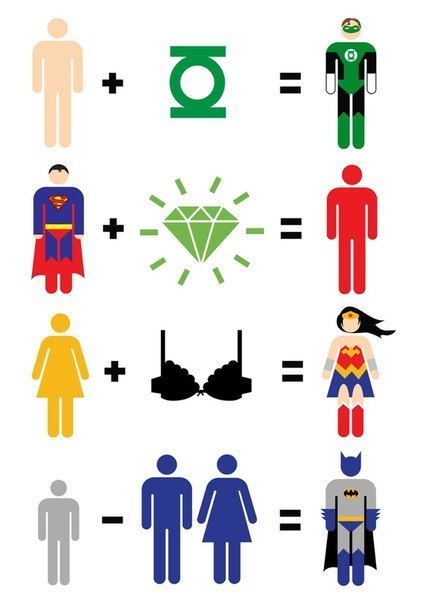
Graphic designer Matt Cowan from Italy has created a series of illustrated mathematical equations that identify superheroes and villains.
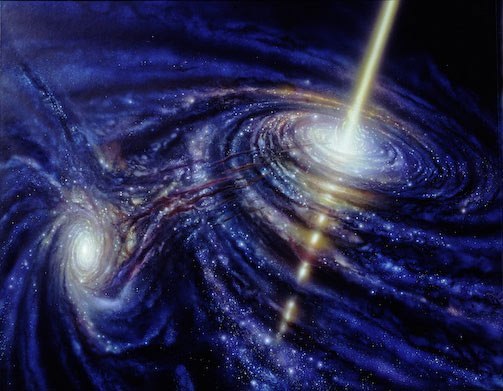
Quasars are some of the most distant objects in the universe. They are extremely bright and emit large amounts of energy, including a tremendous amount of light. Quasars are formed when giant galaxies contain massive stars with very high masses and densities. These stars have such high temperatures that their surfaces reach temperatures of millions of degrees Celsius. Their extreme brightness makes them visible even from enormous distances. Therefore, quasars can be considered to be some of the
“Elixir of Youth”
Recommended articles

More Galleries
- #### Leisure Dive
- Graphic designer Matt Cowan from Italy has created a series of illustrated mathematical equations that identify superheroes and villains.
- Quasars are some of the most distant objects in the universe. They are extremely bright and emit large amounts of energy, including a tremendous amount of light. Quasars are formed when giant galaxies contain massive stars with very high masses and densities. These stars have such high temperatures that their surfaces reach temperatures of millions of degrees Celsius. Their extreme brightness makes them visible even from enormous distances. Therefore, quasars can be considered to be some of the
- “Elixir of Youth”
 Graffiti in the Alien Zone
 Christopher S
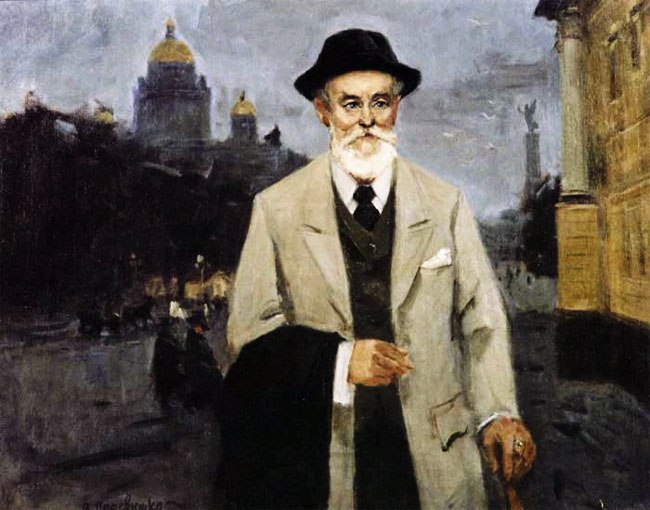 Peter Karl Fabergé was born on May 30, 1846, in Saint Petersburg. His father was a modest jeweler who owned his own business. The boy exhibited artistic talents at an early age and demonstrated a keen interest in the art of jewelry making.
 Alexander Sergeyevich Demyanenko was born on May 30, 1937, in Sverdlovsk. He studied at the GITIS, and after graduating, he worked for several months at the Mayakovsky Theater before moving to Leningrad, where he spent the rest of his life. His theatrical career...
 Iris Tablet – a transparent tablet launched by the company Fujitsu.
 A suspension bridge in Malaysia that is 685 meters high.
 The Top 6 Richest Heads of State in the Modern World
 The city of Chiang Rai in northern Thailand is one of those regions where traditional Thai culture and art thrive. 5 kilometers south of the city lies an incredibly beautiful white structure – Wat Rong Khun, also known as the White Temple.