Na poziomie edukacji8 zdjęć
On the Field of Education
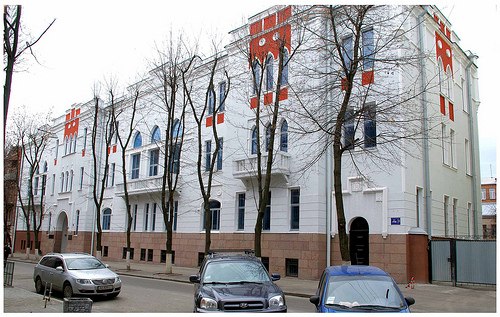
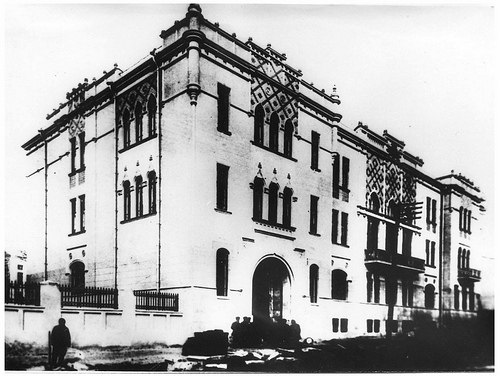
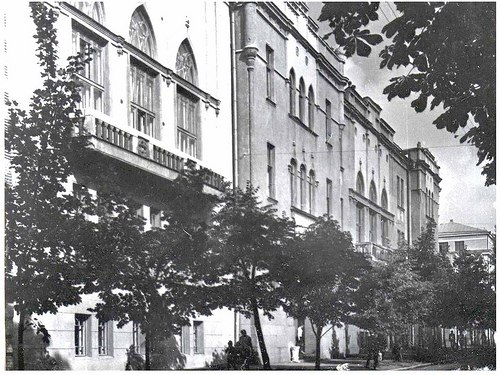
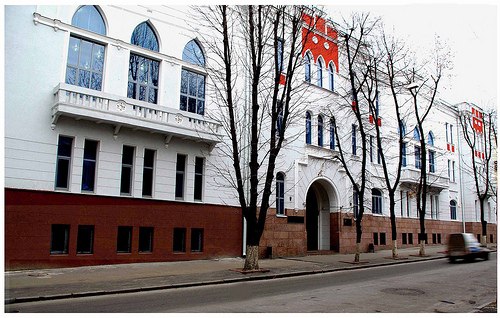
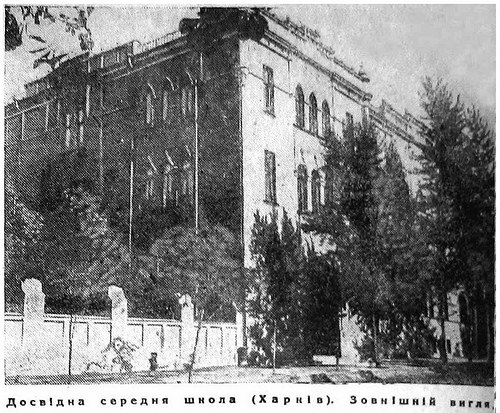
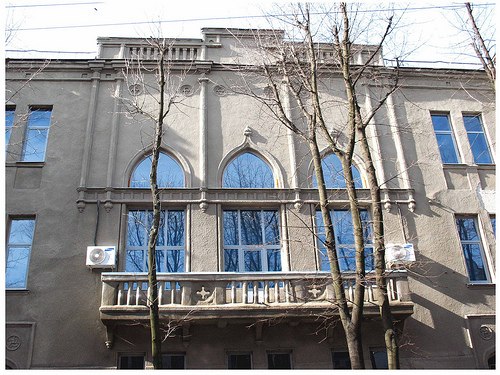
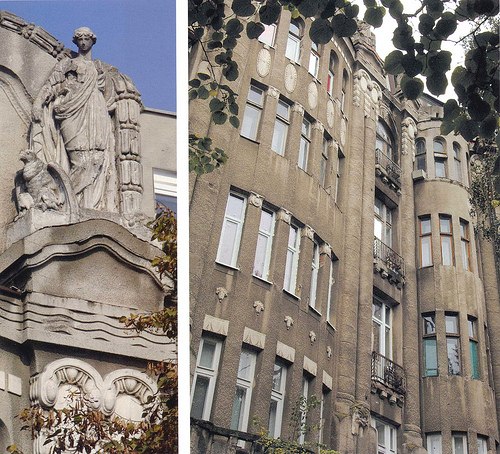
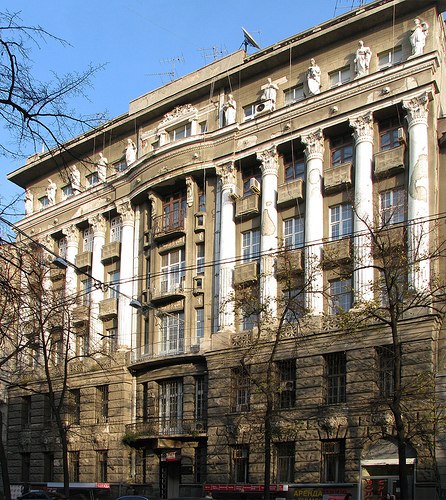
We are talking about a building constructed in 1914 according to the design by the young civil engineer A.G. Molokin, located at 29 Artyom Street (at that time the street was called Eparchial). It was a four-story building in the Art Nouveau style with elements of Gothic architecture, such as pointed windows. Well-proportioned details and restrained decorative elements gave it the dignity befitting a bank – after all, the building was designed and constructed for the Peasants’ Land Bank.
For background: The Peasants’ Land Bank was established in Russia in 1882 to provide loans to peasants for purchasing private land. In 1895, it gained the right to purchase land from landlords, and within ten years (1895–1905), it acquired approximately 1 million decatines of land. The bank’s activities contributed to a rapid increase in land prices: the cost of one decatine rose from 49 rubles in 1896 to 111 rubles in 1905. Between 1906 and 1916, the bank purchased more than 4.6 million decatines of land (for a total amount of approximately 500 million rubles), and within those same years, 3.8 million decatines were sold to individual households. In total, between 1906 and 1915, peasants purchased 10.4 million decatines of land from the bank or with its assistance; by 1914, the price had risen to 136 rubles per decatine. High loan payments led to an increase in delinquencies, and the number of borrowers decreased (from 134,000 in 1910 to 64,000 in 1914). By 1917, only 61% of the land purchased by the bank had been sold.
The Peasants’ Bank was dissolved by decree of the Soviet Government on November 25, 1917; its assets were nationalized under the Land Decree and distributed to peasants, who thus also became free from their debts to the bank amounting to 3310 million rubles.
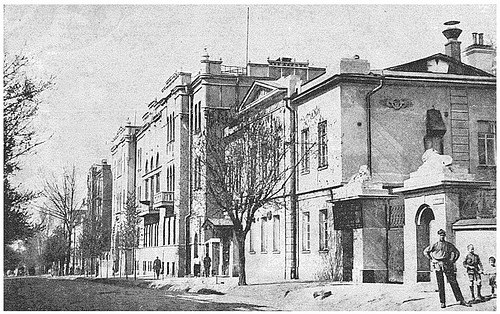
The bank building on Eparchial Street was also nationalized. Under the new regime, it housed the People’s Education Commission, initially headed by V.P. Zatonsky and later by N.A. Skrypnik. After the government of the Ukrainian Republic moved to Kiev in 1934, the empty building was assigned to the first experimental middle school established in Ukraine – the 102nd Ukrainian Middle School (according to the 1937 directory).
<
Information about its objectives, plans, and prospects can be found in an article published in the same year in the republican journal „Vsesvit“:
„At the initiative of the People’s Education Commission, an experimental middle school was established in Kharkiv, which began operating on September 1. It is the only such school in Ukraine. Its purpose is to test new teaching methods and communist education approaches, as well as our educators’ innovative proposals, to apply advanced educational practices from abroad, and to evaluate and implement them in practice. At the same time, the school is intended to critically assess the experiences of foreign schools as well.
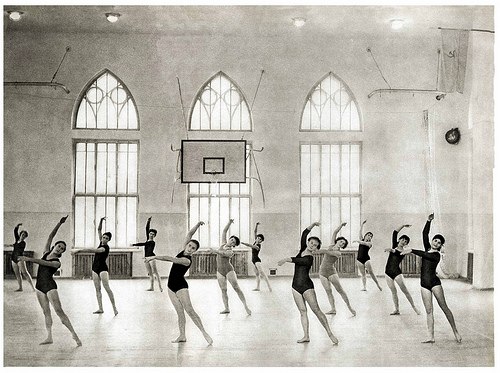
The school consists of eleven classes – ten regular classes and one preparatory class – and follows the curriculum and study plans of the Ukrainian Soviet Socialist Republic’s regular middle schools. It achieves its goals through both its exemplary role as an educational institution and by undertaking specialized experimental projects. Thanks to its advanced facilities, furniture, appearance, and students’ living and working conditions, as well as the expertise of its teachers, the school aims to become one of the leading institutions of education in the republic. Its design and operation should reflect the best achievements of educational theory. Everything from the selection and arrangement of furniture to the choice of equipment and devices should conform to the principles of educational science.
The best educators – both experienced classroom teachers and experts in theoretical teaching fields – have been recruited for this school. Among them are Professor Paradissky for literature, Professor Nimich and Associate Professor Hilchenko for natural sciences, Associate Professor Karlova for physics, graduate student Shvidun for astronomy, and others. The primary school teaching staff also includes the most experienced teachers from Kharkiv, such as Sorokotyaiga and Przhevalskaya.The school operates on a single shift system, which allows for extensive use of extracurricular activities and health promotion programs. As a priority, technical facilities and a sanatorium-style wellness system are being established; these will be available to the majority of children after regular classes. Physically weaker children will receive additional care, enhanced nutrition, and various health treatments such as outdoor activities and exercise, all within a structured routine at home and at school. Other children will participate in various clubs, workshops, and study groups. Such an organization allows for more prolonged influence on students’ development than in traditional schools.
Special attention is given to the seven-year-old children in the preparatory class. Their lessons combine play, outdoor activities, and physical exercises. For this purpose, two spacious rooms with a veranda have been allocated to them, so that they can lead a lifestyle different from that of older students.The school utilizes various visual aids such as slides and films, as well as hands-on laboratory work. Five thousand visual aids and short films have been purchased, and plans are underway to integrate film education into the school curriculum.At present, the teaching staff is focusing on organizing the classrooms and arranging children according to health and educational considerations. They are also deciding on the design style of the classrooms, including the choice of walls, portraits, and other elements suitable for different age groups. The types of furniture for laboratories, workshops, and other facilities have already been selected.The next step is to identify the individual characteristics, abilities, weaknesses, and interests of each child, in order to tailor teaching methods to their specific needs.The school aims to promote its activities and seek the support of Soviet society, especially the Ukrainian education community. Special rooms have been designated for visiting guests, so that discussions can be held in a structured manner regarding their impressions and suggestions.”
It seems likely that the 102nd School continued using the building at 29 Artyom Street until the beginning of the war. However, despite the innovative educational approaches described in these plans, such practices may have been interrupted earlier. Regardless, after the liberation of Kharkiv, the focus shifted to other matters entirely. By 1934, schools were dealing with completely different challenges and issues.
<
And the building found a new owner. Its new owner became the pedagogical institute, which, having lost its previous home during the war, was now occupying the former building of the Institute of Noble Ladies on Sumskaya Street. That building had been destroyed during the war. The space available in the former bank building was no longer sufficient for the needs of the pedagogical institute, so the architect who designed the original building, Professor A.G. Molokin, prepared a plan for adding an annex to the south side of the building.Sixty years have passed since then. Now, the former bank building is about to celebrate its hundredth anniversary of serving in the field of education. And it still looks as young and vibrant as it did at the beginning of its career.
We are talking about a building constructed in 1914 according to the design by the young civil engineer A.G. Molokin, located at 29 Artyom Street (at that time the street was called Eparchial). It was a four-story building in the Art Nouveau style with elements of Gothic architecture, such as pointed windows. Well-proportioned details and restrained decorative elements gave it the dignity befitting a bank – after all, the building was designed and constructed for the Peasants’ Land Bank.
For background: The Peasants’ Land Bank was established in Russia in 1882 to provide loans to peasants for purchasing private land. In 1895, it gained the right to purchase land from landlords, and within ten years (1895–1905), it acquired approximately 1 million decatines of land. The bank’s activities contributed to a rapid increase in land prices: the cost of one decatine rose from 49 rubles in 1896 to 111 rubles in 1905. Between 1906 and 1916, the bank purchased more than 4.6 million decatines of land (for a total amount of approximately 500 million rubles), and within those same years, 3.8 million decatines were sold to individual households. In total, between 1906 and 1915, peasants purchased 10.4 million decatines of land from the bank or with its assistance; by 1914, the price had risen to 136 rubles per decatine. High loan payments led to an increase in delinquencies, and the number of borrowers decreased (from 134,000 in 1910 to 64,000 in 1914). By 1917, only 61% of the land purchased by the bank had been sold.
The Peasants’ Bank was dissolved by decree of the Soviet Government on November 25, 1917; its assets were nationalized under the Land Decree and distributed to peasants, who thus also became free from their debts to the bank amounting to 3310 million rubles.
The bank building on Eparchial Street was also nationalized. Under the new regime, it housed the People’s Education Commission, initially headed by V.P. Zatonsky and later by N.A. Skrypnik. After the government of the Ukrainian Republic moved to Kiev in 1934, the empty building was assigned to the first experimental middle school established in Ukraine – the 102nd Ukrainian Middle School (according to the 1937 directory).
<
Information about its objectives, plans, and prospects can be found in an article published in the same year in the republican journal „Vsesvit“:
„At the initiative of the People’s Education Commission, an experimental middle school was established in Kharkiv, which began operating on September 1. It is the only such school in Ukraine. Its purpose is to test new teaching methods and communist education approaches, as well as our educators’ innovative proposals, to apply advanced educational practices from abroad, and to evaluate and implement them in practice. At the same time, the school is intended to critically assess the experiences of foreign schools as well.
The school consists of eleven classes – ten regular classes and one preparatory class – and follows the curriculum and study plans of the Ukrainian Soviet Socialist Republic’s regular middle schools. It achieves its goals through both its exemplary role as an educational institution and by undertaking specialized experimental projects. Thanks to its advanced facilities, furniture, appearance, and students’ living and working conditions, as well as the expertise of its teachers, the school aims to become one of the leading institutions of education in the republic. Its design and operation should reflect the best achievements of educational theory. Everything from the selection and arrangement of furniture to the choice of equipment and devices should conform to the principles of educational science.
The best educators – both experienced classroom teachers and experts in theoretical teaching fields – have been recruited for this school. Among them are Professor Paradissky for literature, Professor Nimich and Associate Professor Hilchenko for natural sciences, Associate Professor Karlova for physics, graduate student Shvidun for astronomy, and others. The primary school teaching staff also includes the most experienced teachers from Kharkiv, such as Sorokotyaiga and Przhevalskaya.
Special attention is given to the seven-year-old children in the preparatory class. Their lessons combine play, outdoor activities, and physical exercises. For this purpose, two spacious rooms with a veranda have been allocated to them, so that they can lead a lifestyle different from that of older students.
It seems likely that the 102nd School continued using the building at 29 Artyom Street until the beginning of the war. However, despite the innovative educational approaches described in these plans, such practices may have been interrupted earlier. Regardless, after the liberation of Kharkiv, the focus shifted to other matters entirely. By 1934, schools were dealing with completely different challenges and issues.
<
And the building found a new owner. Its new owner became the pedagogical institute, which, having lost its previous home during the war, was now occupying the former building of the Institute of Noble Ladies on Sumskaya Street. That building had been destroyed during the war. The space available in the former bank building was no longer sufficient for the needs of the pedagogical institute, so the architect who designed the original building, Professor A.G. Molokin, prepared a plan for adding an annex to the south side of the building.
Znajdź najlepszych specjalistów dla swojego projektu
Specjaliści od remontów, budowy i wykończeń gotowi Ci pomóc
Polecane galerie
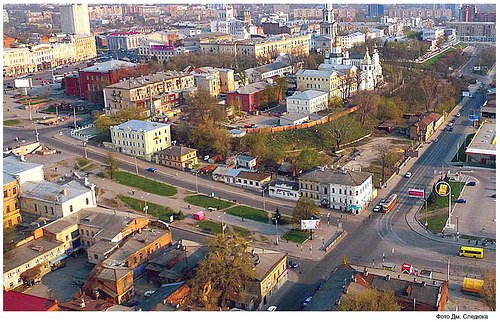
Bursaczkowy Stok
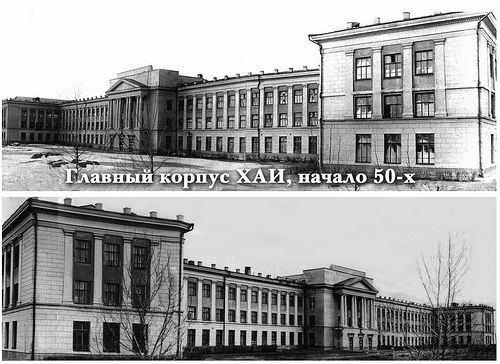
Харьków i lotnictwo, a także historia instytutu HAİ<br>(Część 2) --- Please note that this is part 2 of a series of articles. It is recommended to read the previous parts as well in order to fully understand the content.
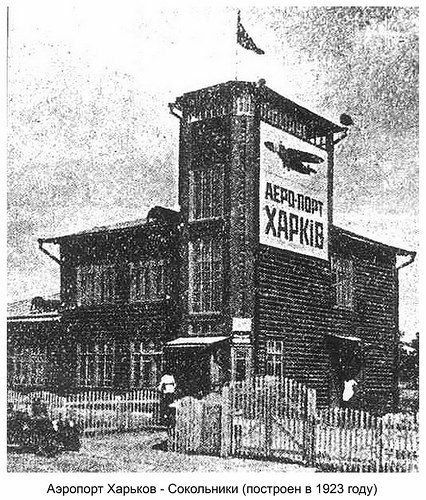
Харьków i lotnictwo<br>(Część 1) --- Return NOTHING else. No additional explanations or texts.
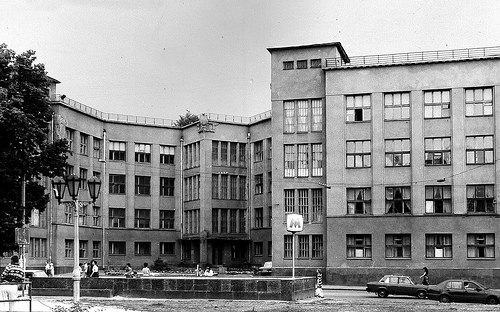
Ulica Puszkinska, 82. Instytut Medycznej Radiologii (1930 r.).<br>Styl: konstruktywistyczny art déco.
Polecane artykuły



Więcej galerii
- Bursaczkowy Stok
- Харьków i lotnictwo, a także historia instytutu HAİ<br>(Część 2) --- Please note that this is part 2 of a series of articles. It is recommended to read the previous parts as well in order to fully understand the content.
- Харьków i lotnictwo<br>(Część 1) --- Return NOTHING else. No additional explanations or texts.
- Ulica Puszkinska, 82. Instytut Medycznej Radiologii (1930 r.).<br>Styl: konstruktywistyczny art déco.
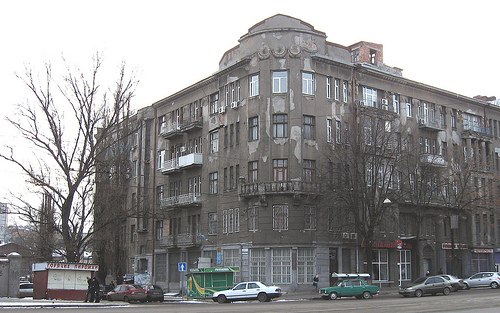 Ulica Poltawski szlach, 47/49.<br>Były kamienica z mieszkaniami i prywatna lekarnia (1918).
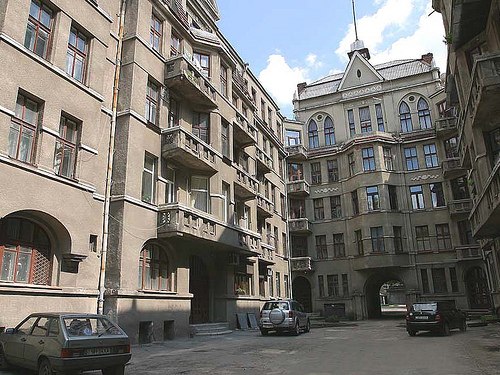 Ulica Artioma 6. Dom mieszkalny „Czerwony bankier” (1928). W przygotowaniu projektu brał udział architekt Andrusenko. Styl: dekoratywny art déco.
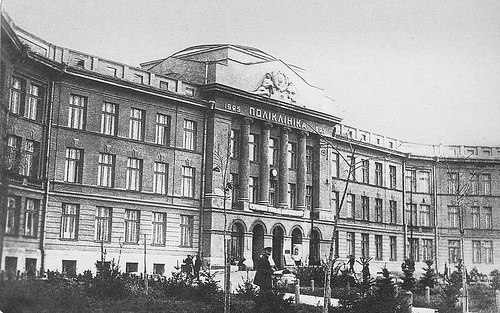 Moskowska 197
 Ulica Poltawski szlach, 22a. Dawny kamieniczka kamienica braci Kaców (1914).
 Ulica Sumska, 82. Były pensjonat Moszkewicza (1914 r.).<br>(Styl: neorenesans.)
 Historia jednego domu przy ulicy Sumskiej 14 w Sumsku --- Return ONLY the complete translated** translation of the text**. Do not include any additional information or explanations.
 Harbin w latach okupacji.
 Ulica Oktyabrskiej Rewolucji nr 20